Monthly Archives: January 2011

Best of January

I posted 57 times in January.

January was dominated by ScienceOnline2011, of course, and I let others do all of the in-depth blogging (so far), But before it started I got one last ScienceOnline2010 interview in – with Steve Koch.

Open Laboratory 2010 is almost ready. But while you wait – we announced the new cover art: And now…. the brand new Open Lab cover!. And we have opened up for submissions for the next year: Open Laboratory 2011 – open for submissions.

I also asked Can WordPress do this?

I made sure that the Scientific American Guest Blog was busy all month as well – check them all out:

The discovery of the ruins of ice: The birth of glacier research By David Bressan
The Ferret Hunters By David Manly
In the wake of Wakefield: Risk-perception and vaccines By David Ropeik
Can sitting too much kill you? By Travis Saunders
The Emperor’s New Missile Defense By Lawrence M. Krauss
Anecdotes from the Archive: From the basement to the blog By Mary Karmelek
Could chess-boxing defuse aggression in Arizona and beyond? By Andrea Kuszewski
Anecdotes from the Archive: Bed bugs are vintage, and vintage is in By Mary Karmelek
Invisibility: After several years of research, it’s just gotten weirder By Greg Gbur
Words, pictures, and the visual display of scientific information: Getting back to the basics of information design By Lena Groeger
An arsenic-laced bad-news letter: Who is the audience for online post-publication peer review? By Marie-Claire Shanahan
The Lady and the Trump–without hungry puppies: The science of stray dog sterilization By Cynthia Mills
Anecdotes from the Archive: Taking On the Monocle Problem By Mary Karmelek
The mores of makeup By Christine Ottery
Anecdotes from the Archive: Diesel milk By Mary Karmelek
Can you be both obese and healthy? By Peter Janiszewski
Psychotherapy and the healing power of narrating a life By May Benatar
The low-carbon diet: One family’s effort to shrink carbon consumption By Robynne Boyd
Anecdotes from the Archive: Bad news for sneak thieves, porch climbers and window workers By Mary Karmelek
Can you hear me now? Animals all over the world are finding interesting ways to get around the human din By Rose Eveleth
Anecdotes from the Archive: When zookeepers looked like doormen By Mary Karmelek
When animals attack: Death databases indicate that our fondest phobias may be misdirected By Rachel Nuwer
Biting the hand that feeds: The evolution of snake venom By David Manly
The Higgs boson particle meets Shakespeare By Laura Neuhaus
Me and the copperheads–or why we still don’t know if snakes secrete melatonin at night By Bora Zivkovic (yes, that’s me – I wrote a science post!)
How to humanize technology: from the scatological to the sublime By Laura Neuhaus
Anecdotes from the Archive: Relief for Writers By Mary Karmelek
In search of the origins of warfare in the American Southwest By Dan Bailey.

New post on the SciAm Guest Blog – Anasazi

There was a new post on the Scientific American Guest Blog this morning. Check out In search of the origins of warfare in the American Southwest by Dan Bailey. Enjoy, comment, share.

Open Laboratory 2011 – open for submissions

Jason and Blake were both at ScienceOnline2011 so had more important things to do for a few days. But now they are back, finalizing the Open Laboratory 2010. A couple of more hard-to-get bloggers to chase down, and we’re ready for production and publishing. Another week or two…and the book will be out.

There may be some changes in the way we do Open Laboratory in the future, so I am holding off, for now, on announcing the next year’s Editor. More information later….

In the meantime, you can buy the last four annual collections here. You can read Prefaces and Introductions to older editions here. The instructions for submitting are here.

And, most importantly, you can now start submitting your posts (and other people’s posts) for the next edition. The submission form for the 2011 edition of Open Lab is now open. Any blog post written since December 1, 2010 is eligible for submission.

Just two months into it, it should not be hard to go back into your archives and submit your recent posts now – when next November comes you’ll hardly remember them ;-)

And once you are done submitting your own posts, you can start looking at the others’, including on aggregators like ScienceSeeker, Scienceblogging.org and Researchblogging.org.

Here are the submission badges, designed again this year by Doctor Zen. You are encouraged to display them prominently on your websites and blogs:

<a href=”http://openlab.wufoo.com/forms/submission-form/”&gt<img src=”http://coturnix.files.wordpress.com/2011/01/open_lab_2011_150x100.png”&gt</a&gt

<a href=”http://openlab.wufoo.com/forms/submission-form/”&gt<img src=”http://coturnix.files.wordpress.com/2011/01/open_lab_2011_300x200.png”&gt</a&gt

Or take the Open Lab 2011 submission bookmarkletOpen Lab – and drag it to your browser’s toolbar to have it always handy as you browse around science blogs.

Two new posts on the SciAm Guest Blog

Two new posts today on the Scientific American Guest Blog.

First, continuing her reporting from the World Economic Forum in Davos, Laura Neuhaus wrote How to humanize technology–from the scatological to the sublime.

Then, wrapping up the week for the blog, Mary Karmelek (not knowing about my carpal tunnel troubles today) fished out this from the 156-year-old SciAm archives – Anecdotes from the Archive: Relief for writers.

As always: read, comment, share….

Two new posts on the SciAm Guest Blog

Two new posts on the Scientific American Guest Blog today.

First in the morning, Laura Neuhaus is reporting for Scientific American on the science-oriented sessions from the World Economic Forum in Davos. Here is her first dispatch: The Higgs boson particle meets Shakespeare

Then, to complete a hat-trick of posts on snake venom, I (re)wrote and posted my own piece – Me and the copperheads, or, why we still don’t know if snakes secrete melatonin at night.

Enjoy, comment, share….

#Scio11: Staten Island Academy Boys (#SITT Exclusive) – video

New post on the SciAm Guest Blog

Another busy day for me, so I am just now getting to this, announcing a hew post on the Scientific American Guest Blog from earlier today.

Biting the hand that feeds: The evolution of snake venom is the second guest post by David Manly and the second post in a row about venomous animals on the Guest Blog in as many days.

Enjoy, comment, share….

#Scio11: Stacy Baker’s Extreme Biology Class Interview (#SITT Exclusive) – video

New posts on the SciAm Guest Blog

There are two new posts on the Scientific American Guest Blog.

I think you will love When animals attack: Death databases indicate that our fondest phobias may be misdirected by Rachel Nuwer.

And earlier in the morning, a new Archive post by Mary Karmelek – Anecdotes from the Archive: When zookeepers looked like doormen.

As always, enjoy, comment, share….

#Scio11: Carl Zimmer (#SITT Exclusive) – video

#Scio11: Virginia Hughes Interview (#SITT Exclusive) – video

#Scio11: Katie Mosher Interview (#SITT Exclusive) – video

New post on the SciAm Guest Blog

There is a new cool post on the Scientific American Guest Blog, by Rose EvelethCan you hear me now? Animals all over the world are finding interesting ways to get around the human din.

And I think I forgot, in the throes of packing and moving, to point you to last Friday’s post by Mary Karmelek – Anecdotes from the Archive: Bad news for sneak thieves, porch climbers and window workers.

As always: read, comment, share…

They made ScienceOnline2011 possible

Anton was right – ScienceOnline2011 almost didn’t happen. But it did.

So check out what Anton said this morning.

#Sci011: Rick MacPherson Interview (#SITT Exclusive) – video

#Scio11: Mary Canady Interview (#SITT Exclusive) – video

Tentative 2011 calendar

I am really bad with using my various Google and other calendars, so this is mostly a Note To Self, so have it handy if/when I get invitations etc. to know when I am actually free….

January 24th – final move to a new house.

January 25th – Sigma Xi pizza lunch about bed bugs with Coby Schal

January 31st – Guest-lecture at Nicholas School for Environment at Duke.

February 5th – a very special dinner

February 7-8 – monthly trip to NYC

February 17-21 – AAAS – my panel on 21st at 9:45am: Social Networks and Sustainability

March 5-8 – monthly trip to NYC plus TEDxNYED

March 14th 3-6pm, Skype into science education class

March 20-25 – NYC

March 26 – NCWC (BIO101 lab)

April 2 – NCWC (BIO101 lab)

April 9 – NCWC (BIO101 lab), also adv.board meeting for the UNC j-school medical program

April 11-12 – NYC monthly trip, #NYCscitweetup

April 16 – NCWC (BIO101 lab)

April 18-19 – Passover

April 23rd – Washington DC – D.C. Science Writers Association

May 3rd – Boston – annual meeting of the advisory group for PRI/BBC/NOVA/SigmaXi Science.

May 7th – an important wedding

May 12-13th – Wake Forest University workshop on science writing in the Biology department

June 25-28th – Cairo, Egypt new location is Doha, Qatar – World Conference of Science Journalists

September 2-3rd – London, UK – Science Online London

October 14-18th – Flagstaff AZ – CASW/NASW Science Writers 2011

November 5 – an important wedding

#Scio11: Darlene Cavalier Interview (SITT Exclusive) – video

#Scio11: Science Comedian Brian Malow (SITT Exclusive) – video

#Scio11: Robert Krulwich Interview (SITT Exclusive) – video

ScienceOnline2011 – videos from Thursday night opening and Keynote

Two new posts on the SciAm Guest Blog

Sorry for the delay – in the middle of packing and moving to a new apartment….

There are two new posts on the Scientific American Guest Blog.

Today, Robynne Boyd continues her series of posts about making sure her house is energy-efficient. See The Low-Carbon Diet: One Family’s Effort to Shrink Carbon Consumption (Part 2: A Little Research Goes a Long Way).

And yesterday, May Benatar wrote Psychotherapy and the healing power of narrating a life.

Two new posts on SciAm Guest Blog – healthy obesity and milk

There are two new posts on the Scientific American Guest Blog today.

First up this morning was Anecdotes from the Archive: Diesel Milk by Mary Karmelek.

Then, at noon, Peter Janiszewski posted Can you be obese and healthy?

Read, comment, share!

New post on the SciAm Guest Blog – on the mores of makeup

For today’s Scientific American Guest Blog post, Christine Ottery interviewed Mark Changizi. The result is this piece: The mores of makeup. Enjoy, comment, share…

Two new posts on SciAm Guest Blog

There are two new posts on the Scientific American Guest Blog today.

First up this morning is The Lady and the Trump–without hungry puppies: The science of stray dog sterilization by Cynthia Mills.

Then, continuing with the regular series, Anecdotes from the Archive: Taking On the Monocle Problem by Mary Karmelek.

Enjoy, comment, share…

And now…. the brand new Open Lab cover!

Designed this year by Andrea Kuszewski!

A required reading for ScienceOnline2011 participants (including virtual) on rhetoric of #arseniclife, on the SciAm Guest Blog

Today on the Scientific American Guest Blog, the new post is by Marie-Claire Shanahan. Read An arsenic-laced bad-news letter: Who is the audience for online post-publication peer review?, comment and share!

Some fun stats about the participants of ScienceOnline2011

While the public list of participants is still a little bit in flux – a few people just canceled and we scrambled to get some waitlisters in – the statistics on all of them are interesting (click on link to see large and play):

For example – 199 identified themselves as bloggers but 222 say they blog, so some people who use blogging software use it for something else they do not consider to be be blogging.

We have guests from eight countries: 264 from USA, 14 from Canada, 14 from the U.K., two from Netherlands, two from Germany, one from Ireland, one from Italy and one from Malaysia.

Canadians come from four different provinces: Ontario, Alberta, Nova Scotia and British Columbia.

Not all Brits are from Central London either, there are one each from Avon, Berkshire and Surrey.

We have guests from 35 states of the USA: NC – 95, NY – 42, CA – 20, DC – 10, IL – 9, MA – 8, PA – 7, VA – 7, GA – 6, FL – 5, MD – 5, TX – 5, CO – 4, IN – 4, MO – 3, SC – 3, WA – 3, WI – 3, CT – 2, DE – 2, IA – 2, KY – 2, TN – 2, AZ – 1, HI – 1, ID – 1, ME – 1, MN – 1, MT – 1, NH – 1, NJ – 1, NM – 1, OH – 1, OR – 1, UT – 1

Out of 95 from North Carolina, 75 reside in the Triangle area – the rest are spread from the mountains (Saluda), through Charlotte area, to the coast (e.g, Wilmington).

Check the stats yourself. We’ll also do some more later, e.g., the gender break-down etc. I think there will be 10 attendees younger than 18 years old, but I am not sure how old is the oldest participant (last year it was 75!) – there must be quite a range.

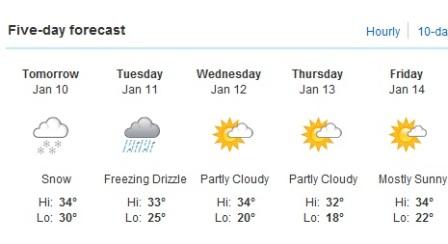
Weather in Chapel Hill this week

Right now it is sunny and clear. The major roads are dry, and the ice is rapidly melting on sidewalks:

New post on the SciAm Guest Blog – Words, pictures, and the visual display of scientific information

On the Scientific American Guest Blog today, Lena Groeger provides a number of examples, some very old some brand new, of good and bad visual representation of scientific information in Words, pictures, and the visual display of scientific information: Getting back to the basics of information design. Enjoy, comment and share!

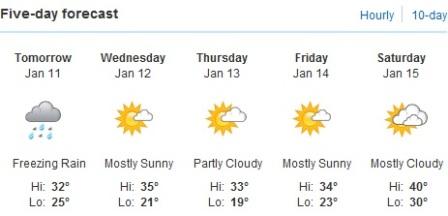
Weather in Chapel Hill NC for the next five days

Two new posts on the SciAm Guest Blog: Bed bugs and Invisibility Cloaks

There are two new posts today at the Scientific American Guest Blog.

First, from the June 1924 issue – Anecdotes from the Archive: Bed Bugs are vintage, and vintage is in, by Mary Karmelek.

Then, see Invisibility: After several years of research, it’s just gotten weirder by Greg Gbur, aka Dr.SkySkull.

Read, comment, share…

Citizen Science Project at ScienceOnline2011

One of the special speakers at the banquet at ScienceOnline2011 will be Dr. Margaret (Meg) Lowman, the Director of the North Carolina Museum of Natural SciencesNature Research Center.

The Nature Research Center (NRC) is “the new 80,000-square-foot wing of the Museum dedicated to bringing scientific research into the public eye. Currently under construction in the block west of the Museum, the NRC is scheduled to open in early 2012. Lowman is also Research Professor of Natural Sciences in the College of Physical and Mathematical Sciences at NC State University, where she focuses on initiatives involving communicating science to the public.”

The way I understand the concept of NRC is that the Museum visitors (and a number of ScienceOnline2011 participants will go on a traditional tour of the Museum and its basement vaults) will have an opportunity there to interact with real working scientists, observe them at work, talk to them and ask questions, and importantly, to try their own hands at doing stuff. A number of local labs are going to be involved in this, putting some of their research resources into the building and doing their work under the eyes (and probably continuous questioning and conversation) of the curious public.

One of the participants in this endeavor will be Dr.Rob Dunn from the NCSU Biology Department (yes, that is my old Department, now renamed).

Now, to understand what next I will say, you need to be familiar with Rob Dunn’s recent blog post, The top 10 life-forms living on Lady Gaga (and you), especially point #5: Vanity.

Just as was described in the post, visitors of the NRC at the Museum will be able to volunteer to have bacteria from their navels cultured and photographed and e-mailed to them.

NRC is not open yet, but attendees of ScienceOnline2011 on Sunday will be the very first to be offered this opportunity to participate. As Meg Lowman will also explain during the Saturday banquet, there will be a table set up at Sigma Xi on Sunday morning where you can donate your bellybutton lint. Provide your e-mail, and you’ll get a picture of the cultures.

Now, I know that this is not Citizen Science in the proper definition of the word. But, knowing the people who attend this meeting, I bet they can find creative ways to actually turn it into something more like it. Perhaps all of the images can be pooled into a single online place, perhaps a geographical map (including perhaps additional information about the donors, e.g,. bathing habits – morning vs. evening showers, usual type of clothes they wear, etc.). Or, some of the participants who have labs with required capabilities may go a step further and repeat the experiment at home but also sequence the microbial metagenomes of their navels, then get together with each other and publish a comparative study. Who knows, we may all learn something new from the exercise? Or at least they can be strong contenders for the next IgNobels…

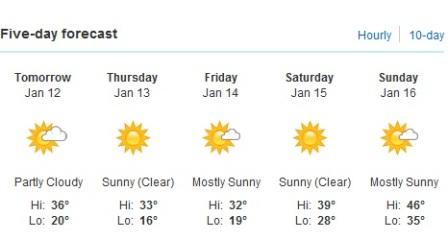
Weather prognosis for Chapel Hill NC for the next five days

New post at SciAm Guest Blog – could Chessboxing prevent violence?

The Scientific American Guest Blog has a new post. And it is coincidentally and eerily relevant to the unfortunate Arizona event from Saturday.

Read Andrea Kuszewski’s post Chessboxing Is Fighting For Good Behavior, comment and share.

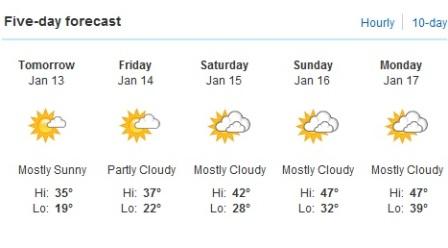
Weather prognosis for Chapel Hill NC for the next five days

Open Laboratory 2010 – is your post in it?

You can now see for yourself! The 50 essays (plus 6 poems and 1 cartoon) have been chosen by a large and energetic panel of judges.

I will give the honors to Jason – go to his blog post announcing and linking to all the winning entries to see for yourself. Jason deserves all the traffic and accolades – he worked hard, was efficient and diligent…and he is such a softie! I think he cried about 850 times over the past month as all but the 50 out of 900 entries had to, one by one, get eliminated….

Congrats to all the winners – Jason will be in touch with you shortly about editing and formatting the final version.

Two new posts on the SciAm Guest Blog

There are two new exciting posts on the Scientific American Guest Blog today.

First, The Emperor’s New Missile Defense by Lawrence Krauss.

Second, Mary Karmelek whose job is to digitize 165 years of the Scientific American archives, has started a regular feature on the blog – check out the first post: Anecdotes from the Archive: From the basement to the blog .

Enjoy, comment, share….

ScienceOnline2011 – introducing the participants

This is the last post in the series of introductions to the attendees/participants of ScienceOnline2011. A couple of last-minute waitlisters may still squeeze in over the next few days so keep checking the list, but it may help if you get them in smaller chunks, focusing on a few at a time.

Robert Krulwich is a correspondent for NPR’s Science Desk where he hosts the Radio Lab and blogs. He also tweets as @rkrulwich.

Sarah Avery is the Medical reporter and Science editor at the Raleigh News & Observer.

Jacqueline Floyd is an Associate in Research at Yale University. She blogs at Element List and tweets as @jackiefloyd.

Ashutosh Jogalekar has just arrived at UNC Chapel Hill for a Postdoc. He blogs at The Curious Wavefunction.

Billy Frey is the North American Public Relations Manager at Alltech.

David Butler is the Web Marketing Manager at Alltech and he tweets as @AlltechTweets.

Karen Ventii is the Senior Medical Writer for TRM Oncology. I interviewed Karen back in 2008.

Ryan Shalley is an Intern at NC Sea Grant and tweets as @ryanshalley.

Dipika Kohli is the Creative Director of Design Kompany and she tweets as @dipikakohli.

Two new posts on the SciAm Guest Blog

Today is a busy day at the Scientific American Guest Blog – two excellent posts!

The first one is In the wake of Wakefield: Risk-perception and vaccines by David Ropeik.

In the second, Travis Saunders asks Can sitting too much kill you?.

Enjoy, comment, share….

ScienceOnline2011 – introducing the participants

Continuing with the introductions to the attendees/participants of ScienceOnline2011. You can find them all on the list, but it may help if you get them in smaller chunks, focusing on a few at a time.

David Wescott is vice president of APCO Worldwide. He blogs at It’s Not a Lecture and tweets as @dwescott1.

Minjae Ormes is a consultant for National Geographic Channel and Tribeca Film Institute. She tweets as @minjae.

Stephen Diggs is a Data/Cyberinfrastructure Manager at Scripps Institution of Oceanography. He tweets as @scdiggs.

William Alexander is a Medical Writer/Editor. He often blogs at Science in the Triangle and at Stretch your mind.

Sarah Yelton is the PreK-12 Environmental Education Consultant at the NC Office of Environmental Education & Public Affairs.

Katherine Grichnik is Associate Dean at Continuing Medical Education at the Duke Clinical Research Institute.

Lisa Dellwo is a freelance writer and photographer, and a frequent contributor to Science in the Triangle. She tweets as @LisaDellwo.

Dawn Crawford is a Social media consultant. She blogs at BC/DC Ideas and tweets as @socmediarckstr and @dawnacrawford.

Brian Crawford is a Copywriter. He also blogs at BC/DC Ideas and tweets as @bcwritr.

Donna Krupa is the Communications Director at the American Physiological Society and she tweets as @Phyziochick.

Sigma Xi Pizza Lunch (if you have stomach to eat at the time): Everything you wanted to know about Bedbugs but were too afraid to ask

You’ve heard the media buzz about bed bugs. But what of the science? Join us at noon, Jan. 25 here at Sigma Xi to hear N.C. State University entomologist Coby Schal offer the facts. He’ll discuss the basic biology of the insects and some of the new research strategies aimed at finding ways to better control them.

Thanks to a grant from the N.C. Biotechnology Center, American Scientist Pizza Lunch is free and open to science journalists and science communicators of all stripes. Feel free to forward this message to anyone who might want to attend. RSVPs are required (for the slice count) to cclabby@amsci.org

Directions to Sigma Xi, the Scientific Research Society in RTP, are here.

Quick Links

This is, to put it mildly, a hectic time. Today I need to make final changes – before it is sent to the printers – to the Program for ScienceOnline2011 (which is going to be awesome). We are finally finalizing the final finalists for the Open Laboratory (which is going to be awesome). We are getting close to the Scienceblogging.org release of Version 2.0 (which is going to be awesome). And there is a lot of movement at work, building a new network (which is going to be awesome). Oh, and I think we’ll be moving to a new apartment over the next couple of weeks as well. So, stressful time, but also all awesome. And most of it is occurring behind the scenes, so you cannot see, so you’ll have to just wait and, in the meantime, read these great articles:

Continue reading

New post on the SciAm Guest Blog – The Ferret Hunters

There is a new post on the Scientific American Guest Blog. Today, David Manly recounts his experiences in The Ferret Hunters. Enjoy, comment, share.

ScienceOnline2011 – introducing the participants

Continuing with the introductions to the attendees/participants of ScienceOnline2011. You can find them all on the list, but it may help if you get them in smaller chunks, focusing on a few at a time.

Scott Huler is an Independent writer and producer. He blogs and tweets as @huler and also writes books like the awesome latest On The Grid. I interviewed Scott back in May.

Krystal D’Costa is an anthropologist working in New York City. She blogs at Anthropology in Practice and tweets as @anthinpractice.

Dr.Isis is a physiologist and blogger. She blogs at On Becoming a Domestic and Laboratory Goddess and The Brain Confounds Everything and tweets as @drisis.

Richard Grant is the chief editor of Naturally Selected, the Faculty of 1000 blog at The Scientist magazine. He also blogs at his own blog Confessions of a (former) Lab Rat and tweets as @rpg7twit.

Betul Kacar Arslan is a Postdoctoral Fellow at the NASA Astrobiology Institute Center for Ribosome and Evolution. She blogs at Counter Minds and tweets as @BetulKArslan. I interviewed Betul in 2009.

Sara Imari Walker is a Postdoctoral Fellow at the NASA Astrobiology Institute.

Michelle Cerulli is a Graduate student in The Medical & Science Journalism Program at UNC. She tweets as @cerulli_m.

Rhitu Chatterjee is a Science reporter for the PRI’s The World. She tweets as @worldscipod.

Charles Yelton is the Curator of Programs and Citizen Science at the NC Museum of Natural Sciences. He tweets as @naturalsciences.

Neil Losin is a Ph.D. Candidate at the UCLA Department of Ecology and Evolutionary Biology. He blogs and he tweets as @neillosin.

Science Cafe Raleigh: Rain Forests – Going, Going, Gone?

Happy New Year! We are excited to be starting a new year of science cafes. Our January Science Café (description below) will be held on Tuesday 1/18 at Tir Na Nog on South Blount Street. Our speaker for the evening will be Dr. Meg Lowman, Director of the Nature Research Center (a new wing of the Museum of Natural Sciences currently under construction). Dr. Lowman is a world famous canopy researcher. To learn more about her and her work please see the information listed below (be sure to look at her website). We will have a fun and informative discussion about the amazing (and sometimes strange) diversity of life that can be found in the earth’s rainforests as well as how researchers have figured out ways to study sometimes elusive plants and animals. We will talk about the importance of what is being discovered in the rainforests and how these discoveries can affect our way of life. I hope that many of you can come.

Tuesday, January 18, 2011

6:30-8:30 p.m. with discussion beginning at 7:00 followed by Q&A
Tir Na Nog, 218 South Blount Street, Raleigh, 833-7795

Every child grows up with a sense of awe about tropical forests — extraordinary creatures including poison dart frogs, sloths, orchids and jaguars representing a veritable treasure-trove of biodiversity. But scientists estimate that more than half of Africa’s rain forests are gone, with at least 40 percent losses in Asia and Latin America and 95 percent in Madagascar. Even with new technologies, measuring tropical deforestation is not easy, and illegal logging is epidemic in many parts of the world. What is the prognosis for the future of tropical rain forests? And how will human beings fare if these vital ecosystems disappear? What essential services do tropical forests provide for the planet, and how can we conserve them for our children?

About our speaker:

Dr. Meg Lowman (www.canopymeg.com) is Director of the Nature Research Center, North Carolina Museum of Natural Sciences and a research professor at NC State University. Over the past three decades, “Canopy Meg” has earned an international reputation as a pioneer in forest canopy ecology, tropical rain forest conservation, and for designing canopy access tools including ropes, hot-air balloons, walkways and construction cranes. Equipped with degrees in biology, ecology and botany, Lowman developed her childhood interest of building tree forts into mapping canopy biodiversity worldwide and spearheading the construction of canopy walkways in tropical forests for conservation. She uses science education to influence government policy and encourage environmental stewardship. Her book, “Life in the Treetops,” earned a cover review in the New York Times Sunday Book Review.

New post on the SciAm Guest Blog – The Top Ten Life Forms Living on Lady Gaga (And You)

Rob Dunn is in my old Department at NCSU – he got hired just as I left, so it took us a few years to finally meet in person – at the science Monti storytelling session opening last year’s ScienceOnline conference.

Today, Rob has a new article up on the Scientific American Guest Blog and you’re gonna love it! See The Top Ten Life Forms Living on Lady Gaga (And You). Enjoy, comment, share!

ScienceOnline2011 – introducing the participants

Continuing with the introductions to the attendees/participants of ScienceOnline2011. You can find them all on the list, but it may help if you get them in smaller chunks, focusing on a few at a time.

Robin Ann Smith is a science writer, a freelance contributor to the News and Observer & Charlotte Observer, and directs the newsroom at NESCent. She tweets as @NESCent and @robinannsmith. I interviewed Robin back in March.

Amanda Moon is the Senior Book Editor at Scientific American and Farrar, Straus and Giroux. She tweets as @amsciam.

Megan Scudellari is a Correspondent for The Scientist magazine.

Mary Jane Gore is the Senior Science Writer at the Duke Medicine News office. She tweets as @mjgore. I interviewed Mary back in March.

Victoria McGovern is the Senior Program Officer at the Burroughs Wellcome Fund.

Pamela Blizzard is the Executive Director of the Contemporary Science Center. She tweets as @blizzkin.

Marla Broadfoot is a Freelance science writer and editor. She tweets as @mvbroadfoot. I interviewed Marla in November.

Fenella Saunders is a Senior Editor at the American Scientist. She tweets as @fenellasaunders. I interviewed Fenella back in May.

Elsa Youngsteadt is the Programs manager and Science producer for the Sigma Xi/BBC/Nova/PRI The World Science Podcast. She tweets as @worldscipod and @elsa_y.

Anne Frances Johnson is a Graduate Student in the Medical & Science Journalism Program at UNC. She is @afjwriting on Twitter. I interviewed Anne back in July.

Quick Links

A good crop today:
Continue reading

ScienceOnline2010 – interview with Steve Koch

Continuing with the tradition from last two years, I occasionally post interviews with some of the participants of the ScienceOnline2010 conference that was held in the Research Triangle Park, NC back in January 2010. See all the interviews in this series here. You can check out previous years’ interviews as well: 2008 and 2009.

Today, I asked Steve Koch to answer a few questions.

Welcome to A Blog Around The Clock. Would you, please, tell my readers a little bit more about yourself? Where are you coming from (both geographically and philosophically)? What is your (scientific) background?

I was raised in Ann Arbor, Michigan, USA, a town that embraces the University of Michigan’s Athletic and Academic programs (in that order probably!). I remain a huge fan of Michigan and, sadly, Detroit professional sports teams. My mom and dad adopted me when I was about two months old and raised my sister and me in this house. My parents were very encouraging of my love of science. I remember many trips with my mom to the bookmobile to get the science books that the driver had found for me in the library. It boggles my mind to think of what I could have learned if I had the internet and Wikipedia around when I was young! My dad was an audiologist and helped me with all my science fair projects and taught me to be a good experimentalist. One project I remember the best was when he brought home an audiometer and I tested the noise reduction capabilities of various ear plugs. He helped me with the title too and “Stick it in your ear!” won my 9th grade science fair. Yes, I am bragging about that.

Mr. Mastie was our earth science teacher in junior high school, but more importantly, he was our leader for Science Olympiad. He had a spectacular amount of energy and enthusiasm for science and launched science careers for quite a few of us, I’d expect. Richard Taylor, my physics teacher in 12th grade was another outstanding teacher that played a huge part in my career.

After high school graduation, I asked my friend Liz if she could ask her dad, Francis Collins, if I could work in his lab that summer. He said yes! So, my first research job at Michigan (where I did my undergraduate degree in physics) was in a genetics lab. I LOVED it and wrote a bit about it in a blog post, Assistant to Robot, Promoted to Robot. I worked in a lab every semester I was at Michigan, working for professors doing genetics (Collins), granular systems (Nori), atomic physics (Bucksbaum), and high energy physics. I also did an internship in non-destructive evaluation with Bill Ellingson at Argonne National Lab – probably the first time I saw my research in a lab produce results that people outside the lab were actually excited about.

Tell us a little more about your career trajectory so far: interesting projects past and present?

After my undergraduate work, I went to the Cornell physics Ph.D. program. Why did I choose Cornell? At the time, Bose-Einstein condensation had recently been achieved. I was accepted at MIT and dying to work in atomic physics with the Ketterle and Pritchard labs. However, my best friend had already decided to go to Cornell for MechE Ph.D. At the time, it was a tough decision, but I finally decided that I was sure it would be fun to be at the same school as my friend, whereas it was less certain that I’d thrive in atomic physics or MIT in general. In retrospect, it’s clear I made the right decision. Nowadays, when I talk with undergraduates who are choosing graduate schools, I make it a point to discuss factors besides the science: distance from family or boyfriends/girlfriends, climate, etc. Cornell did not have any atomic physics, which I was in love with at the time. Even so, it still took me two years to realize that biology is the science I love the most. It’s so obvious in retrospect. But back then, I spent half a year in low temperature physics with Jeevak Parpia. The science and the experiments were very cool. And Jeevak was a terrific advisor. But I eventually realized that biophysics was where I belonged, so I switched to a single-molecule / optical tweezers lab.

What is taking up the most of your time and passion these days? What are your goals?

I have a wonderful five-year-old son and a wonderful three-year-old daughter. One of my goals is to succeed at being a scientist to serve as an example for my kids. Without a doubt, for me it’s a huge challenge to switch mental gears between being a scientist and being a dad. And I can only imagine how much tougher this is for scientist moms. I need to get better at it. Last spring, I coached tee ball, which was surprisingly rewarding (and time-consuming). Before starting, I assumed I just wanted to have fun watching my own son play ball. But it turns out that I really enjoyed it when any of the children learned a new skill. And they were like sponges and got better every game, so it was a ton of fun and I will do it again next spring. If you’re going to click on one link in this interview, check out the photo of my son in the Wikipedia tee ball article. Looks like a great catcher!

The rest of my time is taken up by teaching and managing our research lab and talking science with the students in our lab. I have non-talents that impede my grant writing and paper writing. Definitely I am not passionate about those tasks. I love thinking up experiments, looking at data, thinking of data analysis algorithms, coding, and seeing unexpected and / or new results. So, I still have a strong passion for being an experimentalist. And the lab has really taken off since getting our first big grant a year and a half ago. We are having a lot of fun in the lab, but it also takes more and more time the better the students get at generating and analyzing the data…so it’s a bit crazy, and one of my goals is to survive. :) What are my specific goals? For my lab, I want my students to learn a lot about their talents during their time in the lab. And I want them to succeed after leaving the lab and I want to get vicarious happiness from that. For my family, I want to show my kids that you can succeed while having fun. I will be happy whatever my kids do as long as they strive for excellence.

What’s the worst thing about being a professor?

I don’t like how many jobs I have that I am not good at and how often I have to switch from one task to another. In graduate school, after completing my required courses, I loved being able to focus on a single task for 20 hours straight, and then come right back to it the next day. Especially if it were a computer programming / data analysis problem. Well, those days are gone and now I have to constantly switch from teaching to advising to grant writing to committee work to paper writing to friendfeed to… Yes, I know that’s reality for most of us, I’m just sayin’ I don’t like it. I also don’t like the pressure of having graduate students depend on me obtaining research grants for their livelihood. Not the kind of stress I thrive on.

What’s the best thing about being a professor?

By far it’s being able to interact with students – both in teaching and in the research lab. I’ve been here about four years, and have interacted with hundreds of students. I’d say I know close to a dozen very well and dozens remain in touch. I have one strong talent necessary for teaching / managing students, and that is that I get true enjoyment out of seeing students succeed, both now and later in their careers. I think that’s an essential talent for this career, which I fortunately have. Of course, I get to know the students best when they’re in our research lab. I have been so lucky to have many outstanding students contribute to our lab’s success. We’ve had some students in our lab who are now or soon will be in graduate school elsewhere—Diego Ramallo Pardo (Stanford), Caleb Morse, Pat Jurney (UT Austin), Nas Manole (UNM Med.), Linh Le (UNM), Brandon Beck. Currently we have four graduate students—Andy Maloney, Pranav Rathi, Anthony Salvagno, and Nadia Fernandez-Oropeza—and one undergraduate—Brian Josey. All of these students are carrying out Open Notebook Science, inspired by Jean-Claude Bradley and many others. And, big news: We just graduated our first Ph.D. student, Larry Herskowitz! And he even got a job already!!! The students are what I love the most, and I am continually regretting that I don’t spend enough time with them. Maybe 2011 will be the year I can fix that??? We’ll see…

How does (if it does) blogging figure in your work? How about social networks, e.g., Twitter, FriendFeed and Facebook? Do you find all this online activity to be a net positive (or even a necessity) in what you do?

I think social networking is now a necessity for me and my students. I enjoy blogging but have not been able to keep it up consistently. For the past couple years, FriendFeed has been a wonderful resource—so many clever, dedicated, and supportive people to interact with.

What was the best aspect of ScienceOnline2010 for you?

By far the best part of ScienceOnline2010 was getting to meet in-person many of the people whom I’d only previously known electronically. I had great conversations over lunch, dinner, and at the bar. By the time the conference was over, I had serious insomnia from so many inspiring ideas. At the time I blogged a little about them, along with some resolutions. It’s been over half a year now, and I’m happy to see that I’ve made progress on the resolutions, even if very slowly. I talk with the students in the lab frequently about how we can continue to make our lab notebooks better and easier to manage, and we’re making some progress. I’ve started a collaboration with a new library scientist at UNM, Rob Olendorf. So, hopefully within a year we’ll have figured out a lot about how our library can host our open data. Research in the lab is going really well and we’ve recently submitted two papers to PLoS ONE.

It was so nice to meet you in person and thank you for the interview. I will see you again very soon!