
Grab my RSS feed:
Recent Comments:
Bora Zivkovic on Morning at Triton Angie Lindsay Ma on Morning at Triton Linda chamblee on Morning at Triton Jekyll » Blog… on The Big Announcement, this tim… Mike H on The Big Announcement, this tim… -
Buy the 2009 Science Blogging Anthology:

Buy the 2008 Science Blogging Anthology:

Buy the 2007 Science Blogging Anthology:

Buy the 2006 Science Blogging Anthology:


CC licence

This work is licensed under a Creative Commons Attribution-NonCommercial-ShareAlike 3.0 Unported License.PayPal

Sitemeter
#NYCscitweetup and Quick Links
We had a great time last night at the #NYCscitweetup. A lot of good people showed up, including @brideyrevisited, @robinlloyd99, @NoahWG, @j_timmer, @LouWoodley, @anthinpractice, @genegeek, @virginiahughes, @nparmalee, @apoorva_nyc, @genomicslawyer, @arikia, @culturingsci, @cassierodenberg, @maiasz and @BoraZ. Now that I will be coming to NYC often, perhaps that can be used as an excuse to make these kinds of meetups a regular feature.
And now, to today’s links:
Continue reading
Comments Off on #NYCscitweetup and Quick Links
Posted in Uncategorized
ScienceOnline2010 – interview with Anne Jefferson
Continuing with the tradition from last two years, I will occasionally post interviews with some of the participants of the ScienceOnline2010 conference that was held in the Research Triangle Park, NC back in January. See all the interviews in this series here. You can check out previous years’ interviews as well: 2008 and 2009.
Today, I asked Dr. Anne Jefferson to answer a few questions.
Welcome to A Blog Around The Clock. Would you, please, tell my readers a little bit more about yourself? Where are you coming from (both geographically and philosophically)? What is your (scientific) background?
I’m a hydrologist – meaning I study water – and an assistant professor at the University of North Carolina at Charlotte. My pursuit of groundwater and rivers has taken me all over the country from my childhood in Minnesota, east to Johns Hopkins University in Baltimore for my undergraduate degree, back to Minnesota for a MS, out west to Oregon State University for a PhD and post-doc, and now to the south. My interaction with on-line communication has similarly meandered; I learned HTML and created a website as a high school student but only came to science blogging a few years ago.
Tell us a little more about your career trajectory so far: interesting projects past and present?
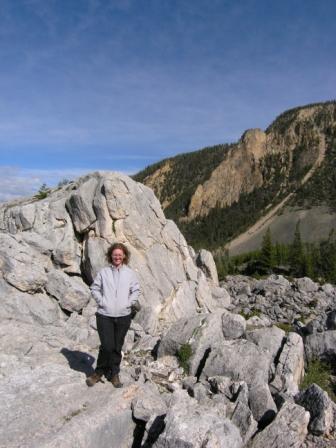 I’m fascinated by the way that surface water, groundwater and landscapes interact at all timescales, from a single rain storm to millions of years. What controls whether a rain drop ends up running over or through the soil into a stream channel within hours to weeks versus sinking down and becoming groundwater that spends years to centuries underground before maybe emerging in that same stream at a spring? How does that partitioning of water between surface and ground affect the way landscapes erode? And how does that partitioning affect the hydrologic behavior of streams and their sensitivity to floods, droughts, and climate change? Those are the sorts of questions I began exploring in the geologically young volcanic rocks of Oregon and I’m now trying to translate to the old, fractured crystalline rocks of North Carolina. Plus, Iiving in the rapidly growing Southeast, I’ve begun asking how human landscapes overlay on natural hydrologic processes. I’m really excited about a project I’m working on with a stream biogeochemist and ecologist to look at how stormwater management practices affect the hydrology, temperature, and ecology of small urban streams. (Come work with me on the project!)
What is taking up the most of your time and passion these days? What are your goals?
My job consists of a wonderfully stimulating mix of research, advising graduate students, and teaching. I sometimes think that each of those activities is enough for a full-time job – but they are all part of one pre-tenure assistant professor job description! My goals are to do and teach good, interesting science with my students and help them succeed, because I know that in their success lies my own. I’m also the single parent of an energetic three (and a half) year old, so my second shift involves learning dinosaur paleontology and explaining viral versus bacterial illnesses in non-technical terms.
What aspect of science communication and/or particular use of the Web in science interests you the most?
I’m interested in how the Internet can serve as an important community and resource for individuals who might otherwise feel isolated or disconnected from others like themselves. This might be the lone geologist in a physics department at a liberal arts college, it might be a Latina hydrologist in the northwest, or it might be a woman graduate student struggling to figure out how she’s going to combine her plans for an academic career with her desire to have a family. I teamed up with Kim Hannula, Pat Campbell, and Suzanne Franks to look at how women geoscientists use blogs for mentoring and professional development, and we published a paper summarizing our findings and recommendations for the way we could improve the potential for on-line communities to support diverse geoscientists. (You can read more about it – and the open-access paper here).
I’m also interested in how the Internet, and science blogging, can create opportunities for informal, life-long science education and supplement the traditional science classroom. When I write posts for Highly Allochthonous, I’m trying to write for the non-scientist, or at least non-hydrologist, who is interested enough in water or geology to Google the right keywords over her morning cup of coffee.
But the person I picture in my head is the middle or high school science teacher who is looking to go beyond the textbook and bring richer context into her teaching or learn more about earth science to be able to do a better job answering inquisitive students’ questions. Having worked with science teachers in the past, I am acutely aware how few resources are available in many schools, and that’s part of why I’m so thrilled to be helping out with the DonorsChoose Science Bloggers for Students drive through our Highly Allochthonous Earth Science Challenge.
How does (if it does) blogging figure in your work? How about social networks, e.g., Twitter, FriendFeed and Facebook? Do you find all this online activity to be a net positive (or even a necessity) in what you do?
Blogging, tweeting, and reading blogs and twitter actually helps me stay somewhat up-to-date with the scientific literature in a much broader sense than if I were solely reading journal articles. I’m also increasingly finding that blogging affects the way I teach. For example, this semester I’m teaching a seminar on climate change science that meets a university communication requirement, and I’ve had students do critical analyses of news media reporting on climate change. My choice of that assignment and my approach to doing it has been heavily influenced by discussions I’ve seen and participated in on blogs. I think some on-line presence, even if it is just a well-crafted and up-to-date web page, is a necessity for a young academic, so that people reading your articles and prospective students can find out more about what you do. But beyond that I think there are corners of academia that view online presence as a distraction. I just hope that my tenure committee will see that my online activities are not detrimental to my research productivity and are instead a valuable form of outreach. I’ll let you know in a couple of years.
When and how did you first discover science blogs? What are some of your favourites? Have you discovered any cool science blogs by the participants at the Conference?
I started reading science blogs in about 2006, but didn’t start writing at Highly Allochthonous until 2008 or so. The geoblogosphere is a great, tight-knit community, so it’s hard to pick favorites, but if you forced me to pick one, I’d go with Eruptions by Erik Klemetti. Erik and I actually went to grad school together at Oregon State and it’s been great to reconnect through blogging and to feed my volcano addiction with his frequent updates and always gorgeous photos. At the Saturday night banquet, I had the pleasure of hanging out with the Deep Sea News crew, and making their acquaintance was certainly a highlight of the conference.
What was the best aspect of ScienceOnline2010 for you? Any suggestions for next year? Is there anything that happened at this Conference – a session, something someone said or did or wrote – that will change the way you think about science communication, or something that you will take with you to your job, blog-reading and blog-writing?
There are two particularly memorable parts of ScienceOnline2010 for me. First was the realization that despite the vastness of the science blogosphere I knew, it was only a small part of online science communication efforts – which range from open-access publishing to podcasting and beyond. The second memorable part of ScienceOnline2010 was the session I moderated on “Casting a wider net: Promoting gender and ethnic diversity in STEM.” We had a great unconference-y discussion with lots of thoughtful contributions from the audience. Among the points that stick out in my brain were discussions of the challenges of continuing mentoring relationships beyond the time a student is in a particular program and of spot-lighting the work of minority scientists without forcing them into being role models or spokespeople if that’s not what they want to do. I find these sorts of discussions from diverse viewpoints incredibly helpful as I continue my on-line and off-line efforts to increase the recruitment and retention of women and minorities in the geosciences.
It was so nice to see you again and thank you for the interview. I hope to see you again next January.
Posted in Scio10 Interviews
How “truthy” is Twitter? (video)
Information spreads quickly online, especially in the age of social networking. The ‘Truthy’ project, based at Indiana University, seeks to map the spread of ideas on services such as Twitter and help identify artificially-created memes. By examining how messages get bounced from one member of a network to another, and by examining the context around those messages, the researchers think they can identify ‘astroturfing,’ the creation of false grass-roots political movements. Want to participate in an mini-experiment? Tweet using the key words ‘#truthy, @scifri, and @truthyatindiana’ and the project leaders will try to track their spread.
More about the Truthy project at http://truthy.indiana.edu/
[Hat-tip: Leslie Taylor]
Comments Off on How “truthy” is Twitter? (video)
Posted in Fun, Media, Technology
Quick Links
This is posted at the SciAm office. Long, exhausting but exciting day yesterday. Real work start right about now….
#NYCscitweetup will meet at the Kilarney Rose http://www.killarneyrose.com/ at 7pm tonight. Join us if you can.
Posted in Uncategorized
How ink is made (video)
More info at The Printing Ink Company [Hat-tip]
Comments Off on How ink is made (video)
Posted in Fun, Technology
Open Laboratory 2010 – submissions so far
Note: if you have recently moved your blog, please e-mail me the corrected URLs for your entries
The list is growing fast – check the submissions to date and get inspired to submit something of your own – an essay, a poem, a cartoon or original art.
The Submission form is here so you can get started. Under the fold are entries so far, as well as buttons and the bookmarklet. The instructions for submitting are here.
You can buy the last four annual collections here. You can read Prefaces and Introductions to older editions here.
Comments Off on Open Laboratory 2010 – submissions so far
Posted in OpenLab10
The recording of the Skeptically Speaking show about Science Journalism is now available online
You can download it or listen to it here.
Quick Links
I will be in NYC next three days. Not sure if the hotel has free wifi (cannot and will not pay) so online access may be sporadic. The trip is mostly work, but we’ll also have fun on Tuesday night, at 7pm – follow #NYCscitweetup hashtag on Twitter as we still need to figure out the location. If you are there and have time, join us.
Continue reading
Comments Off on Quick Links
Posted in Uncategorized
Little Red Riding Hood, the modern version (video)
You may want to click through and watch in Full-Screen mode for the best effect.
[Hat-tip Alison Campbell]
Comments Off on Little Red Riding Hood, the modern version (video)
Posted in Fun
Quick Links
Have a good weekend….
Continue reading
Comments Off on Quick Links
Posted in Uncategorized
Sigma Xi pizza lunch lecture: Images of Darwin and the Nature of Science
From Sigma Xi:
Join us at noon, Tuesday, Oct. 19 here at Sigma Xi to hear NC State University evolutionary biologist Will Kimler talk about “Images of Darwin and the Nature of Science.” Prof. Kimler researches the history of evolutionary ideas in natural history, ecology, genetics and behavior.
Thanks to a grant from the N.C. Biotechnology Center, American Scientist Pizza Lunch is free and open to science journalists and science communicators of all stripes. Feel free to forward this message to anyone who might want to attend. RSVPs are required (for the slice count) to cclabby@amsci.org
Directions to Sigma Xi, the Scientific Research Society in RTP, are here
Posted in Evolution, History of Science, North Carolina, Science Education
Science Cafe Raleigh – March of the Fossil Penguins
March of the Fossil Penguins
Wednesday, October 20, 2010
6:30-8:30 p.m. with discussion beginning at 7:00 followed by Q&A
Tir Na Nog, 218 South Blount Street, Raleigh, 833-7795
RSVP to kateyDOTahmannATncdenrDOTgov
Penguins are familiar faces at zoos and aquariums, but they evolved long before humans. These fascinating birds have been around for more than 60 million years, during which they survived dramatic changes in climate, wholesale re-arrangements of the continents, and the rise of new mammalian competitors. Thanks to their dense bones, penguins have left behind a rich fossil record that we can use to trace their geographical expansion and morphological evolution. In this Science Cafe we will get to know some of the diverse cast of extinct penguins, including primitive species from the deep past, spear-billed penguins from Peru, and giants that would have towered over today’s Emperor Penguins.
About our Speaker:
Dr. Daniel Ksepka (blog) is a paleontologist at North Carolina State University and a research associate at the North Carolina Museum of Natural Sciences. His research focuses on reconstructing the evolutionary tree of birds and understanding the transition from aerial flight to underwater wing-propelled diving in groups like penguins and the now extinct plotopterid birds. Ksepka has traveled to South America and New Zealand to collect and study fossil penguins. He is the author of numerous scientific papers on penguin evolution as well as the science blog “March of the Fossil Penguins.”
For the coverage of Dr.Ksepka’s latest paper, see How the Penguin Got His Tuxedo and Inkayacu – Peru’s Giant Fossil Penguin and the Stories Its Feathers Tell and Giant extinct penguin skipped tuxedo for more colorful feathers, How the penguin got its tuxedo and A fossil penguin gets its colours.
Watch Dr. Ksepka discuss his research: March of the Fossilized Penguins
Posted in North Carolina, Paleontology, Science Education
Scienceblogging: The Lay Scientist (and The Guardian) – a Q&A with Martin Robbins
This is the series of interviews with people doing interesting things in the current science blogging ecosystem.
Today I got to ask Martin Robbins of The Lay Scientist a few questions.
Hi, thank you for taking your time for answering a few questions about the past, present and future developments of the science blogging ecosystem. Let me begin with you – can you tell our readers, please, who are you, where you come from and how you got into science blogging? Before the launch of the Guardian science blogging network, what did you do?
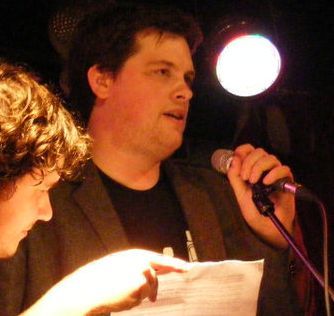 I am Martin Robbins, I have a background in science and I currently work in a research job which I try to keep apart from my public life due to the nature of some of the people I write about. I’m also a freelance journalist and writer with a column at The Guardian, and a blogger, and at the moment I’m contracted by the Guardian to work on the development of their blogging network, and produce a report on its future (and by extension to some extent the future of science blogging). I got into science blogging though basically annoyance at poor coverage of science issues, combined with a passion for researching things and finding out more about them, and then thanks to some helpful editors and Twitter I ended up where I am now.
Everyone seems to agree that the summer of 2010 saw some big and important changes in the science blogging ecosystem. What are your own thoughts on this? Where do you think it will go next, over the next couple of years?
I actually don’t agree. I think the changes have been happening for the last few years, but for whatever reason people didn’t notice them happening, or chose to ignore them. All of the things we’re talking about now – proliferation of competing networks, the commercialization of science blogging, bloggers merging with mainstream media, and issues between business and editorial – are things that people were talking about in 2009. What happened in 2010 with ‘Pepsigate’ and the aftermath was that people finally decided to talk about the elephant in the room, and act on it.
I think a lot of people are in denial about their position too, or cling to labels that are increasingly irrelevant. Once ScienceBlogs started being aggregated by Google News, bloggers there became to some extent subject to the same ethical considerations as mainstream media journalists, whether they are willing to accept it or not. Bloggers will be placed under much more scrutiny as the playing field levels and they become indistinguishable from columnists and journalists
In the next couple of years I think the trends of 2008-2010 will continue. Blogging will become increasingly commercialized and increasingly affiliated with mainstream media outlets. Social media will increasingly act as people’s editor of choice. Networks which thrive will be those who support good writers, and give them freedom and space to explore and innovate, and I expect to see more sophisticated editorial approaches developed in terms of how networks of blogs are developed and managed.
On the downside, I think the issue of editorial control won’t go away. I suspect we’ll see a whole series of battles similar to Pepsigate over the next 24 months as battles which were once fought in print media over things like the division between editorial and business management are refought on the internet.
How do you personally read science blogs? Do you use feeds, or social networks, or some other ways of keeping track of the science blogging world? How do you find new blogs?
Twitter has become better than me at finding interesting stuff to read, and has taken over to a large extent from my news-reader, as there are very few bloggers worth reading every single day. Twitter is like having six hundred and fifty brains filtering content for me, catering to my interests. Social media has transformed the way people access the internet and news websites, and will continue to do so.
That said, I also try to subscribe to other, more diverse sources to try to prevent myself falling into the trap of existing within a news bubble or echo-chamber – Google alerts are useful, and also specialist aggregators like AllAfrica.com.
Tell us a little bit more about The Lay Scientist – it used to be your own personal blog but is now a group blog. How and why did you make the decision to make this change? How did you assemble the bloggers – did they apply, did you hand-pick them, or some other way? What is the goal and vision of the site?
 I wanted the site to be bigger and better, but couldn’t achieve that on my own. I could also see that the existing blogging model doesn’t work for a lot of people. There are many people who occasionally have something interesting to say, but who don’t want to start a blog of their own because they’d only write once a month and it’s too much hassle. My aim was to provide some of those people with a platform.
Where do you see The Lay Scientist within the blogging ecosystem – what is its position, how does it differ from others, what unique service does it provide?
The two sites should work quite nicely together once I can find someone to take over layscience.net and run it day to day. My aim is that the old community site will be an open platform, while the site at guardian.co.uk/layscience will be used to showcase people and issues which I think deserve a wider audience, as well as being a supplement to my own column and journalism. I don’t think it’s particularly unique, but I think I’ve managed to provide a conduit between the wider blogosphere and mainstream media. So for example I’ve been able to help unknown bloggers get issues like ‘bleachgate’ into the mainstream media via The Guardian.
What prompted The Guardian to add a science blogging network to their already prolific and high-quality science reporting? Did #PepsiGate have any effect on decision-making or timing of the project? What is your role, apart from blogging yourself, in the new Guardian blogging network?
My role is initially as a consultant for the launch, and I’ll be setting out how I think the network should develop once the launch is out of the way and the site has settled down. I hope to take a long term role developing the site, but we’ll see. (I’ll leave the rest of the question for Alok to cover as I’m not sure how much I should say).
Do you notice any geographical differences in topics, styles etc. between British, US, Canadian, Australian, New Zealand, continental European and other science bloggers? If so, any explanations you can come with?
I think there’s been a disappointing lack of communication and collaboration between especially British and American bloggers, and that’s disappointing because many of the issues we tackle are global or international in nature, and could benefit from a coordinated attack.
British and Australian/NZ bloggers seem much more willing to take things offline and engage in real-world activism, whereas Americans either aren’t bothering, or haven’t managed to convey what they’re doing to an international audience. Certainly getting Americans to take part in or even promote international campaigns like 10:23 was a thankless task.
I wonder if it’s entirely a coincidence that in recent times campaigns on things like the atheist buses, 10:23, libel, science funding and so on have starting in London and Liverpool rather than New York or Boston, and US atheists are relying on Brits like Dawkins and Hitchens to rally the crowds.
Thank you for the interview. We’ll keep being in touch and I hope you can come to ScienceOnline2011 so we can discuss the future in person.
Name of the site: The Lay Scientist
URL: guardian.co.uk/layscience / layscience.net
Feed URL: http://www.guardian.co.uk/science/the-lay-scientist/rss
Owner (if corporate): The Guardian / Martin Robbins
Founder(s): Martin Robbins
Current community manager: Martin Robbins
Geographical location: London, UK
Date of launch: February 2008 (layscience.net) / September 2010 (guardian.co.uk)
Number of bloggers on the day of launch: 1 (around 30 by time of Guardian launch)
Maximum number of bloggers in the history of the site: ~30
Current number of bloggers: ~30
Software/Platform: Drupal (layscience.net) Proprietary system (guardian.co.uk)
Average monthly traffic (visits/pageviews): Only have stats for both sites for September, combined total was ~ 700,000 page views, but probably closer to 200k on an average month, though that’s a complete guess as the Guardian site is so new, and growing.
Quick Links
Maryn McKenna’s reading of “Superbug” at Quail Ridge Books is awesome. If she comes to your town, go to the event!
Continue reading
Posted in Uncategorized
New E-mail address
If you want to contact me about something directly related to my job – building a science blogging network at Scientific American – you can now do so via this e-mail address:
Bora AT sciam DOT com
For everything else, you should keep using my old address (coturnix AT gmail DOT com), but if you really want to get my attention, DM me on Twitter.
Blog about evolution, come to ScienceOnline2011!
If you are a blogger, and if you write a post with an evolutionary topic, you may be eligible to win one of the travel grants to come to ScienceOnline2011 from NESCent – National Evolutionary Synthesis Center:
Win a travel award for best evolution-themed blog
Application deadline: December 1, 2010
Are you a blogger who is interested in evolution? The National Evolutionary Synthesis Center is offering two travel awards to attend ScienceOnline2011, a science communication conference to be held January 13-15, 2011, in North Carolina’s Research Triangle Park.
The awards offer the opportunity to travel to North Carolina to meet with several hundred researchers, writers, editors and educators to explore how online tools are changing the way science is done and communicated to the public. Each winner will receive $750 to cover travel and lodging expenses to attend the conference. For more information about ScienceOnline2011, visit http://scienceonline2011.com/.
To apply for an award, writers should submit a blog post that highlights current or emerging evolutionary research. In order to be valid, posts must deal with research appearing in the peer-reviewed literature within the last five years. Posts should be 500-1000 words, and must mention the NESCent contest. Two recipients will be chosen by a panel of judges from both NESCent and the science blogging community. Please send your name, contact information, the title and date of your blog post, and a URL to travel.award@nescent.org. Winners will be notified by December 15th, 2010.
For the results of last year’s contest, visit http://www-dev.nescent.org/news/TravelAward.php. For more information contact Craig McClain at cmcclain@nescent.org, or Robin Smith at rsmith@nescent.org.
Posted in SO'11
Scienceblogging: LabSpaces – a Q&A with Brian Krueger
This is the series of interviews with people doing interesting things in the current science blogging ecosystem.
Today I got to ask Brian Krueger of LabSpaces a few questions.
Hi, thank you for taking your time for answering a few questions about the past, present and future developments of the science blogging ecosystem. Let me begin with you – can you tell our readers, please, who are you, where you come from and how you got into science blogging?
 Hello readers! I’m Brian Krueger, I’m a researcher at the University of Florida. By day I mutate important “stuff” out of Herpes viruses to better understand how viral proteins, microRNAs and genetic regulatory regions affect how the virus survives in a host, and by night I run the science news site and blog network, LabSpaces.net. I began my love for science as a young nerd growing up in the suburbs of Chicago. Not deterred by all of the early ridicule, I studied biology at a small liberal arts school and got my bachelor of science degree from Bradley University. I completed my PhD in molecular biology at the University of Iowa in the fall of 2009, and then moved down to Florida to manage the start up of the Herpes virus mutation core facility.
I got into science blogging as a result of trying to create a social network for the scientific community. In 2005, I had just begun my PhD, saw how popular an interesting new website had become (Facebook) and decided I’d try to see how I could spin a “Facebook” into a useful tool for scientists. After years of trying to unsuccessfully promote my social network on a non-existent advertising budget, I decided to change the focus of the network to one of increasing science literacy by getting scientists and the public interacting and talking about science in one place. To best facilitate this communication, I asked a very talented group of bloggers to join the site.
Everyone seems to agree that the summer of 2010 saw some big and important changes in the science blogging ecosystem. What are your own thoughts on this? Where do you think it will go next, over the next couple of years?
The falling out at ScienBlogs was definitely important. A lot of great science bloggers have since joined new networks or formed their own collectives. It seemed like new networks sprung up almost over night after the pepsi-gate scandal and I think that this has helped put the spotlight on newer blogging talent. Maybe the best thing that happened was that it opened the eyes of bloggers and showed them that they didn’t have to aspire to ScienceBlogs to have their voices heard. There’s a ton of room for growth in the blog network sector, and we’re starting to realize that.
As far as the future of science blogging is concerned, I think for now things are going to be pretty complicated. We’re trying to figure out what is the best fit for the science blogging community. Niche networks are on the rise and we’re seeing all ecology, geology, marine biology etc networks form. It remains to be seen if these types of networks can sustain a readership, though.
Additionally, how the ecosystem shapes up depends on what bloggers and networks want to get out of their writing. Many bloggers have chosen to stay independent. I know I have spoken with a significant number of bloggers who are content staying at wordpress or blogger and have no intention of joining a blogging network. For some they like having complete control over their bloggy domain or have no desire to make blogging more stressful by having to meet deadlines or posting quotas. Personally, I think things will probably settle back into a normal routine in a year or so. There are going to be great independent bloggers, high profile blog networks like ScienceBlogs, Discovery, SciAM etc, and smaller “for fun” networks like LabSpaces. I don’t see there being “one network to rule them all” though, because each network has different goals in mind.
How do you personally read science blogs? Do you use feeds, or social networks, or some other ways of keeping track of the science blogging world? How do you find new blogs?
I usually read science blogs based on what I find through twitter or through posts made by my own bloggers. I also have a blogroll on my own blog at LabSpaces that lists my favorite blogs that I read on a daily basis. I find new blogs through blog posts by my own bloggers, their blog rolls, and by reading through researchblogging.org every couple of days. There’s a ton of blogging talent out there and you really don’t have to look very hard!
Tell us a little bit more about Lab Spaces. What is it about? How did it come about? By what process do you add bloggers to the network – do they apply, do you invite them, or some other way?
 LabSpaces main goal is to increase communication between scientists and the public. The bloggers serve a very important role in facilitating the realization of this goal. I have tried to recruit a wide variety of scientists and science bloggers to the website. Most of the bloggers on the site are full time scientists who blog about the scientific lifestyle or interesting new developments in their field of study.
When I first coded the blogging platform at LabSpaces, I thought it would be a great way to try to get scientists to blog about their daily lab lives, talk about experimental problems, or discuss their latest data. Since the website has remained small, the blogging section was unused for at least two years (if you don’t count the biotech spammers…). I decided after my major redesign of the site that I’d try to actively recruit current scientist bloggers to the site to flesh out the blog section. It began almost as a joke on twitter. I asked Joanne Manaster (world renowned Science Goddess, former international model, and YouTube powered Science book reviewer) if she’d like to syndicate her book reviews on the site. David Manly, a recent journalism graduate and animal lover, asked if he could have a blog spot too. This started a small wave of twitter requests from Nancy Parmalee and Evie Marom who also wanted to blog. Since I had at least 4 twitter followers who were interested, I asked a few more of my favorite followers if they were interested in blogging on the website and I ended up adding Catherine Anderson, The ModernScientist, Disgruntled Julie, and the Angry Scientist. From there I have slowly invited other bloggers to the site who I find interesting and LabSpaces currently has 26 active bloggers.
The process of adding people is pretty simple. I let the bloggers nominate anyone they’d like, we discuss them in the forum, and then I send that person an invite to join. I’ll also invite bloggers that I think write engaging and interesting content. We have a private googleDoc spreadsheet to keep track of new talent. There’s no big committee or review board, but I do try to bring bloggers in who I think fit well with our band of blogging misfits. Bloggers are also welcome to audition by posting in the blogger forum and linking to their blog for review.
Where do you see Lab Spaces within the global science blogging ecosystem – what is its position, how does it differ from others, what unique service does it provide?
I think LabSpaces has the potential to become very popular with both practicing scientists and the lay public. The bloggers write on a wide range of topics that are appealing to both communities. Lately, the majority of posts have been focused on the scientific lifestyle and it seems that LabSpaces content is heading in that direction although I am trying to balance that out by recruiting bloggers who write about both lifestyle and scientific research. I don’t tell the bloggers what to write about or put limits on their topics, but I think content diversity certainly is important for sustaining a readership.
What makes the blogging experience different at LabSpaces is that the site was originally programmed as a social network. This means that readers can interact with the bloggers in more ways than just by commenting on blog posts. A few of our bloggers have formed groups on the website where they discuss anything from football to whether we should contact alien life.
LabSpaces has the potential to provide a richer user experience by allowing users to interact in a self contained community. Users can track the activity of their friends on the site to see what their friends are commenting on or discussing. This could help spur further discussion or bring different viewpoints to posts that a reader may have missed or thought wouldn’t interest them.
LabSpaces is also different because it was coded by me and I’m the only person on the back end that runs the site. If things break or stop working, I know where to look and what to fix. If the bloggers want something new or added functionality, they don’t have to find a plugin that only solves half of the problem, they can tell me what they want and I’ll code it in over the weekend. Finally, because it’s just me running the site, things can be changed or updated immediately. We don’t have to hold meetings, ask the editorial board or the investors if it’s ok. We are in a much better position to be innovative and take risks. I hope that we can take advantage of this to bring about changes to how the public interacts with scientists and the news we generate.
What is next for Lab Spaces?
World Domination. Haha, no, I really don’t have a set plan for “What’s next.” We’re going to keep our eyes out for good talent and try to grow the community. I’m always looking for new ideas or suggestions on how to improve the site. So I invite everyone to stop by the site and then send me an e-mail or post in the forum about what they’d like to see changed or improved! Currently we’re working on coming up with some fun ideas to help bring in new readers. Expect to see the announcement of some exciting contests in the future to do just that!
Thank you so much for this interview. I hope you and some of your bloggers will be able to come to ScienceOnline2011 so we can discuss future developments together.
Name of the site: LabSpaces
URL: http://www.labspaces.net
Feed URL: http://www.labspaces.net/labspaces.xml http://www.labspaces.net/labspacesblogs.xml
Founder(s): Brian Krueger
Current community manager: Brian Krueger
Geographical location: Chicago (Server), Me (Florida)
Date of launch: January 2006
Number of bloggers on the day of launch: 0
Maximum number of bloggers in the history of the site: 26
Current number of bloggers: 26
Software/Platform: Programmed from scratch
Average monthly traffic (visits/pageviews): 300,000
Top Bloggers: Doc Becca, TideLiar, GertyZ, BiochemBelle
Key events from the history of the site:
Started coding July 2005
Launch January 2006
Added press releases March 2008
Added blog interface April 2008
Major site redesign June 2010
Actively recruited bloggers June 2010-Present
Posted in Blogging, Scienceblogging Q&As
Best of September
I can’t believe I forgot to do this on the 1st of the month! But better late than never….
I posted 75 times in September 2010. I bet half of those were ‘Quick Links’ and videos…but there was other stuff as well:
Of course, I had to share with you Some Big And Important And Exciting News!
Ecosystem is rapidly changing: PLoS Blogs – the science blogging network! and Introducing Wired Science Blog network!
And in order to see just how the ecosystem is changing, I started a series of Q&As with people who are most actively involved. I started with a Q&A with Andrew Thaler of The Gam.
I went to The Most Awesome Wedding and to the Block By Block conference and to see the Mythbusters – yes, I got to meet Jamie and Adam.
On my very last day working at PLoS, I made my last Blog Pick of the Month.
I got a couple of more of the ScienceOnline2010 interviews – and hoping to get a few more still. Read the Q&As with Jennifer Williams and Morgan Giddings
If you are local, I hope you come to The BlogTogether Birthday Bash
And I hosted Berry Go Round #31.
Posted in Housekeeping
Quick Links
It is always exciting the first day after unveiling the website, wiki, Facebook group etc. for a new edition of ScienceOnline!
Continue reading
Comments Off on Quick Links
Posted in Uncategorized
Calendar
This is, tentatively, where I plan to be over the new few months. If you are in the same town on the same date, let me know and we can perhaps meet:
October 6th, 2010, Raleigh, NC. Maryn McKenna reading/signing ‘Superbug’ at Quail Ridge Books (I may also go on the 7th for the second reading at Regulator shop in Durham).
October 12th (most likely), 2010, NYC. #NYCscitweetup – if you are there, join us.
October 19th 2010, Durham NC. The BlogTogether Birthday Bash, I would not miss it for anything!
October 21st 2010, 9-11am at Duke Perkins Library, Room 217, Durham NC. Open Access Publishing. I’ll be on a panel with several other people and we will talk about our experiences with open access publishing and its impact on scholarly communications.
November 3-4, 2010, Greenville SC. 2010 Conference on Communicating Science. I will do the session “New Tools for Communication (Use of “New” Media)” on the 4th in the morning.
November 5-9th, 2010, New Haven CT. ScienceWriters2010 co-organized by National Association of Science Writers and Council for the Advancement of Science Writing’s New Horizons in Science Briefings®. I will be a part of a panel on November 6th, Rebooting science journalism: Adapting to the new media landscape, together with Emily Bell and Betsy Mason, organized and moderated by David Dobbs.
November 23rd, 2010, Morrisville, NC. Pizza Lunch at Sigma Xi. I’ll be the speaker, about the ways WWW is changing the nature of science communication.
December 2-4th, 2010, Raleigh NC. W.M.Keck Center for Behavioral Biology Alumni meeting. As I am an alumnus, I will definitely attend to see all my old friends from grad school.
January 13-15th, 2010, Durham, NC. ScienceOnline2011. Of course.
March 19-20th 2011, Deidesheim, Germany. 4th SciLogs conference. I’ll go to meet with European science bloggers.
June 27-29th, 2011, Cairo, Egypt. World Conference of Science Journalists 2011. I’ll be on one panel and moderate another panel (see preliminary program). This will be fun.
Posted in Housekeeping, Personal
What will ScienceOnline2011 be?
 ScienceOnline2011 is the fifth annual international meeting on Science and the Web. On January 13-15th, 2011 the Research Triangle area of North Carolina will once again host scientists, students, educators, physicians, journalists, librarians, bloggers, programmers and others interested in the way the World Wide Web is changing the way science is communicated, taught and done.
2010 has been an exciting year in science, in the developments of the Web, and in the media (including science journalism). The past year’s events, coupled with the growing reputation of our conference around the world, prompted us to make the conference bigger than last year: we expect as many as 500 participants to convene over the three full days of exciting discussions, conversations and events.
One of the most interesting developments in the second half of 2011 is the explosive growth of the science blogosphere, especially formation of new blogging networks (one of which will be developed by one of us). To help you navigate the new science blogging ecosystem, we started developing a website that aggregates it all in one place: Scienceblogging.org.
As in all the previous years, the meeting will be held in an ‘Unconference’ style – the Program is built beforehand with the help of participants on the wiki, and the sessions are designed to foster conversations and discussions rather than a more traditional lecture approach.
You can get prepared ahead of time and help us make the conference great by looking around the site, volunteering to help, or volunteering to lead sessions. You can also follow us on Twitter – either the hashtag #scio11 or our official account @scio11 – or join the discussion in our official FriendFeed room. You can help us get a feel for the number of people intending to attend by indicating your interest on our Facebook event page.
Posted in SO'11
Scienceblogging: SciBlogs NZ – a Q&A with Peter Griffin
This is the series of interviews with people doing interesting things in the current science blogging ecosystem.
Today I got to ask Peter Griffin of SciBlogs NZ a few questions.
Hi, thank you for taking your time for answering a few questions about the past, present and future developments of the science blogging ecosystem. Let me begin with you – can you tell our readers, please, who are you, where you come from and how you got into science blogging?
 I’m Peter Griffin, former technology journalist for the New Zealand Herald, currently the manager of the Science Media Centre of New Zealand and and founder and editor of Sciblogs.co.nz I used to blog on technology for the New Zealand Herald and saw a need to coordinate some of the science blogging activity underway in New Zealand and help new scientists get into blogging – hence the formation of Sciblogs, which was modeled on Scienceblogs.com
Everyone seems to agree that the summer of 2010 saw some big and important changes in the science blogging ecosystem. What are your own thoughts on this? Where do you think it will go next, over the next couple of years?
The Scienceblogs/Pepsi blog incident was a reminder of how fragile trust is online and the importance of being in tune with your online community and your contributors. It was sad to see a strong and successful platform damaged by something that was so obviously not in the interests of the community or its contributors. I think 2009 will go down as the year science blogs in general really exploded – there is a huge amount of content now available which I think overall is good for science communication efforts. Our relationship with the website of the best read newspaper in the country suggests this type of content is in demand and there is a vacuum that the media isn’t filling.
How do you personally read science blogs? Do you use feeds, or social networks, or some other ways of keeping track of the science blogging world? How do you find new blogs?
Yes, I read widely – I don’t use feeds – I bookmark sites and visit them regularly and pick up suggestions on Twitter and Facebook. I mainly find out about new blogs via Twitter or email newsletters
Tell us a little bit more about Sciblogs NZ. How did it come about? Who started it and why? How many of the bloggers mirror their posts on their own blogs and how many write only for the network? What are the pros and cons of the mirroring setup for many of your bloggers?
 Science blogging was very immature in New Zealand before we decided to get involved in this space. A few very good bloggers ran sites but it was hard to find them and there was very little sense of community among science bloggers. We saw an opportunity to do a mini Scienceblogs in New Zealand, nurture some science communicators and get some informed discussion going on science-related issues the mainstream media was constantly missing. These goals fitted with the objectives of the Science Media Centre which is part of a global network that helps journalists gain better access to research and scientists with the aim of improving coverage of science in the media.
Just under half of our bloggers mirror their content on their own websites. The WordPress MU platform makes mirroring very easy and it is generally a very good system. However, comments are an issue – maintaining two separate threads of comments can be frustrating for bloggers and there is currently no system that allows comments across two blogs to be integrated and maintained centrally. The most popular blogs on Sciblogs are exclusive to Sciblogs which suggests people discover bloggers on Sciblogs and quickly migrate to the original blog.
Where do you see SciBlogs NZ within the global science blogging ecosystem – what is its position, how does it differ from others, what service does it provide?
We are very much focused on New Zealand and the Pacific though our bloggers are well integrated into the global blogging community and swap content and ideas. Our bloggers are also very outward looking in terms of the content they generate – they are widely read and follow science developments closely – some of the most popular posts so far have been about issues that do not relate to our geographical area.
We are finding that we are becoming a default service for the science sector for people looking to get into science communication. We travel the country giving lectures and workshops on science communication. All of this came about through our Sciblogs efforts and it has attracted strong support from scientific institutions. We now host two institutional blogs – the Antarctic Research Centre and Genetics Otago.
On the other hand, what is the role of SciBlogs NZ within the science journalism ecosystem in New Zealand?
We are increasingly becoming integrated with the media which I see as a positive development. Sciblogs content is increasingly in demand and we have undertaken to share our content with the media. This is opening up a larger audience for the work of our bloggers. We are also finding journalists are using Sciblogs to gather ideas for stories and several of our bloggers have become very active with the media on the back of their blogging activity. We have not had any feedback so far from the media that they consider Sciblogs a threat.
Thank you so much for the interview. One of your bloggers, Fabiana Kubke, came to ScienceOnline2010 and we hope that SciBlogsNZ will be well represented at ScienceOnline2011 as well.
Name of the site: SciBlogs NZ
URL: www.sciblogs.co.nz
Feed URL: http://sciblogs.co.nz/terms/feed/
Motto, or subheading, or one-line explanation: Australasia’s largest science blog network
Owner (if corporate): Royal Society of New Zealand
Founder(s): Peter Griffin and Aimee Whitcroft
Current community manager: Peter Griffin and Aimee Whitcroft
Geographical location: Wellington, New Zealand
Date of launch: 1 October 2009
Number of bloggers on the day of launch: 27
Maximum number of bloggers in the history of the site: 30
Current number of bloggers: 30
Software/Platform: WordPress MU
Average monthly traffic (visits/pageviews): 39,000 visits 71,000 pageviews
Top Bloggers: Grant Jacobs (Code for Life), Peter Griffin (Griffin’s Gadgets), Shaun Hendy (A Measure of Science), Chris McDowall (Seeing Data)
Key events from the history of the site: Syndication on Scienceblogs, Scoop, Earthquake in Christchurch (huge increase in traffic), joint venture with New Zealand Herald, Sciblogs book project funded
Quick Links
It is becoming really busy around here….
Continue reading
Comments Off on Quick Links
Posted in Uncategorized
Scienceblogging: science3.0.com – a Q&A with Mark Hahnel
This is the series of interviews with people doing interesting things in the current science blogging ecosystem.
Today I got to ask Mark Hahnel of science3.0.com a few questions.
Hi, thank you for taking your time for answering a few questions about the past, present and future developments of the science blogging ecosystem. Let me begin with you – can you tell our readers, please, who are you, where you come from and how you got into science blogging?
 I’m a final year PhD student at Imperial College studying stem cell mobilisation. I have a strong interest in ‘Science 2.0’ and online science in general. I noticed there was a lot of talk going on about how we could use the web to enhance scientific research on sites such as friendfeed, but not enough action. I found this frustrating. So I set up Science 3.0 as a community where those who share a similar interest can attempt to move science forward in a more efficient manner. The possibilities for scientific research and collaboration provided by web 2.0 are huge, crowd sourcing projects and getting feedback from those who will be using the software is a must. I appreciate we serve a niche group of researchers, but that does not mean that what we are doing is a) not important and b) that it won’t work. Blogging was just a natural addition to the services we offer. Science blogging is an essential part of science online. I provided the option, the people who joined the community took up the option and now we as a community are building a back catalogue of hugely relevant and ever interesting questions, queries and answers via the platform of blogging.
Everyone seems to agree that the summer of 2010 saw some big and important changes in the science blogging ecosystem. What are your own thoughts on this? Where do you think it will go next, over the next couple of years?
There has been a power shift in terms of what you can and cannot do with a blog. Bloggers appreciate that networks do increase the reach of your blog, and recently have realised that blog networks are relatively simple to set up. Blogging networks such as Scientopia have made everything a lot more transparent, the goal no longer appears to be commercial success.
Bloggers on Science 3.0 choose exactly how they want their blog, it is their page. Science 3.0 is advert free and operates at a loss, but the bloggers can choose to add adverts or microfinancing links such as Flattr in order to try to monetize their blogs. Knowing this, not one of the bloggers on Science 3.0 has added adverts to their blogs. I think this speaks volumes on why everyone got so annoyed with ScienceBlogs following ‘pepsigate’.
The flip side of this is the spread of blogs. Now users have to look at several sites whereas in the past they just looked at one. This again raises a problem that needs to be fixed. Scienceblogging.org was the first to address this situation by creating a blog aggregation site. Science 3.0 has followed suit with our ‘science blogs’ section. We are now working together in order to optimise this service.
How do you personally read science blogs? Do you use feeds, or social networks, or some other ways of keeping track of the science blogging world? How do you find new blogs?
Before building the ‘science blogs’ section, I accessed nearly all of the blogs I read via twitter. There are a few blogs which I follow via their RSS feeds as well as listening to the recommendations of the Science 3.0 users.
Tell us a little bit more about Science3.0. What is it about? How did it come about? By what process do you add bloggers to the network – do they apply, do you invite them, or some other way?
 Science 3.0 is a community dedicated to advancing science online. The website is designed to be a neutral, impartial community where people can discuss the pros and cons of each application so that they can be developed in the most efficient manner.
The site is not designed to be a place where all science researchers from all disciplines meet and share results. The site is for those who wish to develop science online, or have an interest in science online. We do not have the answers to all of the problems associated with open access and bringing science to the masses. We are the place where like minded people can collaborate to generate these answers. We truly believe that people-centric communication (social web, web 2.0) and decision support for people (web 3.0, e.g. data mining, reducing information overload) will help us creating better and more efficient science.
Bloggers are members who have signed up to a blog themselves. There is no real recruitment, other than the odd tweet inviting new bloggers to give it a try. The blogs must be related to the goals of the site. They must be science related, online science related or open access related. There are no real rules, we don’t wish for people to blog unless they want to and they get something out of it.
Where do you see Science3.0 within the global science blogging ecosystem – what is its position, how does it differ from others, what is the target audience, what unique service does it provide?
We don’t just blog. Science 3.0 is a place where we can gather information, meet people, and collaborate to push online science forward. We aim to share information openly where possible (open access), and ensure that users know where to find relevant closed information. If there are people out there who have an idea, and want somewhere to test it, we are the ideal location. Science 3.0 offers a lot more than just blogging. For some people this is ideal, others just want to blog and this is why we compliment all the existing blog sites so well. We act as a place where people who do not blog all the time can have a voice. Science 3.0 is where all the action happens after all the talking stops.
What is next for Science3.0 (as far as you are free to reveal)?
We aim to be completely transparent and due to user contributions, we have a million ideas. The advantage of the site is that we don’t need to answer to our superiors before acting, upgrading or developing the site. For this reason we have experimented with many pieces of software to see what works. Because ideas are implemented so fast, our current thoughts on setting up etherpads and a user web activity hub page (using software by ‘thinkup’) may be up and running by the time this is published! We are also open to collaborating with any sites who feel that we can offer something collectively, either from a blogging point of view, a software developing point of view or just an idea generating angle. Hopefully, new users continue to sign up and get some benefit from the site. As with all community based projects, a critical mass of active members is needed in order to survive. Hopefully, we are on our way to reaching this number and will continue to thrive.
Thank you so much for this interview. We’ll continue working on Scienceblogging.org and I hope you and others from science3.0.com will be able to come to ScienceOnline2011 to discuss future strategies.
Name of the site: Science 3.0
URL: http://www.science3point0.com
Feed URL:
Activity: http://www.science3point0.com/activity/feed/
Posts: http://www.science3point0.com/feed/
Motto, or subheading, or one-line explanation: Viva la evolution!
Founder(s): Mark Hahnel
Current community manager: Joerg Kurt Wegner
Geographical location: London
Date of launch: 27.06.10
Number of bloggers on the day of launch: 0
Maximum number of bloggers in the history of the site: 13
Current number of bloggers: 13
Software/Platform: WordPress/Buddypress
Average monthly traffic (visits/pageviews):
June/July ~10000
July/August ~15000
August/September ~20000
Top Bloggers: Daniel Mietchen, Graham Steel, Catherine Anderson (aka genegeek)
Key events from the history of the site:
The name change after a threat of legal action by Hank Campbell.
Live-streaming of Science Online London 2010 (with the help of Graham Steel)
Launch of the science blogging aggregator, archiver and analysis tool: www.science3point0.com/scienceblogs/
Users own developments of the site, such as Daniel Mietchen’s www.science3point0.com/coaspedia
Open Laboratory 2010 – submissions so far
Note: if you have recently moved your blog, please e-mail me the corrected URLs for your entries
The list is growing fast – check the submissions to date and get inspired to submit something of your own – an essay, a poem, a cartoon or original art.
The Submission form is here so you can get started. Under the fold are entries so far, as well as buttons and the bookmarklet. The instructions for submitting are here.
You can buy the last four annual collections here. You can read Prefaces and Introductions to older editions here.
Comments Off on Open Laboratory 2010 – submissions so far
Posted in OpenLab10
Quick Links
Where did the weekend go?
Continue reading
Comments Off on Quick Links
Posted in Uncategorized
Science Journalism at Skeptically Speaking
This Friday at 6pm MST (8pm EST) I will be a guest on the Skeptically Speaking radio show. The topic is Science Journalism. Send your questions in advance and tune in on Friday.
Comments Off on Science Journalism at Skeptically Speaking
Posted in Blogging, Media, Personal, Science Reporting
Superbug in the Triangle!
 Well, hopefully not the real MRSA in your home! But the book Superbug will be introduced to the audiences around here. Author Maryn McKenna (Twitter) will be in the Triangle this week.
First, on Wednesday October 6th at 7:30 pm, Maryn will be reading at my most favourite bookstore in the world – Quail Ridge Books in Raleigh. I’ll be there.
Then, next day, on Thursday October 7th at 7:00 pm, she will be going over to Durham to read/sign at The Regulator Bookshop. I may try to come to that again.
Join us if you are in town for one or the other or both events!
Comments Off on Superbug in the Triangle!
Posted in Books, Medicine, North Carolina
Meet us at the October #NYCscitweetup
Lou Woodley (Twitter) and I will be in NYC in mid-October.
Usually when I travel, if there is time, I organize a meetup, but this time Lou was faster – see the #NYCscitweetup hashtag on Twitter.
So, if you are a science blogger, twitterer, writer, journalist, commenter or fan, go to this place and put in your preference for the exact date/time of the meetup.
Quick Links
…catching on my beauty sleep today….
Continue reading
Comments Off on Quick Links
Posted in Uncategorized
Quick Links
I taught my BIO101 lab this morning. A little sleepy. Last nice weather days in NC so we should go out. While you read these:
Continue reading
Posted in Uncategorized
A Fun(gal) Photo Quiz
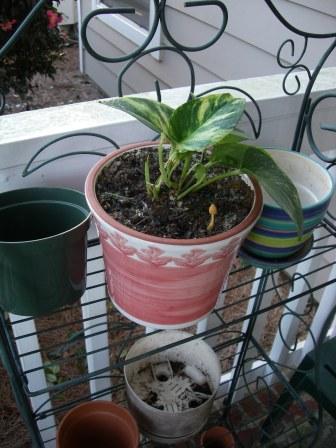
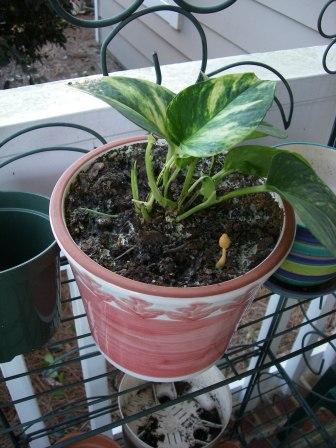
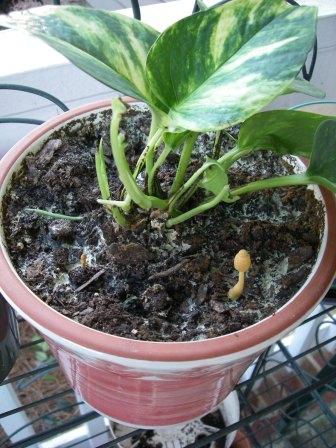
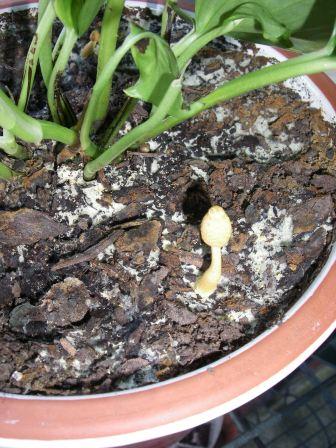
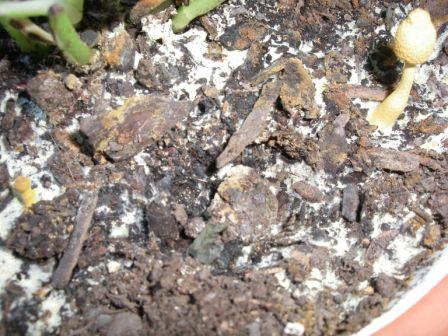
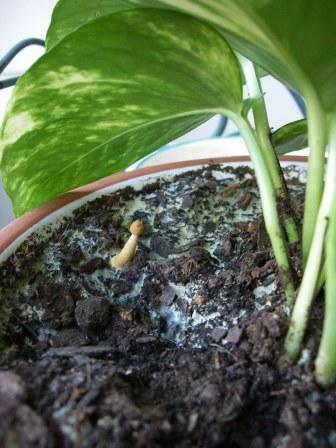
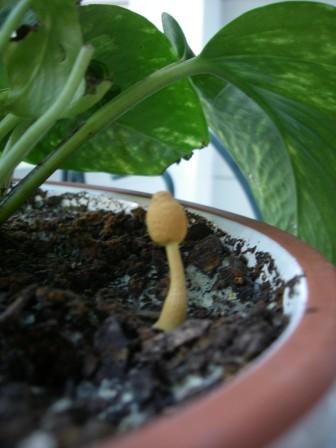
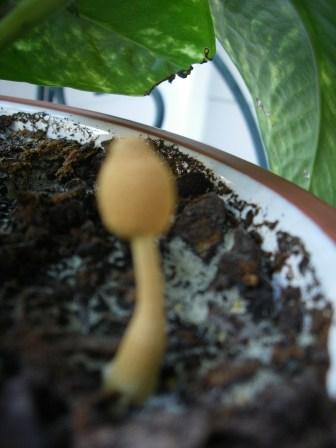
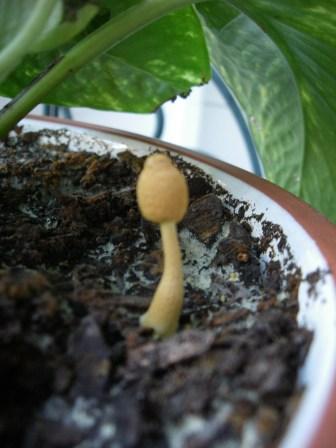
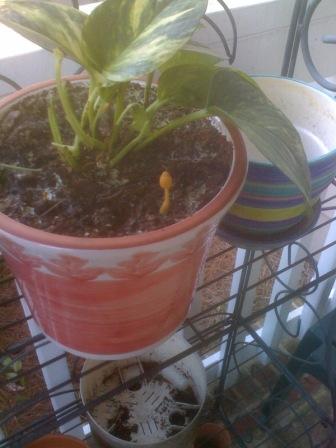
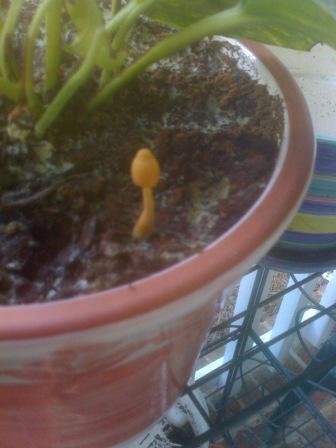
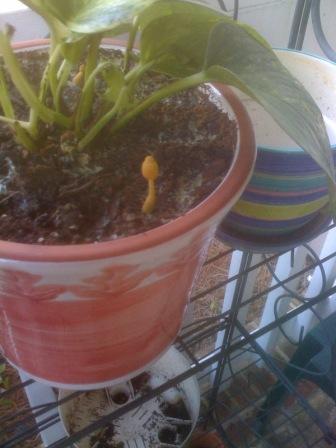
Winter is coming. So it is time to take care of the surviving plants. Some outdoor plants get moved inside, some indoors plants go out, some get replanted, etc. (location – central North Carolina)
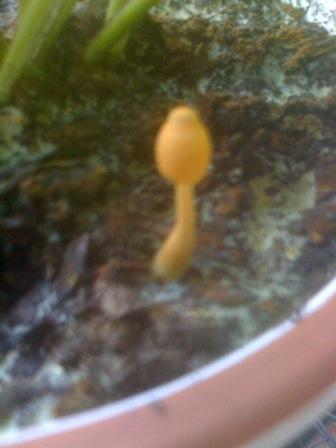
What we noticed in one of them is a sprouting of a few small but pretty mushrooms from the soil. So, question is: what is this fungus? Did the spores come from the air or were they already in the soil? If in soil, why did they wait so long to grow out of the soil and show up?
Click on images to see big:
Posted in Fun
The Sound of Science (video)
[hat-tip: a lot of people are tweeting the link]
Scienceblogging: the Gam – a Q&A with Andrew Thaler
Over the next several months, I intend to do Q&As with a number of people who have done something interesting, useful, remarkable or at least memorable in the world of science blogging. I will interview founders and managers of networks, aggregators and services, pioneer bloggers, professional bloggers and others I think are interesting and have insight and information that should not be lost to the science blogging world.
We are also continuing to develop (and need your input and help) the Scienceblogging.org aggregator where you can discover dozens of networks and communities containing thousands of science bloggers.
I am also hoping to get several more ScienceOnline2010 participants interviews posted before ScienceOnline2011 – those are also all very fascinating people and what they said in those interviews are historical documents about the origins and evolution of the science blogging (and science communication) ecosystem.
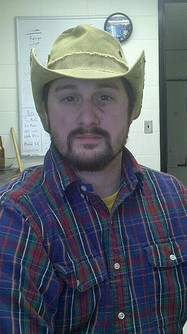
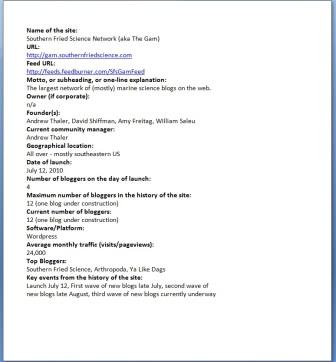
I am starting this series with the Q&A with Andrew Thaler, blogger at Southern Fried Science and manager (and one of the founders) of the new independent science blogging network – the Gam.
 Hi, thank you for taking your time for answering a few questions about the past, present and future developments of the science blogging ecosystem. Let me begin with you – can you tell our readers, please, who are you, where you come from and how you got into science blogging?
I’m a graduate student at the Duke University Marine Lab studying gene flow and population structure at hydrothermal vent ecosystems. I started blogging on the encouragement of Kevin Zelnio of Deep Sea News. I really enjoy being able to discuss science with a broader audience. After several months I added David Shiffman and Amy Freitag to the blog to expand the discussion.
Everyone seems to agree that the summer of 2010 saw some big and important changes in the science blogging ecosystem. What are your own thoughts on this? Where do you think it will go next, over the next couple of years? How do the big changes in science blogging affect medical bloggers?
I feel like the great blowout had been brewing for a long time. Even at ScienceOnline2009 there were bloggers expressing their frustration with the (then) two major networks. I’m not privy to the inner working of ScienceBlogs, but it seems like there were some deeper problems in the way the network was being managed that caused many bloggers to seek other options. The Pepsi Blog incident was just a catalyst. I think that was largely a good thing. ScienceBlogs came with prestige and a paycheck but the sheer size of the network made it unwieldy. As more direct ways of reaching an audience (Twitter, primarily) became more popular, the benefits of such a large network became less and less important, and the detriments started to become more apparent.
How do you personally read science blogs? Do you use feeds, or social networks, or some other ways of keeping track of the science blogging world? How do you find new blogs?
I have feed reader for my favorite blogs, the ones I like to check every day. For everything else, Twitter is king, although I’ve found that since we started building a network, I find out a lot from other members of the Gam through e-mail and the back channel.
 Tell us a little bit more about The Gam. What is it about? How did it come about? By what process do you add bloggers to the network – do they apply, do you invite them, or some other way?
The structure of the Gam began shortly after Science Online 2010. We had invited William Saleu to join us on Southern Fried Science, but we felt that a forth blogger on the main site would be quickly drowned out by pictures of dolls and posts about manatee farts. So when we moved from a free hosting platform, we set up our domain to allow blogs under the southernfriedscience.com domain. After Bomai Cruz launched, we stayed dormant for awhile. I had a vision for a network, but was busy with the rest of my life. Luckily, the structure for building a network was already there.
The Gam is a collection of (mostly) marine science blogs. Our goal is to find good new, less well known, or lower traffic niche blogs, and bring them to a broader audience. Bloggers can be nominated by any member of the Gam or they can approach us with a proposal. Once we vote on the new blog, we send an invite. After a blogger is invited, we can be set up to launch a new blog within a few hours.
Where do you see The Gam within the global science blogging ecosystem – what is its position, how does it differ from others, what is the target audience, what unique service does it provide?
We definitely have the marine science edge going for us, in conjunction with Deep Sea News, who we’re very close with, we comprise the largest collection of marine science bloggers on the internet. I think we’re more flexible than other blogging networks (all bloggers have total control over their web design, among other things) and we avoid the potentially toxic effect of advertisers. Each blog has a different target audience. Some of us are writing for scientists, some for the general public.
What is next for The Gam (as far as you are free to reveal)?
We have a really exciting site about to launch called Journeys. Journeys will be a group blog featuring writing by scientists in the field collecting data. It’s essentially an aggregation of expedition blogs – those one hit wonders that show up for a few months and then go silent. Because Journeys is a permanent platform, those expedition blogs won’t fade into the internets. In addition, Journeys comes with a built in audience, social media support through an active network of bloggers, and tech support, so writers can focus on writing and research and not worry about blogging from the back country.
Quick Links
Sleepy, rainy days in North Carolina…perfect for browsing blogs:
Continue reading
Comments Off on Quick Links
Posted in Uncategorized
Berry Go Round #31
Welcome to the September edition of Berry Go Round, the blog carnival of all things botanical!
 We’ll start with the The Roaming Naturalist who went out into the desert somewhere out in the Western United States and took pictures of Bitterroot, Desert Beauty.
 Ted C. MacRae of Beetles In The Bush took a trip to the Sam Baker State Park and saw a Cleft Phlox, which is found in just a handful of Missouri counties.
 Christina Agapakis of Oscillator is fascinated with figs and their symbiosis with pollinating wasps so she wrote not one but two posts about them: Edible Symbiosis and Seedlessness.
 Sarcozona of Gravity’s Rainbow saw a wild Impatiens with an unusually looking flower – Orange Jewelweed.
 Joan Knapp from Anybody Seen My Focus? took a lot of excellent pictures of the Green Comet Milkweed (Asclepias viridiflora) in Wilkes County, Georgia.
 Matt DiLeo is The Scientist Gardener. The Orange Mystery Dust that painted everyone’s shoes orange during a ballgame turned out to be from the lawn rust fungi. Matt tells us what that is all about.
 Mr. Strawberry of Strawberry Plants.org introduces us to a strange-looking but mouth-watering new cultivar – the Pineberry: Pineapple Strawberry.
 Dave Ingram of the Dave Ingram’s Natural History Blog explains how identification of native vs. introduced grasses requires some Learning about Ligules.
 Emilie Wolf of Purple Carrots & Fairy Smoke tells you more than you ever knew about apples in Don’t You Just Love Apples?
 Jessica M. Budke from Moss Plants and More takes a look at the new attempt to classify 350 species of peat moss in A Tale of the Sphagnums that Weren’t.
 “Where should breeders look for traits like drought resistance among the landraces and wild relatives of crops?” asked Luigi of the Agricultural Biodiversity Weblog and took a look at a new paper about tomatoes: Getting the most out of wild tomatoes.
 The Phytophactor gets help from some strange flowers, like a star flower, to get students excited about Pollination biology in the greenhouse (and then you take a fruit, spice and veggie quiz).
 Janet Creamer from the Midwest Native Plants, Gardens, and Wildlife took a series of pictures of a bumblebee, the only pollinator strong enough to force open the always closed flower of the Bottle Gentian.
 Greg Laden of Greg Laden’s Blog gave his readers a photo quiz – Name that organism and his readers guessed them all.
 Everything you ever wanted to know about Sugar beet biology you can learn from Anastasia Bodnar at Biofortified.
And that’s it for this month. Thank you all for your submissions. Next edition of Berry Go Round will be hosted by Mike Bergin at 10000 birds – make sure you send in your entries in time.
Quick Links
Berry Go Round coming in about an hour. Sit tight. Keep yourself amused with these links in the meantime:
Continue reading
Comments Off on Quick Links
Posted in Uncategorized
Quick Links
Busy day, and also preparing Berry Go Round for early tomorrow. These links should hold you over until then:
Continue reading
Comments Off on Quick Links
Posted in Uncategorized
Insects! Outreach and Three Books (video)
Joanne shares information about the University of Illinois’ outreach, BugScope and tells of a yearly event featuring insects called The Insect Fear Film Festival. Awesome! Also, three Featured Books by Sonia Dourlot (Insect Museum), Hugh Raffles (Insectopedia) and May Berenbaum (The Earwig’s Tale) All three books have chapters listed in alphabetical order, but not in the way you would imagine
Posted in Books, Fun, Insects, Invertebrates, Science Education
Accidental cells (video)
[Hat-tip Peggy Kolm]
Comments Off on Accidental cells (video)
Posted in Fun
Quick Links
This was a long and sleepy day. After three days of sauna-like conditions, the AC is finally fixed so I expect I’ll be able to sleep tonight. While you read these:
Continue reading
Comments Off on Quick Links
Posted in Uncategorized
Fry Hard – explaining the fats (video)
Comments Off on Fry Hard – explaining the fats (video)
Posted in Fun


 A Blog Around The Clock