Category Archives: Blogging

Stories: what we did at #WSF11 last week

As you probably know, I spent last week in New York City, combining business with pleasure – some work, some fun with friends (including #NYCscitweetup with around 50 people!), some fun with just Catharine and me, and some attendance at the World Science Festival.

My panel on Thursday afternoon went quite well, and two brief posts about it went up quickly on Nature Network and the WSF11 official blog.

But now, there is a really thorough and amazing piece on it, combining text by Lena Groeger (who also did a great job livetweeting the event) with comic-strip visualization of the panel by Perrin Ireland – worth your time! Check it out: All about Stories: How to Tell Them, How They’re Changing, and What They Have to Do with Science

More about the trip and the Festival still to come…

Update: See also coverage at Mother Geek.

The 3rd Annual 3QD Science Prize

The great science blog 3 Quarks Daily has announced the voting for it’s third annual prize for the best science writing on blogs. Last year, the judge was Richard Dawkins. This year, once the voting by the public narrows down the choices, the finalists will be judged by Lisa Randall.

Check out the nominees (yes, one of my posts is there, but look around and pick one that you think is the best) and then vote for your favorite.

Is education what journalists do?

We had a great discussion this afternoon on Twitter, about the way journalists strenuously deny they have an educational role, while everyone else sees them as essential pieces of the educational ecosystem: sources of information and explanation missing from schools, or for information that is too new for older people to have seen in school when they were young. Also as sources of judgement in disputes over facts.

While journalists strongly deny their educational role, as part of their false objectivity and ‘savvy’, everyone else perceives them as educators – people who should know and then tell, what is true and what is false, who is lying and who is not. People rely, as they cannot be in school all their lives, on the media for continuing education, especially on topics that are new. And people are then disappointed when, as usually happens, journalists fail in that role by indulging in false balance, He-Said-She-Said reporting, passionately avoiding to assign the truth-value to any statement, or self-indulgent enjoyment of their own “skill with words” in place of explaining the facts.

Fortunately for you all, you do not have to wade through all the tweets to see the entire discussion, as Adrian Ebsary has collected it all using Storify – read the whole thing (keep clicking “Load more” on the bottom of the page until you get to the end):

Informer or Educator: Defining the Journalist’s Role

As you can see, while there is some snark and oversimplification here and there due to short format, the discussion was pretty interesting and constructive. This is also a demonstration that useful discussions can be had on Twitter.

Whenever someone says “you cannot say anything in 140 characters” I respond with “who ever said that you only have 140 characters?”. To their quizzical look, I add “You are not limited to one tweet per lifetime – if you need 14,000 characters, you can write 100 tweets”. But, by writing 100 tweets, and making sure that each tweet – not just the collection of 100 – makes sense, has punch to it, and is hard to misunderstand or misquote out of context, one has to write and edit each tweet with great care. Twitter does not allow for sloppy writing!

Picking a theme for a few hours or days, and tweeting a whole lot about it during that period, is usually called ‘mindcasting‘. But it is even better when a bunch of other people join in and mindcast together – everyone learns something from the experience.

Now read the Storify and, if you have time and energy, respond with an essay on your own blog, as a continuation of the mindcasting process.

Update: And the first responses are in:

Whose Job is Public Science Education?

Are Journalists Educators? Does It Even Matter?

Scientific Communication all-you-can-eat Linkfest

About a week ago, Catherine Clabby (editor at American Scientist), Anton Zuiker and I did a two-day workshop on science communication with the graduate students in the Biology Department at Wake Forest University in Winston-Salem, NC. Here are some of the things we mentioned and websites we showed during those two days.

Links shown by Anton for the personal web page session:

Official homepage of Aaron Martin Cypess, M.D., PH.D.
Stanford Medicine faculty profiles
Web Pages That Suck
Anton Zuiker (old homepage)
Biology: Faculty at Wake Forest
Official homepage of Thomas L. Ortel, MD, PhD
Official homepage of Matthew Hirschey
About.me
Joe Hanson’s About.me page
Jakob Nielsen’s Utilize Available Screen Space
Official homepage of Jacquelyn Grace
Laboratory and Video Web Site Awards
Web Style Guide

Link to the step-by-step page for creating a WordPress blog:

Simple exercises for creating your first blog

Links shown during the social media session:

Anton’s Prezi presentation
Delicious link sharing
Twitter and a tweet
Facebook – you know it, of course. Here’s the fish photo
LinkedIn
Tumblr
Posterous
Bora’s take on Tumblr and Posterous

==========================

From Cathy Clabby:

References:

Good books on writing well:

Writing Tools: 50 Essential Strategies for Every Write by Roy Peter Clark
On Writing Well by William K. Zinsser
Eats Shoots & Leaves by Lynne Truss.
The Elements of Style by William Strunk and E.B. White

Excellent articles on how to avoid gobbledygook when writing about science:

Deborah Gross and Raymond Sis. 1980. Scientific Writing: The Good, The Bad, and The Ugly. Veterinary Radiology
George Gopen and Judith Swan. 1990 The Science of Scientific Writing. American Scientist

Web resources for good-writing advice:

Websites with smart writing advice:

Roy Peter Clark from the Poynter Institute offers these 50 “quick list” writing tools.
Purdue University’s OnLine Writing Lab
Carl Zimmer’s banned words (updated regularly on The Loom, his Blog)

You are what you read:

Newsstand magazines with excellent science writing:

The New Yorker
Discover
National Geographic
Scientific American
American Scientist
Outside

Books featuring clear, vivid science writing:

The Beak of a Finch by Jonathan Weiner
The Map that Changed the World by Simon Winchester
Lives of a Cell: Notes of a Biology Watcher by Lewis Thomas
Galileo’s Daughter by Dava Sobel
The Making of the Atomic Bomb by Richard Rhodes
The Emperor of All Maladies by Siddhartha Mukherjee
The Best American Science Writing (a yearly anthology with a changing cast of guest editors)
The Best American Science and Nature Writing (another yearly anthology)

==========================

From Bora:

Workshop on conferences in the age of the Web:

How To Blog/Tweet a Conference:
How To Blog a Conference
On the challenges of conference blogging
What a difference a year makes: tweeting from Cold Spring Harbor

How to present at a conference mindful of Twitter backchatter:

How the Backchannel Has Changed the Game for Conference Panelists
On organizing and/or participating in a Conference in the age of Twitter

Icons to put on your slides and posters:

Creating a “blog-safe” icon for conference presentations: suggestions?
CameronNeylon – Slideshare: Permissions
Andy and Shirley’s new ONS Logos

A good recent blog post about the changes in the publishing industry (good links within and at the bottom):
Free Science, One Paper at a Time

Open Notebook Science:
Open Notebook Science
UsefulChem Project
Open Science: Good for Research, Good for Researchers?

A little bit of historical perspective on science, science journalism, blogging and social media (and you can endlessly follow the links within links within links within these posts):
The line between science and journalism is getting blurry….again
Why Academics Should Blog: A College of One’s Own
The Future of Science
Visualizing Enlightenment- Era Social Networks
“There are some people who don’t wait.” Robert Krulwich on the future of journalism
A Farewell to Scienceblogs: the Changing Science Blogging Ecosystem
New science blog networks mushroom to life
Science Blogging Networks: What, Why and How
Web breaks echo-chambers, or, ‘Echo-chamber’ is just a derogatory term for ‘community’ – my remarks at #AAASmtg
Is education what journalists do?
All about Stories: How to Tell Them, How They’re Changing, and What They Have to Do with Science
Telling science stories…wait, what’s a “story”?
Blogs: face the conversation
Identity – what is it really?
Books: ‘Reinventing Discovery: The New Era of Networked Science’ by Michael Nielsen
#scio12: Multitudes of Sciences, Multitudes of Journalisms, and the Disappearance of the Quote.

Where to find science blogs (and perhaps submit your own blog for inclusion/aggregation):
ScienceBlogging.org
ScienceSeeker.org
ResearchBlogging.org

A blog about science blogging, especially for scientists – well worth digging through the archives:
Science of Blogging

A blog post about science that was inspired by a previous post on the same blog:
1000 posts!

A blog post about the way a previous blog post put together a researcher and a farmer into a scientific collaboration:
Every cell in a chicken has its own male or female identity
In which I set up a collaboration between a biologist, a farmer and a chimeric chicken

A blog post demonstrating how to blog about one’s own publication:
The story behind the story of my new #PLoSOne paper on “Stalking the fourth domain of life”
Comments, Notes and Ratings on: Stalking the Fourth Domain in Metagenomic Data: Searching for, Discovering, and Interpreting Novel, Deep Branches in Marker Gene Phylogenetic Trees

Another example:
Comments, Notes and Ratings on: Order in Spontaneous Behavior
Paper explained in video at SciVee.tv
Author’s blog and site. See some more buzz.

Collection of links showing how Arsenic Life paper was challenged on blogs:
#Arseniclife link collection

A blog post about a scientific paper that resulted from a hypothesis first published in a previous blog post:
Does circadian clock regulate clutch-size in birds? A question of appropriateness of the model animal.
My latest scientific paper: Extended Laying Interval of Ultimate Eggs of the Eastern Bluebird

A post with unpublished data, and how people still do not realize they can and should cite blog posts (my own posts have been cited a few times, usually by review papers):
Influence of Light Cycle on Dominance Status and Aggression in Crayfish
Circadian Rhythm of Aggression in Crayfish

Good blogs to follow the inside business of science and publishing:
Retraction Watch
Embargo Watch
DrugMonkey and DrugMonkey

Who says that only young scientists are bloggers (you probably studied from his textbook):
Sandwalk

My homepage (with links to other online spaces) and my blog:
Homepage
Blog
Twitter
Facebook

How to find me on Scientific American:
A Blog Around The Clock

Scientific American and its blogs (new blog network, with additional blogs, will launch soon) and social networks:
Scientific American homepage
Scientific American blogs
Scientific American Facebook page
Scientific American official Twitter account
Scientific American MIND on Twitter
Scientific American blogs on Twitter

Cool videos:
Fungus cannon
Octopus Ballet
The Fracking Song

Why blog?
Science Blogs Are Good For You
To blog or not to blog, not a real choice there…
Bloggers unite
Scooped by a blog
Scientists Enter the Blogosphere
“Online, Three Years Are Infinity”
Studying Scientific Discourse on the Web Using Bibliometrics: A Chemistry Blogging Case Study
The Message Reigns Over the Medium
Networking, Scholarship and Service: The Place of Science Blogging in Academia

Great series of post about scientists using blogs and social media by Christie Wilcox:

Social Media for Scientists Part 1: It’s Our Job
Social Media for Scientists Part 2: You Do Have Time.
Social Media for Scientists Part 2.5: Breaking Stereotypes
Social Media For Scientists Part 3: Win-Win

Why use Twitter?

What is Twitter and Why Scientists Need To Use It.
Twitter: What’s All the Chirping About?
Social media for science: The geologic perspective
Why Twitter can be the Next Big Thing in Scientific Collaboration
How and why scholars cite on Twitter
Researchers! Join the Twitterati! Or perish!
Twitter for Scientists
PLoS ONE on Twitter and FriendFeed

Some good Twitter lists and collections/apps:
Attendees at ScienceOnline2012
Scientific American editors, writers and contributors
SciencePond
The Tweeted Times

Some interesting Twitter hashtags:
#scio12 (chatter about ScienceOnline conference, and discussions within that community)
#scio13 (people already talking about next year’s event)
#SITT (Science In The Triangle, NC)
#madwriting (writing support community)
#wherethesciencehappens (pictures of locations where science happens)
#icanhazpdf (asking for and receiving PDFs of papers hidden behind paywalls)
#scimom – scientists and mothers and scientist-mothers.
#scienceblogging
#sciwri – science writing
#sciart – science and art
#histsci – history of science
#IamScience – a great initiative, see: original blog post, Storify, Tumblr, Kickstarter – and see the related Tumblr: This Is What A Scientist Looks Like

The Open Laboratory anthology of science blogging:
The Open Laboratory – what, how and why
The Open Laboratory at Lulu.com
The Open Laboratory 2011 updates
A couple of Big Announcements about The Open Laboratory

ScienceOnline conferences:
ScienceOnline2011
ScienceOnline2012
ScienceOnline2011 programming wiki
ScienceOnline2012 programming wiki
ScienceOnline2012 homepage
ScienceOnline2012 official blog
ScienceOnline2012 coverage blog
ScienceOnline2012 organizing wiki
ScienceOnline2012 blog and media coverage
ScienceOnline2013 organizing wiki
ScienceOnline participants’ interviews

Probably the best and most current book on science communication for scientists is ‘Explaining Research‘ by Dennis Meredith – see the book homepage and the associated blog for a wealth of additional information and updates.

Probably the best book for preparing oral (and to a smaller degree poster) presentations is Dazzle ‘Em With Style: The Art of Oral Scientific Presentation by Robert Anholt.

For posters, dig through the archives of this blog:
Better Posters

Testing Posterous and Tumblr

When I just started blogging, a traditional blogging platform was the only way to put something online. This was before Facebook, Twitter, YouTube and all the other new technologies and platforms.

Now, these different platforms are most effectively divided for different uses. There is no need to post one-liners, quotes, linkfests, or single videos on a blog when there are platforms better suited for this. The good ole’ blog can now remain the place for posting longer stuff, usually thoughtful essays.

I do longform “macro-blogging” here and a few other places (most recently on Scientific American’s Observations blog and Guest Blog).

I do “micro-blogging” on Twitter, FriendFeed and Facebook.

But I never did “meso-blogging“.

I keep hearing that those places are full of people who are not found elsewhere – a potential audience. And that some sciencey types are starting to use them and find them useful.

So I decided yesterday to give these wheels a little spin around the block – no guarantee I will use this much or for long, but I think I should take a look and figure out how it all works, who is there, etc.

So I started a Tumblr and a Posterous.

First, very impressionistic thoughts: Posterous is an extremely easy to use blogging platform, one to suggest to someone who is completely new to internet, web, computers, smartphones etc.

Tumblr is an updated, shiny, fancy version of LiveJournal – which is not a bad thing. Reblogging, following, making friends, etc, are a good way to blog.

Check them out and let me know what you think about those platforms, what do you advise me to do, etc.

#NYCScitweetup – meet us in New York City

We’ll be in NYC again all next week. The whole family is going so I will split my attention between work and fun, while the rest of the family will have all fun all the time.

We’ll also meet everyone who can come to #NYCScitweetup – you don’t need to be on Twitter despite the misleading name of the event – if you have an interest in science, science communication, science writing, science journalism, or you are just a fan, come by at 7pm at Ninth Ward.

More details (and you can add yourself as “Attending”) on the Facebook event page.

The exact day is not completely determined yet. If you think you can show up, put your name and all the free nights you have on this little form. The date that has most checks wins. So far, Wednesday is in the lead, but that can change….

I hope to see you there…

Update: poll is now closed – the meetup will be on Wednesday.

Interview in Italian (but you can listen in English)

About a week ago I was interviewed for Jekyll, an Italian science journalism blog. The interview is now up – you can read it here if you can read Italian, and if not, all the audio files are in English, the recording of the phone interview itself, in its entirety. We cover a lot of ground on science blogging, media, etc. Listen/read when you have time.

On Peer Review Radio

If you missed it earlier this week (i.e., if you do not follow me on Twitter or Facebook), you can catch up now. Adrian Ebsary interviewed Marie-Claire Shanahan, Greg Gbur, Chris Gunter and me for the Peer Review Radio Episode 20: Go Sing it On the Mountain – Communicating Science Online, about science blogging, science writing, teaching, open science and more. Worth a listen (at least for the other three guests – great stuff!).

Web breaks echo-chambers, or, ‘Echo-chamber’ is just a derogatory term for ‘community’ – my remarks at #AAASmtg

As you probably know, I was in D.C. last week, attending the annual AAAS meeting. This was my second one (funny, back when I was a member of AAAS I was still in grad school and I could never afford to go – now that I am out of science, invitations are finally happening). It is an enormous meeting (about 8200 people this year, I hear) and I missed even seeing some of the friends as the space was so enormous and the program so rich.

Unlike last year, when I was in a session that made quite a splash, this year I was a part of a much more academic panel on Social Networks and Sustainability.

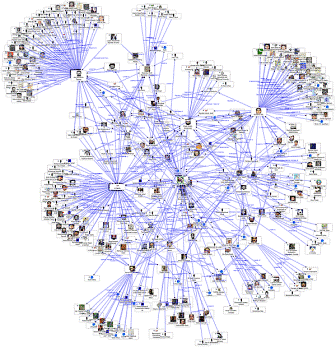
Organized by Thomas Dietz of Michigan State University, the panelists were Mrill Ingram (University of Wisconsin), Ken Frank (Michigan State University) and Adam D. Henry (West Virginia University). These are people from areas like sociology, people who make graphs like this one and understand how to properly interpret it:

My role on the panel was as a ‘discussant’, i.e., someone who does not give a separate talk but comments, at the end, on what the other panelists have said.

I am glad I got the materials from the panelists in advance as this was quite dense stuff.

Every scientific discipline invents new words – the terminology (or jargon) with precise meaning that is necessary for practitioners to talk to each other. For the most part, natural sciences tend to stick to agreed definitions, and counter-examples are relatively rare thus usually quite well known (e.g., the different use of the term “gene” by population geneticists vs. molecular geneticists).

Social sciences, on the other hand, tend to appropriate words from the existing English vocabulary and give those words new, precise definitions. Thus, possibility of misunderstanding by non-experts is greater. Also, some of the terms are defined differently by different sub-disciplines, research communities or even individuals, which makes it even harder to be sure one got the meaning correctly.

This all made reading the materials, as well as listening to the panel, quite challenging for me, the outsider in this field. I am also not a researcher of social networks – I am a user and observer, perhaps an amateur student of them. My thoughts could not be supported by numbers and graphs, but had to, by necessity, be more impressionistic – what I learned from my experiences using, living in, and running online social communities.

As all the speakers went substantially over their allotted times all I had left was seven minutes. Fortunately for me, I had all seven (not 3.5) as the other discussant’s flight into D.C. was canceled. Also fortunately for me, this was the very last time-slot of the meeting, so nobody was in a rush to go to another session and thus everyone let me talk a few minutes longer and then remained in the room asking even more questions.

As I tend to do, and in this case particularly, I decided not to prepare too much (OK, at all) in advance. Instead, I listened to the panelists carefully and made the decision what to say only once I climbed onto the podium in the end and knew how much time I had at my disposal. I decided what to say in the first couple of sentences – the rest came out on its own, pure improvisational theater.

As I was reading the materials and listening to the talks, I realized that a couple of examples were clearly discussing real-world, meat-space, offline social networks, but that all the other examples were ambiguous: I could not figure out if those were online, offline, or combined/hybrid social networks.

So, I decided to use my seven minutes to compare and contrast online and offline social networks, how they differ (more important than how they are similar, which is the default thinking), and how they interact and potentially strengthen each other due to such differences.

This is, roughly, what I said – or at least what I meant to say but had to speed up, i.e., this is an (very) expanded version:

Social norms build and enforce echo-chambers

You want to remain in a friendly relationship with the people you see (or potentially can see) often: neighbors, family, colleagues and friends. Nothing makes for a more unpleasant interaction than discussion of politics, ideology or religion with the people you disagree with.

Thus, there is a social norm in place: politics and religion are taboo topics in conversation. It is considered bad manners to start such conversations in polite company.

This means that most people are not exposed to views other than their own in their day-to-day interactions with other people.

In a small tightly-knit community where everyone’s politics and religion are the same (and people tend to move to such places in order to feel comfortable, on top of most likely being born in such a community to begin with), there is no need to discuss these topics as everyone already agrees. If the topic is discussed, there are no other opinions to be heard – it’s just back-slapping and commiserating about the evil enemies out there.

In mixed communities, the taboo against discussing politics and religion is strongly enforced. Again, as a result, there is not much chance to hear differing opinions.

There is no more airtight echo-chamber than a small community which interacts predominantly within itself, and not so much with the outside world.

Mass media builds and enforces echo-chambers

If you are born and raised by parents with a particular set of beliefs, you will also inherit from them the notions of which media outlets are trustworthy. If you were raised in the reality-based community, you are unlikely to waste much time with the media of the fantasy-based community (and vice versa). If your parents read Washington Post, you are unlikely to read Washington Times. You’ll prefer New York Times and not New York Post. MSNBC rather than Fox News. NPR rather than Limbaugh show on the radio.

But it is even worse than that – the choice is really not as broad. The media shapes the public opinion by choosing what is and what is not respectable opinion, i.e., ‘sphere of legitimate debate’ – what opinions to cover as serious, what opinions to denigrate and what opinions to ignore. There are many ideas that people hold that you will never see even mentioned in the US mass media and some of those are actually very legitimate in the Real World.

Furthermore, the press then divides the ‘respectable opinion’ into two opposites, gives voice to each of the two, and will never actually tell you which of the two is more reasonable than the other – “we report, you decide”, aka, He Said She Said journalism.

By presenting every issue as a battle between two extremes (and the fuzzy, undefinable “middle” is reserved only for them, the wise men), the mainstream press makes every opinion something to be sneered at, both those they deem worthy of mentioning and the unmentionable ones.

By refusing to acknowledge the existence of many stands on any issue, by refusing to assign Truth-values to any, by looking down at anyone who holds any opinion that is not their own, the mainstream press fosters the atmosphere of a bipolar world in which enmity rules, and the wagons need to be circled – the atmosphere that is so conducive to formation and defense of echo-chambers and yet so devoid of airing of any alternatives.

The Web breaks echo-chambers

When an individual first goes online, the usual reaction is shock! There are people in the world who believe what!?!?

The usual first response is anger and strenuous attempts at countering all other ideas and pushing one’s own.

But after a while, unbeknown to the person, all those various novel ideas start seeping in. One is not even aware of changing one’s own mind from one year to the next. Many ideas take time to process and digest and may quietly get incorporated into one’s gradually enriching and more sophisticated worldview.

We all learn from encountering all those other opinions even if we vehemently disagree with them. And we cannot help bumping into them all the time. There are no taboo topics online, no social norms preventing people from saying exactly what they think.

Forming, finding or defending a vacuum-sealed echo-chamber online is extremely difficult, if at all possible.

Your Facebook friends will post stuff that reveals their politics is different than yours (and you did not even know that about them before – they seemed so nice in real life!). By the time you get around to blocking them…it’s too late – the virus has already entered your head [this one sentence added 2-27-11].

People you follow on Twitter because of some common interest (e.g., food or knitting or parenting or technology or geographic area) may be very different from you when concerning some other interest, e.g., religion, and will occasionally post links to articles that contain opinions you have never heard of before.

If you are, for example, a liberal and tend to read only liberal blogs, you will constantly see links to conservative sites that are being debunked by your favourite bloggers – thus you will be exposed to conservative ideas daily.

If your interest is science, you are even luckier. The mainstream media, if it links to anything at all, tends to link either to each other or to governmental sources (e.g., CDC, USDA, etc.). Political bloggers link a lot more, but again the spectrum of sources is pretty narrow – they link to MSM, to governmental pages, and to each other (including the “opposition” bloggers).

But science bloggers link to a vastly broader gamut of sources. If mass media is linked to at all, it is usually in order to show how bad the coverage was of a science story. Linking to each other is important (and that includes linking to anti-science sites when needed to counter them), but what science bloggers do that others do not is link to scientific papers, documents, databases, even raw data-sets (including some Open Notebook Science bloggers who pipe data straight from their lab equipment onto the web).

What echo-chamber? Contrary to what some uninformed op-eds in the mass media like to say, the Web breaks echo-chambers that the social norms and mass media have previously built.

The online and offline social networks can work synergistically to affect real change

Many curmudgeons like to say that the Web does not do anything on its own. They (unlike behavioral biologists) do not understand the distinction between Proximal Causes and Ultimate Causes. Web is a tool that allows, among other things, many more people in much shorter time to organize to do something useful in the real world.

Release of Tripoli 6 was an instance in which massive outpouring of support online forced the mainstream media to cover the story which then forced the hand of politicians to do something.

Likewise, in the case of resignation of George Deutsch from NASA, it was investigative work by a blogger, Nick Anthis, that energized the blogosphere, which pushed the MSM to finally report on the story, which forced the event to happen.

PRISM was an astroturf website built to counter the pro-open-access NIH bill in the US Senate. Outpouring of online anger at the tactics by the publishers’ lobby inundated the senatorial offices – as a result the bill passed not once, but twice (GW Bush vetoed the first version of the large omnibus bill it was a part of, then signed it with no changes in the language on this particular issue) and the Senate is now educated on this issue.

But probably the best example is the Dover Trial (Kitzmiller v. Dover Area School District) that made Intelligent Design illegal to teach in US public schools. The ruling by Judge Jones (pdf) is one of the most powerful texts in the history of judicial decisions I am aware of.

There are anti-evolution bills popping up somewhere in the country seemingly every week. But because of the Dover ruling, they are all illegal. Most don’t make it to the committee, let alone to the floor of the state legislatures. Others are soundly defeated.

Before Dover, both Creationist sites and pro-evolution sites, when linking to me, would bring approximately the same amount of traffic to my blog. After Dover, getting a link from PZ Myers, Richard Dawkins, Larry Moran or Jerry Coyne brings substantial new traffic. Links from Creationist sites? Essentially undetectable by traffic trackers – I discover them only when I search my blog URL to specifically see if there are new links out there. Creationism, while still popular with the people, is politically essentially dead. The Dover ruling castrated it.

But Dover Trial would not have gone that way, and would not result in such a gorgeously written document by the Judge, if it was not for a small army of bloggers who contribute to the blog Panda’s Thumb. A mix of scientists from different disciplines, lawyers, etc., this group has been online – first on Usenet, later on the blog – for a couple of decades before the trial.

This is a group of people who battled Creationists for many years, online and offline, in courtrooms and political campaigns, in classrooms and in print. They know all the characters, all the usual creationist “arguments” (and provided all the answers to them in one place), all the literature, etc.

It is one of them who discovered that the new Intelligent Design “textbook” is really just a reprint of an old Creationist book, in which the word “Creationists” was replaced by “Intelligent Design proponents” throughout the text….except in one place where they made a typo: “Cdesign proponentsists”.

Ooops – a huge piece of evidence that Intelligent Design Creationism is just a warmed-up version of the old-style Creationism masquerading as something new. The Panda’s Thumb bloggers were at the trial as expert witnesses who provided all the expert evidence that Judge Jones needed to make his decision. People who organized on the Web have helped a meatspace history come to pass.

The online and offline social networks can work synergistically if the ecology is right

When looking at the role of online communities and networks in meatspace events, counting the numbers of networked citizens (or ratio of networked to non-networked citizens) is not sufficient – one also needs to know their geographic distribution, and their connectiveness with non-networked citizens. The most fresh example are the so-called “Twitter revolutions” in the Arab world.

There are at least two possible scenarios (or thought experiments) that demonstrate the importance of ecological thinking about social networks:

1) There are 10 people on Twitter in a country. All in the same city, all in the same college dorm, good friends with each other. No communication with other people. No Twitterati in other cities. Nobody knows that other people in other cities have the same negative feelings toward the government.

2) There are 10 people on Twitter in a country. One each in 10 different cities. They communicate with each other via social networks continuously. Each is also a center of the local community of thousands of non-networked people using offline methods of communication. Through this connection, they become aware that there are millions of them, all over the country, and that a revolution is feasible.

In scenario 1, there are 10 buddies dreaming of revolution. In scenario 2, there are thousands of people in ten cities organizing revolution. In both, there are only 10 people on Twitter. Yet, the outcome is likely to be very different.

Thus, the ecology of the networkers, their spatial and temporal distribution, and their effectiveness in informing not just each other but many non-networked citizens, are important data one needs for this exercise.

‘Echo-chamber’ is just a derogatory term for ‘community’

I shamelessly stole this sub-heading from someone on Twitter (let me know who said it first if you know). Edit: Thank you – it was Chris Rowan,

A great example of a case where the Web produced a community (aka echo-chamber) but that was a good thing, is the case of American atheists.

Before the Web, each atheist in the USA thought he or she was the only one in the country. The social norms about the impoliteness of discussing religion, as well as the real fear of reprisals by the religious neighbors, made atheism completely invisible. No need to mention that the media never mentioned them – they were outside of the “sphere of legitimate debate”.

But then the Web happened, and people, often pseudonymously, revealed their religious doubts online. Suddenly they realized they are not alone – there are millions of atheists in the country, each closeted before, each openly so after! It is not a surprise that “no belief” is the fastest-growing self-description in questions about religion in various nation-wide polls and censuses.

President Bush Senior, himself not very religious, could say that atheists are not real American citizens. A decade later, his son GW Bush, himself a fundamentalist, could not say that any more – his speechwriters made sure he mentioned atheists in the listings of all the equally American religious groupings.

Not all online communities need to be politically active. Discovering people with the same interest in knitting is nice. Exchanging LOLcat pictures is fun. But such interactions also build ties that can be used for action in the real world if the need arises.

Without the Web, I would not know many people whose friendship I cherish. Without the Web I would not have this job. Without the Web, me and many of my friends would have never gone to a meeting like AAAS. There would be no such meetings as ScienceOnline, Science Online London, SciBarCamp, SciFoo, and others.

Every time I travel I make sure that people I know online – from blogs, Twitter, Facebook etc. – know I am traveling. I say on which date, at which time, I will be in which restaurant in which city. Twenty people show up. Most I have never met in real life before. But after sharing a meal, a beer, a handshake and a hug, our weak ties become strong ties. Superficial relationships become friendships. If there is a need to organize some real-world action – we can rely on each other to participate or help.

I have a separate Dunbar Number in each city I visited. And I try to connect them to each other even more than they are already connected via online communication. Which is one of the reasons we organize conferences and one of the reasons I am online all the time.

Related:

As Science Bloggers, Who Are We Really Writing For? by Emily Anthes.

Are science blogs stuck in an echo chamber? Chamber? Chamber? by Ed Yong.

Can WordPress do this?

Is there a plugin in WordPress that can do this – a tabbed blog:

How would that work?

Example #1

I could pick a few Top Categories on my blog, e.g., Science, Media, Education, Politics and Other and assign each to one of the tabs. Thus, every time I post, I would have to use one or more Top Categories as well as second-level categories if and as many as I want to add. This way a reader can check out only my content of interest (e.g., Science) and not waste time on content of lesser interest (e.g., Politics). The reader would also be able to subscribe to only the feed for one of the tabs/categories and ignore the rest. I would also be able to, for example, import only the feeds of select Tabs into other services (e.g., facebook, friendfeed, twitter).

Example #2

A conference has multiple ‘tracks’ or rooms. Each of these has its own tab for (live)blogging. The official conference bloggers would log in to a particular account or be instructed to use a particular Top Category in order to have their posts appear under the correct tab.

Example #3

A group blog in which each co-blogger has his or her own tab (or even an entire multi-blog network which just appears on surface to be a single multi-author blog). Each person would either have a separate login/password which would automatically place their posts under the correct tab, or each person would have his/her own Top Category.

Settings

Depending on the needs and uses, the placement and order of tabs should be easy to manage by the bloggers. Possible options for such settings are:

- set up manually the order of tabs which always appears the same way to the readers. For example, I could place my Science tab to be the first one, Media as second, etc., thus providing Science as the top layer of the blog at all times.

- set it to “Random” so each time each reader comes to the site, the order of tabs (and thus which one is visible as the top layer) is different.

- set it in a way that Users can pick their own Default order of tabs. That may be good for official conference blogs as users may want to pick a “track” to follow. Or I can set it that way so my readers can choose which of my categories to see up on top each time they visit.

- set it for regular rotation, e.g., be able to tell WordPress to rotate all the tabs in a particular way (e.g., move them all one position to the left, moving the first tab back to become the last one, or the other way round, or random, etc.) at a particular time interval (e.g., every X days). This may be good for group blogs or networks or news-sites in which all co-bloggers/authors/topics post with the same frequency.

- have the order of tabs determined by the recency of posts in each tab, so the tab with the most recent post is the first (“left”, “top”), etc. This would be useful for multi-author blogs or blog networks where authors greatly vary in their frequency of posting – the rare new post by the infrequent blogger will be appearing up front for a while for readers who may not often check out that blogger.

- Ideally, one could do a hybrid of the above, e.g., a preset default for the top layer (Tab #1, e.g., the news homepage), while the order of the other tabs (individual topics or authors) would be ordered either randomly, or by timed schedules, or by the recency of the last posting.

Needless to say, it would be very easy to add, delete or rename tabs, and there would be either no limit or a very high limit (12? 20? stacked up in rows of 4-5?) to the number of tabs one can have.

What would a reader see?

All the reader would need to do is remember or bookmark a single URL. Clicking on tabs would expand the experience to a broader – and more organized – range of content.

In most cases, clicking on a tab would only change the content of the column in the middle. This makes sense for an individual blog with multiple categories, or a news-site, or a conference blog.

But in cases of some big multi-author blogs or multi-blog networks, clicking on the tab can possibly change much more – banner, URL, sidebars, About page (and other pages), background, font, etc. There would be a possibility to customize quite a lot, leaving only some agreed elements common to all the tabs.

So, does such a plugin exist? If not, would it be easy to make? Any takers taking a shot at it?

2010 in review

Probably the best way to review one’s year is to dig through one’s blog’s archives and see what is written there. Our Blogs, Our Memories.

So, how was 2010 for me? Let’s dig through the archives together and see…. Of course, there are many posts there – I hit the 10,000th post about halfway through the year – and many of those are cool videos, quotes, announcements, linkfests, and a number of interviews with cool people. But this retrospective is more personal – what I did, what happened to me, what I thought (and how that changed over time).

January was, of course, all about ScienceOnline2010, the preparations, last-minute announcements, and then coverage afterwards. At the end, I wrote my own summary of the meeting, pretty long, and I think still pretty relevant for ScienceOnline2011.

February was really busy on the blog. The biggest event, of course, was the publication of the fourth annual anthology of the best writing on science blogs – Open Laboratory 2009.

I published a scientific paper and blogged about it.

I went to the AAAS meeting and made them uncomfortable with a post about lack of online access and other backward ways of defining who is media.

I saw Megalodon teeth,

There were three posts in a row about young science bloggers:
Very young people blogging about science and Very young people blogging about science – let’s welcome them and Explaining Science to the Public.

Finally, two more provocative posts – Why is ‘scientists are bad communicators’ trope wrong and Using Twitter to learn economy of words – try to summarize your research paper in 140 characters or less!

In March I was really on a roll with posts about old and new media. See Why it is important for media articles to link to scientific papers and New science journalism ecosystem: new inter-species interactions, new niches and What is journalism and do PIOs do it? And what’s with advertising? and What is Journalism? and Push vs. Pull strategies in science communication and the critique of a journal article about science blogging – Science blogs and public engagement with science.

I reviewed ‘Spring Awakening‘ at DPAC.

I was also thinking about conferences – see On organizing and/or participating in a Conference in the age of Twitter – and I did a radio show about organizing an interactive conference. Of course, as that month I just attended Raleigh Ignite and co-organized TEDxRTP.

In April I attended the WWW2010 conference which I subsequently blogged about. I also went to the NYC edition of The 140conf.

I reviewed a student rendition of ‘Rent’ at Duke.

Other notable posts from April include For the millionth time: bloggers vs. journalists is over! and Twittering is a difficult art form – if you are doing it right and More on mindcasting vs. lifecasting.

Probably most notable for April was that I actually did real science blogging again: Evolutionary Medicine: Does reindeer have a circadian stop-watch instead of a clock?

In May I was busy going to local book events and talks – Scott Huler – ‘On The Grid’ at Quail Ridge Books and Serious Gaming at Sigma Xi and Cory Doctorow in Chapel Hill.

In June I went to a vaccination meeting in Philadeliphia and blogged about it.

I reviewed ‘Bonobo Handshake’ by Vanessa Woods, ‘On The Grid’ by Scott Huler and ‘The Poisoner’s Handbook’ by Deborah Blum.

I got interviewed on topics I usually do not get asked so it is an interesting one…

And then, of course, a bunch of posts about the media, blogging and related stuff, e.g., The continuum of expertise and No, blogs are not dead, they are on summer vacation and Why is some coverage of scientific news in the media very poor? and Am I A Science Journalist? and ‘Going Direct’ – the Netizens in former Yugoslavia, altogether some interesting stuff.

And I tried to collect as many books published by science bloggers as possible.

That was the placid first half of the year. And then….then all hell broke lose! July was the time of #Pepsigate, #Pepsimageddon! The seismic event that moved around all the tectonic plates of the science blogging world.

I collected the PepsiGate linkfest.

Then I wrote my own post – A Farewell to Scienceblogs: the Changing Science Blogging Ecosystem – that really got stuff moving around. I heard it in good confidence that the post was read (as required reading) by students in at least two science journalism programs in j-schools in the USA this Fall.

That post had a few follow-ups that added more links, more information about the events, and more thoughts about the future: Thank You and Science Blogging Networks: What, Why and How (essentially a How-To-Build-A-Science-Blogging-Network manual).

A certain Virginia Heffernan wrote a bad piece on science blogging in NYT, so I collected the reactions.

And I did write some science as well – Are Zombies nocturnal?

And had a great guest post by Dr.Marie-Claire Shanahan: UC Berkeley Genetic Testing Affair: Science vs Science Education.

In August I continued the post-Pepsi series of long posts, with Links ‘n’ Thoughts on emerging science blogging networks and Branding Science Blogging: Cooperatives + Corporate Networks.

Two new networks launched – so I introduced Scientopia and Guardian blogs. This proliferation of new networks prompted us to build a new aggregator site – Drumroll, please! Introducing: Scienceblogging.org.

I wrote a science post – Food goes through a rabbit twice. Think what that means!

And wrote two ruminations: Why republish an old blog post? and Origins of Science Writers…but am I one?

In September I announced Some Big And Important And Exciting News! – my new job! And new blog. And new blogging network-to-be.

Speaking of new networks, two more appeared – PLoS Blogs and Wired Science Blogs.

I went to The Most Awesome Wedding and to the Block By Block conference and to see the Mythbusters – yes, I got to meet Jamie and Adam.

I guess I had enough excitement for the year, so October was pretty calm.

I did two interviews – radio: Skeptically Speaking show about Science Journalism and video: Dr. Kiki’s Science Hour 68: Taking Science Online.

I reviewed ‘Social Network’.

And we announced ScienceOnline2011.

In November I gave a talk at Sigma Xi, which inspired a blog post – Blogging. What’s new? which in turn was the seed for one of my epically long posts – and my first Scientific American article – The line between science and journalism is getting blurry….again – that was already in December.

I was on a panel at the NASW meeting (you can scroll down this page to watch the video).

We opened ScienceOnline2011 for registration and had to close in 45 minutes as the conference was full! A little later on we posted some updates and a Thanksgiving message.

The big event in science in December was the brouhaha over arsenic in bacteria – so I collected a linkfest of the key articles and blog posts on the topic.

I went to NYC again and lived to tell about it.

I was interviewed by a Staten Island Academy student for their Extreme Biology blog – read the interview here.

And throughout November and December, I made sure that the Scientific American Guest Blog had good, fresh posts almost every day.

What does the next year bring? Who knows, but I am optimistic in many ways – personal, professional, global. Happy New Year everyone!

Introducing: Science of Blogging

Peter Janiszewski and Travis Saunders, nutrition scientists and bloggers you know from the Obesity Panacea blog, have a new endeavor – Science of Blogging

In the introduction, they explain:

Science of Blogging will not only highlight the ways by which social media is changing the way science and research is communicated, but also provide basic suggestions for individuals or organizations who seek to use social media to increase the public understanding of scientific research.

We hope to achieve this goal by picking the brains of members of the online science community via regular guest posts, discussions, interviews, podcasts and more. We want to bring together our combined knowledge and experience to make it easier for people to start discussing science online (via any social media channels), or to do so more effectively.

Read (and comment on) the first posts there:

Scientists: Publicizing your research gets you cited more often

How building your online social network may affect your offline social life

Why all scientists should blog: a case study

Follow the Twitter hashtag #SoB and add your suggestions here.

I am considering writing a post or two for the site myself, and you should think about it as well.

Blogging. What’s new?

UPDATE: I have greatly expanded on this post in this article written about a month later.
============

Last night on Twitter I asked:

OK, who were the best bloggers and Twitterers from before the WWW, perhaps before the 20th century? Letter writers, pamphleteers, diarists – who of old would have been a Natural Born Blogger?

This is what people came up with in responses:

Samuel Pepys (yes, click on it, it’s a blog, also on Twitter)
George Orwell (yes, see his blog)
Darwin (here, on Twitter),
Aldous Huxley (on Twitter)
Richard_Owen (on Twitter)
Mark Twain
Oscar Wilde
James Boswell,
Nellie Bly
H.L.Mencken
Leonardo da Vinci
Ezra the Prophet
David Hume
Alexander von Humboldt,
Aldo Leopold,
Walt Whitman
Socrates,
Plato,
Aristotle
Galileo
St John
Michael Faraday
Nietzsche
Ben Franklin (That would practically be Boing Boing)
Jesus’ apostles
Maimonides
Confucious
Einstein and Freud wrote some interesting letters back and forth that were published at some point.
Virginia Woolf,
Samuel Johnson,
Emerson,
Graham Greene
Robert Scott,
Admunsen,
Joseph Banks
Anne Frank
Jane Austen
Anne Louise Germaine de Staël
Montaigne
Walter Cronkite
Joseph Priestley
H.P. Lovecraft (who wrote more correspondence + commentary than he did fiction)
Albert Camus,
all the great war correspondents were proto-bloggers,
Various diarists

Also all of these guys (watch the animation, play with parameters):

And read: What Bloggers Owe Montaigne.

Letters and diaries were meant to be public, shared, read, saved, then published (at least posthumously). Just like blogs, tweets and Facebook today….

Many wrote letters in duplicate: one copy to send, one to keep for publishing Collected Letters later in life. Darwin did that, for example (well, if I remember correctly, his wife made copies from his illegible originals into something that recipients could actually read).

I bet a lot of ship captains’ logs were essentially tweets, right? With geolocation apps (RT @Cdarwin Just became mayor of HMS Beagle). And those are still very useful today.

Nothing new under the Sun. Apart from technology (software instead of writing/printing on paper), speed (microseconds instead of days and weeks by stagecoach, railroad or Pony Express, see image on the left) and number of people reached (potentially millions simultaneously instead of one person or small group at a time), blogging is nothing new – this is how people have always communicated.

It is the broadcast media, a few large corporations employing professional writers informing millions – with no ability for the receivers of information to fact-check, talk back, ask questions, be a part of the conversation – that is an exception in history, for just a few decades of the 20th century.

It took 150-250 years or so between the invention of printing press by Gutenberg until we get to the first examples of something similar to the 20th century system of communication. London Gazette of 1666 is usually thought to be the very first newspaper. First English-language scientific journal was the Philosophical Transactions of the Royal Society of London in 1665.

But until the 20th century we did not see the consolidation of media into large conglomerates, and of course there were no radio or TV until mid-20th century. Not until later did we see the monopolization of local media markets by a single newspaper which, then, had to serve everyone, so had to invent the fake “objective” HeSaidSheSaid timid style of reporting in order not to lose customers and thus advertising revenue.

All we are doing now is returning to (old but important link to revisit) a more natural, straightforward and honest way of sharing information, but using much more efficient ways of doing it. And not even that – where technology is scarce, the analog blogging is live and well.

What about trustworthiness of all that online stuff? Some is and some isn’t to be trusted. It’s up to you to figure out your own filters and criteria, look for additional sources.

But that is not new, either. The only thing that was really wrong is the way so many people unquestioningly accepted what 20th-century style broadcast media served them. Just because articles were under the banners of big companies did not make them any more trustworthy by definition. In the 20th century we lost the ability to read everything critically, awed by the big names like NYT and BBC and CNN.

With the return of a more natural system of communication, we got to see additional opinions, fact-checks on the media by experts on the topic, and realized that the mainstream media is not to be trusted. With the return of a more natural system of communication, we will all have to re-learn how to read critically, find second opinions, evaluate sources. Nothing new there either – that is what people have been doing for millennia – the 20th century is the exception.

Sigma Xi pizza lunch lecture – Science in the current media environment

Next Tuesday at Sigma Xi:

Hi all. Normally we aim to hold pizza lunch on the 3rd Tuesday of each month. In November, that date conflicts with the ship date of the January-February 2011 issue of American Scientist. So we’ll convene a week later. Still, I think you’ll find the session—something different this time—worth the wait.

Join us on Tuesday, Nov. 23 to hear one of our own, veteran science blogger Bora Zivkovic, talk about the shifting ecosystems within his craft. Zivkovic has had a front seat to much of that change, as author of the influential A Blog Around The Clock, as co-founder (with Anton Zuiker) of the international conference ScienceOnline in RTP, as the former online community manager at Public Library of Science and, now, as the new blog and community editor for Scientific American magazine. For a long time, people spoke of the day when print and online media would converge. In a growing share of the publishing world, that convergence has occurred. And Bora, when it comes to science journalism, has been a catalyst in that change.

Thanks to a grant from the N.C. Biotechnology Center, American Scientist Pizza Lunch is free and open to science journalists and science communicators of all stripes. Feel free to forward this message to anyone who might want to attend. RSVPs are required (for the slice count) to cclabby@amsci.org

Directions to Sigma Xi, the Scientific Research Society in RTP, are here: http://www.sigmaxi.org/about/center/directions.shtml

New Guest Post at SciAm

There is a new post on the SciAm Guest Blog this morning. It is by Steven Wartik, asking if computer science is a science or nor or what – I’m Not a Real Scientist, And That’s Okay. Go check it out and post comments. Share with your computer scientist friends ;-)

New post on the SciAm Guest Blog

The Guest Blog is busy! Another new post today!

See Food for thought: Musings on sustenance and what makes us human by Diana Gitig. Post comments!

Two new posts on the SciAm Guest Blog

There are two new posts on the Guest Blog at Scientific American – one yesterday, one today.

In case you missed it yesterday, there is a new post by SE Gould, aka Lab Rat, titled
Synthetic biology: Building machines from DNA.

And today, Hannah Waters published her first there – Now in 3D: the shape of krill and fish schools.

Go read them and post comments!

Two new posts on the Scientific American Guest Blog today

First, in the morning, Hold that door, please! Observations on elevator etiquette by Krystal D’Costa (blog, blog, Twitter).

Second in the afternoon, Glia: The new frontier in brain science by R. Douglas Fields.

Go and post comments!

More tomorrow….then Monday and so on….if you are interested, pitch me a story at: Bora@sciam.com

Guest Blog on Scientific American – Bacteria, the anti-cancer soldier

James Byrne of the Disease of the Week! blog (also on Twitter) is the latest guest blogger on the Scientific American Guest Blog. Check out his post – Bacteria, the anti-cancer soldier.

Guest Blog at Scientific American – second guest post: We all need (a little bit of) sex

As I noted yesterday, the Scientific American Guest Blog is about to get really busy! Already today we have another new post – We all need (a little bit of) sex by Lucas Brouwers (blog, Twitter). Go and check it out and post comments (it takes a second to register).

ScienceWriters2010 – NASW/CASW meeting this week

ScienceWriters2010 is starting on Friday afternoon at Yale University in New Haven, CT. This is a joint meeting of the National Association of Science Writers (NASW) and the Council for the Advancement of Science Writing (CASW).

I am not exactly sure, but I think most sessions will be recorded in some fashion and made available online later.

It is much better, if you want to follow live, to bookmarks the official ScienceWriters2010 blog where recipients of the travel grants – mostly science journalism students or young freelancers – will cover all the sessions in as close to real-time as is possible.

The fellows will also tweet from the meeting, and you can follow them by subscribing to this Twitter list. Or you can follow everyone from the conference by saving a Twitter search for the #sciwri10 hashtag.

I will be on a panel Rebooting science journalism: Adapting to the new media landscape, put together by David Dobbs. My co-panelists are Emily Bell and Betsy Mason. That should be fun!

Definitely check out the rest of the schedule – it is awesome. Everyone’s biggest problem is that all those great sessions are happening simultaneously, so we’ll all also have to wait for recordings of our colleagues’ sessions afterward.

And if you are there and you see me, please come and say Hi!

Guest Blog at Scientific American – first guest post: Apple, meet Orange

Building the new science blogging network at Scientific American will take some time. But there are already seven blogs on the site, mostly written by Scientific American editors, writers and correspondents. One blog that is written by others – scientists and bloggers – is the Guest Blog that has been around for several years now.

Starting today, I will be in charge of the Guest Blog, and have invited a number of interesting people to contribute guest posts for it (Interested? Pitch me a story at: Bora@sciam.com).

The first contributor is Dr.Carin Bondar (Twitter) with a post about conservation – the dueling approaches to species preservation: saving one species at a time, or saving entire ecosystems and ecological communities. Carin reviews recent studies from both ‘schools’ and makes her own decision as to which approach makes more sense. Go read it here!

Written In Stone: interview with Brian Switek

2010 is an incredible year for science books, many written by people who daily write on blogs.

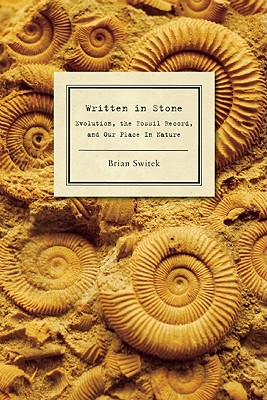
The latest in this fantastic streak is Written In Stone (homepage, IndieBound, Amazon) by Brian Switek (blog, Twitter).

Written In Stone is officially published today. If you pre-ordered it, it should hit your mailbox in a few days and bookstores should get it soon after (watch Brian’s blogs for updates – there was a small delay in shipping). I got the book earlier, have read it and loved it – my review is coming here later today. But first, I wanted to catch up with Brian and ask him a few questions about his book, his blog, and how the two are connected.

———–

A few years ago, you were a student and blogging was a hobby – something you did on the side, out of love. At what point did you realize that you could do writing as a profession? Was there a precipitating event or did that gradually dawn on you?

There wasn’t any single event or cause – I just fell into it. Now that we’re mostly beyond the blogger vs. journalist sniping – I hope – I can look back and say that I was acting like a science writer even before it became a viable career option. Making the transition required a change in attitude and a realization that I could actually get paid for what I like to do, and I feel exceptionally lucky that I have been able to turn my hobby into a nascent science writing career (even though I still work an unrelated day job to keep the lights on at home).

The more detailed story goes like this – After blogging for two years, I got serious about my science writing and started to pitch to magazines. My performance was abysmal. Most of the time I didn’t even hear back from the publications I pitched to. Still, I kept using my blog as a writing laboratory and tried to fine-tune my writing. Then, in May of last year, everything changed almost instantaneously. It was at that time that I started working with my literary agent – Peter Tallack of the Science Factory – and Mark Henderson of the Times was kind enough to give me my first formal op-ed about the Darwinius controversy. Those breakthroughs, paired with the earlier acceptance of my first academic paper (just published), allowed me to build up enough momentum to start making some headway into more formal channels of science writing outside the blogohedron.

I wouldn’t be able to do what I do without blogs, Twitter, or the web in general. Blogging allowed me to practice writing, plug into a community of fellow science enthusiasts, and has otherwise made it possible for me to become a professional – if still part-time – science writer. If I tried to do the same thing just a few years ago, or otherwise tried to jump into science writing without developing my writing online, I would have almost surely failed. As I mentioned above, though, I did not think of my efforts as a career change. The only major difference was that people started paying me for the sort of work I had been doing anyway!

How did you decide to write a book? You were already a well-known blogger and have started appearing in more mainstream media on occasion – why a book?

Written in Stone had a relatively long gestation and significantly changed since the time that I was first inspired to write a book. I knew that I wanted to write a book about evolution from the time I started blogging, but I was pretty clueless as to how to go about it. I used my blog as a way to practice writing, keep up with the literature, and organize my ideas. Blogging gave me an incentive to keep learning, researching, and sharing that information with whoever cared to read it.

This went on for about three years. I kept notes and wrote parts of a few chapters, but I didn’t have a story to tie things all together. I knew that I wanted to write about evolution from the perspective of the fossil record, but that’s not a book – I needed a more specific angle from which to approach the bigger story of life through time. I knew that I didn’t want to write a comprehensive textbook – we’ve already got plenty of those – but what examples should I choose to help people understand what fossils tell us about how life has changed?

Unfortunately I can’t remember the moment the idea struck me, but I settled on looking at some of the major transitions in the history of vertebrates that transfixed me as a child. The evolution of the first tetrapods from fish, the evolution of birds from dinosaurs, the evolution of whales from terrestrial mammals, the evolution of humans, and others – they were classic examples of evolutionary change, but as I became more familiar with the scientific literature I felt that the public wasn’t being presented with the latest science about these examples. Even in recent popular books about evolution, a few of these transitions would be presented but usually in such paltry detail as to be unconvincing to anyone who didn’t already agree that evolution is a reality. More than that, these changes have been debated for a very long time but we often talk about them only in reference to recent discoveries. I wanted to dig into the long history of debate and show how our understanding has changed. In distilling everything down to simple, step-by-step diagrams of evolutionary change, I felt like other authors had missed something, and I wanted to plug that gap in the popular literature.

Once I figured all that out, writing the book wasn’t too difficult. I had been rummaging through the literature for my own education for several years already – it was mostly a matter of writing the thing. With three chapters in hand, I signed with Bellevue Literary Press in September and completed the first full draft of the manuscript just two days before Christmas. The manuscript went back and forth a few times over the following months for edits, but, looking back, I am still a little baffled as to how I put the whole thing together so quickly!

Your writing – both on the blog and in the book – looks at evolution, focusing mainly on fossils, in the context of history of science. This is a pretty unique combination of themes – where did that come from? Was that a conscious decision or something that just happened as it combined your existing passions?

The mix of evolution, paleontology, and the history of science happened organically. They all overlap and feed into each other. Since I wanted to write about what the fossil record tells us about evolution, those aspects of the story came together very easily. I could have left it at that, but then I would have done the same thing as everyone else by divorcing recent discoveries from their context. I didn’t want to do that. I did not want to act as a figure of authority, handing down data for the public to digest and accept.

Instead of taking the more traditional approach, I wanted to give the book a warmer tone – I wanted to present science in the way that I might talk to a curious friend about evolution, or in terms of what I might say if I were walking with someone through a natural history museum. The history of science allowed me to do this by providing me with a flowing narrative which encompassed the scientific points I wanted to talk about. This served the dual purpose of placing recent discoveries in context and also gave me a way to lead readers through the tangled process of scientific discovery. This was especially important in the historical chapters about the beginnings of paleontology and evolutionary theory (Ch. 2 and 3). I found the idea of simply laying out the nuts and bolts of stratigraphy, natural selection, the nature of the fossil record, etc. repulsive – as I mentioned, I had no intention of writing a textbook – but by tracing the history of science I could use stories to introduce readers to those same concepts in a more palatable way.

Naturally, my own interests played a role, as well. I am fascinated by vertebrate paleontology, and both evolutionary theory and the history of science remain important in the field for understanding the patterns of life on earth and how our perspective of those patterns has changed. It was not a stretch to bring it all together. Paleontology is an evolutionary science, and paleontologists are constantly reexamining old specimens and localities. Given all these available perspectives, it was mostly a matter of choosing where to place the emphasis.

The book grew out of your blog. What proportion of the book, can you estimate, comes directly from edits of your older posts, and how much was brand new material? Was it difficult to repurpose the bloggy format into something that will work well in the book form?

The book grew out of my blog in the sense that I used my blog to practice writing about some studies and ideas which eventually became incorporated into the blog. The book is not just a stitched-together collection of posts. It was written as a story unto itself – containing many smaller stories – and even when I covered something I had blogged about earlier I disregarded what I had already said and wrote something fresh. Sometimes I would dig back into my posts for something I had referenced which I had trouble remembering, but in no instance did I edit any of my posts to place that material in the book. I wanted to write in such a way that the story flowed, and I felt that if I was going to start incorporating material directly plucked from the blog I would jeopardize that. Readers of my blogs will see some familiar subjects, absolutely, but, barring quotations, the book is 100% new writing.

Reading the book, it struck me how unique it is and how much it fills a glaring gap in the literature. There are many books on evolution. There are many books on the history of science. There are many books about fossils (though usually narrower in subject, focusing on a single group like dinosaurs, or even a single fossil like Tiktaalik or Darwinius). Yet I cannot remember another book that combines these three topics until today (literally today!). While it is fortunate for you that this niche was wide open for you to fill, do you have any thoughts as to why this niche was empty to begin with? Aren’t there other scholars who could have, perhaps should have, covered this area in this way?

I think some historians of science have written similar books, but they have usually been focused on a particular time period of group of researchers (such as Adrian Desmond’s Archetypes and Ancestors about Victorian paleontology, Peter Bowler’s Life’s Splendid Drama about early 20th-century paleontology, or Eric Buffetaut’s sadly out-of-print A Short History of Vertebrate Paleontology). When you’re dealing with the history of paleontology, you have to include biological details as well as historical ones, and in many ways this historical subgenre was very influential in determining how I should go about telling my story.

You’re absolutely right about the gap in the literature, though. I intentionally wrote this book to fill it. There’s no single reason why the gap was left open to start with. From a practical perspective, the history of science is often left out of popular books because there is a common assumption that the public doesn’t care about it. One publisher I spoke to about the book early on, in fact, wanted me to cut all the historical material from the book and focus only on new discoveries – from science magazines to book publishers, there is a major push to cover what is new and exciting and leave the historical bits for people who want to track them down (despite the success of some books, such as Bill Bryson’s A Short History of Nearly Everything, which have a heavy emphasis on history!). An exception is Sean B. Carroll’s recent book Remarkable Creatures, but, while I greatly enjoyed it, the treatment of significant people and specimens was a collection of snapshots which did not illustrate the importance of paleontology to our understanding of evolution. There are gaps and jumps in my narrative too – if I included everything I wanted Written in Stone would have rivaled The Structure of Evolutionary Theory in length – but it was very important to me to trace ideas through multiple shifts in understanding over the past 150 years.

The fact that many recent, popular-audience books about evolution – such as Why Evolution is True by Jerry Coyne, The Greatest Show on Earth by Richard Dawkins, and Only a Theory by Kenneth Miller – have been written by lab-based evolutionary scientists is another reason for the persistence of the “paleo gap.” Paleontology isn’t their field and so, understandably, doesn’t get much attention from these authors outside of transitional forms in the fossil record. More than that, though, there is something of a conceit that genetics and microbiology are more important to evolutionary science than paleontology is. Paleontology is still often viewed as the search for old bones to fill museums with – it can demonstrate the reality of evolution by do little else. This appraisal of paleontology has been around since the beginning of the 20th century, at least, and Dawkins even downplayed the importance of the fossil record to understanding evolution in his book The Ancestor’s Tale.

Since Stephen Jay Gould died in 2002, we haven’t really had a strong public advocate for paleontology as an essential evolutionary science. I’m no Gould, but I was inspired by his work to communicate the relevance of the fossil record to understanding of evolution (as well as similar efforts made before him by George Gaylord Simpson). Not only does paleontology provide the essential context to understand why life is as it is now – it is the science which showed us that extinction is real and that life has been changing for vast periods of time – but has become arguably the most interdisciplinary evolutionary science. Paleontologists regularly use ideas and techniques from genetics, molecular biology, embryology, histology, geochemistry, and other sciences in addition to comparative anatomy and geology. Having just attended the 70th annual meeting of the Society of Vertebrate Paleontology just last month, I can tell you that paleontology is an exceptionally vibrant field in which everything from the color of dinosaur feathers to the tempo and mode of evolutionary change are being investigated. This makes the rather brief treatment of paleontology in many recent books on evolution all the more irritating – paleontology, as I know it, is not being reflected in discussions about evolution, and I wanted to write a book to help remedy that.

One thing that struck me as I was reading the book is how well fleshed are the characters in the story, people like Lamarck, Darwin, Owen and Huxley, among others. You present them with a nuance that is rarely seen in usual discourse on the history of evolution. How much did you use biographies of these people, their letters and diaries, in trying to understand them as complex personalities, not just cardboard caricatures that we usually see?

I have to admit that I actually did not get to include the amount of detail I wanted – I mostly restricted biographical sections to the period a given authority was working on a particular problem or idea – but I thought it was essential to provide some background as to who these people were and why they did what they did. In the case of Lamarck, for example, I didn’t know anything about his life outside of his ideas about evolution before writing the book, so I thought including a little more information about him would be a small way of helping his public image since he is so often trotted out to be a contrast to Darwin and nothing else.

The sources I used varied from figure to figure. For Cuvier, I relied on various historical papers and Martin Rudwick’s selected translations of his work in Georges Cuvier, Fossil Bones, and Geological Catastrophes, whereas I used Adrian Desmond’s biography Huxley and the naturalist’s original research papers for sections about the man famously called “Darwin’s Bulldog.” The most difficult challenge was Charles Darwin. So much has been written about him that I could not possibly read it all, so in addition to biographical accounts I used the Darwin Correspondence Project and The Complete Work of Charles Darwin Online to dig into his original writings as much as possible. Of course my account of Darwin’s work is framed in terms of paleontology – I could not comprehensively cover everything he did, especially since he was such a prolific naturalist and correspondent! – but I tried to hit the major points of his career leading up to 1859 without derailing the paleontological thread of the book.

Finally – what’s next? I know you will be busy traveling the country promoting the book, but I am wondering if you already have the ideas for the next book?

I actually don’t have many travel plans. I’ll be giving a few talks in the NY-NJ-PA area, but I don’t have the budget to allow for a full-scale book tour. I am going to focus on doing what I do best – keeping up my blogs and trying to find more stories to tell in more formal science publications and journals. If opportunities to travel and talk about the book pop up, I’ll jump, but I have no idea when or where such opportunities will arise.

If anything, I have too many ideas for future books. Some are just the seeds of future projects which will require significantly more background than I presently have to cultivate, whereas others I am already in the process of starting. Right now I am trying to choose between two different projects – one on the “Dinosaur Enlightenment” which is rapidly changing our understanding of the charismatic creatures, and another on the controversial idea of “Pleistocene Rewilding.” I fully intend on writing both, but which comes first depends on an array of factors from my ability to travel to places relevant to the books to the willingness of publishers to jump at the projects. Beyond those, I have at least three more ideas for long-term book projects on three disparate subjects, so with any luck I will be writing for some time to come!

And, as a closing note, thank you for your help and support, Bora. You have been behind my writing from the very beginning, and it has been a pleasure to talk to you about a book which has grown directly from my work online. Your ongoing encouragement has helped drive me to become a more professional science writer, so I am genuinely thrilled that you enjoyed the book.

Thank you so much for the interview. And let’s hope that book sells very well – it surely deserves it.

Encephalon, the neuroscience blog carnival, is coming back!

Yes, it has risen again!

You can still find the old archives from the first run in 2006/2007 here (click on “past carnivals” tab), and the second run in 2008/2009 here, but the new archives will be built fresh, starting this month, with Encephalon #81 on Cephalove.

I will host the next one, #82, on November 29th 2010. Send your entries by midnight before that date to: Coturnix AT gmail DOT com

‘Social Network’, the movie

Finally saw ‘Social Network’, the movie. I was primed by all the reviews to hate the movie. But I didn’t. I found Mark Zuckerberg to be the only sympathetic character in the entire dog-eat-dog, sexist tech-biz world as portrayed in the film – which is not that far removed from reality.

A brilliant, talented, socially awkward kid with at least mild Aspergers has a vision and a feel for what he needs to do and can do. He may not be interested in money, women and fame, but people who are necessary for him to fund his vision are interested in these, and sometimes he falls for their sweet-talk, makes mistakes, falls and gets up again, and is driven to move on and pursue his dream.

Yes, the movie has factual errors, and yes the movie tried to slander him badly, and yes, what Facebook really means (which is important) is totally lost to the movie-makers who emphasize, like every dinosaurian curmudgeon worth his salt has to, the least important but most offensive (to old-time Puritanical tastes) aspects of Facebook (e.g., the potential for finding suitable dates, or changes in the meaning of privacy they don’t grok).

But in the end it is the old-timers – the lawyers, the old-money guys, the keepers of old traditions, the vile, sexist business wheelers&dealers (including Larry Summers) that come off the worst in the movie – you end up loathing them all by the time the credits roll.

In the end, the only one remaining standing, unscathed and even likable is the visionary, the one who changed the norms of the world to be a little more up-to-date: Mark Zuckerberg. It is easy to identify with him. It is easy to root for him when he uses his intelligence to talk back to the elders who imagine they have authority over him and to put them in their proper place. Who of us was never a kid, confused by the scheming of adults, falling into their traps, and hoping to learn from those negative experiences and go on and change the world for the better?

‘Charles Darwin would have been a blogger.’

‘Charles Darwin would have been a blogger.’ – that was the title of the winning proposal for the Wellcome Trust’s Survival Rival Winners award. You can read the original proposal (PDF) here.

And now, Karen James (website, blog, Twitter) and a group of students and teachers from Scotland are on their trip to Galapagos, live-blogging and tweeting their trip, posting images and videos online and generally doing what Darwin would have done on his original Beagle trip if the technology was available at the time.

As Karen says:

“Now through the 30th of October I am in Galapagos with the Wellcome Trust, accompanying some students and teachers on their trip of a lifetime (in fact, they are accompanying me on MY trip of a lifetime, they just don’t know it). In the spirit of our session at Science Online ’10, my winning application proposed communicating our adventures by twitter, blogs, flickr and youtube, as described here.”

You can and should follow their adventures on the blog (go back in time through the archives to the very first post – fascinating!) and Twitter (actually Twitter list of all the travelers), see their photographs on Flickr and videos on YouTube.

I assume they will also write some final reports after they come back from the trip. And perhaps some of them will come to ScienceOnline2011 with Karen and share their experiences with us there.

Scienceblogging: Scientopia – a Q&A with SciCurious and Mark Chu-Carroll

Hi, thank you for taking your time for answering a few questions about the past, present and future developments of the science blogging ecosystem. Let me begin with you – can you tell our readers, please, who are you, where you come from and how you got into science blogging?

Sci: My ‘name’ is Scicurious, and I started blogging in May(ish) of 2008. I have a PhD in Physiology, and I’m currently a post-doc at a rather famous MRU. I got into scienceblogging when I met BORA! I wanted to improve my science writing skills and see how the science writing world looked. My contact told me to talk to Bora. I met him at a coffee shop. The next day, Scicurious was born, first on WordPress, then on Scienceblogs, and now at Scientopia!

Mark: I’m Mark Chu-Carroll. I write the blog Good Math/Bad Math, which is pretty much about exactly what the title says. I write to try to explain good math, and what makes it beautiful and fascinating; and to show how people abuse math to deceive or distort things.

How I got into blogging was by reading blogs. It looked like a lot of fun writing them, but I couldn’t quite figure out an angle – what could I say that people would be interested in reading, that would be different from what dozens of people were already saying?

So I just kept reading. And one day, I was reading one of Orac’s posts about a really stupid vaccination/autism study. Orac had done a typically Orac’ian takedown – that is, remarkably thorough and comprehensive – and yet, it seemed obvious to me, he’d missed the stupidest part of the thing: the whole thing was based on an obviously and deliberately incorrect mathematical procedure. I posted a long comment explaining it – and then said, hey, you know what? I could write a blog about that! And so I started Good Math/Bad Math on Blogger, by copying that comment into the first post.

I thought, when it started, that I’d probably never get anyone to read it, and that I’d probably end up giving up after a week or two. Now it’s been almost five years!

Everyone seems to agree that the summer of 2010 saw some big and important changes in the science blogging ecosystem. What are your own thoughts on this? Where do you think it will go next, over the next couple of years?
Continue reading

I hope to see you tonight!

If you come to Durham tonight you’ll get to schmooze and share drinks with a bunch of veteran Triangle bloggers, or veteran bloggers now living in the Triangle, and some new bloggers and some fans. Join us – more the merrier. Who will be there?

Anton Zuiker
me and my wife
Pam Spaulding
David Kroll a.k.a. Abel PharmBoy
Craig McClain
Misha Angrist
Wayne Sutton
Ilina Ewen
Dawn and Brian Crawford
Ruby Sinreich and Brian Russell
Princess Ojiaku
Andre Blackman
Gabrielle Kaasa
Lisa Sullivan
J. Michael Quante
Joanna Wolfe
Rob Zelt
Wendy Livingston
Allegra Sinclair
Stacey Alexander
Alicia Cuthbertson
Kevin Davis
Beck Tench
Jeff Stern
Fiona Morgan
Jeremy Griffin
Dipika Kohli
and more….

There is plenty of space, and you can still register or just show up.

The BlogTogether Birthday Bash

Being such a large technology hub, it is not surprising that North Carolina is the home to a number of pioneer bloggers, people who have been at it for a decade or more.

The city of Greensboro took to blogging so early and so intensely (mainly due to the efforts by everyone’s blogfather Ed Cone and the early adoption of blogs by Greensboro News & Record) that it was dubbed Blogsboro in a 2005 article in LA Times. According to some, Greensboro has the highest per capita number of bloggers, and blogging is almost essential for running for local office.

Just an hour to the East of Greensboro lies the Triangle area with its several universities and the Research Triangle Park full of technology companies. UNC school of journalism adopted blogging early on as well. Unsurprisingly, the blogging craze quickly spread around the Triangle as well.

One of such early pioneer bloggers is my good friend Anton Zuiker, who recently celebrated his tenth blogiversary.

One way in which Anton is not a typical blogger is that he is not a natural self-promoter. There are so many things he did that the outside world erroneously ascribes to others (including me, especially me). For just a few examples, he was involved in the organization of the 2005 Chapel Hill BlogerCon and helped Brian Russell in the organization of the 2006 PodcasterCon. He organized Triangle Blogger Meetups for years. He founded Blog Together, the community of local bloggers. He is one of the founding members of SCONC, association of science communicators of NC. He hosts a Triangle Blogger BBQ every year at his home. He left his fingerprints in a number of online publications at Duke, UNC and NCSU.

Without Anton, the annual ScienceOnline conferences would never have happened. The Open Laboratory anthologies stem from a seed that was his idea. Science In The Triangle news-site was originally his idea. He set up Scienceblogging.org to begin with. He organized the first local food-blogging event and the first Long Table event. He is the silent force that brought a bunch of us independent bloggers together, meeting face-to-face, becoming friends, doing business together, organizing events together, etc. – what he calls the ‘Blogtogether spirit’.

And now, ten years after he started blogging, and almost six years since the foundation of BlogTogether, Anton is organizing something new – The BlogTogether Birthday Bash.

If you live in North Carolina or just happen to be in the state on October 19th 2010, and if you are a blogger or commenter or blog-reader or just a fan of a particular blogger, join us for an evening of conversations and community and fun (and a few drinks).

Come to downtown Durham and have something to eat in one of the wonderful local restaurants. Then come to Casbah at 7pm where there will be a cash bar for drinks. A number of bloggers will stand up and tell a story that in some way relates to their blogging, perhaps how their blogs changed their lives. As Anton explains:

We’ll ask a handful of bloggers to get up on stage and tell a story about what blogging has meant to them or done for them, and share a highlight of something they’re particularly proud of having accomplished because of blogging.

After half a dozen or so prepared stories, we’ll throw it open to the crowd for anyone who wants 5 minutes to share a highlight or read a memorable post or thank someone in the audience for their blog mentorship.

You can see who has registered so far and if you can join us please register today, bring your significant others or friends, and let us know if you are willing to get up on stage and tell us your blogging story.

Dr. Kiki’s Science Hour 68: Taking Science Online (video)

An hour-long show with Dr.Kiki last night, about science media and blogging, ScienceOnline conferences, science communication in North Carolina and more – you can download the file here, watch as mp4, or just watch here:

Scienceblogging: Field of Science – a Q&A with Edward Michaud

This is the series of interviews with people doing interesting things in the current science blogging ecosystem.

Today I got to ask Edward Michaud from Field of Science a few questions.

Hi, thank you for taking your time for answering a few questions about the past, present and future developments of the science blogging ecosystem. Let me begin with you – can you tell our readers, please, who are you, where you come from and how you got into science blogging?

My professional life is wholly separate from my passion for science and web development, so to best understand who I am and where I come from in relation to Field of Science, it seems more appropriate to tell the story of how I came to found it: ’00-’05: The best science blogger I know doesn’t blog and rarely writes about science. She posts anonymously in a forum that will remain unnamed. Hers is by far the fittest intellect I have ever encountered. I spend the first half of the decade in the online company of this person and others of her ilk (i.e. people smarter and better educated than I). … ’05-’08: I take note that the Internet helps those who help themselves. Given how much I enjoy the medium, I try my hand at it. Soon after I conclude that web development is my cup of tea. … ’08-Present: With tried and tested skill set in hand, I decide it’s time to quit messing around and try to create a space that will hopefully appeal to the people I find most interesting–scientists–all while betting that on the Internet, nobody knows I’m a dog. That space is Field of Science.

Everyone seems to agree that the summer of 2010 saw some big and important changes in the science blogging ecosystem. What are your own thoughts on this? Where do you think it will go next, over the next couple of years?

For the science blogger, it truly is a new day (even though it might not feel like it). From idealistic newbie to cynical seasoned pro, if there was ever a time to blog at your best, this next year is it. A new world of science blogging just opened up, so not only is there new territory full of unoccupied niches waiting to be filled, the old world order no longer rules the day.

Competition is key, and in that respect the schism (a mistake) is the best thing to happen to science blogging since, well, ScienceBlogs. My take on where things go from here starts with the new, more diverse science blog network landscape.

I suspect that the sudden valuation of science blogs is a bit of a bubble in that the credibility the corporate publishers think they’re buying with their science blog networks can never truly be quantified, leaving them perpetually vulnerable to the subjective whims and prejudices of the next Owner, Editor, Department Head? I expect to see some of these networks fall innocent victim to buyer’s remorse.

Fortunately for the commercial networks, they won’t be struggling to justify their existence in a corporate echo chamber. In the newly competitive environment: flexibility, freedom to experiment and test new/fresh ideas, and simple numbers give the noncommercial networks a substantial advantage over their more top-heavy, structurally and financially constrained corporate counterparts. The commercial networks that prove the most successful will likely be the ones not too proud to follow the lead of the innovative collectives and nonprofits, because they are the new proving grounds, and where the next “elite” science bloggers will cut their teeth.

At some point during the summer ScienceBlogs stopped being the center of the science blogging universe. That’s a fundamental break from the past, and as a consequence the future of science blogging has been unstuck with the spotlight now on change and innovation. The power is back in the science blogger’s hands. An example of this new power would be supporting the elite science bloggers at their commercial digs by a) reading them and b) linking to them when they’ve said something right, wrong or worthy of note. The reason for this is as I mentioned above, it’s hard to quantify the “authority” a science blog network gains a publication, but traffic and pagerank are measurable, and if the science blogging community supports its lucky elite, then two things happen: those commercial networks grow (read: more room at the top), and presumably scientific literacy increases, which is good in and of itself, but also happens to be the best way to grow the audience for science blogs everywhere.

How do you personally read science blogs? Do you use feeds, or social networks, or some other ways of keeping track of the science blogging world? How do you find new blogs?

I use feedreader because I’m old school like that. I’m also no stranger to Twitter, but because it’s still new school, I can’t really admit to using it just yet.

Where do you see Field Of Science within the global science blogging ecosystem – what is its position, how does it differ from others, what unique service does it provide?

Field of Science is a big tent, from the occasional blogger who wants a larger audience for those rare posts, to the frequent science blogger who has their sights set on bigger things, it exists to serve its bloggers whatever their aspirations.

I tend to order the science blog networks as if I were an upwardly mobile science blogger. From that vantage Field of Science is the lowest rung in the ladder. It’s a voluntary first step for science bloggers interested in exploring the network effect. By raising a science blogger’s profile, Field of Science helps to guard against great content being overlooked. It’s also the case that perceptions play a huge role in the authority readers assign content. The casual reader reads a science blog the same as they do any other blog. Being powered by Blogger, Field of Science is positioned to turn the credibility deficit blogspot blogs suffer by default, into a credibility surplus, without changing the blogging experience for the science blogger one iota.

Personally, I hope to some day see a Field of Science blogger graduate to a paying gig, and to feel like their association with Field of Science played a role in making that happen. If I had one wish for Field of Science, it would be that it become conventional wisdom that a proven route to the upper echelons of science blogging passes through Field of Science.

Otherwise, my vision of Field of Science is always that of a patient and thoughtful science tribe that excels at finding and promoting voices in science.

What is next for Field Of Science?

I’m currently bouncing between redesigning the main page and the standard template for blogs, as we’ve outgrown out last design. I’m looking at the problem from the perspective of future partner networks as well. That is, creating an architecture that can be shared across multiple science blog networks. I’m also working on the problem of preserving a blog’s individual character while still delivering the benefits a network.

Thank you so much for your time. I hope you and some of your bloggers will be able to make it to ScienceOnline2011 in January so we can continue this dialogue in real life.

===========================

Name of the site:
Field of Science (FoS)

URL:
http://www.fieldofscience.com/

Feed URL:
http://feeds.feedburner.com/FoSCombinedFeed

Founder(s):
Edward Michaud

Date of launch:
September 26, 2008

Number of bloggers on the day of launch:
1

Maximum number of bloggers in the history of the site:
13

Current number of bloggers:
13

Software/Platform:
Google/Blogger

Average monthly traffic (visits/pageviews):
61,132/88,005

Scienceblogging: The Lay Scientist (and The Guardian) – a Q&A with Martin Robbins

This is the series of interviews with people doing interesting things in the current science blogging ecosystem.

Today I got to ask Martin Robbins of The Lay Scientist a few questions.

Hi, thank you for taking your time for answering a few questions about the past, present and future developments of the science blogging ecosystem. Let me begin with you – can you tell our readers, please, who are you, where you come from and how you got into science blogging? Before the launch of the Guardian science blogging network, what did you do?

I am Martin Robbins, I have a background in science and I currently work in a research job which I try to keep apart from my public life due to the nature of some of the people I write about. I’m also a freelance journalist and writer with a column at The Guardian, and a blogger, and at the moment I’m contracted by the Guardian to work on the development of their blogging network, and produce a report on its future (and by extension to some extent the future of science blogging). I got into science blogging though basically annoyance at poor coverage of science issues, combined with a passion for researching things and finding out more about them, and then thanks to some helpful editors and Twitter I ended up where I am now.

Everyone seems to agree that the summer of 2010 saw some big and important changes in the science blogging ecosystem. What are your own thoughts on this? Where do you think it will go next, over the next couple of years?

I actually don’t agree. I think the changes have been happening for the last few years, but for whatever reason people didn’t notice them happening, or chose to ignore them. All of the things we’re talking about now – proliferation of competing networks, the commercialization of science blogging, bloggers merging with mainstream media, and issues between business and editorial – are things that people were talking about in 2009. What happened in 2010 with ‘Pepsigate’ and the aftermath was that people finally decided to talk about the elephant in the room, and act on it.

I think a lot of people are in denial about their position too, or cling to labels that are increasingly irrelevant. Once ScienceBlogs started being aggregated by Google News, bloggers there became to some extent subject to the same ethical considerations as mainstream media journalists, whether they are willing to accept it or not. Bloggers will be placed under much more scrutiny as the playing field levels and they become indistinguishable from columnists and journalists

In the next couple of years I think the trends of 2008-2010 will continue. Blogging will become increasingly commercialized and increasingly affiliated with mainstream media outlets. Social media will increasingly act as people’s editor of choice. Networks which thrive will be those who support good writers, and give them freedom and space to explore and innovate, and I expect to see more sophisticated editorial approaches developed in terms of how networks of blogs are developed and managed.

On the downside, I think the issue of editorial control won’t go away. I suspect we’ll see a whole series of battles similar to Pepsigate over the next 24 months as battles which were once fought in print media over things like the division between editorial and business management are refought on the internet.

How do you personally read science blogs? Do you use feeds, or social networks, or some other ways of keeping track of the science blogging world? How do you find new blogs?

Twitter has become better than me at finding interesting stuff to read, and has taken over to a large extent from my news-reader, as there are very few bloggers worth reading every single day. Twitter is like having six hundred and fifty brains filtering content for me, catering to my interests. Social media has transformed the way people access the internet and news websites, and will continue to do so.

That said, I also try to subscribe to other, more diverse sources to try to prevent myself falling into the trap of existing within a news bubble or echo-chamber – Google alerts are useful, and also specialist aggregators like AllAfrica.com.

Tell us a little bit more about The Lay Scientist – it used to be your own personal blog but is now a group blog. How and why did you make the decision to make this change? How did you assemble the bloggers – did they apply, did you hand-pick them, or some other way? What is the goal and vision of the site?

I wanted the site to be bigger and better, but couldn’t achieve that on my own. I could also see that the existing blogging model doesn’t work for a lot of people. There are many people who occasionally have something interesting to say, but who don’t want to start a blog of their own because they’d only write once a month and it’s too much hassle. My aim was to provide some of those people with a platform.

Where do you see The Lay Scientist within the blogging ecosystem – what is its position, how does it differ from others, what unique service does it provide?

The two sites should work quite nicely together once I can find someone to take over layscience.net and run it day to day. My aim is that the old community site will be an open platform, while the site at guardian.co.uk/layscience will be used to showcase people and issues which I think deserve a wider audience, as well as being a supplement to my own column and journalism. I don’t think it’s particularly unique, but I think I’ve managed to provide a conduit between the wider blogosphere and mainstream media. So for example I’ve been able to help unknown bloggers get issues like ‘bleachgate’ into the mainstream media via The Guardian.

What prompted The Guardian to add a science blogging network to their already prolific and high-quality science reporting? Did #PepsiGate have any effect on decision-making or timing of the project? What is your role, apart from blogging yourself, in the new Guardian blogging network?

My role is initially as a consultant for the launch, and I’ll be setting out how I think the network should develop once the launch is out of the way and the site has settled down. I hope to take a long term role developing the site, but we’ll see. (I’ll leave the rest of the question for Alok to cover as I’m not sure how much I should say).

Do you notice any geographical differences in topics, styles etc. between British, US, Canadian, Australian, New Zealand, continental European and other science bloggers? If so, any explanations you can come with?

I think there’s been a disappointing lack of communication and collaboration between especially British and American bloggers, and that’s disappointing because many of the issues we tackle are global or international in nature, and could benefit from a coordinated attack.

British and Australian/NZ bloggers seem much more willing to take things offline and engage in real-world activism, whereas Americans either aren’t bothering, or haven’t managed to convey what they’re doing to an international audience. Certainly getting Americans to take part in or even promote international campaigns like 10:23 was a thankless task.

I wonder if it’s entirely a coincidence that in recent times campaigns on things like the atheist buses, 10:23, libel, science funding and so on have starting in London and Liverpool rather than New York or Boston, and US atheists are relying on Brits like Dawkins and Hitchens to rally the crowds.

Thank you for the interview. We’ll keep being in touch and I hope you can come to ScienceOnline2011 so we can discuss the future in person.

Name of the site: The Lay Scientist
URL: guardian.co.uk/layscience / layscience.net
Feed URL: http://www.guardian.co.uk/science/the-lay-scientist/rss
Owner (if corporate): The Guardian / Martin Robbins
Founder(s): Martin Robbins
Current community manager: Martin Robbins
Geographical location: London, UK
Date of launch: February 2008 (layscience.net) / September 2010 (guardian.co.uk)
Number of bloggers on the day of launch: 1 (around 30 by time of Guardian launch)
Maximum number of bloggers in the history of the site: ~30
Current number of bloggers: ~30
Software/Platform: Drupal (layscience.net) Proprietary system (guardian.co.uk)
Average monthly traffic (visits/pageviews): Only have stats for both sites for September, combined total was ~ 700,000 page views, but probably closer to 200k on an average month, though that’s a complete guess as the Guardian site is so new, and growing.

Scienceblogging: LabSpaces – a Q&A with Brian Krueger

This is the series of interviews with people doing interesting things in the current science blogging ecosystem.

Today I got to ask Brian Krueger of LabSpaces a few questions.

Hi, thank you for taking your time for answering a few questions about the past, present and future developments of the science blogging ecosystem. Let me begin with you – can you tell our readers, please, who are you, where you come from and how you got into science blogging?

Hello readers! I’m Brian Krueger, I’m a researcher at the University of Florida. By day I mutate important “stuff” out of Herpes viruses to better understand how viral proteins, microRNAs and genetic regulatory regions affect how the virus survives in a host, and by night I run the science news site and blog network, LabSpaces.net. I began my love for science as a young nerd growing up in the suburbs of Chicago. Not deterred by all of the early ridicule, I studied biology at a small liberal arts school and got my bachelor of science degree from Bradley University. I completed my PhD in molecular biology at the University of Iowa in the fall of 2009, and then moved down to Florida to manage the start up of the Herpes virus mutation core facility.

I got into science blogging as a result of trying to create a social network for the scientific community. In 2005, I had just begun my PhD, saw how popular an interesting new website had become (Facebook) and decided I’d try to see how I could spin a “Facebook” into a useful tool for scientists. After years of trying to unsuccessfully promote my social network on a non-existent advertising budget, I decided to change the focus of the network to one of increasing science literacy by getting scientists and the public interacting and talking about science in one place. To best facilitate this communication, I asked a very talented group of bloggers to join the site.

Everyone seems to agree that the summer of 2010 saw some big and important changes in the science blogging ecosystem. What are your own thoughts on this? Where do you think it will go next, over the next couple of years?

The falling out at ScienBlogs was definitely important. A lot of great science bloggers have since joined new networks or formed their own collectives. It seemed like new networks sprung up almost over night after the pepsi-gate scandal and I think that this has helped put the spotlight on newer blogging talent. Maybe the best thing that happened was that it opened the eyes of bloggers and showed them that they didn’t have to aspire to ScienceBlogs to have their voices heard. There’s a ton of room for growth in the blog network sector, and we’re starting to realize that.

As far as the future of science blogging is concerned, I think for now things are going to be pretty complicated. We’re trying to figure out what is the best fit for the science blogging community. Niche networks are on the rise and we’re seeing all ecology, geology, marine biology etc networks form. It remains to be seen if these types of networks can sustain a readership, though.

Additionally, how the ecosystem shapes up depends on what bloggers and networks want to get out of their writing. Many bloggers have chosen to stay independent. I know I have spoken with a significant number of bloggers who are content staying at wordpress or blogger and have no intention of joining a blogging network. For some they like having complete control over their bloggy domain or have no desire to make blogging more stressful by having to meet deadlines or posting quotas. Personally, I think things will probably settle back into a normal routine in a year or so. There are going to be great independent bloggers, high profile blog networks like ScienceBlogs, Discovery, SciAM etc, and smaller “for fun” networks like LabSpaces. I don’t see there being “one network to rule them all” though, because each network has different goals in mind.

How do you personally read science blogs? Do you use feeds, or social networks, or some other ways of keeping track of the science blogging world? How do you find new blogs?

I usually read science blogs based on what I find through twitter or through posts made by my own bloggers. I also have a blogroll on my own blog at LabSpaces that lists my favorite blogs that I read on a daily basis. I find new blogs through blog posts by my own bloggers, their blog rolls, and by reading through researchblogging.org every couple of days. There’s a ton of blogging talent out there and you really don’t have to look very hard!

Tell us a little bit more about Lab Spaces. What is it about? How did it come about? By what process do you add bloggers to the network – do they apply, do you invite them, or some other way?

LabSpaces main goal is to increase communication between scientists and the public. The bloggers serve a very important role in facilitating the realization of this goal. I have tried to recruit a wide variety of scientists and science bloggers to the website. Most of the bloggers on the site are full time scientists who blog about the scientific lifestyle or interesting new developments in their field of study.

When I first coded the blogging platform at LabSpaces, I thought it would be a great way to try to get scientists to blog about their daily lab lives, talk about experimental problems, or discuss their latest data. Since the website has remained small, the blogging section was unused for at least two years (if you don’t count the biotech spammers…). I decided after my major redesign of the site that I’d try to actively recruit current scientist bloggers to the site to flesh out the blog section. It began almost as a joke on twitter. I asked Joanne Manaster (world renowned Science Goddess, former international model, and YouTube powered Science book reviewer) if she’d like to syndicate her book reviews on the site. David Manly, a recent journalism graduate and animal lover, asked if he could have a blog spot too. This started a small wave of twitter requests from Nancy Parmalee and Evie Marom who also wanted to blog. Since I had at least 4 twitter followers who were interested, I asked a few more of my favorite followers if they were interested in blogging on the website and I ended up adding Catherine Anderson, The ModernScientist, Disgruntled Julie, and the Angry Scientist. From there I have slowly invited other bloggers to the site who I find interesting and LabSpaces currently has 26 active bloggers.

The process of adding people is pretty simple. I let the bloggers nominate anyone they’d like, we discuss them in the forum, and then I send that person an invite to join. I’ll also invite bloggers that I think write engaging and interesting content. We have a private googleDoc spreadsheet to keep track of new talent. There’s no big committee or review board, but I do try to bring bloggers in who I think fit well with our band of blogging misfits. Bloggers are also welcome to audition by posting in the blogger forum and linking to their blog for review.

Where do you see Lab Spaces within the global science blogging ecosystem – what is its position, how does it differ from others, what unique service does it provide?

I think LabSpaces has the potential to become very popular with both practicing scientists and the lay public. The bloggers write on a wide range of topics that are appealing to both communities. Lately, the majority of posts have been focused on the scientific lifestyle and it seems that LabSpaces content is heading in that direction although I am trying to balance that out by recruiting bloggers who write about both lifestyle and scientific research. I don’t tell the bloggers what to write about or put limits on their topics, but I think content diversity certainly is important for sustaining a readership.

What makes the blogging experience different at LabSpaces is that the site was originally programmed as a social network. This means that readers can interact with the bloggers in more ways than just by commenting on blog posts. A few of our bloggers have formed groups on the website where they discuss anything from football to whether we should contact alien life.

LabSpaces has the potential to provide a richer user experience by allowing users to interact in a self contained community. Users can track the activity of their friends on the site to see what their friends are commenting on or discussing. This could help spur further discussion or bring different viewpoints to posts that a reader may have missed or thought wouldn’t interest them.

LabSpaces is also different because it was coded by me and I’m the only person on the back end that runs the site. If things break or stop working, I know where to look and what to fix. If the bloggers want something new or added functionality, they don’t have to find a plugin that only solves half of the problem, they can tell me what they want and I’ll code it in over the weekend. Finally, because it’s just me running the site, things can be changed or updated immediately. We don’t have to hold meetings, ask the editorial board or the investors if it’s ok. We are in a much better position to be innovative and take risks. I hope that we can take advantage of this to bring about changes to how the public interacts with scientists and the news we generate.

What is next for Lab Spaces?

World Domination. Haha, no, I really don’t have a set plan for “What’s next.” We’re going to keep our eyes out for good talent and try to grow the community. I’m always looking for new ideas or suggestions on how to improve the site. So I invite everyone to stop by the site and then send me an e-mail or post in the forum about what they’d like to see changed or improved! Currently we’re working on coming up with some fun ideas to help bring in new readers. Expect to see the announcement of some exciting contests in the future to do just that!

Thank you so much for this interview. I hope you and some of your bloggers will be able to come to ScienceOnline2011 so we can discuss future developments together.

Name of the site: LabSpaces
URL: http://www.labspaces.net
Feed URL: http://www.labspaces.net/labspaces.xml http://www.labspaces.net/labspacesblogs.xml
Founder(s): Brian Krueger
Current community manager: Brian Krueger
Geographical location: Chicago (Server), Me (Florida)
Date of launch: January 2006
Number of bloggers on the day of launch: 0
Maximum number of bloggers in the history of the site: 26
Current number of bloggers: 26
Software/Platform: Programmed from scratch
Average monthly traffic (visits/pageviews): 300,000
Top Bloggers: Doc Becca, TideLiar, GertyZ, BiochemBelle
Key events from the history of the site:
Started coding July 2005
Launch January 2006
Added press releases March 2008
Added blog interface April 2008
Major site redesign June 2010
Actively recruited bloggers June 2010-Present

Scienceblogging: SciBlogs NZ – a Q&A with Peter Griffin

This is the series of interviews with people doing interesting things in the current science blogging ecosystem.

Today I got to ask Peter Griffin of SciBlogs NZ a few questions.

Hi, thank you for taking your time for answering a few questions about the past, present and future developments of the science blogging ecosystem. Let me begin with you – can you tell our readers, please, who are you, where you come from and how you got into science blogging?

I’m Peter Griffin, former technology journalist for the New Zealand Herald, currently the manager of the Science Media Centre of New Zealand and and founder and editor of Sciblogs.co.nz I used to blog on technology for the New Zealand Herald and saw a need to coordinate some of the science blogging activity underway in New Zealand and help new scientists get into blogging – hence the formation of Sciblogs, which was modeled on Scienceblogs.com

Everyone seems to agree that the summer of 2010 saw some big and important changes in the science blogging ecosystem. What are your own thoughts on this? Where do you think it will go next, over the next couple of years?

The Scienceblogs/Pepsi blog incident was a reminder of how fragile trust is online and the importance of being in tune with your online community and your contributors. It was sad to see a strong and successful platform damaged by something that was so obviously not in the interests of the community or its contributors. I think 2009 will go down as the year science blogs in general really exploded – there is a huge amount of content now available which I think overall is good for science communication efforts. Our relationship with the website of the best read newspaper in the country suggests this type of content is in demand and there is a vacuum that the media isn’t filling.

How do you personally read science blogs? Do you use feeds, or social networks, or some other ways of keeping track of the science blogging world? How do you find new blogs?

Yes, I read widely – I don’t use feeds – I bookmark sites and visit them regularly and pick up suggestions on Twitter and Facebook. I mainly find out about new blogs via Twitter or email newsletters

Tell us a little bit more about Sciblogs NZ. How did it come about? Who started it and why? How many of the bloggers mirror their posts on their own blogs and how many write only for the network? What are the pros and cons of the mirroring setup for many of your bloggers?

Science blogging was very immature in New Zealand before we decided to get involved in this space. A few very good bloggers ran sites but it was hard to find them and there was very little sense of community among science bloggers. We saw an opportunity to do a mini Scienceblogs in New Zealand, nurture some science communicators and get some informed discussion going on science-related issues the mainstream media was constantly missing. These goals fitted with the objectives of the Science Media Centre which is part of a global network that helps journalists gain better access to research and scientists with the aim of improving coverage of science in the media.

Just under half of our bloggers mirror their content on their own websites. The WordPress MU platform makes mirroring very easy and it is generally a very good system. However, comments are an issue – maintaining two separate threads of comments can be frustrating for bloggers and there is currently no system that allows comments across two blogs to be integrated and maintained centrally. The most popular blogs on Sciblogs are exclusive to Sciblogs which suggests people discover bloggers on Sciblogs and quickly migrate to the original blog.

Where do you see SciBlogs NZ within the global science blogging ecosystem – what is its position, how does it differ from others, what service does it provide?

We are very much focused on New Zealand and the Pacific though our bloggers are well integrated into the global blogging community and swap content and ideas. Our bloggers are also very outward looking in terms of the content they generate – they are widely read and follow science developments closely – some of the most popular posts so far have been about issues that do not relate to our geographical area.

We are finding that we are becoming a default service for the science sector for people looking to get into science communication. We travel the country giving lectures and workshops on science communication. All of this came about through our Sciblogs efforts and it has attracted strong support from scientific institutions. We now host two institutional blogs – the Antarctic Research Centre and Genetics Otago.

On the other hand, what is the role of SciBlogs NZ within the science journalism ecosystem in New Zealand?

We are increasingly becoming integrated with the media which I see as a positive development. Sciblogs content is increasingly in demand and we have undertaken to share our content with the media. This is opening up a larger audience for the work of our bloggers. We are also finding journalists are using Sciblogs to gather ideas for stories and several of our bloggers have become very active with the media on the back of their blogging activity. We have not had any feedback so far from the media that they consider Sciblogs a threat.

Thank you so much for the interview. One of your bloggers, Fabiana Kubke, came to ScienceOnline2010 and we hope that SciBlogsNZ will be well represented at ScienceOnline2011 as well.

Name of the site: SciBlogs NZ
URL: www.sciblogs.co.nz
Feed URL: http://sciblogs.co.nz/terms/feed/
Motto, or subheading, or one-line explanation: Australasia’s largest science blog network
Owner (if corporate): Royal Society of New Zealand
Founder(s): Peter Griffin and Aimee Whitcroft
Current community manager: Peter Griffin and Aimee Whitcroft
Geographical location: Wellington, New Zealand
Date of launch: 1 October 2009
Number of bloggers on the day of launch: 27
Maximum number of bloggers in the history of the site: 30
Current number of bloggers: 30
Software/Platform: WordPress MU
Average monthly traffic (visits/pageviews): 39,000 visits 71,000 pageviews
Top Bloggers: Grant Jacobs (Code for Life), Peter Griffin (Griffin’s Gadgets), Shaun Hendy (A Measure of Science), Chris McDowall (Seeing Data)
Key events from the history of the site: Syndication on Scienceblogs, Scoop, Earthquake in Christchurch (huge increase in traffic), joint venture with New Zealand Herald, Sciblogs book project funded

Scienceblogging: science3.0.com – a Q&A with Mark Hahnel

This is the series of interviews with people doing interesting things in the current science blogging ecosystem.

Today I got to ask Mark Hahnel of science3.0.com a few questions.

Hi, thank you for taking your time for answering a few questions about the past, present and future developments of the science blogging ecosystem. Let me begin with you – can you tell our readers, please, who are you, where you come from and how you got into science blogging?

I’m a final year PhD student at Imperial College studying stem cell mobilisation. I have a strong interest in ‘Science 2.0’ and online science in general. I noticed there was a lot of talk going on about how we could use the web to enhance scientific research on sites such as friendfeed, but not enough action. I found this frustrating. So I set up Science 3.0 as a community where those who share a similar interest can attempt to move science forward in a more efficient manner. The possibilities for scientific research and collaboration provided by web 2.0 are huge, crowd sourcing projects and getting feedback from those who will be using the software is a must. I appreciate we serve a niche group of researchers, but that does not mean that what we are doing is a) not important and b) that it won’t work. Blogging was just a natural addition to the services we offer. Science blogging is an essential part of science online. I provided the option, the people who joined the community took up the option and now we as a community are building a back catalogue of hugely relevant and ever interesting questions, queries and answers via the platform of blogging.

Everyone seems to agree that the summer of 2010 saw some big and important changes in the science blogging ecosystem. What are your own thoughts on this? Where do you think it will go next, over the next couple of years?

There has been a power shift in terms of what you can and cannot do with a blog. Bloggers appreciate that networks do increase the reach of your blog, and recently have realised that blog networks are relatively simple to set up. Blogging networks such as Scientopia have made everything a lot more transparent, the goal no longer appears to be commercial success.

Bloggers on Science 3.0 choose exactly how they want their blog, it is their page. Science 3.0 is advert free and operates at a loss, but the bloggers can choose to add adverts or microfinancing links such as Flattr in order to try to monetize their blogs. Knowing this, not one of the bloggers on Science 3.0 has added adverts to their blogs. I think this speaks volumes on why everyone got so annoyed with ScienceBlogs following ‘pepsigate’.

The flip side of this is the spread of blogs. Now users have to look at several sites whereas in the past they just looked at one. This again raises a problem that needs to be fixed. Scienceblogging.org was the first to address this situation by creating a blog aggregation site. Science 3.0 has followed suit with our ‘science blogs’ section. We are now working together in order to optimise this service.

How do you personally read science blogs? Do you use feeds, or social networks, or some other ways of keeping track of the science blogging world? How do you find new blogs?

Before building the ‘science blogs’ section, I accessed nearly all of the blogs I read via twitter. There are a few blogs which I follow via their RSS feeds as well as listening to the recommendations of the Science 3.0 users.

Tell us a little bit more about Science3.0. What is it about? How did it come about? By what process do you add bloggers to the network – do they apply, do you invite them, or some other way?

Science 3.0 is a community dedicated to advancing science online. The website is designed to be a neutral, impartial community where people can discuss the pros and cons of each application so that they can be developed in the most efficient manner.

The site is not designed to be a place where all science researchers from all disciplines meet and share results. The site is for those who wish to develop science online, or have an interest in science online. We do not have the answers to all of the problems associated with open access and bringing science to the masses. We are the place where like minded people can collaborate to generate these answers. We truly believe that people-centric communication (social web, web 2.0) and decision support for people (web 3.0, e.g. data mining, reducing information overload) will help us creating better and more efficient science.

Bloggers are members who have signed up to a blog themselves. There is no real recruitment, other than the odd tweet inviting new bloggers to give it a try. The blogs must be related to the goals of the site. They must be science related, online science related or open access related. There are no real rules, we don’t wish for people to blog unless they want to and they get something out of it.

Where do you see Science3.0 within the global science blogging ecosystem – what is its position, how does it differ from others, what is the target audience, what unique service does it provide?

We don’t just blog. Science 3.0 is a place where we can gather information, meet people, and collaborate to push online science forward. We aim to share information openly where possible (open access), and ensure that users know where to find relevant closed information. If there are people out there who have an idea, and want somewhere to test it, we are the ideal location. Science 3.0 offers a lot more than just blogging. For some people this is ideal, others just want to blog and this is why we compliment all the existing blog sites so well. We act as a place where people who do not blog all the time can have a voice. Science 3.0 is where all the action happens after all the talking stops.

What is next for Science3.0 (as far as you are free to reveal)?

We aim to be completely transparent and due to user contributions, we have a million ideas. The advantage of the site is that we don’t need to answer to our superiors before acting, upgrading or developing the site. For this reason we have experimented with many pieces of software to see what works. Because ideas are implemented so fast, our current thoughts on setting up etherpads and a user web activity hub page (using software by ‘thinkup’) may be up and running by the time this is published! We are also open to collaborating with any sites who feel that we can offer something collectively, either from a blogging point of view, a software developing point of view or just an idea generating angle. Hopefully, new users continue to sign up and get some benefit from the site. As with all community based projects, a critical mass of active members is needed in order to survive. Hopefully, we are on our way to reaching this number and will continue to thrive.

Thank you so much for this interview. We’ll continue working on Scienceblogging.org and I hope you and others from science3.0.com will be able to come to ScienceOnline2011 to discuss future strategies.

Name of the site: Science 3.0
URL: http://www.science3point0.com
Feed URL:
Activity: http://www.science3point0.com/activity/feed/
Posts: http://www.science3point0.com/feed/
Motto, or subheading, or one-line explanation: Viva la evolution!
Founder(s): Mark Hahnel
Current community manager: Joerg Kurt Wegner
Geographical location: London
Date of launch: 27.06.10
Number of bloggers on the day of launch: 0
Maximum number of bloggers in the history of the site: 13
Current number of bloggers: 13
Software/Platform: WordPress/Buddypress
Average monthly traffic (visits/pageviews):
June/July ~10000
July/August ~15000
August/September ~20000
Top Bloggers: Daniel Mietchen, Graham Steel, Catherine Anderson (aka genegeek)
Key events from the history of the site:
The name change after a threat of legal action by Hank Campbell.
Live-streaming of Science Online London 2010 (with the help of Graham Steel)
Launch of the science blogging aggregator, archiver and analysis tool: www.science3point0.com/scienceblogs/
Users own developments of the site, such as Daniel Mietchen’s www.science3point0.com/coaspedia

Science Journalism at Skeptically Speaking

This Friday at 6pm MST (8pm EST) I will be a guest on the Skeptically Speaking radio show. The topic is Science Journalism. Send your questions in advance and tune in on Friday.

Meet us at the October #NYCscitweetup

Lou Woodley (Twitter) and I will be in NYC in mid-October.

Usually when I travel, if there is time, I organize a meetup, but this time Lou was faster – see the #NYCscitweetup hashtag on Twitter.

So, if you are a science blogger, twitterer, writer, journalist, commenter or fan, go to this place and put in your preference for the exact date/time of the meetup.

Scienceblogging: the Gam – a Q&A with Andrew Thaler

Over the next several months, I intend to do Q&As with a number of people who have done something interesting, useful, remarkable or at least memorable in the world of science blogging. I will interview founders and managers of networks, aggregators and services, pioneer bloggers, professional bloggers and others I think are interesting and have insight and information that should not be lost to the science blogging world.

We are also continuing to develop (and need your input and help) the Scienceblogging.org aggregator where you can discover dozens of networks and communities containing thousands of science bloggers.

I am also hoping to get several more ScienceOnline2010 participants interviews posted before ScienceOnline2011 – those are also all very fascinating people and what they said in those interviews are historical documents about the origins and evolution of the science blogging (and science communication) ecosystem.

I am starting this series with the Q&A with Andrew Thaler, blogger at Southern Fried Science and manager (and one of the founders) of the new independent science blogging network – the Gam.

Hi, thank you for taking your time for answering a few questions about the past, present and future developments of the science blogging ecosystem. Let me begin with you – can you tell our readers, please, who are you, where you come from and how you got into science blogging?

I’m a graduate student at the Duke University Marine Lab studying gene flow and population structure at hydrothermal vent ecosystems. I started blogging on the encouragement of Kevin Zelnio of Deep Sea News. I really enjoy being able to discuss science with a broader audience. After several months I added David Shiffman and Amy Freitag to the blog to expand the discussion.

Everyone seems to agree that the summer of 2010 saw some big and important changes in the science blogging ecosystem. What are your own thoughts on this? Where do you think it will go next, over the next couple of years? How do the big changes in science blogging affect medical bloggers?

I feel like the great blowout had been brewing for a long time. Even at ScienceOnline2009 there were bloggers expressing their frustration with the (then) two major networks. I’m not privy to the inner working of ScienceBlogs, but it seems like there were some deeper problems in the way the network was being managed that caused many bloggers to seek other options. The Pepsi Blog incident was just a catalyst. I think that was largely a good thing. ScienceBlogs came with prestige and a paycheck but the sheer size of the network made it unwieldy. As more direct ways of reaching an audience (Twitter, primarily) became more popular, the benefits of such a large network became less and less important, and the detriments started to become more apparent.

How do you personally read science blogs? Do you use feeds, or social networks, or some other ways of keeping track of the science blogging world? How do you find new blogs?

I have feed reader for my favorite blogs, the ones I like to check every day. For everything else, Twitter is king, although I’ve found that since we started building a network, I find out a lot from other members of the Gam through e-mail and the back channel.

Tell us a little bit more about The Gam. What is it about? How did it come about? By what process do you add bloggers to the network – do they apply, do you invite them, or some other way?

The structure of the Gam began shortly after Science Online 2010. We had invited William Saleu to join us on Southern Fried Science, but we felt that a forth blogger on the main site would be quickly drowned out by pictures of dolls and posts about manatee farts. So when we moved from a free hosting platform, we set up our domain to allow blogs under the southernfriedscience.com domain. After Bomai Cruz launched, we stayed dormant for awhile. I had a vision for a network, but was busy with the rest of my life. Luckily, the structure for building a network was already there.

The Gam is a collection of (mostly) marine science blogs. Our goal is to find good new, less well known, or lower traffic niche blogs, and bring them to a broader audience. Bloggers can be nominated by any member of the Gam or they can approach us with a proposal. Once we vote on the new blog, we send an invite. After a blogger is invited, we can be set up to launch a new blog within a few hours.

Where do you see The Gam within the global science blogging ecosystem – what is its position, how does it differ from others, what is the target audience, what unique service does it provide?

We definitely have the marine science edge going for us, in conjunction with Deep Sea News, who we’re very close with, we comprise the largest collection of marine science bloggers on the internet. I think we’re more flexible than other blogging networks (all bloggers have total control over their web design, among other things) and we avoid the potentially toxic effect of advertisers. Each blog has a different target audience. Some of us are writing for scientists, some for the general public.

What is next for The Gam (as far as you are free to reveal)?

We have a really exciting site about to launch called Journeys. Journeys will be a group blog featuring writing by scientists in the field collecting data. It’s essentially an aggregation of expedition blogs – those one hit wonders that show up for a few months and then go silent. Because Journeys is a permanent platform, those expedition blogs won’t fade into the internets. In addition, Journeys comes with a built in audience, social media support through an active network of bloggers, and tech support, so writers can focus on writing and research and not worry about blogging from the back country.

Block By Block

Next two days I will be at the awesome Block By Block conference in Chicago.

You can see the list of participants, check out the Program and tune in to the live stream of the event.

You can also follow on Twitter – hashtag is #bxb2010.

It is about local, community, online journalism. I am going mainly as a representative of our local science news site – Science in the Triangle.

This is exciting – I am sure I will tweet and blog from there, but mostly I am excited about all the things I will learn and all the forward-thinking people I will meet.

Alert! Some Big And Important And Exciting News!

I have no idea how well I managed to keep this secret – at least 20 people already know this for sure. But you should know as well. There have been some big changes in my life over the past couple of weeks.

My e-mail address, my cell phone number, even my snail-mail address will remain the same, at least for a while. But some other important things will change, as…

…I got an offer I could not refuse.

After the unfortunate Pepsi event, I left Scienceblogs.com and wrote a couple of long, detailed posts about the new science blogging ecosystem, and even got together with a few friends and built a website that can help you track all the changes.

Many people expected I would join another network quickly, so they got progressively more curious as they noticed I did not join Scientopia, Guardian Science Blogs, PLoS Blogs or Wired Science Blogs. I kept getting questions. I heard gossip. But the day has finally arrived for me to announce.

I will be doing this:

Blog and Community Editor, Scientific American : New York, NY:

Scientific American seeks an editor to acquire and manage our expanding blogger network. The position requires at least three years of experience in online editorial positions for science-related outlets.

The ideal candidate will have a facile writing style and a demonstrable track record for successful online community development; a discerning eye for finding engaging scientists in various disciplines who want to engage directly with the public through blogging; the ability to develop editorial packages from the material for print and digital media; familiarity with the production of online material; and the ability to negotiate and manage rights and other associated administrative functions.

The job requires an organized, highly motivated individual who can work in a fast-paced environment and in our Manhattan offices.

Except, I will only be visiting Manhattan offices a few times a year, and will do most of the work from home, here in Chapel Hill. This may change a year from now – a move to NYC is definitely not going to be off the table at that time.

So yes, I will be working with the Scientific American editors and staff in conceptualizing, building, launching and then running a new science blogging network. How could I say No when given such a chance? To do what I love and what I think I can do well, and all of that under the banner of a magazine that was published continuously since 1845.

Mine is actually one of three new appointments at Scientific American announced today. The other two are Christine Gorman who will primarily edit health and medicine features, and Anna Kuchment who will edit the front of the book section of the magazine. You can read about all three of us in the press release. About my role, the press release says:

In this new role at Scientific American, Bora will recruit talented science bloggers and serve as moderator for the community, encouraging discussion and facilitating the exchange of ideas with both the bloggers and Scientific American readers.

Now, as you may know, blogging is nothing new to Scientific American. They have had six blogs for many years now: Observations written by SciAm editors and reporters, Expeditions written by researchers from the field, Extinction Countdown where John Platt introduces endangered species, Solar at Home where George Musser chronicles his attempt to solarize his house, Cross-check where John Horgan covers the news, Bering in Mind where Jesse Bering writes about the Brain and the Mind, and the Guest Blog which hosts the posts by a variety of invited science and blogging luminaries. Their international editions have their own multi-author blogs and networks in several languages.

And then there are all sorts of other cool things on the site, including podcasts, images, multimedia, Ask the Experts and much more.

There is a wealth of stuff on the site already, so we’ll now start figuring out how to build a fun and useful blogging network that is well incorporated into the rest of the site, well connected to the rest of the science blogging ecosystem, and will be a destination for many who are interested in science. It is too early in the game to say much, but I will keep you posted over the next couple of months as we start developing the network.

This also means that I am leaving PLoS after more than three years with the organization. This was a hard decision to make – working at PLoS was a fantastic experience, it opened so many other doors for me, and the office is full of great people I am happy to call my friends. I want to thank everyone there for a great time, for giving me all the opportunities, and for educating me about nuances of Open Access publishing (of course I will remain an OA evangelist!).

As recently as three or four weeks ago, I was involved in developing PLoS Blogs and was slated to move my blog there. But the offer from Scientific American changed that – I will either move this blog or start a new one at the SciAm network once it is ready to launch. My bora@plos.org e-mail will be discontinued pretty soon and I assume I will get a new one from SciAm, but my personal address, Coturnix@gmail.com, will always work. Or DM me on Twitter, FriendFeed or Facebook, or post a comment here on the blog. I am not going anywhere – if anything, you will see and here even more from me in the future!

Introducing Wired Science Blog network!

There is a new science blogging network in town – the Wired Science Blogs!

The launch was announced earlier today by Betsy Mason (Twitter), the editor of Wired Science. She will be assisted, as Online Community Manager, by Arikia Millikan (blog, profile, Twitter) whose experience in managing online communities (from Scienceblogs.com, through Psychology Today blogs to Haiti Rewired) is unprecedented.

The new network is starting with an All-Star line-up of science bloggers:

Brian Switek (Twitter) has moved his blog Laelaps from here via here to the brand new shiny Laelaps on Wired.

Maryn McKenna (Twitter) moved from here, via here to the new version of Superbug at Wired.

David Dobbs (Twitter), previously here and here, alights today on the new Neuron Culture on the network.

Brian Romans (Twitter), is moving his blog from here to the new Wired version of Clastic Detritus.

Rhett Allain (Twitter) will keep blogging about physics, but instead of at the old place, he’ll do it at Wired, on Dot Physics.

Jonah Lehrer (Twitter) was the first one to move to the Wired network, from here to the new Frontal Cortex

Daniel MacArthur (Twitter), currently here, will also join the crew shortly, moving his Genetic Future blog to an URL that will be something like this.

And the original Wired Science Blog will continue publishing with multiple authors (including, I assume, both Betsy and Arikia).

The combined RSS feed is not ready yet, but you can grab the feeds of all the individual blogs you are interested in. And don’t forget that the network now has its own official Twitter account – @wiredsciblogs.

This is a great new development in the evolution of the science blogging ecosystem. Congratulations to the Wired team on the good job and to the bloggers for landing on such a cool network. We’ll bookmark, subscribe and read…

Images on Scienceblogging.org

If you upload your images that in some way relate to science blogging (e.g., from various related conferences, meetups, events, etc.) and give them a tag #scienceblogging on Flickr, they will appear on the front page at http://scienceblogging.org/ (scroll down a little bit to see them). See the related blog post.

PLoS Blogs – the science blogging network!


Earlier today, Public Library of Science (PLoS) launched a wonderful (if I may say so myself) new science blogging networks – PLoS Blogs!

The network was built by Brian Mossop, the Community Manager at PLoS Hubs and blogger at Decision Tree (Twitter). Any questions? Just e-mail him at: bmossop@plos.org

Brian was ably assisted by a team of PLoS staffers, including Sara Wood, Pete Binfield, Liz Allen and Richard Cave, among others (yup, I left a few fingerprints around the site as well).

You should read the About section at the network, introductory post by Liz Allen, and a post describing the history of the project and the concept by Brian Mossop.

The network has two parts. The PLoS Blogs are editorial blogs you are already familiar with from before: the official PLoS Blog, everyONE (PLoS ONE community blog) and Speaking of Medicine (PLoS Medicine community blog).

The other part, the new part, is The PLoS Blogosphere, a collection of independent science bloggers who have moved (or started new) blogs on the network today.

While media organizations have stable-fulls of professional writers and may tend to want to enlist scientists to write their blogs in a different tone from the rest of their fare, or as scientific societies may like to enlist professional writers to do the blogging for them, PLoS wanted to do something different: have scientist-bloggers and science-journalist-bloggers writing side by side.

PLoS possesses a huge database of excellent scientific research in their seven journals. But scientific papers tend to be written for other researchers in the same field and can be difficult to read – they need translation. On the other end, PLoS has an excellent social media presence and great ongoing relationship with bloggers elsewhere. What this network does is provide the stuff in-between – a translation of research and other science news targeted at educated lay audience interested in science.

The starting line-up at the network is:

Speakeasy Science: Deborah Blum

The Language of Bad Physics: Sarah Kavassalis

Body Politic: Melinda Wenner Moyer

Wonderland: Emily Anthes

Take As Directed: David Kroll

Neuroanthropology: Daniel Lende and Greg Downey

Obesity Panacea: Peter Janiszewski and Travis Saunders

Gobbledygook: Martin Fenner

GenomeBoy: Misha Angrist

NeuroTribes: Steve Silberman

The Gleaming Retort: John Rennie

Check them out, and go say Hello in the comments on their first posts on the network.

Grab the RSS feed (I have already placed it on the homepage of Scienceblogging.org).

You can follow the network also on Twitter – @plosblogs or the hashtag #plogs.

Check out the blog posts reacting to the launch as well: Phil Yam at Scientific American, Daniel Lende, Jason Goldman, Greg Laden, John Dupuis, Deborah Blum, ihatewasabi, Sara Kavassalis, Hank Campbell, John Stafford, Grant Jacobs, Casey Rentz, Sammy Smith and Carl Zimmer.

Best of August 2010

I posted 82 times in August.

The two most important posts are about the changes in the science blogging ecosystem, its rapid diversification, and how new networks are (and should be) built: Links ‘n’ Thoughts on emerging science blogging networks and Branding Science Blogging: Cooperatives + Corporate Networks.

The science blogging ecosystem is rapidly reorganizing, with bloggers moving from one URL to another at a breath-taking pace, e.g., Terra Sigillata has moved!.

There were two new networks announced in August: Welcome Scientopia, a new science blogging network and Introducing The Guardian Science Blogging Network.

And all of that needs to be organized in some way – thus we put together a website that can help you get your daily snapshots of the science blogosphere: Drumroll, please! Introducing: Scienceblogging.org.

I hosted two blog carnivals last month: Grand Rounds Vol. 6 No. 49 – a conference in a tropical island resort and Carnal Carnival #1 – Essentials of Elimination (Carnal Carnival is a new thing, which I explained here).

I did some actual science blogging as well – Food goes through a rabbit twice. Think what that means! and a do-over of an ancient post: Postscript to Pittendrigh’s Pet Project – Phototaxis, Photoperiodism and Precise Projectile Parabolas of Pilobolus on Pasture Poop.

A brief musing: Why republish an old blog post?

A very personal post: Origins of Science Writers…but am I one?

Continuing with the series of interviews (all collected here, and there are more to come), here is the ScienceOnline2010 interview with Helene Andrews-Polymenis.

I did a podcast: Rebooting The News, on science blogging and media.

It was my sixth blogiversary in August.

After a summer break, the Fall looks like it is full of travel again. To keep up, check out my Tentative conference schedule for Fall 2010

Work-wise, I announced the July 2010 PLoS ONE Blog Pick of the Month.

Finally, I reposted my BIO101 lecture series, asking the readers to fact-check the material and make it better:
BIO101 – Biology and the Scientific Method
BIO101 – Cell Structure
BIO101 – Protein Synthesis: Transcription and Translation
BIO101 – Cell-Cell Interactions
BIO101 – Cell Division and DNA Replication
BIO101 – From Two Cells To Many: Cell Differentiation and Embryonic Development
BIO101 – From Genes To Traits: How Genotype Affects Phenotype
BIO101 – From Genes To Species: A Primer on Evolution
BIO101 – What Creatures Do: Animal Behavior
BIO101 – Organisms In Time and Space: Ecology
BIO101 – Origin of Biological Diversity
BIO101 – Evolution of Biological Diversity
BIO101 – Current Biological Diversity
BIO101 – Introduction to Anatomy and Physiology
BIO101 – Physiology: Regulation and Control
BIO101 – Physiology: Coordinated Response

Grand Rounds Vol. 6 No. 49 – a conference in a tropical island resort

The summer is almost over, but we can try to remain in the summery mood just a little bit longer. Perhaps we can go to a medical conference held at a luscious tropical island resort, listen to presentations, chat in the hallways, and then have great fun at the bar in the evenings. And call it Grand Rounds. No coats and ties allowed – this meeting is supposed to be fun!

Day 1 – Morning session: Biomedical Science

Let’s start with controversy! Laika’s MedLibLog digs into the XMRV controversy with another comprehensive treatment prompted by the newest paper in the field – Does the NHI/FDA Paper Confirm XMRV in CFS? Well, Ditch the MR and Scratch the X… and… you’ve got MLV. And Abbie at ERV covers the same paper without mincing her words – ouch! – in XMRV and chronic fatigue syndrome: Scientific Blue Balls.

Diane Meier at The John A. Hartford Foundation blog wrote a review and summary of a blockbuster study on palliative care and quality (and length!) of life: Palliative Care: We Still Have a Lot to Learn.

Day 1 – afternoon session: The Brain and The Mind

SharpBrains contributors have two entries this week. The first one is by Jo Ellen Roseman and Mary Koppel at AAAS: The Brain in Science Education: What Should Everyone Learn? The second one is Why working memory matters in the knowledge age: study by Dr. Tracy Alloway.

How to Cope with Pain reviews exciting, new, non-invasive and non-medication treatments for pain, in Brain Re-training To Decrease Pain.

Will Meek, PhD is working through human psychology, one post at a time. The latest installment is Romantic vs Committed Love.

Dinah at Shrink Rap, differentiating normal moods from those associated with mental illness: Emotion versus Mental Illness.

Day 1 – hallway conversations: Practice, Patients, Nursing and Cases

Katrina Racial Violence is a poignant recollection of treating a Katrina survivor, who had been threatened with violence, by Toni Brayer, MD at EverythingHealth.

‘Nancy Nurse, RN, MD’ on the Muse, RN is a post motivated by the phrase “If she’s so smart, why isn’t she a doctor?”. Its a little dicey…but Nurses need some dice every once in a while.

Medical Resident, from A Medical Resident’s Journey responds to a recent blog post in the New York Times by Pauline Chen on medical errors: On Medical Mistakes…. And another post on the same topic, at Supporting Safer HealthcareI Care For You; I Am Your Doctor – focuses on the fact that, unfortunately, communication can break down at this most crucial time.

Physician Quality Report Cards, Part II on Kent Bottles Private Views is a post about a physician’s resistance to administrative review and patient feedback. Doctor report cards, NFL football, teachers, controversy, and nasty comments. What more could you want in a blog post?

Fizzy, last week’s host of Grand Rounds over on Mothers in Medicine, starts with a cartoon and writes about looking too young to be a doctor: Get confident, stupid!

Waterworks at Other things amanzi is a great story by Bongi about a joke he played on a not-so-hard-working urologist.

From Kimberly Manning, FACP at ACP Hospitalist, Life at Grady: Black and white, a story about a patient questioning his doctor’s race.

When do medical students start learning to practice medicine defensively? It didn’t take long for this one to encounter the opening lesson: Defensive Medicine 101… it starts now, at The Notwithstanding Blog.

And a little comparative medicine from Dog Zombie: Comparative medicine: what is a wallaby?

Greg Friese at Everyday EMS Tips: Paramedic that Knows Everything Declines Additional Learning

Day 2 – morning session: Medicine and Technology

Livetweeting surgery is becoming all the rage these days. Ramona of Suture for a Living writes about the latest case: Double Hand Transplant on Twitter.

Physicians are a group that greatly adopted the use of smartphones in theor work. Ryan DuBosar at ACP Internist comments in QD: News Every Day–What smartphone are you using?

In Doctors Not Using Email Like It’s 2010 It’s 2010, Elaine Schattner, MD at Medical Lessons considers physicians’ selective use of email, a no-longer-new technology that might, if embraced, facilitate communication between doctors and patients.

Michelle R. Wood of Occam Practice Management looks at some Famous Last Words in regard to technology, and how those words turned out…including the worries about the “paperless” Health Information Technology.

Day 2 – afternoon session: History of Medicine

Delia O’Hara at Birth Story introduces us to a historical figure of Alexis Carrel, who pioneered vascular surgery and transplant surgery.

At From the Hands of Quacks, Jaipreet Virdi gives us a glimpse of quirky medicine from the past, in How to Avoid Deafness and for those who want to know more, there is a Reading List.

Day 2 – hallway conversations: Healthcare policy

Louise at Colorado Health Insurance Insider discusses Amendment 63 On The Ballot In Colorado which will determine who can purchase health insurance.

Day 2 – evening at the bar: The Fun Stuff

The Happy Hospitalist tried something new – to draw a cartoon: Parkinson’s Cruise Cartoon (The Happy Hospitalist Original)

The Poetry Contest at The Examining Room of Dr.Charles ends tonight. Many great health/medical poems were submitted and some of them were posted there. Here is Thirteen Ways of Seeing, a poem (in 13 parts) by Aidel Moodnick.

And with this, the tropical island resort conference ends. Have a great trip home! We’ll see you all again next week at the Grand Rounds hosted by Musings of a Dinosaur.

Introducing The Guardian Science Blogging Network

Early this morning, The Guardian launched their brand new science blogging network, adding another shiny new island to the growing archipelago of the science blogging universe.

Alok Jha introduces the network:

You would not know it from general media coverage but, on the web, science is alive with remarkable debate. According to the Pew Research Centre, science accounts for 10% of all stories on blogs but only 1% of the stories in mainstream media coverage. (The Pew Research Center’s Project for Excellence in Journalism looked at a year’s news coverage starting from January 2009.)

On the web, thousands of scientists, journalists, hobbyists and numerous other interested folk write about and create lively discussions around palaeontology, astronomy, viruses and other bugs, chemistry, pharmaceuticals, evolutionary biology, extraterrestrial life or bad science. For regular swimmers in this fast-flowing river of words, it can be a rewarding (and sometimes maddening) experience. For the uninitiated, it can be overwhelming.

The Guardian’s science blogs network is an attempt to bring some of the expertise and these discussions to our readers. Our four bloggers will bring you their untrammeled thoughts on the the latest in evolution and ecology, politics and campaigns, skepticism (with a dollop of righteous anger) and particle physics (I’ll let them make their own introductions).

The four initial bloggers (apart from Alok who will continue blogging on the already well-known Guardian ScienceBlog) are Martin Robbins, Jon Butterworth, Evan Harris and my old friend and SciBling GrrlScientist.

So, subscribe to their RSS feed and their Twitter list and their official Twitter account, then go and post Hello comments on their blogs.

Quick Links

Lots of good reading today:

Continue reading

Quick Links

Just a few….but good ones!

Continue reading

Terra Sigillata has moved!

My friend David Kroll, better known online as Abel PharmBoy, has found a new home for his blog Terra Sigillata after leaving scienceblogs.com a few weeks ago.

He joined the excellent CENtral Science network, hosted by American Chemical Society.

Change your bookmarks, subscriptions and feeds to the new URL of Terra Sigillata and go say Hello in the comments of the Welcome post.

Quick Links

Off the grid yesterday, but managed to collect a few good links:

Continue reading