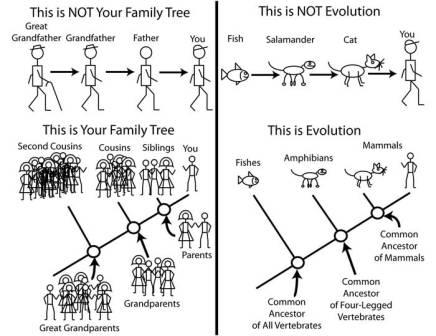
Quick Links

Wow! These are good!
Continue reading

Open Laboratory 2010 – submissions so far

Note: if you have recently moved your blog, please e-mail me the corrected URLs for your entries

The list is growing fast – check the submissions to date and get inspired to submit something of your own – an essay, a poem, a cartoon or original art.

The Submission form is here so you can get started. Under the fold are entries so far, as well as buttons and the bookmarklet. The instructions for submitting are here.

You can buy the last four annual collections here. You can read Prefaces and Introductions to older editions here.

Continue reading

Quick Links

Tomorrow is the start of a very busy week. Good night till then…
Continue reading

Quick Links

Not as many links as usual now, but these are really good:
Continue reading

How to dissect a dinosaur (chicken) – video

Mythbusters – yes, I got to meet Jamie and Adam

Last week, Mythbusters duo of Adam Savage and Jamie Hyneman came to Chapel Hill and did an event at the Dean Dome on UNC campus as the starting event of the NC Science Festival.

I am not going to recap what happened, as Tyler Dukes, Ross Maloney and Maria Gontaruk did it masterfully last week. I want to think a little bit more about Mythbusters and what their show means in the ecosystem of science media and communication, so please continue reading here….

I went to Block By Block conference….

…and wrote about it at ScienceInTheTriangle.com.

Quick Links

Got back from Chicago late last night, exhausted but energized by the Block By Block conference (blog, Twitter). Midway airport has no wifi. Technically, one can buy wifi, which means there is no wifi. And because they use a competitor, there is no way to use iPhone and At&T either. They don’t charge for water, power and use of bathrooms and other travelers’ essentials, so why charge for the equally essential wifi? Ugh.

But anyway, I was reading Brian Switek’s book instead, had great flights there and back, and generally had a blast.

Below the fold – some links for you:
Continue reading

Quick Links

I’ll be in transit (airport or airplane) at the time this hits your feeds. I may not get online, but you can – enjoy these links:
Continue reading

Quick Links

Traveling tomorrow, but you can read these in the meantime:
Continue reading

Block By Block

Next two days I will be at the awesome Block By Block conference in Chicago.

You can see the list of participants, check out the Program and tune in to the live stream of the event.

You can also follow on Twitter – hashtag is #bxb2010.

It is about local, community, online journalism. I am going mainly as a representative of our local science news site – Science in the Triangle.

This is exciting – I am sure I will tweet and blog from there, but mostly I am excited about all the things I will learn and all the forward-thinking people I will meet.

Scientific American – the new look!

Late last night, while you were probably asleep, the Scientific American crew unveiled a re-design of the website – check out the shiny, new look at Scientific American homepage.

The re-design also includes the landing page for all seven of the current blogs – just go here.

As far as I know, each blog has its own RSS feed but there is still no Combined feed, so, in order to aggregate the SciAm blogs on Scienceblogging.org we made a combined feed using FriendFeed – see it here.

Read more about the changes, by Mariette DiChristina and Philip Yam.

The fact that the site redesign is done also means that we can start thinking about, developing and building the new blogging network. This will take some time, but I am chomping at the bit!

Quick Links

Incredibly busy day, but here are the links:
Continue reading

Dot. The world’s smallest stop-motion animation character (video)

Hat-tip (and more detailed explanation): Tracy Staedter

Quick Links

Off to Sigma Xi pizza lunch – in the meantime, read these:
Continue reading

Journal of Science Communication

Issue 03, september 2010 of Journal of Science Communication is out – always full of articles interesting for further discussion by science bloggers:

Road maps for the 21st-century research in Science Communication:

This is an introduction to the essays from the Jcom commentary devoted to the statute and the future of research in science communication. The authors have a long experience in international research in this domain. In the past few years, they have all been committed to the production of collective works which are now the most important references for science communication research programmes in the next few years.
What topics should science communication research focus on and why? What is its general purpose? What is its real degree of autonomy from other similar fields of study? In other words, is science communication its ‘own’ field? These are some of the questions addressed by the in-depth discussion in this Jcom issue, with the awareness that science communication is a young, brittle research field, looking for a shared map, but also one of the most stimulating places of the contemporary academic panorama.

Notes from some spaces in-between:

Science communication is less a community of researchers, but more a space where communities of research coexist to study and deal with communities of researchers. It is, as a field, a consequence of the spaces left between areas of expertise in (late) modern society. It exists to deal with the fragmentations of expertise in today’s society. In between those fragments is where it lives. It’s not an easy position, but an awareness of this unease is part of how science communication scholars can be most effective; as we examine, reflect, debate and help others manage the inescapable cultural gaps of post/late modern knowledge communities.

Science communication, an emerging discipline:

Several publications have sought to define the field of science communication and review current issues and recent research. But the status of science communication is uncertain in disciplinary terms. This commentary considers two dimensions of the status of discipline as they apply to science communication – the clarity with which the field is defined and the level of development of theories to guide formal studies. It argues that further theoretical development is needed to support science communication’s full emergence as a discipline.

From analogue to digital scholarship: implications for science communication researchers:

Digital media have transformed the social practices of science communication. They have extended the number of channels that scientists, media professionals, other stakeholders and citizens use to communicate scientific information. Social media provide opportunities to communicate in more immediate and informal ways, while digital technologies have the potential to make the various processes of research more visible in the public sphere. Some digital media also offer, on occasion, opportunities for interaction and engagement. Similarly, ideas about public engagement are shifting and extending social practices, partially influencing governance strategies, and science communication policies and practices. In this paper I explore this developing context via a personal journey from an analogue to a digital scholar. In so doing, I discuss some of the demands that a globalised digital landscape introduces for science communication researchers and document some of the skills and competencies required to be a digital scholar of science communication.

Coming of age in the academy? The status of our emerging field:

Science communication is certainly growing as an academic field, as well as a professional specialization. This calls to mind predictions made decades ago about the ways in which the explosion of scientific knowledge was envisioned as the likely source of new difficulties in the relationship between science and society. It is largely this challenge that has inspired the creation of the field of science communication. Has science communication become its own academic subdiscipline in the process? What exactly does this entail?

Open science, a complex movement:

Science must be open and accessible, and diffusion of knowledge should not be limited by patents and copyrights. After the Open Science Summit held in Berkeley, some notes about sharing scientific data and updating the social contract for science. Against the determinist view on technological and legal solutions, we need an explicit reflection on the relation between science and society. Both academic and industrial science seem unable to fulfill open science needs: new societal configurations are emerging and we should keep asking questions about appropriation, power, privatisation and freedom.

Greek students’ images of scientific researchers:

Public images of scientific researchers –as reflected in the popular visual culture as well as in the conceptions of the public- combine traditional stereotypic characteristics and ambivalent attitudes towards science and its people. This paper explores central aspects of the public image of the researcher in Greek students’ drawings. The students participated in a drawing competition held in the context of the ‘Researcher’s Night 2007’ realized by three research institutions at different regions of Greece. The students’ drawings reveal that young people hold stereotypic and fairly traditional and outdated views of scientists and scientific activity. Research institutions are faced with the challenge of establishing a sincere and fertile dialogue with society to refute obsolete and deceiving notions and to promote the role of researchers in society.

The rhetoric of computer simulations in astrophysics: a case study:

This article is a case study and rhetorical analysis of a specific scientific paper on a computer simulation in astrophysics, an advanced and often highly theoretical science. Findings reveal that rhetorical decisions play as important a role in creating a convincing simulation as does sound evidence. Rhetorical analysis was used to interpret the data gathered in this case study. Rhetorical analysis calls for close reading of primary materials to identify classical rhetorical figures and devices of argumentation and explain how these devices factor in the production of scientific knowledge. This article describes how abduction, dilemma, compensatio, aetiologia, and other tactics of argumentation are necessary in creating the simulation of a supernova. Ultimately, the article argues that rhetorical mechanisms may be responsible for making some simulations better and more sound than others.

Pandemic on the air: a case study on the coverage of new influenza A/H1N1 by Brazilian prime time TV news:

In this paper we analyze the coverage of the pandemic influenza caused by the A (H1N1) virus by the main Brazilian TV news. Jornal Nacional (JN) – which can be roughly translated with National News – reaches an average of 25 million people throughout the country daily. We have observed that the attention cycle given to the new flu by JN lasted approximately five months with significant space given to the disease. Most of the news highlighted the number of illness cases and the health measures to control the infection. Only a small amount of news dealt with issues related to research and scientific development, and included scientists as interviewees or as information sources. We believe that the coverage made by JN may have contributed to the dissemination of what some authors refer to as a “pandemic of panic”.

Stick Science cartoons

Stick Science cartoon winners announced – see all the finalists and winners here. My favourite, #6 did not win, unfortunately:

Quick Links

First day at work…not much happening yet, mostly paperwork stuff. So plenty of time to find good links for you:
Continue reading

Open Laboratory 2010 – submissions so far

Note: if you have recently moved your blog, please e-mail me the corrected URLs for your entries

The list is growing fast – check the submissions to date and get inspired to submit something of your own – an essay, a poem, a cartoon or original art.

The Submission form is here so you can get started. Under the fold are entries so far, as well as buttons and the bookmarklet. The instructions for submitting are here.

You can buy the last four annual collections here. You can read Prefaces and Introductions to older editions here.

Continue reading

Quick Links

Saw Jamie and Adam of Mythbusters today (live). May blog about it later. In the meantime, read these:
Continue reading

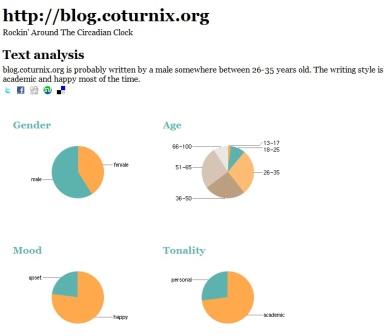
A happy academic, I am

According to this I am a little younger in my writing than in real life:

Check your own blog here.

[Hat-tip: Larry Moran]

Quick Links

Busy time – last night Anton Zuiker and I got together and did some work on ScienceOnline2011. This morning I taught my BIO101 Lab. But I did manage to read some good stuff online in-between: here are the links.
Continue reading

Quick Links

Thank you all for the wonderful response to yesterday’s good news – here in the blog comments, on Twitter, FriendFeed, Facebook, by e-mail and in person. It was a busy and overwhelming and happy day – also our 18th wedding anniversary! The job starts on Monday, and I will give you updates as I go, whenever there is something to update you on.

In the meantime, a lot of other people wrote interesting stuff online so I will not be remiss in my duty sending you out to all those great articles – under the fold:

Continue reading

Alert! Some Big And Important And Exciting News!

I have no idea how well I managed to keep this secret – at least 20 people already know this for sure. But you should know as well. There have been some big changes in my life over the past couple of weeks.

My e-mail address, my cell phone number, even my snail-mail address will remain the same, at least for a while. But some other important things will change, as…

…I got an offer I could not refuse.

After the unfortunate Pepsi event, I left Scienceblogs.com and wrote a couple of long, detailed posts about the new science blogging ecosystem, and even got together with a few friends and built a website that can help you track all the changes.

Many people expected I would join another network quickly, so they got progressively more curious as they noticed I did not join Scientopia, Guardian Science Blogs, PLoS Blogs or Wired Science Blogs. I kept getting questions. I heard gossip. But the day has finally arrived for me to announce.

I will be doing this:

Blog and Community Editor, Scientific American : New York, NY:

Scientific American seeks an editor to acquire and manage our expanding blogger network. The position requires at least three years of experience in online editorial positions for science-related outlets.

The ideal candidate will have a facile writing style and a demonstrable track record for successful online community development; a discerning eye for finding engaging scientists in various disciplines who want to engage directly with the public through blogging; the ability to develop editorial packages from the material for print and digital media; familiarity with the production of online material; and the ability to negotiate and manage rights and other associated administrative functions.

The job requires an organized, highly motivated individual who can work in a fast-paced environment and in our Manhattan offices.

Except, I will only be visiting Manhattan offices a few times a year, and will do most of the work from home, here in Chapel Hill. This may change a year from now – a move to NYC is definitely not going to be off the table at that time.

So yes, I will be working with the Scientific American editors and staff in conceptualizing, building, launching and then running a new science blogging network. How could I say No when given such a chance? To do what I love and what I think I can do well, and all of that under the banner of a magazine that was published continuously since 1845.

Mine is actually one of three new appointments at Scientific American announced today. The other two are Christine Gorman who will primarily edit health and medicine features, and Anna Kuchment who will edit the front of the book section of the magazine. You can read about all three of us in the press release. About my role, the press release says:

In this new role at Scientific American, Bora will recruit talented science bloggers and serve as moderator for the community, encouraging discussion and facilitating the exchange of ideas with both the bloggers and Scientific American readers.

Now, as you may know, blogging is nothing new to Scientific American. They have had six blogs for many years now: Observations written by SciAm editors and reporters, Expeditions written by researchers from the field, Extinction Countdown where John Platt introduces endangered species, Solar at Home where George Musser chronicles his attempt to solarize his house, Cross-check where John Horgan covers the news, Bering in Mind where Jesse Bering writes about the Brain and the Mind, and the Guest Blog which hosts the posts by a variety of invited science and blogging luminaries. Their international editions have their own multi-author blogs and networks in several languages.

And then there are all sorts of other cool things on the site, including podcasts, images, multimedia, Ask the Experts and much more.

There is a wealth of stuff on the site already, so we’ll now start figuring out how to build a fun and useful blogging network that is well incorporated into the rest of the site, well connected to the rest of the science blogging ecosystem, and will be a destination for many who are interested in science. It is too early in the game to say much, but I will keep you posted over the next couple of months as we start developing the network.

This also means that I am leaving PLoS after more than three years with the organization. This was a hard decision to make – working at PLoS was a fantastic experience, it opened so many other doors for me, and the office is full of great people I am happy to call my friends. I want to thank everyone there for a great time, for giving me all the opportunities, and for educating me about nuances of Open Access publishing (of course I will remain an OA evangelist!).

As recently as three or four weeks ago, I was involved in developing PLoS Blogs and was slated to move my blog there. But the offer from Scientific American changed that – I will either move this blog or start a new one at the SciAm network once it is ready to launch. My bora@plos.org e-mail will be discontinued pretty soon and I assume I will get a new one from SciAm, but my personal address, Coturnix@gmail.com, will always work. Or DM me on Twitter, FriendFeed or Facebook, or post a comment here on the blog. I am not going anywhere – if anything, you will see and here even more from me in the future!

Quick Links

Busy day today. Busy day tomorrow. Some links anyway….
Continue reading

Introducing Wired Science Blog network!

There is a new science blogging network in town – the Wired Science Blogs!

The launch was announced earlier today by Betsy Mason (Twitter), the editor of Wired Science. She will be assisted, as Online Community Manager, by Arikia Millikan (blog, profile, Twitter) whose experience in managing online communities (from Scienceblogs.com, through Psychology Today blogs to Haiti Rewired) is unprecedented.

The new network is starting with an All-Star line-up of science bloggers:

Brian Switek (Twitter) has moved his blog Laelaps from here via here to the brand new shiny Laelaps on Wired.

Maryn McKenna (Twitter) moved from here, via here to the new version of Superbug at Wired.

David Dobbs (Twitter), previously here and here, alights today on the new Neuron Culture on the network.

Brian Romans (Twitter), is moving his blog from here to the new Wired version of Clastic Detritus.

Rhett Allain (Twitter) will keep blogging about physics, but instead of at the old place, he’ll do it at Wired, on Dot Physics.

Jonah Lehrer (Twitter) was the first one to move to the Wired network, from here to the new Frontal Cortex

Daniel MacArthur (Twitter), currently here, will also join the crew shortly, moving his Genetic Future blog to an URL that will be something like this.

And the original Wired Science Blog will continue publishing with multiple authors (including, I assume, both Betsy and Arikia).

The combined RSS feed is not ready yet, but you can grab the feeds of all the individual blogs you are interested in. And don’t forget that the network now has its own official Twitter account – @wiredsciblogs.

This is a great new development in the evolution of the science blogging ecosystem. Congratulations to the Wired team on the good job and to the bloggers for landing on such a cool network. We’ll bookmark, subscribe and read…

Quick Links

Calm before the storm….
Continue reading

Open Laboratory 2010 – submissions so far

Note: if you have recently moved your blog, please e-mail me the corrected URLs for your entries

The list is growing fast – check the submissions to date and get inspired to submit something of your own – an essay, a poem, a cartoon or original art.

The Submission form is here so you can get started. Under the fold are entries so far, as well as buttons and the bookmarklet. The instructions for submitting are here.

You can buy the last four annual collections here. You can read Prefaces and Introductions to older editions here.

Continue reading

Quick Links

Good morning….
Continue reading

Quick Links

Good night. Tomorrow is another week….
Continue reading

Images on Scienceblogging.org

If you upload your images that in some way relate to science blogging (e.g., from various related conferences, meetups, events, etc.) and give them a tag #scienceblogging on Flickr, they will appear on the front page at http://scienceblogging.org/ (scroll down a little bit to see them). See the related blog post.

Carnival reminders

The Carnal Carnival #2 – Vomit:

The next Carnal Carnival will go up on Friday 9/17, hosted by Carin Bondar, and the theme is vomit.

Which means you still have a few days to send your barfiest posts to:
carnivalcarnal AT gmail DOT com
or to
carin AT carinbondar DOT com

==============

3 days until The Giant’s Shoulders #27

There’s only 3 days left before the deadline of the next edition of The Giant’s Shoulders history of science blog carnival! It will be held at Entertaining Research, and the deadline for entries is September 15th. Entries can be submitted through blogcarnival.com or directly to the host blog, as usual!

===============

Berry Go Round – call for submissions to the plant blog carnival

Yes, I will host Berry Go Round, the Botanical blog carnival this month.

The deadline for entry is September 28th at 6pm Eastern time, and the carnival will alight on the 29th.

There are several ways to submit your entries – go here for instructions. If nothing else works, send me the URLs at: coturnix AT gmail DOT com.

Quick Links

It’s still weekend, right?
Continue reading

Quick Links

Teaching tomorrow, The Monti in the evening, a busy weekend, so read these until Monday:
Continue reading

‘Instant Elements’ using Google Instant Search (video)

Quick Links

Busy (but good) day today, more tomorrow, some links to keep you busy till then:
Continue reading

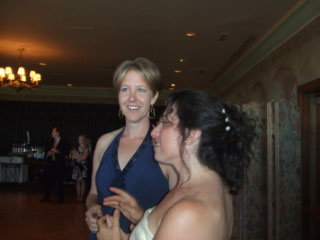
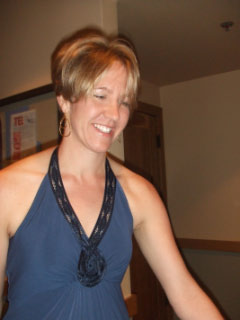
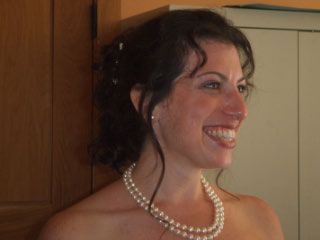
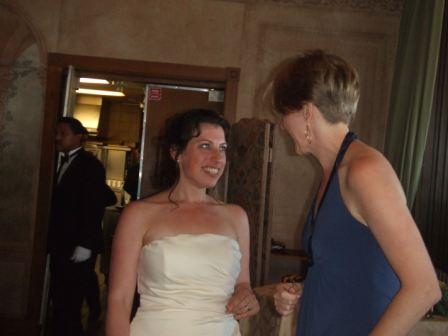
The Most Awesome Wedding

Last weekend, we went to a wedding in New Jersey.

My wife, being in the wedding, went earlier in the week. My teenage son is too cool to go to a wedding so he stayed with Grandma, programming something on his computer. So my daughter and I got on a train early Friday morning (the Carolinian) in Durham. I don’t think she has ever been on a train before! As for me, I traveled by train a lot back in Europe, but not so much in the States – a trip to Charlotte a decade ago, a quick ride in San Francisco in 2007, that’s about it. And this is a looooong ride – about 10 hours from Durham to Newark, NJ.

The train ride was very comfortable. The train is clean, spacious, people on it nice, so I wonder why we don’t use train more often. Ten hours is a lot of time. My daughter and I chatted some, went to the diner car to get some food and drinks a couple of times (though we did stock up on chocolate, chips and sodas before boarding), looked out of the window, etc. She loaded a few movies onto her laptop and watched a couple of those. I read some of Carin Bondar’s delightful book ‘The Nature of Human Nature’. There were parts of rural North Carolina and Virginia where there was no signal for my iPhone, but for the most of the trip the train passes through urban areas and, although there is no wifi on the train itself, there was sufficient signal for my iPhone to be useful. I spent a lot of time reading science blogs via Scienceblogging.org and realized how useful the site is (and that it does not really need a special mobile version – it works fine as it is).

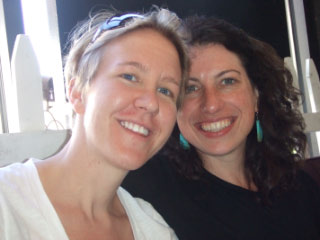
We arrived in Montclair, NJ in the evening and were first taken to a high point (High Lawn Pavillion, for those familiar with the area) from which we could see the night skyline of Manhattan. We stayed with the parents of the bride. Actually, one of the brides. This was to be a wedding in a same-sex marriage, a first one I attended. And also a Jewish wedding (not a first for me, though).

On Saturday, we had time to get on a bus and spend the morning in Manhattan, have lunch there, and meet some friends (you may have seen some pictures I posted on Facebook – my wife has much more still to upload). The Saturday dinner was organized by the parents of the other bride and the wedding itself was on Sunday (we drove back on Monday – a drive much easier and smoother – and with the truck stops much cleaner – than what I remember from 19 years ago, the last time I went that way by I-95, in the opposite direction – North).

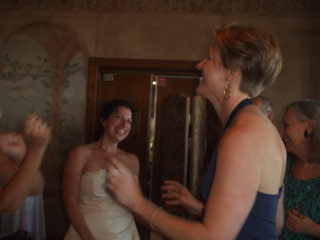
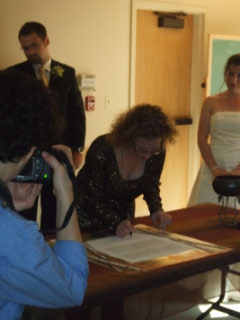
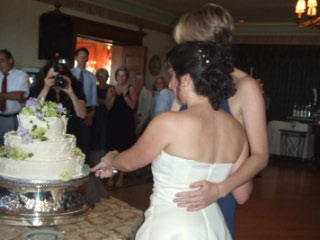
This was probably the most fun and relaxed wedding I ever attended (it is hard not to be nervous at one’s own, so I’ll refrain on commenting on that one). The rabbi had fun. Both brides had fun. Everyone in the synagogue had fun. Not a dull or tense moment during the entire ceremony. It was beautiful, it was spiritual, yet it all felt so normal, so natural, I had to remind myself at the end that I was participating in history. A ceremony like this, just a few years ago, would not just have been impossible, but unthinkable.

The two brides come from two very different families. One from the North, the other from the South. One Democratic, the other Republican. One Jewish, the other Christian. In many ways – polar opposites. Yet both families stepped up to the plate and embraced each other fully.

It was not just Lisa and Erika being revolutionaries and trailblazers. It was not just that Lisa and Erika got married to each other and a couple of hundred of us were there. We were not just observers, but participants. I like to think that each one of us came out of it a better person. That each one of us is now a seedling, making the world a better place wherever we may be.

Quick Links

A few for now, more posts by me soon, I promise:
Continue reading

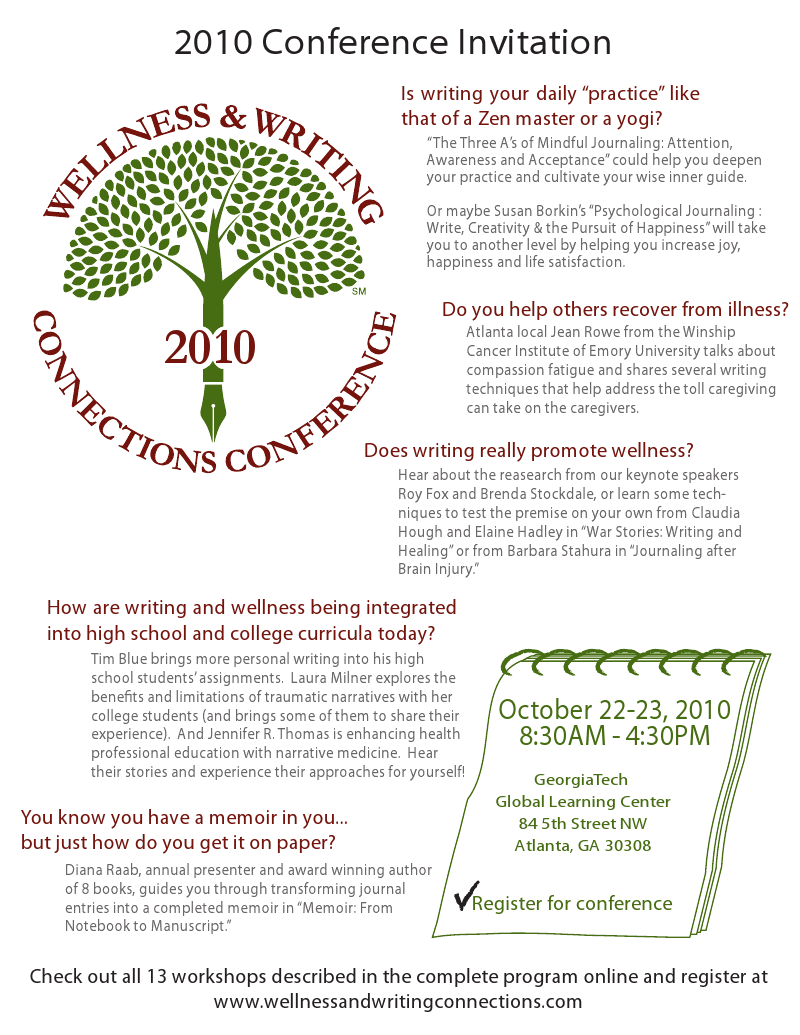
Wellness and Writing Connections Conference

Wellness and Writing Connections Conference:

The annual Wellness and Writing Connections Conference will be held October 22-23, 2010 at the Georgia Tech Global Learning Center in Atlanta, GA.

This two-day conference brings together a number of powerhouse leaders in the field of writing for health and healing. Breakout sessions include writing and healing in wartime, writing and compassion fatigue, and writing in integrative medicine, in addition to topics in journaling, memoir, psychological journaling, student writings, and more.

Now, more than ever, creative expression, writing, and the arts are being used in medical settings to process experiences of illness and trauma. Research led by Dr. James Pennebaker has shown that the use of writing has physiological benefits to health and can aid in healing from both physical and emotional trauma.

The Friday evening keynote address will feature Roy Fox, Professor of English Education and Director of the Missouri Writing Project at the University of Missouri. The keynote address on Saturday evening will feature Brenda Stockdale, Director of Mind-Body Medicine for the Radiology Clinics of Georgia. Additional speakers include Lucille Allegretti-Freeman, Tim Blue, Susan Borkin, Angela and Dennis Buttiner, Claudia-Hill Duffee, Carolyn Graham, Claudia Hough, Elaine Handley, Leatha Kendrick, Laura Miller, Diana Rash, Jean Rowe, and Barbara Stahura.

To find out more information and to register, contact Director John Evans at info@wellnessandwritingconenctions.com or visit http://www.wellnessandwritingconnections.com and the Facebook page.

[click on the image to see large]

Continue reading

Quick Links

Shana tova!!!
Continue reading

How to write and publish a science book?

SCONC Presents: Writing Science: Local Authors Discuss Their Craft (an N.C. Science Festival event):

Join the Science Communicators of North Carolina as we probe the minds of local science writers to find out how they go about the process of writing a book.

How are ideas generated? What does their research process entail? How do they go about getting words down on the blank page/screen? What is the editing process like? Once the book is finished, what next?

Find out the answers to these questions and pose your own.

Panel includes:

T. Delene Beeland (blog, Twitter), author of the forthcoming The Secret World of Red Wolves.

Scott Huler (blog, Twitter), author of On the Grid (review).

Glenn Murphy, author of Why is Snot Green?

Moderated by Russ Campbell (blog, Twitter) of the Burroughs Wellcome Fund.

Thursday, September 23, 2010 from 6:30 PM – 8:00 PM (ET) in Research Triangle Park.

Get your free ticket(s) here!

Really bad timing for me – I’ll be at the Block by Block summit on exactly the same day. I hate I will have to miss this. But you should go if you are in the area! This is bound to be awesome!

Quick Links

Just a few to get you going for the day…
Continue reading

Quick Links

Linky goodness for today:
Continue reading

Look Up! The Billion-Bug Highway You Can’t See (video)

Quick Links

Something to keep you busy today:
Continue reading

ScienceOnline2010 – interview with Morgan Giddings

Continuing with the tradition from last two years, I will occasionally post interviews with some of the participants of the ScienceOnline2010 conference that was held in the Research Triangle Park, NC back in January. See all the interviews in this series here. You can check out previous years’ interviews as well: 2008 and 2009.

Today, I asked Morgan Giddings to answer a few questions.

Welcome to A Blog Around The Clock. Would you, please, tell my readers a little bit more about yourself? Where are you coming from (both geographically and philosophically)? What is your (scientific) background?
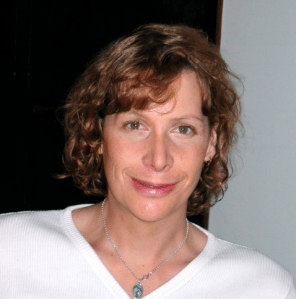
I am presently situated geographically in the center of North Carolina, specifically the Triangle area. If someone has already done it, then I’m bored with it. If the answers are already known, then I’m looking somewhere else.

My scientific background combines degrees in Physics, Computer Science, and a PhD focused on bioinformatics from UW Madison. After that, I got introduced to proteins and proteomics, and ever since have been tinkering with systems and approaches for combining proteomics, genomics, and computing to do hopefully useful things like helping to annotate the genes on the human genome.

My philosophy is that academic science has boxed itself into a bit of a corner with the direction it’s been headed. The “single pathway or system” focus that worked so well 20 years ago no longer works. We are in the era of “integration” but nobody knows how to do it. I am working on a book that touches on this.

Mid-career I had a realization that we scientists are horrible marketers for our work. I had this realization after co-founding a sustainable lifestyles bike shop, and trying to apply my “academic scientist” mentality to selling bikes. It didn’t work. After re-programming myself to market better, I realized that this also applies to everything I do in running a science lab.

That is the basis of my book “Four Steps To Funding” and another upcoming book, “The Golden Ticket in Science”.

Tell us a little more about your career trajectory so far: interesting projects past and present?

I started in computer science and physics, then jumped ship as I started pursuing a PhD in computer science. I realized that pure computer science was a bit too dry for me. I joined a lab developing DNA sequencing technology, fell in love with combining computers and biology, and never looked back. After developing software for interpreting DNA sequencing data, I moved onto the harder problem of interpreting protein data from Mass spectrometers (so called proteomics). That opened up a lot of interesting projects, including:

– Contributing to a deep annotation of the Human Genome using protein/proteomic data

– Modeling bacterial systems with “agent based models” to uncover the basis of behaviors like chemotaxis and competence switching

– Developing methods to find posttranslational modifications on proteins from mass spectrometry data

– Examining the mechanisms that lead to antibiotic resistance in the bacterium P. aeruginosa

What is taking up the most of your time and passion these days? What are your goals?

My time is split between standard academic duties, and my true passion, which is figuring out the “meaning of life” and writing books about it.

After I finish my next book on science careers, I’ll move onto my most ambitious project, which is a book that ties together consciousness, evolution, computing, and creativity. More on that when the time comes.

I also spend some fair bit of time helping scientists advance in their careers through consulting and training on things like how to get more grants and less rejections.

What aspect of science communication and/or particular use of the Web in science interests you the most?

I love blogging and writing. I love giving talks, and figuring out how to convey a message to an audience for the maximal effect possible.

This is why I think “marketing” is so powerful. Marketers have studied how to convey effective messages to people for as long as there have been goods to sell. In particular, the last 100 years have seen many studies of human behavior in the context of how we receive (or don’t) messages.

While some might only associate marketing with nefarious purposes, I take the strong view that it is a value neutral activity. You can use it to promote bad things or good things.

Since most science is good to some extent, I believe that applying marketing could more effectively convey the value of science to other scientists, and the rest of the populace.

Considering that science funding is ever more in doubt, this couldn’t come a moment too soon. All of us scientists should be out telling people what benefit science brings to their lives, and doing so in the most effective way possible. I believe that if we don’t get our act in gear on this point, then science funding will continue to dwindle.

Hence, I am well on my way to becoming a definitive go-to resource on how to “market” one’s science, whether it is in writing a grant proposal, or talking to a member of congress.

How does (if it does) blogging figure in your work? How about social networks, e.g., Twitter, FriendFeed and Facebook? Do you find all this online activity to be a net positive (or even a necessity) in what you do?

I use blogging both to report on some of my science work, as well as to opine about matters related to “science marketing” and science careers. I use social networks to achieve further reach for some of the ideas, but frankly, I don’t have enough time to do that with regularity.

I find that the blogging (both my own and others’) is essential for forward progress, particularly in discussing matters that don’t get published in journal articles – like how to grow and manage a lab, or how to get a grant funded in a competitive environment.

When and how did you first discover science blogs? What are some of your favourites? Have you discovered any cool science blogs by the participants at the Conference?

I discovered them through tweets by Bora Zivkovic, sometime in 2009.

I like A Blog Around The Clock, and a wide variety of other science blogs. I’m more focused on finding blog-posts with relevant content than following specific blogs.

What was the best aspect of ScienceOnline2010 for you? Any suggestions for next year? Is there anything that happened at this Conference – a session, something someone said or did or wrote – that will change the way you think about science communication, or something that you will take with you to your job, blog-reading and blog-writing?

I realized how far I have to go in conveying the notion to my peers that we, as scientists and science communicators, must up our game on “marketing” our work. For example, I attended a session on how to get published with several authors. While it was clear that the authors were ahead of most of the audience in “figuring out” the marketing game for their books, there is a lot of content elsewhere in the world on how to do this successfully that hasn’t filtered into the science community. It was also clear from the questions that were asked by the audience that everyone is still stuck in thinking of book publishing in the traditional model of: get an agent, have the agent find a publisher, then have the publisher publish, promote, and distribute the book.

But things are rapidly changing. For example, e-books are a great alternative to the above model that provide a lot more flexibility to the author (and potentially profit, too). And there are lots of ways to self-publish a physical book as well, without having to go through a “gatekeeper”.

After having self-published my first book, I’d never do it any other way. I can see going with a publisher only if/when I’ve sold enough copies and had enough feedback that I really have strong evidence that it is a concept worth producing thousands of copies of.

In fact publishers are going towards this model as well. They prefer taking successful self-published titles, because it reduces their risk.

But the key to self-publishing is understanding how to market one’s work. Anyone who tries to self publish without understanding that will fail.

So the options for those who wish to publish their ideas in a book, without having to do any promotion or marketing, are becoming very scarce. This means that everyone needs to better learn to market their ideas. By marketing I mean “making the content and message relevant to the audience.”

I’d like to see more discussion on this point at a future conference.

The other thing I notice is that the people who attended the conference are the leaders in science communication. Many scientists are mostly (or completely) oblivious to the rapidly changing nature of science communication. I believe it will be important to spread the message more widely to working scientists as to why modern science communication is so important. I think that the conference could play a role in that.

It was so nice to meet you in person and thank you for the interview. I hope to see you again next January.

Thanks for the opportunity!

Berry Go Round – call for submissions to the plant blog carnival

Yes, I will host Berry Go Round, the Botanical blog carnival this month.

The deadline for entry is September 28th at 6pm Eastern time, and the carnival will alight on the 29th.

There are several ways to submit your entries – go here for instructions. If nothing else works, send me the URLs at: coturnix AT gmail DOT com.

Quick Links

An incredibly productive Labor Day:
Continue reading

Open Laboratory 2010 – submissions so far

Note: if you have recently moved your blog, please e-mail me the corrected URLs for your entries

The list is growing fast – check the submissions to date and get inspired to submit something of your own – an essay, a poem, a cartoon or original art.

The Submission form is here so you can get started. Under the fold are entries so far, as well as buttons and the bookmarklet. The instructions for submitting are here.

You can buy the last four annual collections here. You can read Prefaces and Introductions to older editions here.

Continue reading

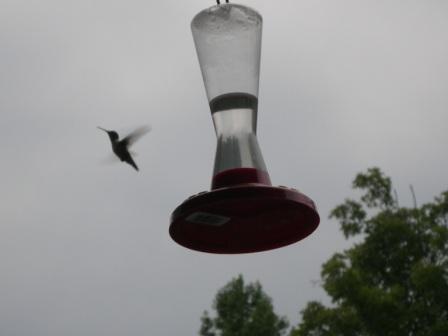
Hummingbirds at the feeder