

Grab my RSS feed:
Recent Comments:
Bora Zivkovic on Morning at Triton Angie Lindsay Ma on Morning at Triton Linda chamblee on Morning at Triton Jekyll » Blog… on The Big Announcement, this tim… Mike H on The Big Announcement, this tim… -
Buy the 2009 Science Blogging Anthology:

Buy the 2008 Science Blogging Anthology:

Buy the 2007 Science Blogging Anthology:

Buy the 2006 Science Blogging Anthology:


CC licence

This work is licensed under a Creative Commons Attribution-NonCommercial-ShareAlike 3.0 Unported License.PayPal

Sitemeter
#Scio11: Robert Krulwich Interview (SITT Exclusive) – video
Comments Off on #Scio11: Robert Krulwich Interview (SITT Exclusive) – video
Posted in SO'11
ScienceOnline2011 – videos from Thursday night opening and Keynote
Comments Off on ScienceOnline2011 – videos from Thursday night opening and Keynote
Posted in SO'11
Two new posts on the SciAm Guest Blog
Sorry for the delay – in the middle of packing and moving to a new apartment….
There are two new posts on the Scientific American Guest Blog.
Today, Robynne Boyd continues her series of posts about making sure her house is energy-efficient. See The Low-Carbon Diet: One Family’s Effort to Shrink Carbon Consumption (Part 2: A Little Research Goes a Long Way).
And yesterday, May Benatar wrote Psychotherapy and the healing power of narrating a life.
Comments Off on Two new posts on the SciAm Guest Blog
Posted in SciAm
Two new posts on SciAm Guest Blog – healthy obesity and milk
There are two new posts on the Scientific American Guest Blog today.
First up this morning was Anecdotes from the Archive: Diesel Milk by Mary Karmelek.
Then, at noon, Peter Janiszewski posted Can you be obese and healthy?
Read, comment, share!
Comments Off on Two new posts on SciAm Guest Blog – healthy obesity and milk
Posted in SciAm
New post on the SciAm Guest Blog – on the mores of makeup
For today’s Scientific American Guest Blog post, Christine Ottery interviewed Mark Changizi. The result is this piece: The mores of makeup. Enjoy, comment, share…
Posted in SciAm
Two new posts on SciAm Guest Blog
There are two new posts on the Scientific American Guest Blog today.
First up this morning is The Lady and the Trump–without hungry puppies: The science of stray dog sterilization by Cynthia Mills.
Then, continuing with the regular series, Anecdotes from the Archive: Taking On the Monocle Problem by Mary Karmelek.
Enjoy, comment, share…
A required reading for ScienceOnline2011 participants (including virtual) on rhetoric of #arseniclife, on the SciAm Guest Blog
Today on the Scientific American Guest Blog, the new post is by Marie-Claire Shanahan. Read An arsenic-laced bad-news letter: Who is the audience for online post-publication peer review?, comment and share!
Comments Off on A required reading for ScienceOnline2011 participants (including virtual) on rhetoric of #arseniclife, on the SciAm Guest Blog
Posted in SciAm
Some fun stats about the participants of ScienceOnline2011
While the public list of participants is still a little bit in flux – a few people just canceled and we scrambled to get some waitlisters in – the statistics on all of them are interesting (click on link to see large and play):

For example – 199 identified themselves as bloggers but 222 say they blog, so some people who use blogging software use it for something else they do not consider to be be blogging.
We have guests from eight countries: 264 from USA, 14 from Canada, 14 from the U.K., two from Netherlands, two from Germany, one from Ireland, one from Italy and one from Malaysia.
Canadians come from four different provinces: Ontario, Alberta, Nova Scotia and British Columbia.
Not all Brits are from Central London either, there are one each from Avon, Berkshire and Surrey.
We have guests from 35 states of the USA: NC – 95, NY – 42, CA – 20, DC – 10, IL – 9, MA – 8, PA – 7, VA – 7, GA – 6, FL – 5, MD – 5, TX – 5, CO – 4, IN – 4, MO – 3, SC – 3, WA – 3, WI – 3, CT – 2, DE – 2, IA – 2, KY – 2, TN – 2, AZ – 1, HI – 1, ID – 1, ME – 1, MN – 1, MT – 1, NH – 1, NJ – 1, NM – 1, OH – 1, OR – 1, UT – 1
Out of 95 from North Carolina, 75 reside in the Triangle area – the rest are spread from the mountains (Saluda), through Charlotte area, to the coast (e.g, Wilmington).
Check the stats yourself. We’ll also do some more later, e.g., the gender break-down etc. I think there will be 10 attendees younger than 18 years old, but I am not sure how old is the oldest participant (last year it was 75!) – there must be quite a range.
Posted in SO'11
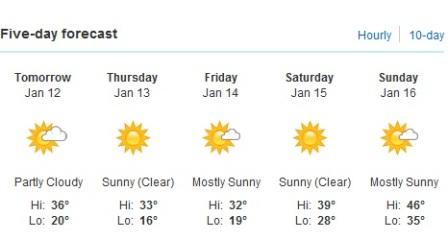
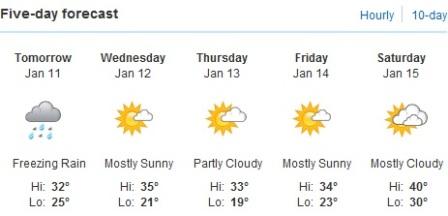
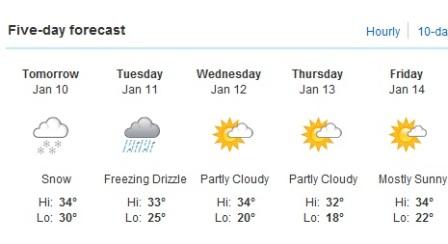
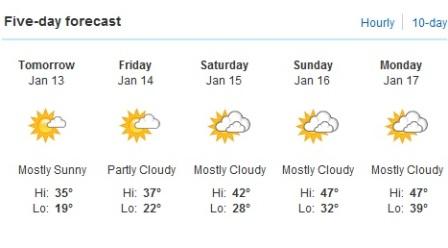
Weather in Chapel Hill this week
Right now it is sunny and clear. The major roads are dry, and the ice is rapidly melting on sidewalks:
New post on the SciAm Guest Blog – Words, pictures, and the visual display of scientific information
On the Scientific American Guest Blog today, Lena Groeger provides a number of examples, some very old some brand new, of good and bad visual representation of scientific information in Words, pictures, and the visual display of scientific information: Getting back to the basics of information design. Enjoy, comment and share!
Two new posts on the SciAm Guest Blog: Bed bugs and Invisibility Cloaks
There are two new posts today at the Scientific American Guest Blog.
First, from the June 1924 issue – Anecdotes from the Archive: Bed Bugs are vintage, and vintage is in, by Mary Karmelek.
Then, see Invisibility: After several years of research, it’s just gotten weirder by Greg Gbur, aka Dr.SkySkull.
Read, comment, share…
Citizen Science Project at ScienceOnline2011
One of the special speakers at the banquet at ScienceOnline2011 will be Dr. Margaret (Meg) Lowman, the Director of the North Carolina Museum of Natural Sciences‘ Nature Research Center.
The Nature Research Center (NRC) is “the new 80,000-square-foot wing of the Museum dedicated to bringing scientific research into the public eye. Currently under construction in the block west of the Museum, the NRC is scheduled to open in early 2012. Lowman is also Research Professor of Natural Sciences in the College of Physical and Mathematical Sciences at NC State University, where she focuses on initiatives involving communicating science to the public.”
The way I understand the concept of NRC is that the Museum visitors (and a number of ScienceOnline2011 participants will go on a traditional tour of the Museum and its basement vaults) will have an opportunity there to interact with real working scientists, observe them at work, talk to them and ask questions, and importantly, to try their own hands at doing stuff. A number of local labs are going to be involved in this, putting some of their research resources into the building and doing their work under the eyes (and probably continuous questioning and conversation) of the curious public.
One of the participants in this endeavor will be Dr.Rob Dunn from the NCSU Biology Department (yes, that is my old Department, now renamed).
Now, to understand what next I will say, you need to be familiar with Rob Dunn’s recent blog post, The top 10 life-forms living on Lady Gaga (and you), especially point #5: Vanity.

Just as was described in the post, visitors of the NRC at the Museum will be able to volunteer to have bacteria from their navels cultured and photographed and e-mailed to them.
NRC is not open yet, but attendees of ScienceOnline2011 on Sunday will be the very first to be offered this opportunity to participate. As Meg Lowman will also explain during the Saturday banquet, there will be a table set up at Sigma Xi on Sunday morning where you can donate your bellybutton lint. Provide your e-mail, and you’ll get a picture of the cultures.
Now, I know that this is not Citizen Science in the proper definition of the word. But, knowing the people who attend this meeting, I bet they can find creative ways to actually turn it into something more like it. Perhaps all of the images can be pooled into a single online place, perhaps a geographical map (including perhaps additional information about the donors, e.g,. bathing habits – morning vs. evening showers, usual type of clothes they wear, etc.). Or, some of the participants who have labs with required capabilities may go a step further and repeat the experiment at home but also sequence the microbial metagenomes of their navels, then get together with each other and publish a comparative study. Who knows, we may all learn something new from the exercise? Or at least they can be strong contenders for the next IgNobels…
New post at SciAm Guest Blog – could Chessboxing prevent violence?
The Scientific American Guest Blog has a new post. And it is coincidentally and eerily relevant to the unfortunate Arizona event from Saturday.
Read Andrea Kuszewski’s post Chessboxing Is Fighting For Good Behavior, comment and share.
Comments Off on New post at SciAm Guest Blog – could Chessboxing prevent violence?
Posted in SciAm
Open Laboratory 2010 – is your post in it?
You can now see for yourself! The 50 essays (plus 6 poems and 1 cartoon) have been chosen by a large and energetic panel of judges.
I will give the honors to Jason – go to his blog post announcing and linking to all the winning entries to see for yourself. Jason deserves all the traffic and accolades – he worked hard, was efficient and diligent…and he is such a softie! I think he cried about 850 times over the past month as all but the 50 out of 900 entries had to, one by one, get eliminated….
Congrats to all the winners – Jason will be in touch with you shortly about editing and formatting the final version.
Two new posts on the SciAm Guest Blog
There are two new exciting posts on the Scientific American Guest Blog today.
First, The Emperor’s New Missile Defense by Lawrence Krauss.
Second, Mary Karmelek whose job is to digitize 165 years of the Scientific American archives, has started a regular feature on the blog – check out the first post: Anecdotes from the Archive: From the basement to the blog .
Enjoy, comment, share….
Comments Off on Two new posts on the SciAm Guest Blog
Posted in SciAm
ScienceOnline2011 – introducing the participants
This is the last post in the series of introductions to the attendees/participants of ScienceOnline2011. A couple of last-minute waitlisters may still squeeze in over the next few days so keep checking the list, but it may help if you get them in smaller chunks, focusing on a few at a time.
Robert Krulwich is a correspondent for NPR’s Science Desk where he hosts the Radio Lab and blogs. He also tweets as @rkrulwich.
Sarah Avery is the Medical reporter and Science editor at the Raleigh News & Observer.
Jacqueline Floyd is an Associate in Research at Yale University. She blogs at Element List and tweets as @jackiefloyd.
Ashutosh Jogalekar has just arrived at UNC Chapel Hill for a Postdoc. He blogs at The Curious Wavefunction.
Billy Frey is the North American Public Relations Manager at Alltech.
David Butler is the Web Marketing Manager at Alltech and he tweets as @AlltechTweets.
Karen Ventii is the Senior Medical Writer for TRM Oncology. I interviewed Karen back in 2008.
Ryan Shalley is an Intern at NC Sea Grant and tweets as @ryanshalley.
Dipika Kohli is the Creative Director of Design Kompany and she tweets as @dipikakohli.
Comments Off on ScienceOnline2011 – introducing the participants
Posted in SciAm
Two new posts on the SciAm Guest Blog
Today is a busy day at the Scientific American Guest Blog – two excellent posts!
The first one is In the wake of Wakefield: Risk-perception and vaccines by David Ropeik.
In the second, Travis Saunders asks Can sitting too much kill you?.
Enjoy, comment, share….
Comments Off on Two new posts on the SciAm Guest Blog
Posted in SciAm
ScienceOnline2011 – introducing the participants
Continuing with the introductions to the attendees/participants of ScienceOnline2011. You can find them all on the list, but it may help if you get them in smaller chunks, focusing on a few at a time.
David Wescott is vice president of APCO Worldwide. He blogs at It’s Not a Lecture and tweets as @dwescott1.
Minjae Ormes is a consultant for National Geographic Channel and Tribeca Film Institute. She tweets as @minjae.
Stephen Diggs is a Data/Cyberinfrastructure Manager at Scripps Institution of Oceanography. He tweets as @scdiggs.
William Alexander is a Medical Writer/Editor. He often blogs at Science in the Triangle and at Stretch your mind.
Sarah Yelton is the PreK-12 Environmental Education Consultant at the NC Office of Environmental Education & Public Affairs.
Katherine Grichnik is Associate Dean at Continuing Medical Education at the Duke Clinical Research Institute.
Lisa Dellwo is a freelance writer and photographer, and a frequent contributor to Science in the Triangle. She tweets as @LisaDellwo.
Dawn Crawford is a Social media consultant. She blogs at BC/DC Ideas and tweets as @socmediarckstr and @dawnacrawford.
Brian Crawford is a Copywriter. He also blogs at BC/DC Ideas and tweets as @bcwritr.
Donna Krupa is the Communications Director at the American Physiological Society and she tweets as @Phyziochick.
Sigma Xi Pizza Lunch (if you have stomach to eat at the time): Everything you wanted to know about Bedbugs but were too afraid to ask
You’ve heard the media buzz about bed bugs. But what of the science? Join us at noon, Jan. 25 here at Sigma Xi to hear N.C. State University entomologist Coby Schal offer the facts. He’ll discuss the basic biology of the insects and some of the new research strategies aimed at finding ways to better control them.
Thanks to a grant from the N.C. Biotechnology Center, American Scientist Pizza Lunch is free and open to science journalists and science communicators of all stripes. Feel free to forward this message to anyone who might want to attend. RSVPs are required (for the slice count) to cclabby@amsci.org
Directions to Sigma Xi, the Scientific Research Society in RTP, are here.
Posted in Insects, North Carolina, Science Education
Quick Links
This is, to put it mildly, a hectic time. Today I need to make final changes – before it is sent to the printers – to the Program for ScienceOnline2011 (which is going to be awesome). We are finally finalizing the final finalists for the Open Laboratory (which is going to be awesome). We are getting close to the Scienceblogging.org release of Version 2.0 (which is going to be awesome). And there is a lot of movement at work, building a new network (which is going to be awesome). Oh, and I think we’ll be moving to a new apartment over the next couple of weeks as well. So, stressful time, but also all awesome. And most of it is occurring behind the scenes, so you cannot see, so you’ll have to just wait and, in the meantime, read these great articles:
Comments Off on Quick Links
Posted in Uncategorized
New post on the SciAm Guest Blog – The Ferret Hunters
There is a new post on the Scientific American Guest Blog. Today, David Manly recounts his experiences in The Ferret Hunters. Enjoy, comment, share.
Comments Off on New post on the SciAm Guest Blog – The Ferret Hunters
Posted in SciAm
ScienceOnline2011 – introducing the participants
Continuing with the introductions to the attendees/participants of ScienceOnline2011. You can find them all on the list, but it may help if you get them in smaller chunks, focusing on a few at a time.
Scott Huler is an Independent writer and producer. He blogs and tweets as @huler and also writes books like the awesome latest On The Grid. I interviewed Scott back in May.
Krystal D’Costa is an anthropologist working in New York City. She blogs at Anthropology in Practice and tweets as @anthinpractice.
Dr.Isis is a physiologist and blogger. She blogs at On Becoming a Domestic and Laboratory Goddess and The Brain Confounds Everything and tweets as @drisis.
Richard Grant is the chief editor of Naturally Selected, the Faculty of 1000 blog at The Scientist magazine. He also blogs at his own blog Confessions of a (former) Lab Rat and tweets as @rpg7twit.
Betul Kacar Arslan is a Postdoctoral Fellow at the NASA Astrobiology Institute Center for Ribosome and Evolution. She blogs at Counter Minds and tweets as @BetulKArslan. I interviewed Betul in 2009.
Sara Imari Walker is a Postdoctoral Fellow at the NASA Astrobiology Institute.
Michelle Cerulli is a Graduate student in The Medical & Science Journalism Program at UNC. She tweets as @cerulli_m.
Rhitu Chatterjee is a Science reporter for the PRI’s The World. She tweets as @worldscipod.
Charles Yelton is the Curator of Programs and Citizen Science at the NC Museum of Natural Sciences. He tweets as @naturalsciences.
Neil Losin is a Ph.D. Candidate at the UCLA Department of Ecology and Evolutionary Biology. He blogs and he tweets as @neillosin.
Comments Off on ScienceOnline2011 – introducing the participants
Posted in SO'11
Science Cafe Raleigh: Rain Forests – Going, Going, Gone?
Happy New Year! We are excited to be starting a new year of science cafes. Our January Science Café (description below) will be held on Tuesday 1/18 at Tir Na Nog on South Blount Street. Our speaker for the evening will be Dr. Meg Lowman, Director of the Nature Research Center (a new wing of the Museum of Natural Sciences currently under construction). Dr. Lowman is a world famous canopy researcher. To learn more about her and her work please see the information listed below (be sure to look at her website). We will have a fun and informative discussion about the amazing (and sometimes strange) diversity of life that can be found in the earth’s rainforests as well as how researchers have figured out ways to study sometimes elusive plants and animals. We will talk about the importance of what is being discovered in the rainforests and how these discoveries can affect our way of life. I hope that many of you can come.
Tuesday, January 18, 2011
6:30-8:30 p.m. with discussion beginning at 7:00 followed by Q&A
Tir Na Nog, 218 South Blount Street, Raleigh, 833-7795Every child grows up with a sense of awe about tropical forests — extraordinary creatures including poison dart frogs, sloths, orchids and jaguars representing a veritable treasure-trove of biodiversity. But scientists estimate that more than half of Africa’s rain forests are gone, with at least 40 percent losses in Asia and Latin America and 95 percent in Madagascar. Even with new technologies, measuring tropical deforestation is not easy, and illegal logging is epidemic in many parts of the world. What is the prognosis for the future of tropical rain forests? And how will human beings fare if these vital ecosystems disappear? What essential services do tropical forests provide for the planet, and how can we conserve them for our children?
About our speaker:
Dr. Meg Lowman (www.canopymeg.com) is Director of the Nature Research Center, North Carolina Museum of Natural Sciences and a research professor at NC State University. Over the past three decades, “Canopy Meg” has earned an international reputation as a pioneer in forest canopy ecology, tropical rain forest conservation, and for designing canopy access tools including ropes, hot-air balloons, walkways and construction cranes. Equipped with degrees in biology, ecology and botany, Lowman developed her childhood interest of building tree forts into mapping canopy biodiversity worldwide and spearheading the construction of canopy walkways in tropical forests for conservation. She uses science education to influence government policy and encourage environmental stewardship. Her book, “Life in the Treetops,” earned a cover review in the New York Times Sunday Book Review.
Comments Off on Science Cafe Raleigh: Rain Forests – Going, Going, Gone?
Posted in Ecology, Environment, North Carolina, Science Education
New post on the SciAm Guest Blog – The Top Ten Life Forms Living on Lady Gaga (And You)
Rob Dunn is in my old Department at NCSU – he got hired just as I left, so it took us a few years to finally meet in person – at the science Monti storytelling session opening last year’s ScienceOnline conference.
Today, Rob has a new article up on the Scientific American Guest Blog and you’re gonna love it! See The Top Ten Life Forms Living on Lady Gaga (And You). Enjoy, comment, share!
Comments Off on New post on the SciAm Guest Blog – The Top Ten Life Forms Living on Lady Gaga (And You)
Posted in SciAm
ScienceOnline2011 – introducing the participants
Continuing with the introductions to the attendees/participants of ScienceOnline2011. You can find them all on the list, but it may help if you get them in smaller chunks, focusing on a few at a time.
Robin Ann Smith is a science writer, a freelance contributor to the News and Observer & Charlotte Observer, and directs the newsroom at NESCent. She tweets as @NESCent and @robinannsmith. I interviewed Robin back in March.
Amanda Moon is the Senior Book Editor at Scientific American and Farrar, Straus and Giroux. She tweets as @amsciam.
Megan Scudellari is a Correspondent for The Scientist magazine.
Mary Jane Gore is the Senior Science Writer at the Duke Medicine News office. She tweets as @mjgore. I interviewed Mary back in March.
Victoria McGovern is the Senior Program Officer at the Burroughs Wellcome Fund.
Pamela Blizzard is the Executive Director of the Contemporary Science Center. She tweets as @blizzkin.
Marla Broadfoot is a Freelance science writer and editor. She tweets as @mvbroadfoot. I interviewed Marla in November.
Fenella Saunders is a Senior Editor at the American Scientist. She tweets as @fenellasaunders. I interviewed Fenella back in May.
Elsa Youngsteadt is the Programs manager and Science producer for the Sigma Xi/BBC/Nova/PRI The World Science Podcast. She tweets as @worldscipod and @elsa_y.
Anne Frances Johnson is a Graduate Student in the Medical & Science Journalism Program at UNC. She is @afjwriting on Twitter. I interviewed Anne back in July.
Comments Off on ScienceOnline2011 – introducing the participants
Posted in SO'11
ScienceOnline2010 – interview with Steve Koch
Continuing with the tradition from last two years, I occasionally post interviews with some of the participants of the ScienceOnline2010 conference that was held in the Research Triangle Park, NC back in January 2010. See all the interviews in this series here. You can check out previous years’ interviews as well: 2008 and 2009.
Today, I asked Steve Koch to answer a few questions.
Welcome to A Blog Around The Clock. Would you, please, tell my readers a little bit more about yourself? Where are you coming from (both geographically and philosophically)? What is your (scientific) background?
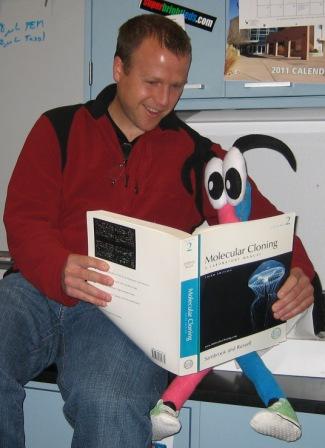 I was raised in Ann Arbor, Michigan, USA, a town that embraces the University of Michigan’s Athletic and Academic programs (in that order probably!). I remain a huge fan of Michigan and, sadly, Detroit professional sports teams. My mom and dad adopted me when I was about two months old and raised my sister and me in this house. My parents were very encouraging of my love of science. I remember many trips with my mom to the bookmobile to get the science books that the driver had found for me in the library. It boggles my mind to think of what I could have learned if I had the internet and Wikipedia around when I was young! My dad was an audiologist and helped me with all my science fair projects and taught me to be a good experimentalist. One project I remember the best was when he brought home an audiometer and I tested the noise reduction capabilities of various ear plugs. He helped me with the title too and “Stick it in your ear!” won my 9th grade science fair. Yes, I am bragging about that.
Mr. Mastie was our earth science teacher in junior high school, but more importantly, he was our leader for Science Olympiad. He had a spectacular amount of energy and enthusiasm for science and launched science careers for quite a few of us, I’d expect. Richard Taylor, my physics teacher in 12th grade was another outstanding teacher that played a huge part in my career.
After high school graduation, I asked my friend Liz if she could ask her dad, Francis Collins, if I could work in his lab that summer. He said yes! So, my first research job at Michigan (where I did my undergraduate degree in physics) was in a genetics lab. I LOVED it and wrote a bit about it in a blog post, Assistant to Robot, Promoted to Robot. I worked in a lab every semester I was at Michigan, working for professors doing genetics (Collins), granular systems (Nori), atomic physics (Bucksbaum), and high energy physics. I also did an internship in non-destructive evaluation with Bill Ellingson at Argonne National Lab – probably the first time I saw my research in a lab produce results that people outside the lab were actually excited about.
Tell us a little more about your career trajectory so far: interesting projects past and present?
After my undergraduate work, I went to the Cornell physics Ph.D. program. Why did I choose Cornell? At the time, Bose-Einstein condensation had recently been achieved. I was accepted at MIT and dying to work in atomic physics with the Ketterle and Pritchard labs. However, my best friend had already decided to go to Cornell for MechE Ph.D. At the time, it was a tough decision, but I finally decided that I was sure it would be fun to be at the same school as my friend, whereas it was less certain that I’d thrive in atomic physics or MIT in general. In retrospect, it’s clear I made the right decision. Nowadays, when I talk with undergraduates who are choosing graduate schools, I make it a point to discuss factors besides the science: distance from family or boyfriends/girlfriends, climate, etc. Cornell did not have any atomic physics, which I was in love with at the time. Even so, it still took me two years to realize that biology is the science I love the most. It’s so obvious in retrospect. But back then, I spent half a year in low temperature physics with Jeevak Parpia. The science and the experiments were very cool. And Jeevak was a terrific advisor. But I eventually realized that biophysics was where I belonged, so I switched to a single-molecule / optical tweezers lab.
What is taking up the most of your time and passion these days? What are your goals?
I have a wonderful five-year-old son and a wonderful three-year-old daughter. One of my goals is to succeed at being a scientist to serve as an example for my kids. Without a doubt, for me it’s a huge challenge to switch mental gears between being a scientist and being a dad. And I can only imagine how much tougher this is for scientist moms. I need to get better at it. Last spring, I coached tee ball, which was surprisingly rewarding (and time-consuming). Before starting, I assumed I just wanted to have fun watching my own son play ball. But it turns out that I really enjoyed it when any of the children learned a new skill. And they were like sponges and got better every game, so it was a ton of fun and I will do it again next spring. If you’re going to click on one link in this interview, check out the photo of my son in the Wikipedia tee ball article. Looks like a great catcher!
The rest of my time is taken up by teaching and managing our research lab and talking science with the students in our lab. I have non-talents that impede my grant writing and paper writing. Definitely I am not passionate about those tasks. I love thinking up experiments, looking at data, thinking of data analysis algorithms, coding, and seeing unexpected and / or new results. So, I still have a strong passion for being an experimentalist. And the lab has really taken off since getting our first big grant a year and a half ago. We are having a lot of fun in the lab, but it also takes more and more time the better the students get at generating and analyzing the data…so it’s a bit crazy, and one of my goals is to survive. 🙂 What are my specific goals? For my lab, I want my students to learn a lot about their talents during their time in the lab. And I want them to succeed after leaving the lab and I want to get vicarious happiness from that. For my family, I want to show my kids that you can succeed while having fun. I will be happy whatever my kids do as long as they strive for excellence.
What’s the worst thing about being a professor?
I don’t like how many jobs I have that I am not good at and how often I have to switch from one task to another. In graduate school, after completing my required courses, I loved being able to focus on a single task for 20 hours straight, and then come right back to it the next day. Especially if it were a computer programming / data analysis problem. Well, those days are gone and now I have to constantly switch from teaching to advising to grant writing to committee work to paper writing to friendfeed to… Yes, I know that’s reality for most of us, I’m just sayin’ I don’t like it. I also don’t like the pressure of having graduate students depend on me obtaining research grants for their livelihood. Not the kind of stress I thrive on.
What’s the best thing about being a professor?
By far it’s being able to interact with students – both in teaching and in the research lab. I’ve been here about four years, and have interacted with hundreds of students. I’d say I know close to a dozen very well and dozens remain in touch. I have one strong talent necessary for teaching / managing students, and that is that I get true enjoyment out of seeing students succeed, both now and later in their careers. I think that’s an essential talent for this career, which I fortunately have. Of course, I get to know the students best when they’re in our research lab. I have been so lucky to have many outstanding students contribute to our lab’s success. We’ve had some students in our lab who are now or soon will be in graduate school elsewhere—Diego Ramallo Pardo (Stanford), Caleb Morse, Pat Jurney (UT Austin), Nas Manole (UNM Med.), Linh Le (UNM), Brandon Beck. Currently we have four graduate students—Andy Maloney, Pranav Rathi, Anthony Salvagno, and Nadia Fernandez-Oropeza—and one undergraduate—Brian Josey. All of these students are carrying out Open Notebook Science, inspired by Jean-Claude Bradley and many others. And, big news: We just graduated our first Ph.D. student, Larry Herskowitz! And he even got a job already!!! The students are what I love the most, and I am continually regretting that I don’t spend enough time with them. Maybe 2011 will be the year I can fix that??? We’ll see…
How does (if it does) blogging figure in your work? How about social networks, e.g., Twitter, FriendFeed and Facebook? Do you find all this online activity to be a net positive (or even a necessity) in what you do?
I think social networking is now a necessity for me and my students. I enjoy blogging but have not been able to keep it up consistently. For the past couple years, FriendFeed has been a wonderful resource—so many clever, dedicated, and supportive people to interact with.
What was the best aspect of ScienceOnline2010 for you?
By far the best part of ScienceOnline2010 was getting to meet in-person many of the people whom I’d only previously known electronically. I had great conversations over lunch, dinner, and at the bar. By the time the conference was over, I had serious insomnia from so many inspiring ideas. At the time I blogged a little about them, along with some resolutions. It’s been over half a year now, and I’m happy to see that I’ve made progress on the resolutions, even if very slowly. I talk with the students in the lab frequently about how we can continue to make our lab notebooks better and easier to manage, and we’re making some progress. I’ve started a collaboration with a new library scientist at UNM, Rob Olendorf. So, hopefully within a year we’ll have figured out a lot about how our library can host our open data. Research in the lab is going really well and we’ve recently submitted two papers to PLoS ONE.
It was so nice to meet you in person and thank you for the interview. I will see you again very soon!
Posted in Scio10 Interviews
ScienceOnline2011 – introducing the participants
Continuing with the introductions to the attendees/participants of ScienceOnline2011. You can find them all on the list, but it may help if you get them in smaller chunks, focusing on a few at a time.
Peter Janiszewski is an exercise physiologist, writer and editor. He is a co-creator of Science of Blogging and he blogs at Obesity Panacea and tweets as @pmjaniszewski.
Gabrielle Lyon is the Cofounder and Executive Director of Project Exploration where she runs the blog and the @ProjExplore twitter account. I interviewed Gabe two years ago.
Thomas Peterson is the Chief Scientist at the National Oceanic and Atmospheric Administration (NOAA) National Climatic Data Center.
Mark MacAllister is the Coordinator of Online Learning Projects at the North Carolina Zoological Society. He founded and runs the Field Trip Earth educational resource and tweets as @fieldtripearth. I interviewed Mark back in March.
Cristine Russell is a Freelance writer for outlets like Columbia Journalism Review. She tweets as @russellcris.
Andrea Kuszewski is a Researcher at Metodo, a Behavior Therapist, and an artist. She blogs at Rogue Neuron and tweets as @AndreaKuszewski.
Tabitha Powledge is a freelance science & medical writer-editor as well as a member of the Executive Board of the National Association of Science Writers (NASW) where she runs the homepage news blog. She tweets as @tamfecit.
Paul Groth is a Postdoc at VU University Amsterdam. He blogs at Think Links and tweets as @pgroth.
Kathleen Raven is a graduate student and freelance writer in the Knight Health Medical Journalism program at Grady College of Journalism and Mass Communication at the University of Georgia. She blogs at Paragraphs and tweets as @ravenkathleen.
Ann Allen is the Science Editor at The Charlotte Observer.
Comments Off on ScienceOnline2011 – introducing the participants
Posted in SO'11
New post on the SciAm Guest Blog – history of the science of glaciers
Another year, another post on the Scientific American Guest Blog.
Today, David Bressan traces the history of our understanding of what glaciers are and how they form in The discovery of the ruins of ice: The birth of Glacier research. Enjoy, comment, share.
Comments Off on New post on the SciAm Guest Blog – history of the science of glaciers
Posted in SciAm
Can WordPress do this?
Is there a plugin in WordPress that can do this – a tabbed blog:

How would that work?
Example #1
I could pick a few Top Categories on my blog, e.g., Science, Media, Education, Politics and Other and assign each to one of the tabs. Thus, every time I post, I would have to use one or more Top Categories as well as second-level categories if and as many as I want to add. This way a reader can check out only my content of interest (e.g., Science) and not waste time on content of lesser interest (e.g., Politics). The reader would also be able to subscribe to only the feed for one of the tabs/categories and ignore the rest. I would also be able to, for example, import only the feeds of select Tabs into other services (e.g., facebook, friendfeed, twitter).
Example #2
A conference has multiple ‘tracks’ or rooms. Each of these has its own tab for (live)blogging. The official conference bloggers would log in to a particular account or be instructed to use a particular Top Category in order to have their posts appear under the correct tab.
Example #3
A group blog in which each co-blogger has his or her own tab (or even an entire multi-blog network which just appears on surface to be a single multi-author blog). Each person would either have a separate login/password which would automatically place their posts under the correct tab, or each person would have his/her own Top Category.
Settings
Depending on the needs and uses, the placement and order of tabs should be easy to manage by the bloggers. Possible options for such settings are:
– set up manually the order of tabs which always appears the same way to the readers. For example, I could place my Science tab to be the first one, Media as second, etc., thus providing Science as the top layer of the blog at all times.
– set it to “Random” so each time each reader comes to the site, the order of tabs (and thus which one is visible as the top layer) is different.
– set it in a way that Users can pick their own Default order of tabs. That may be good for official conference blogs as users may want to pick a “track” to follow. Or I can set it that way so my readers can choose which of my categories to see up on top each time they visit.
– set it for regular rotation, e.g., be able to tell WordPress to rotate all the tabs in a particular way (e.g., move them all one position to the left, moving the first tab back to become the last one, or the other way round, or random, etc.) at a particular time interval (e.g., every X days). This may be good for group blogs or networks or news-sites in which all co-bloggers/authors/topics post with the same frequency.
– have the order of tabs determined by the recency of posts in each tab, so the tab with the most recent post is the first (“left”, “top”), etc. This would be useful for multi-author blogs or blog networks where authors greatly vary in their frequency of posting – the rare new post by the infrequent blogger will be appearing up front for a while for readers who may not often check out that blogger.
– Ideally, one could do a hybrid of the above, e.g., a preset default for the top layer (Tab #1, e.g., the news homepage), while the order of the other tabs (individual topics or authors) would be ordered either randomly, or by timed schedules, or by the recency of the last posting.
Needless to say, it would be very easy to add, delete or rename tabs, and there would be either no limit or a very high limit (12? 20? stacked up in rows of 4-5?) to the number of tabs one can have.
What would a reader see?
All the reader would need to do is remember or bookmark a single URL. Clicking on tabs would expand the experience to a broader – and more organized – range of content.
In most cases, clicking on a tab would only change the content of the column in the middle. This makes sense for an individual blog with multiple categories, or a news-site, or a conference blog.
But in cases of some big multi-author blogs or multi-blog networks, clicking on the tab can possibly change much more – banner, URL, sidebars, About page (and other pages), background, font, etc. There would be a possibility to customize quite a lot, leaving only some agreed elements common to all the tabs.
So, does such a plugin exist? If not, would it be easy to make? Any takers taking a shot at it?
Posted in Blogging, Technology
Quick Links
Just a few more, if you already finished all the yesterday’s ones:
Continue reading
Posted in Uncategorized
Gallery
2010 in review – blog stats
This is something that WordPress sends to all people who use their blogging platform, or so it seems. Interesting to see – my BIO101 posts are getting a lot of traffic from searches, as always. Funny to see “3 views” … Continue reading
Comments Off on 2010 in review – blog stats
Quick Links
Happy New Year!!!!
And while you are recovering from the holidays, and before you have to go back to work, here are a few good reads:
Continue reading
Comments Off on Quick Links
Posted in Uncategorized
Best of December
I posted 67 times in December. I reviewed the entire year yesterday, but here is just the last month.
This is usually a busy time for me. There is ScienceOnline2011 to organize, Open Laboratory to edit, Scienceblogging.org to upgrade, and SciAm blogging network to build. Oh, and holidays and family!
That does not leave too much time for writing original pieces. But I did write one in December – and it’s a big one: The line between science and journalism is getting blurry….again, my first article at Scientific American, also cross-posted at Science Progress.
I was interviewed by a Staten Island Academy student for their Extreme Biology blog – read the interview here.
The latest two in the series of interviews with the participants of ScienceOnline2010 came in December – with Kelly Rae Chi and Princess Ojiaku.
The big event of the month in science was the brouhaha over arsenic in bacteria – so I collected a linkfest of the key articles and blog posts on the topic.
We closed submissions for Open Laboratory 2010 on December 1st, you can see all the entries here.
I went to NYC again and lived to tell about it.
While I may not have written much myself, I certainly made sure that the SciAm Guest Blog kept busy all month. Here are the December posts there – check them all out:
Excuse me, Sir. There’s a moss-animal in my Lake By Jennifer Frazer
Texas “Tea” becomes the Texas “E”? By Melissa C. Lott
Breaking our link to the “March of Progress” By Brian Switek
How to stop a hurricane (good luck, by the way) By Casey Rentz
Carnivore crossing: How predator species dominated mammal diversity on the Kuril Islands By Anne-Marie Hodge
Waste to Energy: A mountain of trash, or a pile of energy? By Melissa C. Lott and David M. Wogan
The worms within By Robin Ann Smith
5 things you never knew about penguins! By Daniel Ksepka
Scientific accuracy in art By Glendon Mellow
Pimp My Virus: Ocean Edition By Jennifer Frazer
I don’t have a 28-day menstrual cycle, and neither should you By Kathryn Clancy
How to name a dinosaur By David Orr
Mixed cultures: art, science, and cheese By Christina Agapakis
Habitable and not-so-habitable exoplanets: How the latter can tell us more about our origins than the former By Kelly Oakes.
Posted in Housekeeping
2010 in review
Probably the best way to review one’s year is to dig through one’s blog’s archives and see what is written there. Our Blogs, Our Memories.
So, how was 2010 for me? Let’s dig through the archives together and see…. Of course, there are many posts there – I hit the 10,000th post about halfway through the year – and many of those are cool videos, quotes, announcements, linkfests, and a number of interviews with cool people. But this retrospective is more personal – what I did, what happened to me, what I thought (and how that changed over time).
January was, of course, all about ScienceOnline2010, the preparations, last-minute announcements, and then coverage afterwards. At the end, I wrote my own summary of the meeting, pretty long, and I think still pretty relevant for ScienceOnline2011.
February was really busy on the blog. The biggest event, of course, was the publication of the fourth annual anthology of the best writing on science blogs – Open Laboratory 2009.
I published a scientific paper and blogged about it.
I went to the AAAS meeting and made them uncomfortable with a post about lack of online access and other backward ways of defining who is media.
I saw Megalodon teeth,
There were three posts in a row about young science bloggers:
Very young people blogging about science and Very young people blogging about science – let’s welcome them and Explaining Science to the Public.
Finally, two more provocative posts – Why is ‘scientists are bad communicators’ trope wrong and Using Twitter to learn economy of words – try to summarize your research paper in 140 characters or less!
In March I was really on a roll with posts about old and new media. See Why it is important for media articles to link to scientific papers and New science journalism ecosystem: new inter-species interactions, new niches and What is journalism and do PIOs do it? And what’s with advertising? and What is Journalism? and Push vs. Pull strategies in science communication and the critique of a journal article about science blogging – Science blogs and public engagement with science.
I reviewed ‘Spring Awakening‘ at DPAC.
I was also thinking about conferences – see On organizing and/or participating in a Conference in the age of Twitter – and I did a radio show about organizing an interactive conference. Of course, as that month I just attended Raleigh Ignite and co-organized TEDxRTP.
In April I attended the WWW2010 conference which I subsequently blogged about. I also went to the NYC edition of The 140conf.
I reviewed a student rendition of ‘Rent’ at Duke.
Other notable posts from April include For the millionth time: bloggers vs. journalists is over! and Twittering is a difficult art form – if you are doing it right and More on mindcasting vs. lifecasting.
Probably most notable for April was that I actually did real science blogging again: Evolutionary Medicine: Does reindeer have a circadian stop-watch instead of a clock?
In May I was busy going to local book events and talks – Scott Huler – ‘On The Grid’ at Quail Ridge Books and Serious Gaming at Sigma Xi and Cory Doctorow in Chapel Hill.
In June I went to a vaccination meeting in Philadeliphia and blogged about it.
I reviewed ‘Bonobo Handshake’ by Vanessa Woods, ‘On The Grid’ by Scott Huler and ‘The Poisoner’s Handbook’ by Deborah Blum.
I got interviewed on topics I usually do not get asked so it is an interesting one…
And then, of course, a bunch of posts about the media, blogging and related stuff, e.g., The continuum of expertise and No, blogs are not dead, they are on summer vacation and Why is some coverage of scientific news in the media very poor? and Am I A Science Journalist? and ‘Going Direct’ – the Netizens in former Yugoslavia, altogether some interesting stuff.
And I tried to collect as many books published by science bloggers as possible.
That was the placid first half of the year. And then….then all hell broke lose! July was the time of #Pepsigate, #Pepsimageddon! The seismic event that moved around all the tectonic plates of the science blogging world.
I collected the PepsiGate linkfest.
Then I wrote my own post – A Farewell to Scienceblogs: the Changing Science Blogging Ecosystem – that really got stuff moving around. I heard it in good confidence that the post was read (as required reading) by students in at least two science journalism programs in j-schools in the USA this Fall.
That post had a few follow-ups that added more links, more information about the events, and more thoughts about the future: Thank You and Science Blogging Networks: What, Why and How (essentially a How-To-Build-A-Science-Blogging-Network manual).
A certain Virginia Heffernan wrote a bad piece on science blogging in NYT, so I collected the reactions.
And I did write some science as well – Are Zombies nocturnal?
And had a great guest post by Dr.Marie-Claire Shanahan: UC Berkeley Genetic Testing Affair: Science vs Science Education.
In August I continued the post-Pepsi series of long posts, with Links ‘n’ Thoughts on emerging science blogging networks and Branding Science Blogging: Cooperatives + Corporate Networks.
Two new networks launched – so I introduced Scientopia and Guardian blogs. This proliferation of new networks prompted us to build a new aggregator site – Drumroll, please! Introducing: Scienceblogging.org.
I wrote a science post – Food goes through a rabbit twice. Think what that means!
And wrote two ruminations: Why republish an old blog post? and Origins of Science Writers…but am I one?
In September I announced Some Big And Important And Exciting News! – my new job! And new blog. And new blogging network-to-be.
Speaking of new networks, two more appeared – PLoS Blogs and Wired Science Blogs.
I went to The Most Awesome Wedding and to the Block By Block conference and to see the Mythbusters – yes, I got to meet Jamie and Adam.
I guess I had enough excitement for the year, so October was pretty calm.
I did two interviews – radio: Skeptically Speaking show about Science Journalism and video: Dr. Kiki’s Science Hour 68: Taking Science Online.
And we announced ScienceOnline2011.
In November I gave a talk at Sigma Xi, which inspired a blog post – Blogging. What’s new? which in turn was the seed for one of my epically long posts – and my first Scientific American article – The line between science and journalism is getting blurry….again – that was already in December.
I was on a panel at the NASW meeting (you can scroll down this page to watch the video).
We opened ScienceOnline2011 for registration and had to close in 45 minutes as the conference was full! A little later on we posted some updates and a Thanksgiving message.
The big event in science in December was the brouhaha over arsenic in bacteria – so I collected a linkfest of the key articles and blog posts on the topic.
I went to NYC again and lived to tell about it.
I was interviewed by a Staten Island Academy student for their Extreme Biology blog – read the interview here.
And throughout November and December, I made sure that the Scientific American Guest Blog had good, fresh posts almost every day.
What does the next year bring? Who knows, but I am optimistic in many ways – personal, professional, global. Happy New Year everyone!
Posted in Blogging, Housekeeping, Personal
ScienceOnline2010 – interview with Princess Ojiaku
Continuing with the tradition from last two years, I will occasionally post interviews with some of the participants of the ScienceOnline2010 conference that was held in the Research Triangle Park, NC back in January. See all the interviews in this series here. You can check out previous years’ interviews as well: 2008 and 2009.
Today, I asked Princess Ojiaku to answer a few questions.
Welcome to A Blog Around The Clock. Would you, please, tell my readers a little bit more about yourself? Where are you coming from (both geographically and philosophically)? What is your (scientific) background?
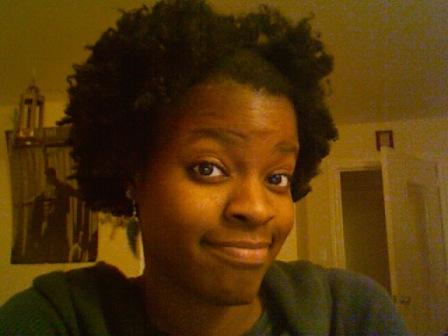 I guess you could say that I was born into a scientific family. My mom is a professor of biology, and my dad was a engineer for some time. My sister and a significant portion of my cousins are all in science-related fields, so it’s almost like science is in my genes. All that home-grown science knowledge helped to push me along the career trajectory I’m on now, and instilled in me a love of science that I want to spread to everyone else!
Tell us a little more about your career trajectory so far: interesting projects past and present?
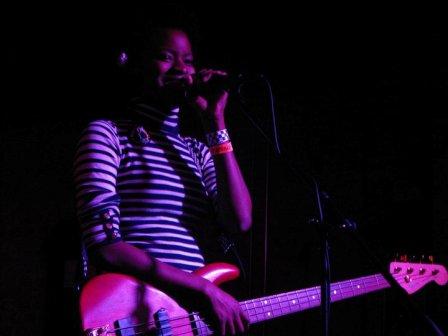
I got my B.S. in Biological Sciences from Louisiana State University and was fortunate enough to do two years of undergraduate research in a lab that really cemented my love for research. Even though I loved science and research, I wanted to take a few years off before committing to the long and hard road to the Ph.D. So I moved to Chapel Hill and took a technician position at the University of North Carolina. While there, I started reading lots of science blogs and getting more into the idea of being a science communicator, as I felt that the public needed more people to make science less scary and more accessible. Working as a tech also afforded me more time to get into projects like starting a local girl band called Pink Flag and playing shows for the first time ever. In Fall 2009, I started a Master’s program at North Carolina Central University, and started up my blog, Science with Moxie where I blog about the intersection of my two loves, neuroscience and music.
What is taking up the most of your time and passion these days? What are your goals?
Most of my time is spent between my research and classwork, my band, and keeping up regular posting on my blog. I also work occasionally on weekends as a museum educator doing science-themed birthday parties for kids. Some goals I have (since 2011 is literally right around the corner) are posting more often on my blog and doing some reconnaissance missions as to what sort of jobs are available for someone with a Biology M.S in science communication/policy/writing/education/advocacy in August when I graduate. (hire me!). I’m heavily considering going back to school too for a Ph.D., but I guess I just need to figure out what my upcoming Master’s degree can do for me first. Other goals are getting out my band ‘s first full-length record and writing lots of new songs. As for longterm goals, I want to stay involved in both science communication and music, so I’m looking forward to discovering all the different opportunities available to combine my love for both.
What aspect of science communication and/or particular use of the Web in science interests you the most?
 I love the complete democratic nature of the internet and the fact that anyone can sign up for their own personal electronic pulpit to reach out to interested minds about anything and everything, and do it as anonymously or as publicly as they like. Another thing I love about the Web and the blogosphere is just the fact that people step up to debunk incorrect information or things that need further study in order to be respectably claimed. The most recent and awesome example of this in the science blogosphere was the whole arsenic bacteria thing in which many independent science bloggers managed to critique and electronically peer-review a hot-off-the-presses scientific paper. That whole incident just amazed me because in this age of open and accessible information things like this can be quickly called out by a network of awesome professionals. I think it’s an exciting time to live in when information is disseminated and then processed so quickly, independently, and simultaneously. In my little nerd girl future fantasy, it’s bringing us just a little closer to the ideal of something resembling “absolute truth,” or at least what we can collectively understand of it.
How does (if it does) blogging figure in your work? How about social networks, e.g., Twitter, FriendFeed and Facebook? Do you find all this online activity to be a net positive (or even a necessity) in what you do?
Blogging keeps me on my toes in the latest of what’s going on in the science world. Researching and writing on topics that are just slightly out of my field helps me become more knowledgeable about my field in particular and better at analyzing thing in general. I feel that Twitter is kind of invaluable for discovering what’s hot in current science and for finding things to blog about. I follow a lot of science-related people on twitter who constantly tweet links that jog the mind and inspire my writing (including this guy named @BoraZ!). So I feel that social networking and reading links that other people post are essential to keeping my blog going with cool and exciting topics.
When and how did you first discover science blogs? What are some of your favorites? Have you discovered any cool science blogs by the participants at the Conference?
I first discovered science blogs via subscribing and reading Seed Magazine as an undergraduate. When the ScienceBlogs network started, I would read the blogs on and off. I got more into reading science blogs right before I started my own blog. SciCurious’ blog posts were always the ones that I looked forward to reading the most, and she is definitely a huge inspiration for my own neuroscience blog. I hope my posts are at least half as fun as all of hers are! Someone else cool I got to meet at the conference last year was Joanne Manaster who makes really fun science videos. There are so many creative people doing so many awesome things for science and meeting her (and so many others too!) reminded me of that.
What was the best aspect of ScienceOnline2010 for you? Any suggestions for next year? Is there anything that happened at this Conference – a session, something someone said or did or wrote – that will change the way you think about science communication, or something that you will take with you to your job, blog-reading and blog-writing?
The best part of ScienceOnline2010 was just getting to mingle and meet so many people in the science blogosphere whose blogs I had been reading for literally years. It was a bit surreal having so many people I admired in one location, all interacting with each other. The whole conference felt so innovative and futuristic from the stream of #scio10-tagged tweets on the screen in the lobby to just the topics being discussed. I think I just took all the enthusiasm and energy of all the people there back to my blog, so I could start carving out my own little contribution to this web of science communication online.
Thank you so much for the interview. And I’ll see you again in two weeks at ScienceOnline2011!
Posted in Scio10 Interviews, SO'10
ScienceOnline2011 – introducing the participants
Continuing with the introductions to the attendees/participants of ScienceOnline2011. You can find them all on the list, but it may help if you get them in smaller chunks, focusing on a few at a time.
Seth Mnookin is a journalist and author, among other books, the upcoming excellent The Panic Virus. He blogs at The Panic Virus blog and tweets as @sethmnookin.
Melody Dye is a Researcher at Stanford University. She blogs at Child’s Play and tweets as @moximer.
Russ Williams is the Executive Director of the NC Zoo Society. He blogs at Russlings and tweets as @russwilliamsiii. I interviewed Russ back in March.
Kathryn Clancy is an Assistant Professor of Anthropology at University of Illinois, Urbana-Champaign. She blogs at Context and variation as well as on her lab blog Laboratory for Evolutionary Endocrinology. She tweets as @KateClancy.
Paul Raeburn is a journalist and author. He blogs most often at Knight Science Journalism Tracker, and sometimes at About Fathers and Fathers and Families. His next book, Why Fathers Matter, will be published in 2012. He tweets as @praeburn.
Leslie Taylor is project manager at the Science Friday Initiative and Web Editor of TalkingScience. She tweets as @talkingscience.
Nicole Garbarini is a Science Policy Fellow at NSF and AAAS. She tweets as @nikkigee.
Kristy Meyer is the Social Media Manager at Sigma Life Science. She tweets as @kristy3m.
John Ohab is the New Technology Strategist at OMNITEC Solutions Inc at the Department of Defense Public Web Program. He tweets as @ArmedwScience.
Chris Mooney is a writer and journalist. He is the author of ‘Republican War on Science’, ‘The Storm World” and “Unscientific America”. He blogs at The Intersection, hosts Point of Inquiry Podcasts and tweets as @ChrisMooney_.
Comments Off on ScienceOnline2011 – introducing the participants
Posted in SO'11
ScienceOnline2011 – introducing the participants
Continuing with the introductions to the attendees/participants of ScienceOnline2011. You can find them all on the list, but it may help if you get them in smaller chunks, focusing on a few at a time.
Mary Knudson is a health and medical journalist. She is a Co-author of Living Well with Heart Failure and co-editor of A Field Guide for Science Writers. She blogs at HeartSense blog and tweets as @maryknudson.
Mark Hahnel is the Founder of science3point0.com and he tweets as @science3point0. I interviewed Mark in October.
Jan Reichelt is the President and Co-Founder of Mendeley. He tweets as @janerixo.
Jason Hoyt is the Chief Scientist at Mendeley. He tweets as @jasonHoyt. I interviewed Jason back in May.
Lucas Brouwers is a postgraduate student following the MSc programme Molecular Mechanisms of Disease in Nijmegen, the Netherlands. He blogs at Thoughtomics and tweets as @lucasbrouwers.
Danielle Lee is Biologist, and an Outreach Scientist in St. Louis, Missouri. She blogs at Urban Science Adventures! and SouthernPlayalisticEvolutionMusic and tweets as @DNLee5. I interviewed Danielle last year.
John Rennie is a Freelance science writer & editor. He blogs at Retort and tweets as @tvjrennie.
Helene Andrews-Polymenis is Associate Professor at Texas A&M Health Science Center in the College of Medicine. She blogs and tweets and is one of the founders/developers of The Third Reviewer. I interviewed Helene back in August.
Amos Zeeberg is the Managing Editor at Discover Magazine Online and Discover Blogs. He tweets as @settostun.
Clifton Wiens is the Head of Research and Editorial Story Development for National Geographic Television. He tweets as @cliftonwiens.
Comments Off on ScienceOnline2011 – introducing the participants
Posted in SO'11
Quick Links
Why am I suddenly so busy?
Continue reading
Comments Off on Quick Links
Posted in Uncategorized
ScienceOnline2011 – introducing the participants
Continuing with the introductions to the attendees/participants of ScienceOnline2011. You can find them all on the list, but it may help if you get them in smaller chunks, focusing on a few at a time.
Jean-Claude Bradley is an Associate Professor of Chemistry at Drexel University. He blogs at Useful Chemistry and tweets as @jcbradley. I interviewed Jean-Claude two years ago – he is one of the handful people to attend all five conferences and one of only two people who moderated a session every single year.
Karen James is the Director of Science for the HMS Beagle Project. She also blogs at Data Not Shown and tweets as @kejames and @beagleproject. I interviewed Karen two years ago.
Olivia Koski is a Freelance Writer and a recent graduate of NYU’s program for Science, Health and Environmental Reporting where she blogged at Scienceline. She tweets as @oliviakoski.
Katie Peek is an astrophysicist turned science journalist and another recent recent graduate of NYU’s program for Science, Health and Environmental Reporting where she blogged at Scienceline. She tweets as @kathrynpeek.
Steve Koch is an Assistant Professor at the University of New Mexico. He blogs at Steve Koch Science and tweets as @skoch3.
Amy Freitag is a PhD student at Duke University. She blogs at Southern Fried Science and tweets as @bgrassbluecrab. I interviewed Amy in May.
Vicky Somma is the Director of Software Development at Management Solutions of Virginia. She blogs at TGAW and tweets as @TGAW.
Robert Mitchum is a Senior Science and Research Reporter at the University of Chicago Medical Center, where is the editor of the Science Life blog. He tweets as @sciencelife.
Romeo Vitelli is a Psychologist in Toronto. He blogs at Providentia and tweets as @rvitelli.
David Whitlock is a chief scientist at Nitroceutic LLC and he blogs at Stranger than you can imagine .
Comments Off on ScienceOnline2011 – introducing the participants
Posted in SO'11
New post on the SciAm Guest Blog
Today saw another great post on the Scientific American Guest Blog. Today’s post by Kelly Oakes is Habitable and not-so-habitable exoplanets: how the latter can tell us more about our origins than the former. Enjoy, comment, share.
Comments Off on New post on the SciAm Guest Blog
Posted in SciAm
Quick Links
Interesting stuff today:
Continue reading
Comments Off on Quick Links
Posted in Uncategorized
ScienceOnline2011 – introducing the participants
Continuing with the introductions to the attendees/participants of ScienceOnline2011. You can find them all on the list, but it may help if you get them in smaller chunks, focusing on a few at a time.
Meg Lowman is a writer, researcher, adventurer, and the Director of the Nature Research Center at the NC Museum of Natural Sciences. She blogs at Canopy Meg and tweets as @canopymeg.
Steve Mirsky is the Podcast Editor and Columnist at Scientific American. He tweets as @stevemirsky.
Sophia Collins is the Producer of the Gallomanor Project: I’m a Scientist, Get me out of Here!. She tweets as @imascientist.
Ryan Somma is the Senior Software Developer at USCG. He blogs at Ideonexus and tweets as @ideonexus. I interviewed Ryan two years ago.
Kea Giles is the Managing Editor of GSA Communications at The Geological Society of America. She blogs at Dragonfly Wars and tweets as @Colo_kea.
James Shackleton is a Student at White Oak High School in Jacksonville, NC.
Mary Canady is the President of Comprendia. She blogs at the Comprendia blog and tweets as @comprendia.
Heidi Anderson is the Editor of SheThought.com. She is on Twitter as @HeidiAnderson.
Nicole Gugliucci is a graduate student at the University of Virginia. She blogs at One Astronomer’s Noise and tweets as @NoisyAstronomer.
Thomas O’Donnell is a Science and Technology Writer at Krell Institute.
Comments Off on ScienceOnline2011 – introducing the participants
Posted in SO'11
New post on the SciAm Guest Blog
And there is another amazing new post on the Scientific American Guest Blog.
Today, Christina Agapakis explains the science, culture and art of cheese – and synthetic biology! Go read Mixed cultures: art, science, and cheese, comment and share.
Comments Off on New post on the SciAm Guest Blog
Posted in SciAm
ScienceOnline2011 – introducing the participants
Continuing with the introductions to the attendees/participants of ScienceOnline2011. You can find them all on the list, but it may help if you get them in smaller chunks, focusing on a few at a time.
Deborah Blum is writer and a Professor of Journalism at University of Wisconsin. She blogs at Speakeasy Science and tweets as @deborahblum. I have reviewed her latest book ‘The Poisoner’s Handbook’ – here.
Stephanie Willen Brown is the director of the Park Library in the School of Journalism and Mass Communication at the University of North Carolina – Chapel Hill. She blogs at CogSci Librarian and tweets as @CogSciLibrarian. I interviewed Stephanie back in July.
Melissa Lott is a Graduate student and Research Assistant at University of Texas at Austin. She blogs on Global Energy Matters and tweets as @mclott.
Jessica McCann is a Postdoctoral Associate at the Duke University Medical Center. She tweets as @jess_i_am.
Louis Shackleton is a student at the University of North Carolina at Wilmington. He blogs at Crowded Head, Cozy Bed and tweets as @LouFCD.
Todd Harris is a Bioinformaticist and information architect at WormBase. He blogs at The World Is My Cubicle and tweets as @tharris.
Carl Boettiger is a Graduate Student Researcher in Population Biology at University of California, Davis. He tweets as @cboettig.
Jennifer Walton is the Public Relations Manager at NEON, Inc.. She tweets as @NEONInc.
Ann Marie Cunningham is the Executive Director of the Science Friday Initiative – the nonprofit of Science Friday on NPR – and she blogs at Talking Science. She tweets as @talkingscience.
Kelly Rae Chi is a freelance writer. I interviewed Kelly justa few weeks ago. She tweets as @kellyraechi.
Comments Off on ScienceOnline2011 – introducing the participants
Posted in SO'11


 A Blog Around The Clock