Two new posts on the Scientific American Guest Blog today

First, in the morning, Hold that door, please! Observations on elevator etiquette by Krystal D’Costa (blog, blog, Twitter).

Second in the afternoon, Glia: The new frontier in brain science by R. Douglas Fields.

Go and post comments!

More tomorrow….then Monday and so on….if you are interested, pitch me a story at: Bora@sciam.com

Science Café Raleigh: Where Have All the Frogs Gone?

Hi Café Enthusiasts,

This month’s Science Café (description below) will be held on November 16th at The Irregardless Cafe. We will be meeting Dr. Bryan Stuart and discussing the status of amphibian populations around the world. Dramatic changes are currently happening globally with diverse populations of frogs and salamanders. It is a time when many new species are being discovered and simultaneously we are also mysteriously losing many species to extinction. Dr. Stuart will discuss current herpetological research that is helping us understand what is happening with the world’s amphibian biodiversity. I hope that many of you can come – it should be a very informative discussion.

Where Have All the Frogs Gone?

Tuesday, November 16, 2010

Time: 6:30-8:30pm with discussion beginning at 7:00 followed by Q&A

Location: The Irregardless Café, 901 W. Morgan Street, Raleigh, 833-8898

Since the 1980s, dramatic reductions in amphibian populations (including population crashes and mass localized extinctions) have been noted from locations all over the world. Currently, the loss of these animals (especially frogs) is thought to be one of the most critical threats to global biodiversity. Many of the causes are still poorly understood, and the topic is the subject of much ongoing research. Join us to discuss what is known and what is yet to be known about the global loss of such an important group of animals.

About our Speaker:

Bryan Stuart is currently the Curator of Herpetology at the NC Museum of Natural Sciences. In 2006, Stuart received his Ph.D. from the University of Illinois-Chicago working in a collaborative program with the Field Museum. He remains a Research Associate and close collaborator with the Field Museum and also completed a two-year postdoctoral program at UC-Berkeley before joining the Museum staff here in Raleigh. Stuart has authored and co-authored numerous publications about reptiles and amphibians in several prominent scientific journals, such as Herpetologica and Molecular Phylogenetics and Evolution. He travels often and extensively in Southeast Asia as well as Africa for his current research and study of herpetological biodiversity.

This will be our final science café for 2010, with our next café being held in January 2011.

As always, it helps so much if you can send me an email letting me know if you will be coming to the event (katey DOT ahmann AT ncdenr DOT gov). Having an approximate participant count helps us communicate with the restaurant so that they can be prepared for serving our group.

Guest Blog on Scientific American – Bacteria, the anti-cancer soldier

James Byrne of the Disease of the Week! blog (also on Twitter) is the latest guest blogger on the Scientific American Guest Blog. Check out his post – Bacteria, the anti-cancer soldier.

Quick Links

What a day – essentially 12 hours of continuous work (with a short break to go and vote), mainly trying to keep the incoming e-mails instantly dealt with (answered, deleted, forwarded, etc.) as I will be on the road over the next few days and will have very little time to do anything!

Continue reading

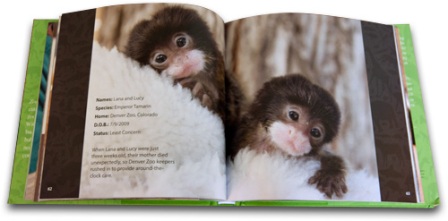
ZooBorns!

My readers are most likely to know Andrew Bleiman as my SciBling from the Zooillogix blog, a witty and fun blog about animals and curious things they do. You may not be aware that he also runs a blog called Zooborns which highlights the animal babies.

Recently, Andrew teamed up with photographer Chris Eastland and produced two books of Zooborns – one, ZooBorns for a little bit bigger children, and the other, ZooBorns!: Zoo Babies from Around the World, for very little kids. Let’s say the first is for kids who can read on their own, and the latter for kids who need to be read to.

When the books arrived the other day, we read them together, the whole family. Actually, “reading” may be an overstatement. We were loudly oooooohing and aaaaaaahing at each page. Those baby animals are sooooo cute!

Of course, that’s the point! Hook ’em young with charismatic megafauna! Or even better – with irresistible babies of animals not usually deemed ‘charismatic’. Perhaps they will want to learn more when they grow up – the information provided in the books is a great hook to get them to want to learn more. Or they will grow up being aware of conservation efforts. Or they will keep us elders hostage by constantly nagging us to keep those species around for a couple of decades more so they can go and see them when they grow up!

On that last point, the books can help you a little bit as 10% of proceeds from the sale of every book goes to support the AZA’s (Association of Zoos and Aquariums) Conservation Endowment Fund.

Holidays are coming soon. If you were wondering what presents to get the small and big children in your family, now you know – a bunch of copies of ZooBorns! books!

Guest Blog at Scientific American – second guest post: We all need (a little bit of) sex

As I noted yesterday, the Scientific American Guest Blog is about to get really busy! Already today we have another new post – We all need (a little bit of) sex by Lucas Brouwers (blog, Twitter). Go and check it out and post comments (it takes a second to register).

ScienceOnline2010 – interview with Marla Broadfoot

Continuing with the tradition from last two years, I occasionally post interviews with some of the participants of the ScienceOnline2010 conference that was held in the Research Triangle Park, NC back in January. As the next one – ScienceOnline2011 – is quickly approaching, I hope you enjoy these Q&As with past participants. See all the interviews in this series here. You can check out previous years’ interviews as well: 2008 and 2009.

Today, I asked Marla Broadfoot to answer a few questions.

Welcome to A Blog Around The Clock. Would you, please, tell my readers a little bit more about yourself? Where are you coming from (both geographically and philosophically)? What is your (scientific) background?

I live in a big old farmhouse in Wendell, a little town east of Raleigh. My husband’s great great great grandfather Dr. Henry Avera built it in 1870-something, so the house has been in the family for nine generations. I’m more of a city girl myself, but it has grown on me, high ceilings, cold winters, busted plumbing, mice, and all. I love doing my interviews from my antique desk, looking out at our resident groundhog as she suns herself in the yard. It’s not such a bad place to muse and write.

I was a research scientist before I was a writer. I had always thought I wanted to be a scientist, until I was one. The way it was laid out in textbooks, science was a beautiful and surprisingly simple thing. But once I delved deeper into the discipline, doing research of my own, I found that nothing was as simple as it seemed. Take that elegant DNA double helix that Watson and Crick first described. It doesn’t always look that way – often it is twisted like a rope, and sometimes it is completely reversed!

Not that I detest complex topics – actually, some of my favorite things to write about are the most basic of basic sciences, which are hardly ever simple. But I did feel like every time I attempted some feat at the bench, the complexities of the science made it take ten times longer than I thought it should. Some people embrace those complications, delving into every detail of the problem they are working on. But I was just too impatient for that. I wanted answers, and I wanted them right away.

I found myself enjoying reading up on the science, presenting the science and writing about the science more than doing the science. I dabbled a bit in science writing, creating a couple of pieces for American Scientist and Endeavors, the research magazine at UNC, where I was in graduate school. I enjoyed the writing immensely, but wasn’t sure I was willing to jump off the track that I had laid out for myself so many years before. So I applied for a very competitive fellowship in clinical molecular genetics at the National Human Genome Research Institute. There was only one spot available, so I figured if I got it that meant I should stick with research; if I didn’t, then clearly writing was my new path. Well, I got it, and once I got over the boost to my ego, I realized I would have to keep doing research. I loved the fellowship, even though there was a huge learning curve as I was one of only a few PhDs in a group of MDs. And then there was that week where I thought I had Marfan syndrome (which Abraham Lincoln may have had) because I could reach around my back with one arm and touch my belly button (I learned in class that was one of the signs of the disease). Turned out it was just part of the hypochondria that sets in after reading up on clinical disorders for hours at a time.

But the research still frustrated me, so I finally admitted to myself (and my mentor) that I was going to take the leap and leave research altogether. I finished my fellowship, passed the boards (a qualification I never used) and let my country mouse of a husband “drag” me down to this quirky old home. I wrote for Duke full-time for a little over a year, most of which it seems I spent pregnant, and then left to pursue freelancing and motherhood. Now I spend my time switching between two completely different worlds: one, where I am often alone on my computer translating scientific jargon and the other, where I am being jumped upon by one little body or another. Both jobs are fun and challenging, though in completely contradictory ways.

I love the concrete nature of writing. I am no longer working with molecules too tiny for the eye to see – I’m manipulating words that I can see transform into something real and telling right there on the page. I love it that I don’t have to hear about the failures or pitfalls of science – no colony contamination or troubleshooting PCR conditions make it into my articles. Because of my stint in research, I have a strong admiration for scientists and the dedication it takes to succeed in the discipline. I also think I can be even more critical of the work I report on because I know how science is done, how it can be manipulated even unintentionally, and how it is ever changing.

Tell us a little more about your career trajectory so far: interesting projects past and present?

Over the last year and a half I have been working on a series on Women in Science for the Burroughs Wellcome Fund. Many women go into science, but just like me, leave around the time of starting their own lab. Russ Campbell at the BWF, God bless him, gave me free reign to completely delve into the problem of why more women don’t make it to the high ranking positions in academia. I pored over the literature and talked with about twenty researchers at all different stages of their careers. The result was a four-part series on a variety of topics from equity issues to mentoring to the biological clock to institutional biases. I found that outright discrimination may be mostly in the past, but subtle biases still exist, and accumulate over time, putting women at a disadvantage for awards, tenure and promotions. And men aren’t solely to blame – women and men alike tend to undervalue the contributions of female scientists. So we may have come a long way, baby, but there is a long way yet to go. Russ and I are putting the four articles and just as much supplemental material into a mini-novella of sorts that we are going to distribute nationally to continue to raise awareness about the issue.

I have also become interested in the idea of translational medicine. According to one statistic, it takes about 17 years to turn a mere 14 percent of research findings into changes in care that benefit patients. To me, that just seems too little too late. When I was in graduate school, I discovered a sort of cure for beta-thalassemia, a Mediterranean blood disorder. Essentially, I obliterated the disease in a Petri dish, published my papers, and then graduated. Patients were contacting me to find out when the treatment would reach them, and all I could see were the nearly insurmountable steps before it would ever get there. I have been writing a number of articles about a large national effort underway to cut down on those steps, and to make those that must remain at least a little less daunting. Right now I think the public is hungry to see some return on their investment. I read somewhere that it is the National Institutes of “Health,” not the National Institutes of “Scientific Publications.” Clearly the bar for success as a scientist has to change.

Another thing I have particularly enjoyed doing is creating an “Ask a scientist” series for the SciTech page of the Charlotte Observer and News & Observer. The series explores relatively basic questions that many of us may have heard about but only have enough knowledge to be dangerous. Topics like “What is ozone?,” “How does chemotherapy work?,” and “Why does Thanksgiving dinner make us sleepy?” The scientists I have talked to really revel in the opportunity to revisit old topics and allay some common misconceptions about science. A lot of the questions are inspired by my kids, who like all kids are innately curious and always want to know more. Plus I’ve been getting a lot of feedback from adult readers, asking for more details and suggesting new topics.

What is taking up the most of your time and passion these days? What are your goals?

Honestly, most of my time is taken up by my two little rugrats, Marilyn age 4 and Viola “Vi” age 2. I remember when Vi was just a baby I flew to Seattle to cover a meeting for aids2031, a group of all these brilliant researchers from around the world who were trying to cure HIV. I was immersed in highly technical discussions and worked 12 hour days practically every day that week. Yet I got more rest than I had in a long, long time. Being a parent is definitely the most exhausting thing I have ever done. Personally, I find writing more exhilarating than exhausting. I know it sounds trite, but sometimes it really feels like a hobby I get paid to do. I frankly don’t have time for any other hobbies – a little yoga, a little reading, but if I have free time, I write, because that is what I love to do. So I guess with regard to my career, my goals are quite simple. To keep getting paid to do what I love to do, for people to read my work, and for it to make them think, perhaps even look at the world a little differently than they did before. But I guess when it comes to what matters most in my life, it is that I raise happy, healthy, well-adjusted kids. Let them save the world.

What aspect of science communication and/or particular use of the Web in science interests you the most?

Practically every major issue facing the world today – global warming, the economic crisis, universal health care – has some aspect of science within it and will likely require the critical thinking and technological advances of science to solve. I personally think that science communication is an excellent vehicle to educate the public, not necessarily so that everyone can name the four bases of DNA, but more so that people can see how science can change their lives. I have always thought science was incredibly cool, and I want to impart that same excitement to those around me. My focus is on biomedical research, so I am constantly trying to explain how even the most basic research can have far-reaching implications (yes, I think fruit fly studies in France are worthwhile). But I also think it is important not to make false promises about the speed with which science is likely to progress or blow the effects of small studies out of proportion, no matter how sexy the question being tackled. That is a risk that has increased as so many dedicated science reporters have been cut from staff rooms, but hopefully the burgeoning number of independents reviewing and writing about science online can pick up the slack.

How does (if it does) blogging figure in your work? How about social networks, e.g., Twitter, FriendFeed and Facebook? Do you find all this online activity to be a net positive (or even a necessity) in what you do?

I read fellow NASW member Tabitha Powledge’s blog break-down every week. I use Twitter mainly to pick up on interesting topics in science and science journalism that I might have missed through (more) traditional channels. And I use Facebook almost entirely to share the cute or horrifying things my kids did that day. I enjoy having social media in my life, especially considering that on the days when I am working it can be the only social interaction I get. But I don’t dedicate a lot of my time to it – I mostly lurk on the sites and read a little, rarely posting myself.

What was the best aspect of ScienceOnline2010 for you? Any suggestions for next year? Is there anything that happened at this Conference – a session, something someone said or did or wrote – that will change the way you think about science communication, or something that you will take with you to your job, blog-reading and blog-writing?

I didn’t get a chance to attend many of the sessions, so I hope I will have the opportunity to go to more of them this year. I enjoyed hearing Michael Specter talk, particularly the discussion afterwards on how a journalist knows when they have talked to enough experts and done enough research to do a particular story justice. I have grappled with that same question myself, sometimes wondering if I should include the other side in a story even when that other side represents a small minority of scientific opinion. I recall one of the participants saying that scientists do the same thing as journalists, accumulating data until they think a story is complete and then submitting it to a particular academic journal. I guess scientists and journalists aren’t all that different, we just have to use our best judgment in how we present our work and the work of others.

It was so nice to see you again and thank you for the interview. I hope you willl be there again next January.

ScienceWriters2010 – NASW/CASW meeting this week

ScienceWriters2010 is starting on Friday afternoon at Yale University in New Haven, CT. This is a joint meeting of the National Association of Science Writers (NASW) and the Council for the Advancement of Science Writing (CASW).

I am not exactly sure, but I think most sessions will be recorded in some fashion and made available online later.

It is much better, if you want to follow live, to bookmarks the official ScienceWriters2010 blog where recipients of the travel grants – mostly science journalism students or young freelancers – will cover all the sessions in as close to real-time as is possible.

The fellows will also tweet from the meeting, and you can follow them by subscribing to this Twitter list. Or you can follow everyone from the conference by saving a Twitter search for the #sciwri10 hashtag.

I will be on a panel Rebooting science journalism: Adapting to the new media landscape, put together by David Dobbs. My co-panelists are Emily Bell and Betsy Mason. That should be fun!

Definitely check out the rest of the schedule – it is awesome. Everyone’s biggest problem is that all those great sessions are happening simultaneously, so we’ll all also have to wait for recordings of our colleagues’ sessions afterward.

And if you are there and you see me, please come and say Hi!

Quick Links

Wow! What a day! I did not even get to finish ‘Written In Stone’ review! Tomorrow, I guess. Then travel for the rest of the week….
Continue reading

Guest Blog at Scientific American – first guest post: Apple, meet Orange

Building the new science blogging network at Scientific American will take some time. But there are already seven blogs on the site, mostly written by Scientific American editors, writers and correspondents. One blog that is written by others – scientists and bloggers – is the Guest Blog that has been around for several years now.

Starting today, I will be in charge of the Guest Blog, and have invited a number of interesting people to contribute guest posts for it (Interested? Pitch me a story at: Bora@sciam.com).

The first contributor is Dr.Carin Bondar (Twitter) with a post about conservation – the dueling approaches to species preservation: saving one species at a time, or saving entire ecosystems and ecological communities. Carin reviews recent studies from both ‘schools’ and makes her own decision as to which approach makes more sense. Go read it here!

Best of October

I posted 75 times in October.

We have made the first announcement – What will ScienceOnline2011 be? and you can try to get a travel grant: Blog about evolution, come to ScienceOnline2011!. Also see ScienceOnline2010 – interview with Anne Jefferson.

Two interviews in October – The recording of the Skeptically Speaking show about Science Journalism is now available online and Dr. Kiki’s Science Hour 68: Taking Science Online (video).

Science? I edited and republished an old post: Why are dinosaur fossils’ heads turned up and back? (repost)

The series of interviews with people who are leaders in the science blogging community continues: Scienceblogging: science3.0.com – a Q&A with Mark Hahnel, Scienceblogging: SciBlogs NZ – a Q&A with Peter Griffin, Scienceblogging: LabSpaces – a Q&A with Brian Krueger, Scienceblogging: The Lay Scientist (and The Guardian) – a Q&A with Martin Robbins, Scienceblogging: Field of Science – a Q&A with Edward Michaud and Scienceblogging: Scientopia – a Q&A with SciCurious and Mark Chu-Carroll.

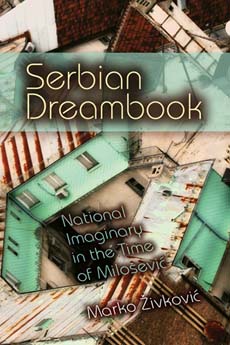
My brother will have his book published soon – you can pre-order Serbian Dreambook: National Imaginary in the Time of Milošević

I saw ‘Social Network’, the movie and wrote a brief review.

The BlogTogether Birthday Bash was awesome.

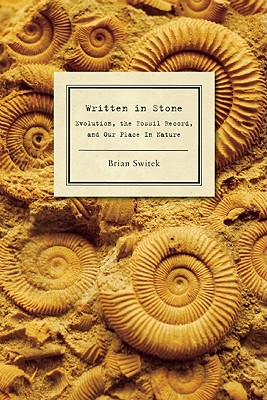
Written In Stone: interview with Brian Switek

2010 is an incredible year for science books, many written by people who daily write on blogs.

The latest in this fantastic streak is Written In Stone (homepage, IndieBound, Amazon) by Brian Switek (blog, Twitter).

Written In Stone is officially published today. If you pre-ordered it, it should hit your mailbox in a few days and bookstores should get it soon after (watch Brian’s blogs for updates – there was a small delay in shipping). I got the book earlier, have read it and loved it – my review is coming here later today. But first, I wanted to catch up with Brian and ask him a few questions about his book, his blog, and how the two are connected.

———–

A few years ago, you were a student and blogging was a hobby – something you did on the side, out of love. At what point did you realize that you could do writing as a profession? Was there a precipitating event or did that gradually dawn on you?

There wasn’t any single event or cause – I just fell into it. Now that we’re mostly beyond the blogger vs. journalist sniping – I hope – I can look back and say that I was acting like a science writer even before it became a viable career option. Making the transition required a change in attitude and a realization that I could actually get paid for what I like to do, and I feel exceptionally lucky that I have been able to turn my hobby into a nascent science writing career (even though I still work an unrelated day job to keep the lights on at home).

The more detailed story goes like this – After blogging for two years, I got serious about my science writing and started to pitch to magazines. My performance was abysmal. Most of the time I didn’t even hear back from the publications I pitched to. Still, I kept using my blog as a writing laboratory and tried to fine-tune my writing. Then, in May of last year, everything changed almost instantaneously. It was at that time that I started working with my literary agent – Peter Tallack of the Science Factory – and Mark Henderson of the Times was kind enough to give me my first formal op-ed about the Darwinius controversy. Those breakthroughs, paired with the earlier acceptance of my first academic paper (just published), allowed me to build up enough momentum to start making some headway into more formal channels of science writing outside the blogohedron.

I wouldn’t be able to do what I do without blogs, Twitter, or the web in general. Blogging allowed me to practice writing, plug into a community of fellow science enthusiasts, and has otherwise made it possible for me to become a professional – if still part-time – science writer. If I tried to do the same thing just a few years ago, or otherwise tried to jump into science writing without developing my writing online, I would have almost surely failed. As I mentioned above, though, I did not think of my efforts as a career change. The only major difference was that people started paying me for the sort of work I had been doing anyway!

How did you decide to write a book? You were already a well-known blogger and have started appearing in more mainstream media on occasion – why a book?

Written in Stone had a relatively long gestation and significantly changed since the time that I was first inspired to write a book. I knew that I wanted to write a book about evolution from the time I started blogging, but I was pretty clueless as to how to go about it. I used my blog as a way to practice writing, keep up with the literature, and organize my ideas. Blogging gave me an incentive to keep learning, researching, and sharing that information with whoever cared to read it.

This went on for about three years. I kept notes and wrote parts of a few chapters, but I didn’t have a story to tie things all together. I knew that I wanted to write about evolution from the perspective of the fossil record, but that’s not a book – I needed a more specific angle from which to approach the bigger story of life through time. I knew that I didn’t want to write a comprehensive textbook – we’ve already got plenty of those – but what examples should I choose to help people understand what fossils tell us about how life has changed?

Unfortunately I can’t remember the moment the idea struck me, but I settled on looking at some of the major transitions in the history of vertebrates that transfixed me as a child. The evolution of the first tetrapods from fish, the evolution of birds from dinosaurs, the evolution of whales from terrestrial mammals, the evolution of humans, and others – they were classic examples of evolutionary change, but as I became more familiar with the scientific literature I felt that the public wasn’t being presented with the latest science about these examples. Even in recent popular books about evolution, a few of these transitions would be presented but usually in such paltry detail as to be unconvincing to anyone who didn’t already agree that evolution is a reality. More than that, these changes have been debated for a very long time but we often talk about them only in reference to recent discoveries. I wanted to dig into the long history of debate and show how our understanding has changed. In distilling everything down to simple, step-by-step diagrams of evolutionary change, I felt like other authors had missed something, and I wanted to plug that gap in the popular literature.

Once I figured all that out, writing the book wasn’t too difficult. I had been rummaging through the literature for my own education for several years already – it was mostly a matter of writing the thing. With three chapters in hand, I signed with Bellevue Literary Press in September and completed the first full draft of the manuscript just two days before Christmas. The manuscript went back and forth a few times over the following months for edits, but, looking back, I am still a little baffled as to how I put the whole thing together so quickly!

Your writing – both on the blog and in the book – looks at evolution, focusing mainly on fossils, in the context of history of science. This is a pretty unique combination of themes – where did that come from? Was that a conscious decision or something that just happened as it combined your existing passions?

The mix of evolution, paleontology, and the history of science happened organically. They all overlap and feed into each other. Since I wanted to write about what the fossil record tells us about evolution, those aspects of the story came together very easily. I could have left it at that, but then I would have done the same thing as everyone else by divorcing recent discoveries from their context. I didn’t want to do that. I did not want to act as a figure of authority, handing down data for the public to digest and accept.

Instead of taking the more traditional approach, I wanted to give the book a warmer tone – I wanted to present science in the way that I might talk to a curious friend about evolution, or in terms of what I might say if I were walking with someone through a natural history museum. The history of science allowed me to do this by providing me with a flowing narrative which encompassed the scientific points I wanted to talk about. This served the dual purpose of placing recent discoveries in context and also gave me a way to lead readers through the tangled process of scientific discovery. This was especially important in the historical chapters about the beginnings of paleontology and evolutionary theory (Ch. 2 and 3). I found the idea of simply laying out the nuts and bolts of stratigraphy, natural selection, the nature of the fossil record, etc. repulsive – as I mentioned, I had no intention of writing a textbook – but by tracing the history of science I could use stories to introduce readers to those same concepts in a more palatable way.

Naturally, my own interests played a role, as well. I am fascinated by vertebrate paleontology, and both evolutionary theory and the history of science remain important in the field for understanding the patterns of life on earth and how our perspective of those patterns has changed. It was not a stretch to bring it all together. Paleontology is an evolutionary science, and paleontologists are constantly reexamining old specimens and localities. Given all these available perspectives, it was mostly a matter of choosing where to place the emphasis.

The book grew out of your blog. What proportion of the book, can you estimate, comes directly from edits of your older posts, and how much was brand new material? Was it difficult to repurpose the bloggy format into something that will work well in the book form?

The book grew out of my blog in the sense that I used my blog to practice writing about some studies and ideas which eventually became incorporated into the blog. The book is not just a stitched-together collection of posts. It was written as a story unto itself – containing many smaller stories – and even when I covered something I had blogged about earlier I disregarded what I had already said and wrote something fresh. Sometimes I would dig back into my posts for something I had referenced which I had trouble remembering, but in no instance did I edit any of my posts to place that material in the book. I wanted to write in such a way that the story flowed, and I felt that if I was going to start incorporating material directly plucked from the blog I would jeopardize that. Readers of my blogs will see some familiar subjects, absolutely, but, barring quotations, the book is 100% new writing.

Reading the book, it struck me how unique it is and how much it fills a glaring gap in the literature. There are many books on evolution. There are many books on the history of science. There are many books about fossils (though usually narrower in subject, focusing on a single group like dinosaurs, or even a single fossil like Tiktaalik or Darwinius). Yet I cannot remember another book that combines these three topics until today (literally today!). While it is fortunate for you that this niche was wide open for you to fill, do you have any thoughts as to why this niche was empty to begin with? Aren’t there other scholars who could have, perhaps should have, covered this area in this way?

I think some historians of science have written similar books, but they have usually been focused on a particular time period of group of researchers (such as Adrian Desmond’s Archetypes and Ancestors about Victorian paleontology, Peter Bowler’s Life’s Splendid Drama about early 20th-century paleontology, or Eric Buffetaut’s sadly out-of-print A Short History of Vertebrate Paleontology). When you’re dealing with the history of paleontology, you have to include biological details as well as historical ones, and in many ways this historical subgenre was very influential in determining how I should go about telling my story.

You’re absolutely right about the gap in the literature, though. I intentionally wrote this book to fill it. There’s no single reason why the gap was left open to start with. From a practical perspective, the history of science is often left out of popular books because there is a common assumption that the public doesn’t care about it. One publisher I spoke to about the book early on, in fact, wanted me to cut all the historical material from the book and focus only on new discoveries – from science magazines to book publishers, there is a major push to cover what is new and exciting and leave the historical bits for people who want to track them down (despite the success of some books, such as Bill Bryson’s A Short History of Nearly Everything, which have a heavy emphasis on history!). An exception is Sean B. Carroll’s recent book Remarkable Creatures, but, while I greatly enjoyed it, the treatment of significant people and specimens was a collection of snapshots which did not illustrate the importance of paleontology to our understanding of evolution. There are gaps and jumps in my narrative too – if I included everything I wanted Written in Stone would have rivaled The Structure of Evolutionary Theory in length – but it was very important to me to trace ideas through multiple shifts in understanding over the past 150 years.

The fact that many recent, popular-audience books about evolution – such as Why Evolution is True by Jerry Coyne, The Greatest Show on Earth by Richard Dawkins, and Only a Theory by Kenneth Miller – have been written by lab-based evolutionary scientists is another reason for the persistence of the “paleo gap.” Paleontology isn’t their field and so, understandably, doesn’t get much attention from these authors outside of transitional forms in the fossil record. More than that, though, there is something of a conceit that genetics and microbiology are more important to evolutionary science than paleontology is. Paleontology is still often viewed as the search for old bones to fill museums with – it can demonstrate the reality of evolution by do little else. This appraisal of paleontology has been around since the beginning of the 20th century, at least, and Dawkins even downplayed the importance of the fossil record to understanding evolution in his book The Ancestor’s Tale.

Since Stephen Jay Gould died in 2002, we haven’t really had a strong public advocate for paleontology as an essential evolutionary science. I’m no Gould, but I was inspired by his work to communicate the relevance of the fossil record to understanding of evolution (as well as similar efforts made before him by George Gaylord Simpson). Not only does paleontology provide the essential context to understand why life is as it is now – it is the science which showed us that extinction is real and that life has been changing for vast periods of time – but has become arguably the most interdisciplinary evolutionary science. Paleontologists regularly use ideas and techniques from genetics, molecular biology, embryology, histology, geochemistry, and other sciences in addition to comparative anatomy and geology. Having just attended the 70th annual meeting of the Society of Vertebrate Paleontology just last month, I can tell you that paleontology is an exceptionally vibrant field in which everything from the color of dinosaur feathers to the tempo and mode of evolutionary change are being investigated. This makes the rather brief treatment of paleontology in many recent books on evolution all the more irritating – paleontology, as I know it, is not being reflected in discussions about evolution, and I wanted to write a book to help remedy that.

One thing that struck me as I was reading the book is how well fleshed are the characters in the story, people like Lamarck, Darwin, Owen and Huxley, among others. You present them with a nuance that is rarely seen in usual discourse on the history of evolution. How much did you use biographies of these people, their letters and diaries, in trying to understand them as complex personalities, not just cardboard caricatures that we usually see?

I have to admit that I actually did not get to include the amount of detail I wanted – I mostly restricted biographical sections to the period a given authority was working on a particular problem or idea – but I thought it was essential to provide some background as to who these people were and why they did what they did. In the case of Lamarck, for example, I didn’t know anything about his life outside of his ideas about evolution before writing the book, so I thought including a little more information about him would be a small way of helping his public image since he is so often trotted out to be a contrast to Darwin and nothing else.

The sources I used varied from figure to figure. For Cuvier, I relied on various historical papers and Martin Rudwick’s selected translations of his work in Georges Cuvier, Fossil Bones, and Geological Catastrophes, whereas I used Adrian Desmond’s biography Huxley and the naturalist’s original research papers for sections about the man famously called “Darwin’s Bulldog.” The most difficult challenge was Charles Darwin. So much has been written about him that I could not possibly read it all, so in addition to biographical accounts I used the Darwin Correspondence Project and The Complete Work of Charles Darwin Online to dig into his original writings as much as possible. Of course my account of Darwin’s work is framed in terms of paleontology – I could not comprehensively cover everything he did, especially since he was such a prolific naturalist and correspondent! – but I tried to hit the major points of his career leading up to 1859 without derailing the paleontological thread of the book.

Finally – what’s next? I know you will be busy traveling the country promoting the book, but I am wondering if you already have the ideas for the next book?

I actually don’t have many travel plans. I’ll be giving a few talks in the NY-NJ-PA area, but I don’t have the budget to allow for a full-scale book tour. I am going to focus on doing what I do best – keeping up my blogs and trying to find more stories to tell in more formal science publications and journals. If opportunities to travel and talk about the book pop up, I’ll jump, but I have no idea when or where such opportunities will arise.

If anything, I have too many ideas for future books. Some are just the seeds of future projects which will require significantly more background than I presently have to cultivate, whereas others I am already in the process of starting. Right now I am trying to choose between two different projects – one on the “Dinosaur Enlightenment” which is rapidly changing our understanding of the charismatic creatures, and another on the controversial idea of “Pleistocene Rewilding.” I fully intend on writing both, but which comes first depends on an array of factors from my ability to travel to places relevant to the books to the willingness of publishers to jump at the projects. Beyond those, I have at least three more ideas for long-term book projects on three disparate subjects, so with any luck I will be writing for some time to come!

And, as a closing note, thank you for your help and support, Bora. You have been behind my writing from the very beginning, and it has been a pleasure to talk to you about a book which has grown directly from my work online. Your ongoing encouragement has helped drive me to become a more professional science writer, so I am genuinely thrilled that you enjoyed the book.

Thank you so much for the interview. And let’s hope that book sells very well – it surely deserves it.

Encephalon, the neuroscience blog carnival, is coming back!

Yes, it has risen again!

You can still find the old archives from the first run in 2006/2007 here (click on “past carnivals” tab), and the second run in 2008/2009 here, but the new archives will be built fresh, starting this month, with Encephalon #81 on Cephalove.

I will host the next one, #82, on November 29th 2010. Send your entries by midnight before that date to: Coturnix AT gmail DOT com

Open Laboratory 2010 – one month left to submit!

There is only one month left for submissions! Dig through your archives, through other people’s archives and submit! Jason has started to contact potential judges for this year’s anthology. We’re ready to roll!

Note: if you have recently moved your blog, please e-mail me the corrected URLs for your entries

The list is growing fast – check the submissions to date and get inspired to submit something of your own – an essay, a poem, a cartoon or original art.

The Submission form is here so you can get started. Under the fold are entries so far, as well as buttons and the bookmarklet. The instructions for submitting are here.

You can buy the last four annual collections here. You can read Prefaces and Introductions to older editions here.

Continue reading

Quick Links

It is pretty amazing how much work I had to do over this weekend! And so much to post here over the next couple of days before I go off traveling to SC and NY and CT….

Continue reading

Serbian Dreambook: National Imaginary in the Time of Milošević

Some of you may know that my brother is Assistant Professor of Anthropology at the University of Alberta. He also works as a visual artist in photography, video, and other media, mostly in collaboration with his wife Gordana who is an artist.

In a few months, his book willl come out – Serbian Dreambook: National Imaginary in the Time of Milošević:

The central role that the regime of Slobodan Milošević played in the bloody dissolution of Yugoslavia is well known, but Marko Živković explores another side of this time period: the stories people in Serbia were telling themselves (and others) about themselves. Živković traces the recurring themes, scripts, and narratives that permeated public discourse in Milošević’s Serbia, as Serbs described themselves as Gypsies or Jews, violent highlanders or peaceful lowlanders, and invoked their own mythologized defeat at the Battle of Kosovo. The author investigates national narratives, the use of tradition for political purposes, and local idioms, paying special attention to the often bizarre and outlandish tropes people employed to make sense of their social reality. He suggests that the enchantments of political life under Milošević may be fruitfully seen as a dreambook of Serbian national imaginary.

I have read most of the stuff in the book, at least in some earlier drafts, over the past few years, and I know this stuff is good! It will help you understand Serbia – in the wartime 1990s as well as before and after. And it may help you understand some other nations or some other groups of people (perhaps even TeaPartiers if you are dilligent in adjusting for different contexts, histories, etc.).

So, pre-order the book now – it will come out next May but it will be worth the wait.

Quick Links

First, a question: is it possible for a WordPress blog to have both “Comment” and “Fact-check” buttons at the bottom of each post, commenting on each resulting in comments in different color, e.g., “comment” looking normal (e.g., white) and “fact-check” having a blue frame (or some other way to distinguish)?

I hope you did already, but if you didn’t, please go and vote for Christie Wilcox right now and right here.

Continue reading

Quick Links

Intensely busy week (obviously, or you’d see more stuff on this blog otherwise). Had lunches with some smart interesting people yesterday and today, though, which is always uplifting. Lots of travel next week. Till then, read these articles and posts:
Continue reading

Quick Links

Dinner with Anton Zuiker last night, working on ScienceOnline2011, update soon.

Preparing for next week’s travels. Need a room-mate for the NASW meeting Nov.5-7 in New Haven – will pay my part. Let me know if interested…

Continue reading

Quick Links

These will keep you occupied for a while:

Continue reading

Quick Links

Lots of work behind the scenes….are you ready for a more eclectic than usual mix of links?
Continue reading

Open Laboratory 2010 – submissions so far

Note: if you have recently moved your blog, please e-mail me the corrected URLs for your entries

The list is growing fast – check the submissions to date and get inspired to submit something of your own – an essay, a poem, a cartoon or original art.

The Submission form is here so you can get started. Under the fold are entries so far, as well as buttons and the bookmarklet. The instructions for submitting are here.

You can buy the last four annual collections here. You can read Prefaces and Introductions to older editions here.

Continue reading

Quick Links

Can’t believe the weekend is over and what a horrendously busy and nerve-wracking week likes ahead….
Continue reading

‘Social Network’, the movie

Finally saw ‘Social Network’, the movie. I was primed by all the reviews to hate the movie. But I didn’t. I found Mark Zuckerberg to be the only sympathetic character in the entire dog-eat-dog, sexist tech-biz world as portrayed in the film – which is not that far removed from reality.

A brilliant, talented, socially awkward kid with at least mild Aspergers has a vision and a feel for what he needs to do and can do. He may not be interested in money, women and fame, but people who are necessary for him to fund his vision are interested in these, and sometimes he falls for their sweet-talk, makes mistakes, falls and gets up again, and is driven to move on and pursue his dream.

Yes, the movie has factual errors, and yes the movie tried to slander him badly, and yes, what Facebook really means (which is important) is totally lost to the movie-makers who emphasize, like every dinosaurian curmudgeon worth his salt has to, the least important but most offensive (to old-time Puritanical tastes) aspects of Facebook (e.g., the potential for finding suitable dates, or changes in the meaning of privacy they don’t grok).

But in the end it is the old-timers – the lawyers, the old-money guys, the keepers of old traditions, the vile, sexist business wheelers&dealers (including Larry Summers) that come off the worst in the movie – you end up loathing them all by the time the credits roll.

In the end, the only one remaining standing, unscathed and even likable is the visionary, the one who changed the norms of the world to be a little more up-to-date: Mark Zuckerberg. It is easy to identify with him. It is easy to root for him when he uses his intelligence to talk back to the elders who imagine they have authority over him and to put them in their proper place. Who of us was never a kid, confused by the scheming of adults, falling into their traps, and hoping to learn from those negative experiences and go on and change the world for the better?

How to be a new-school (mostly TV) journalist, in some time very soon (video)

The video in the previous post, though it may seem like parody today, was actually produced in full seriousness. This one, on the other hand, was produced as a satire, but cuts close to the bone – the trick is: one does not need to invoke social networks or new gizmos&gadgets to talk for five minutes on air without saying anything. The current crop is perfectly good at doing exactly that without any need for new technology.

How to be an old-school (mostly male) journalist, in some time long ago (video)

[From, via]

Quick Links

Saturday, full of cool stories:
Continue reading

‘Charles Darwin would have been a blogger.’

‘Charles Darwin would have been a blogger.’ – that was the title of the winning proposal for the Wellcome Trust’s Survival Rival Winners award. You can read the original proposal (PDF) here.

And now, Karen James (website, blog, Twitter) and a group of students and teachers from Scotland are on their trip to Galapagos, live-blogging and tweeting their trip, posting images and videos online and generally doing what Darwin would have done on his original Beagle trip if the technology was available at the time.

As Karen says:

“Now through the 30th of October I am in Galapagos with the Wellcome Trust, accompanying some students and teachers on their trip of a lifetime (in fact, they are accompanying me on MY trip of a lifetime, they just don’t know it). In the spirit of our session at Science Online ’10, my winning application proposed communicating our adventures by twitter, blogs, flickr and youtube, as described here.”

You can and should follow their adventures on the blog (go back in time through the archives to the very first post – fascinating!) and Twitter (actually Twitter list of all the travelers), see their photographs on Flickr and videos on YouTube.

I assume they will also write some final reports after they come back from the trip. And perhaps some of them will come to ScienceOnline2011 with Karen and share their experiences with us there.

Quick Links

Spent the day on the phone, running around, faxing and mailing stuff, first steps on the way to financial recovery, catching up with old debts, relapsed insurances, expired car-tags, etc… this will take months to afford to fix all!

Continue reading

Slime mold, navigating a maze (video)

hat-tip

Machine made of Legos, builds with Legos (video)

Quick Links

Busy day. Wonderful and lively Open Access panel at Perkins Library at Duke this morning. Sorry, no recording….
Continue reading

Quick Links

Here are some good photos from last night’s blogger bash.

Continue reading

Dean Kamen – new science and technology show on Planet Green

Now this is exciting:

Dean Kamen is a globally renowned inventor with more than 400 patents, including the Segway, the insulin pump and the robotic prosthetic “Luke Arm.” This fall, the inventor will play the role of investigator—leaving his private island to jet around the world in search of the technologies of tomorrow. In the world premiere original series Dean of Invention, Planet Green joins Kamen on his quest to find the next scientific breakthroughs that will improve life for all mankind. Dean of Invention airs in Planet Green’s VERGE primetime block at 10/9c beginning on Friday, October 22.

Dean of Invention follows Kamen and correspondent Joanne Colan as they explore the emerging technologies being developed to tackle the most daunting global challenges of today. In each episode, Kamen and Colan encounter the world’s latest cutting-edge creations by embedding themselves with leading scientists, doctors and inventors. From space-age robotics to artificial intelligence to biological breakthroughs, Dean of Invention reveals the visionary scientific advancements that have the ability to reinvent the future.

See the show website

Check out additional video

See the YouTube playlist

Here’s a zany product side site — buy your own bionic hand!

And here’s how to find Planet Green on TV in your area.

And a background story about it: ‘Dean of Invention’ looks at life-changing science:

Dean Kamen was game to do a weekly TV show about science.

Under two conditions, that is:

First, he wanted to keep the focus squarely on science — especially its thrilling possibilities for youngsters who dive in.

Second, Kamen, a world-renowned inventor (maybe you’ve heard of his Segway human transporter), didn’t feel like reinventing himself as a TV personality.

“I can be me. YOU can make it interesting,” he told his new partners at the Planet Green network…..

That’s this Friday, so tune in.

Quick Links

The blogger bash last night was awesome!
Continue reading

Scienceblogging: Scientopia – a Q&A with SciCurious and Mark Chu-Carroll

Hi, thank you for taking your time for answering a few questions about the past, present and future developments of the science blogging ecosystem. Let me begin with you – can you tell our readers, please, who are you, where you come from and how you got into science blogging?

Sci: My ‘name’ is Scicurious, and I started blogging in May(ish) of 2008. I have a PhD in Physiology, and I’m currently a post-doc at a rather famous MRU. I got into scienceblogging when I met BORA! I wanted to improve my science writing skills and see how the science writing world looked. My contact told me to talk to Bora. I met him at a coffee shop. The next day, Scicurious was born, first on WordPress, then on Scienceblogs, and now at Scientopia!

Mark: I’m Mark Chu-Carroll. I write the blog Good Math/Bad Math, which is pretty much about exactly what the title says. I write to try to explain good math, and what makes it beautiful and fascinating; and to show how people abuse math to deceive or distort things.

How I got into blogging was by reading blogs. It looked like a lot of fun writing them, but I couldn’t quite figure out an angle – what could I say that people would be interested in reading, that would be different from what dozens of people were already saying?

So I just kept reading. And one day, I was reading one of Orac’s posts about a really stupid vaccination/autism study. Orac had done a typically Orac’ian takedown – that is, remarkably thorough and comprehensive – and yet, it seemed obvious to me, he’d missed the stupidest part of the thing: the whole thing was based on an obviously and deliberately incorrect mathematical procedure. I posted a long comment explaining it – and then said, hey, you know what? I could write a blog about that! And so I started Good Math/Bad Math on Blogger, by copying that comment into the first post.

I thought, when it started, that I’d probably never get anyone to read it, and that I’d probably end up giving up after a week or two. Now it’s been almost five years!

Everyone seems to agree that the summer of 2010 saw some big and important changes in the science blogging ecosystem. What are your own thoughts on this? Where do you think it will go next, over the next couple of years?
Continue reading

I hope to see you tonight!

If you come to Durham tonight you’ll get to schmooze and share drinks with a bunch of veteran Triangle bloggers, or veteran bloggers now living in the Triangle, and some new bloggers and some fans. Join us – more the merrier. Who will be there?

Anton Zuiker
me and my wife
Pam Spaulding
David Kroll a.k.a. Abel PharmBoy
Craig McClain
Misha Angrist
Wayne Sutton
Ilina Ewen
Dawn and Brian Crawford
Ruby Sinreich and Brian Russell
Princess Ojiaku
Andre Blackman
Gabrielle Kaasa
Lisa Sullivan
J. Michael Quante
Joanna Wolfe
Rob Zelt
Wendy Livingston
Allegra Sinclair
Stacey Alexander
Alicia Cuthbertson
Kevin Davis
Beck Tench
Jeff Stern
Fiona Morgan
Jeremy Griffin
Dipika Kohli
and more….

There is plenty of space, and you can still register or just show up.

Quick Links….a lot of them…all good.

Tomorrow night! The BlogTogether Birthday Bash – Oct 19, 2010 and The BlogTogether Birthday Bash – what a fantastic line-up! Reads like who’s’who of the local (and in some cases international) blogging world. And many will step up on the stage and tell their stories how blogging changed their lives. It’s free – you should join us. It will be great fun! Click through the links and register.

Continue reading

The BlogTogether Birthday Bash

Being such a large technology hub, it is not surprising that North Carolina is the home to a number of pioneer bloggers, people who have been at it for a decade or more.

The city of Greensboro took to blogging so early and so intensely (mainly due to the efforts by everyone’s blogfather Ed Cone and the early adoption of blogs by Greensboro News & Record) that it was dubbed Blogsboro in a 2005 article in LA Times. According to some, Greensboro has the highest per capita number of bloggers, and blogging is almost essential for running for local office.

Just an hour to the East of Greensboro lies the Triangle area with its several universities and the Research Triangle Park full of technology companies. UNC school of journalism adopted blogging early on as well. Unsurprisingly, the blogging craze quickly spread around the Triangle as well.

One of such early pioneer bloggers is my good friend Anton Zuiker, who recently celebrated his tenth blogiversary.

One way in which Anton is not a typical blogger is that he is not a natural self-promoter. There are so many things he did that the outside world erroneously ascribes to others (including me, especially me). For just a few examples, he was involved in the organization of the 2005 Chapel Hill BlogerCon and helped Brian Russell in the organization of the 2006 PodcasterCon. He organized Triangle Blogger Meetups for years. He founded Blog Together, the community of local bloggers. He is one of the founding members of SCONC, association of science communicators of NC. He hosts a Triangle Blogger BBQ every year at his home. He left his fingerprints in a number of online publications at Duke, UNC and NCSU.

Without Anton, the annual ScienceOnline conferences would never have happened. The Open Laboratory anthologies stem from a seed that was his idea. Science In The Triangle news-site was originally his idea. He set up Scienceblogging.org to begin with. He organized the first local food-blogging event and the first Long Table event. He is the silent force that brought a bunch of us independent bloggers together, meeting face-to-face, becoming friends, doing business together, organizing events together, etc. – what he calls the ‘Blogtogether spirit’.

And now, ten years after he started blogging, and almost six years since the foundation of BlogTogether, Anton is organizing something new – The BlogTogether Birthday Bash.

If you live in North Carolina or just happen to be in the state on October 19th 2010, and if you are a blogger or commenter or blog-reader or just a fan of a particular blogger, join us for an evening of conversations and community and fun (and a few drinks).

Come to downtown Durham and have something to eat in one of the wonderful local restaurants. Then come to Casbah at 7pm where there will be a cash bar for drinks. A number of bloggers will stand up and tell a story that in some way relates to their blogging, perhaps how their blogs changed their lives. As Anton explains:

We’ll ask a handful of bloggers to get up on stage and tell a story about what blogging has meant to them or done for them, and share a highlight of something they’re particularly proud of having accomplished because of blogging.

After half a dozen or so prepared stories, we’ll throw it open to the crowd for anyone who wants 5 minutes to share a highlight or read a memorable post or thank someone in the audience for their blog mentorship.

You can see who has registered so far and if you can join us please register today, bring your significant others or friends, and let us know if you are willing to get up on stage and tell us your blogging story.

Open Laboratory 2010 – submissions so far

Note: if you have recently moved your blog, please e-mail me the corrected URLs for your entries

The list is growing fast – check the submissions to date and get inspired to submit something of your own – an essay, a poem, a cartoon or original art.

The Submission form is here so you can get started. Under the fold are entries so far, as well as buttons and the bookmarklet. The instructions for submitting are here.

You can buy the last four annual collections here. You can read Prefaces and Introductions to older editions here.

Continue reading

Molecular Insights into Classic Examples of Evolution Symposium Live Webcast

This looks awesome! I’ll be at NASW in New Haven CT at the time (I think my session is exactly at this time – bummer!) but if I could I would watch it. If you can, you certainly should watch it:

“Molecular Insights into Classic Examples of Evolution” Symposium to be Webcast Live from NABT Conference in Minneapolis

Are you interested in evolution, but unable to attend this year’s National Association of Biology Teachers (NABT) conference in Minneapolis? Would you and your students like to learn more about how molecular approaches are providing new insights into some of the “classic” examples of evolution you discuss in your class? If so, you will be excited to learn that the annual NABT Evolution Symposium will be accessible via live webcast on Friday, Nov. 5th from 1:00 pm to 5:00 pm, Central time.

Teachers and students are encouraged to tune in to all or part of the free webcast for an opportunity to hear internationally renowned researchers discuss their fascinating, cutting-edge work in molecular evolutionary biology. Classrooms all over the world will even be able to submit their questions online and have the speakers respond in real time!

For more information, including speaker names, talk titles and times, please see https://www.nescent.org/media/NABTSymposium2010.php or contact eog@nescent.org.

To view the live, free webcast, simply go to http://dukeuniversity.acrobat.com/nabt2010 at 11 am Pacific/12 pm Mountain/1 pm Central/2 pm Eastern and log in as a guest. (Note: We suggest you do this in advance to test the connection and make sure you can access the site without problems. When you log in successfully you’ll see a “Congratulations” message. If you have problems, please contact eog@nescent.org.)

See the NESCent site for more information:

This year’s Evolution Symposium features four exciting speakers whose research in molecular evolution is revolutionizing our understanding of familiar and compelling examples of evolution. Learn more about Sean Carroll’s work in Drosophila wing coloration and Hopi Hoekstra’s research into the underlying molecular mechanisms of coat color in beach mice. Butch Brodie will present research on the toxin arms race between newts and garter snakes, and Allen Rodrigo will talk about the practical and research value of studies in viral evolution.

Quick Links

Have a great weekend!
Continue reading

A busy week coming up!

Sometimes, everything happens in the same week:

Tuesday at noon at Sigma Xi: Sigma Xi pizza lunch lecture: Images of Darwin and the Nature of Science, talk by Dr.Will Kimler, NCSU.

Tuesday at 7pm at Casbah in Durham: The BlogTogether Birthday Bash.

Wednesday at 8pm at Duke: Waves of Mu (which means I will have to miss Science Cafe Raleigh – March of the Fossil Penguins, at the same time. Ugh!).

Thursday at 9am at Duke: Open Access Publishing panel.

Dr. Kiki’s Science Hour 68: Taking Science Online (video)

An hour-long show with Dr.Kiki last night, about science media and blogging, ScienceOnline conferences, science communication in North Carolina and more – you can download the file here, watch as mp4, or just watch here:

Quick Links

Happy Friday!
Continue reading

Scienceblogging: Field of Science – a Q&A with Edward Michaud

This is the series of interviews with people doing interesting things in the current science blogging ecosystem.

Today I got to ask Edward Michaud from Field of Science a few questions.

Hi, thank you for taking your time for answering a few questions about the past, present and future developments of the science blogging ecosystem. Let me begin with you – can you tell our readers, please, who are you, where you come from and how you got into science blogging?

My professional life is wholly separate from my passion for science and web development, so to best understand who I am and where I come from in relation to Field of Science, it seems more appropriate to tell the story of how I came to found it: ’00-’05: The best science blogger I know doesn’t blog and rarely writes about science. She posts anonymously in a forum that will remain unnamed. Hers is by far the fittest intellect I have ever encountered. I spend the first half of the decade in the online company of this person and others of her ilk (i.e. people smarter and better educated than I). … ’05-’08: I take note that the Internet helps those who help themselves. Given how much I enjoy the medium, I try my hand at it. Soon after I conclude that web development is my cup of tea. … ’08-Present: With tried and tested skill set in hand, I decide it’s time to quit messing around and try to create a space that will hopefully appeal to the people I find most interesting–scientists–all while betting that on the Internet, nobody knows I’m a dog. That space is Field of Science.

Everyone seems to agree that the summer of 2010 saw some big and important changes in the science blogging ecosystem. What are your own thoughts on this? Where do you think it will go next, over the next couple of years?

For the science blogger, it truly is a new day (even though it might not feel like it). From idealistic newbie to cynical seasoned pro, if there was ever a time to blog at your best, this next year is it. A new world of science blogging just opened up, so not only is there new territory full of unoccupied niches waiting to be filled, the old world order no longer rules the day.

Competition is key, and in that respect the schism (a mistake) is the best thing to happen to science blogging since, well, ScienceBlogs. My take on where things go from here starts with the new, more diverse science blog network landscape.

I suspect that the sudden valuation of science blogs is a bit of a bubble in that the credibility the corporate publishers think they’re buying with their science blog networks can never truly be quantified, leaving them perpetually vulnerable to the subjective whims and prejudices of the next Owner, Editor, Department Head? I expect to see some of these networks fall innocent victim to buyer’s remorse.

Fortunately for the commercial networks, they won’t be struggling to justify their existence in a corporate echo chamber. In the newly competitive environment: flexibility, freedom to experiment and test new/fresh ideas, and simple numbers give the noncommercial networks a substantial advantage over their more top-heavy, structurally and financially constrained corporate counterparts. The commercial networks that prove the most successful will likely be the ones not too proud to follow the lead of the innovative collectives and nonprofits, because they are the new proving grounds, and where the next “elite” science bloggers will cut their teeth.

At some point during the summer ScienceBlogs stopped being the center of the science blogging universe. That’s a fundamental break from the past, and as a consequence the future of science blogging has been unstuck with the spotlight now on change and innovation. The power is back in the science blogger’s hands. An example of this new power would be supporting the elite science bloggers at their commercial digs by a) reading them and b) linking to them when they’ve said something right, wrong or worthy of note. The reason for this is as I mentioned above, it’s hard to quantify the “authority” a science blog network gains a publication, but traffic and pagerank are measurable, and if the science blogging community supports its lucky elite, then two things happen: those commercial networks grow (read: more room at the top), and presumably scientific literacy increases, which is good in and of itself, but also happens to be the best way to grow the audience for science blogs everywhere.

How do you personally read science blogs? Do you use feeds, or social networks, or some other ways of keeping track of the science blogging world? How do you find new blogs?

I use feedreader because I’m old school like that. I’m also no stranger to Twitter, but because it’s still new school, I can’t really admit to using it just yet.

Where do you see Field Of Science within the global science blogging ecosystem – what is its position, how does it differ from others, what unique service does it provide?

Field of Science is a big tent, from the occasional blogger who wants a larger audience for those rare posts, to the frequent science blogger who has their sights set on bigger things, it exists to serve its bloggers whatever their aspirations.

I tend to order the science blog networks as if I were an upwardly mobile science blogger. From that vantage Field of Science is the lowest rung in the ladder. It’s a voluntary first step for science bloggers interested in exploring the network effect. By raising a science blogger’s profile, Field of Science helps to guard against great content being overlooked. It’s also the case that perceptions play a huge role in the authority readers assign content. The casual reader reads a science blog the same as they do any other blog. Being powered by Blogger, Field of Science is positioned to turn the credibility deficit blogspot blogs suffer by default, into a credibility surplus, without changing the blogging experience for the science blogger one iota.

Personally, I hope to some day see a Field of Science blogger graduate to a paying gig, and to feel like their association with Field of Science played a role in making that happen. If I had one wish for Field of Science, it would be that it become conventional wisdom that a proven route to the upper echelons of science blogging passes through Field of Science.

Otherwise, my vision of Field of Science is always that of a patient and thoughtful science tribe that excels at finding and promoting voices in science.

What is next for Field Of Science?

I’m currently bouncing between redesigning the main page and the standard template for blogs, as we’ve outgrown out last design. I’m looking at the problem from the perspective of future partner networks as well. That is, creating an architecture that can be shared across multiple science blog networks. I’m also working on the problem of preserving a blog’s individual character while still delivering the benefits a network.

Thank you so much for your time. I hope you and some of your bloggers will be able to make it to ScienceOnline2011 in January so we can continue this dialogue in real life.

===========================

Name of the site:
Field of Science (FoS)

URL:
http://www.fieldofscience.com/

Feed URL:
http://feeds.feedburner.com/FoSCombinedFeed

Founder(s):
Edward Michaud

Date of launch:
September 26, 2008

Number of bloggers on the day of launch:
1

Maximum number of bloggers in the history of the site:
13

Current number of bloggers:
13

Software/Platform:
Google/Blogger

Average monthly traffic (visits/pageviews):
61,132/88,005

U.S. Government Printing Office: Comic Book (video)

Print-nostalgics print a pro-print comic-strip with a comic result….

[Hat-tip]

Why are dinosaur fossils’ heads turned up and back? (repost)

From the ArchivesThis is an old post from June 2007 (click on the button to see the original), but I thought it would be a good one to re-post for the next edition of Carnal Carnival:

OK, it’s been about 20 years since I was last in vet school and I have fogotten most of the stuff I learned there. But I remember a few things.

I clearly remember the Pathology class (and especially the lab!) and the Five Signs (or stages) of Death: pallor mortis (paleness), algor mortis (cooling), rigor mortis (stiffening), livor mortis (blood settling/red patches) and decomposition (rotting). The linked Wikipedia articles are pitifully anthropocentric, though, and there is much more cool stuff to learn when comparing various animals.

The most interesting (at least to me) of the five signs of death is Rigor Mortis. If you go back to the very basic physiology of muscle contraction, you may remember that ATP is needed for the cross-bridges to be released (i.e., to separate actin from myosin). After death, ATP breaks down, the cross-bridges cannot be released, and the muscles remain stiff for a period of time until decay and decomposition start breaking down muscle proteins. Exactly when rigor mortis sets in, and when the muscles start softening up again depends on a number of factors, including species, body size, proportional muscle mass, physical condition, physical activity prior to the time of death, age, cause of death, environmental temperature and humidity.

I also remember the word Opisthotonus, a backward arching of the head and neck caused by injury of the cerebellum, meningitis, and some types of poisoning (e.g., strychnine). Opisthotonus also occurs after death as a result of rigor mortis.

Back in vet school, all I was interested in was equine medicine (so I studied other species only as much as needed to pass the class), so I spent some time studying that all-important Ligamentum nuchae in the horse. If you ride and train horses, that is one of the most important pieces of equine anatomy, the biggest and strongest ligament (actually a fused composite of hundreds of smaller ligaments) in the horse’s body, connecting the poll (top of the head, a ridge on the occipital bone), the top-line of the neck, withers, back, loins, rump and dock (the base of the tail).

I thought back then that the contraction of the nuchal ligament was the cause of the occurrence of opisthotonus after death. The ligament is so large and powerful, no groups of muscles are supposed to be able to counteract this movement. Particularly in later stages after death, as the muscles start decomposing, nothing would stop the ligament to pull the head and neck up.

Apparently, I was wrong:

Smith (1921) mentioned the function of the funicular ligamentum nuchae. He believed it assisted the muscles in keeping the head extended as, for example, when grazing. He also said that shortening of the ligament was responsible for the dorsiflexion (opisthotonus) of the head/neck after death. This is not the case since severing the ligament does not release such dorsiflexion; rigor mortis of the dorsal cervical muscles causes opisthotonus after death.

Now, Grrrl and Brian Switek point to and discuss at length a new paper by veterinarian Cynthia Marshall Faux, and famous dinosaur paleontologist Kevin Padian, who argue that the opishtotonus seen in many dinosaur fossils is not a result of rigor mortis, but a result of pre-death brain injury or poisoning. Contrary to the quote above, they did not observe opisthotonus in dead horses.

I am intrigued. Not persuaded yet, but open to changing my mind if their evidence is persuasive. Perhaps opisthotonus has different causes in different fossils, depending on the species and the individual case: some got poisoned or brain-injured, while others curved due to rigor mortis. After all, an Archaeopterix is not exactly built like a horse. What do you think?

Apparently, Kevin Padian promised to come by Grrrl’s blog and answer questions in the near future. I’ll let you know when this happens. Update: Kevin Padian responds and Brian has an update – see the comment by the ostrich breeder there as well stating that these birds assume the position, which is similar to their sleeping position, many hours before death, thus eliminating both rigor mortis and poisoning as causes of opisthotonus. I remember similar position of the neck of quail I worked with when they were not feeling well and were going to die within a day or so.

Watch me in about an hour…Dr. Kiki’s Science Hour

I’ll be on Dr.Kirsten Sanford’s science show Dr. Kiki’s Science Hour live on Twit.tv at 7EST/4PST, tune in in less than an hour.

The recording will be available tomorrow on their site and on YouTube.

Update: So, how was it for you? I love doing audio interviews (radio, podcasts), but having my face visible…. let’s say I am not yet as comfortable with it as I should be. So, was it OK?

Quick Links

Back home from NYC. Three full, busy, energizing days, working with an amazing group of people! Now trying to catch up, so these should keep you occupied in the meantime:
Continue reading