#scio11 – How can we maintain high journalism standards on the web?

How can we maintain high journalism standards on the web? from NASW on Vimeo.

This is a recording of a session from ScienceOnline2011, the fifth annual conference on Science and the Web. Join us for the sixth – bigger and better edition – next January at ScienceOnline2012.

Just a few quick updates: NASW, Science(blogging) and more.

Last week I attended the ScienceWriters meeting organized by NASW and CASW. Excellent organization, beautiful location (Flagstaff, AZ, up at 7000ft altitude), great program and wonderful people. I saw several good panels on the first day and some really excellent talks the rest of the meeting, including by Sean Carroll and Steven Pinker. It will be hard to match that experience next year, when we host the meeting here in Raleigh, NC. Kudos to the organizers for a perfect job.

I was on one of the panels, on time management and continuous online acitivity, together with some other people who are also, like me, suspected of never sleeping. We do. But it’s not easy! See two excellent articles covering our panel by Cristine Russell and Helen Shen. Check out more coverage of the conference at the NASW site.

========================

I have posted a number of updates about ScienceOnline2012, Science blogging, Open Laboratory, and #NYCSciTweetup over on The Network Central blog, so head on there to get the details.

========================

I will copy what I wrote on The Network Central here, about a new article covering science blogging:

A new article about science blogging just came out – hurry up, though, as on December 1st it will be placed into the dark dungeons behind the paywall, never to be seen by human eyes again:

More than a blog: Should science bloggers stick to popularizing science and fighting creationism, or does blogging have a wider role to play in the scientific discourse?, by Howard Wolinsky:

….Perhaps because of the increasingly public profile of popular science bloggers, as well as the professional and social value that is becoming attached to their blogs, science blogging is gaining in both popularity and validity. The content in science blogs covers a wide spectrum from genuine science news to simply describing training or running a lab, to opinionated rants about science and its social impact. The authorship is no less diverse than the content with science professionals, science journalists and enthusiastic amateurs all contributing to the melting pot, which also has an impact on the quality….

A number of bloggers were interviewed for the article (of course, each was quoted briefly, while I am sure each provided at least an hour of material that is now lost – remember that every quote is, by definition, a quote out of context, though my quotes are not too far off from what I intended to say), including Rosie Redfield, Jerry Coyne, Carl Zimmer, Daniel McArthur, Sean Carroll, PZ Myers, GrrlScientist and me.

Take a look. See also commentary of the article by Jerry Coyne and Larry Moran.

========================

#scio11 – Having Fun with Citations

Having Fun with Citations from NASW on Vimeo.

This is a recording of a session from ScienceOnline2011, the fifth annual conference on Science and the Web. Join us for the sixth – bigger and better edition – next January at ScienceOnline2012.

#scio11 – Video: From YouTube to TV to Hollywood and Back: Mini Science Film Festival

Video: From YouTube to TV to Hollywood and Back: Mini Science Film Festival from NASW on Vimeo.

This is a recording of a session from ScienceOnline2011, the fifth annual conference on Science and the Web. Join us for the sixth – bigger and better edition – next January at ScienceOnline2012.

#scio11 – The Digital Toolbox

The Digital Toolbox from NASW on Vimeo.

This is a recording of a session from ScienceOnline2011, the fifth annual conference on Science and the Web. Join us for the sixth – bigger and better edition – next January at ScienceOnline2012.

BIO101 – Evolution of Biological Diversity

In this lecture, as well as in the previous one and the next one, I tackle areas of Biology where I am really weak: origin of life, diversity of life, and taxonomy/systematics. These are also areas where there has been a lot of change recently (often not yet incorporated into textbooks), and I am unlikely to be up-to-date, so please help me bring these lectures up to standards…. This post was originally written in 2006 and re-posted a few times, including in 2010.

As you may know, I have been teaching BIO101 (and also the BIO102 Lab) to non-traditional students in an adult education program for about twelve years now. Every now and then I muse about it publicly on the blog (see this, this, this, this, this, this and this for a few short posts about various aspects of it – from the use of videos, to the use of a classroom blog, to the importance of Open Access so students can read primary literature). The quality of students in this program has steadily risen over the years, but I am still highly constrained with time: I have eight 4-hour meetings with the students over eight weeks. In this period I have to teach them all of biology they need for their non-science majors, plus leave enough time for each student to give a presentation (on the science of their favourite plant and animal) and for two exams. Thus I have to strip the lectures to the bare bones, and hope that those bare bones are what non-science majors really need to know: concepts rather than factoids, relationship with the rest of their lives rather than relationship with the other sciences. Thus I follow my lectures with videos and classroom discussions, and their homework consists of finding cool biology videos or articles and posting the links on the classroom blog for all to see. A couple of times I used malaria as a thread that connected all the topics – from cell biology to ecology to physiology to evolution. I think that worked well but it is hard to do. They also write a final paper on some aspect of physiology.

Another new development is that the administration has realized that most of the faculty have been with the school for many years. We are experienced, and apparently we know what we are doing. Thus they recently gave us much more freedom to design our own syllabus instead of following a pre-defined one, as long as the ultimate goals of the class remain the same. I am not exactly sure when am I teaching the BIO101 lectures again (late Fall, Spring?) but I want to start rethinking my class early. I am also worried that, since I am not actively doing research in the lab and thus not following the literature as closely, that some of the things I teach are now out-dated. Not that anyone can possibly keep up with all the advances in all the areas of Biology which is so huge, but at least big updates that affect teaching of introductory courses are stuff I need to know.

I need to catch up and upgrade my lecture notes. And what better way than crowdsource! So, over the new few weeks, I will re-post my old lecture notes (note that they are just intros – discussions and videos etc. follow them in the classroom) and will ask you to fact-check me. If I got something wrong or something is out of date, let me know (but don’t push just your own preferred hypothesis if a question is not yet settled – give me the entire controversy explanation instead). If something is glaringly missing, let me know. If something can be said in a nicer language – edit my sentences. If you are aware of cool images, articles, blog-posts, videos, podcasts, visualizations, animations, games, etc. that can be used to explain these basic concepts, let me know. And at the end, once we do this with all the lectures, let’s discuss the overall syllabus – is there a better way to organize all this material for such a fast-paced class.

In the previous segment of the lecture, we looked at the Origin of Life and the beginnings of the evolution of biological diversity. Now we move to explanations of the mechanisms by which diversity arises.

Although traits can be inherited by non-DNA ways, and DNA sequence does not necessarily translate directly onto the traits, in the long term the differences between species tend to be recorded in the genome. Thus, differences between genomes of different species are most important differences between them. How do differences between genomes arise? There are six major (and some minor) ways this happens:

Mutations are small changes in the sequences of DNA. Some of the changes are just substitutions of one nucleotide with another, others are deletions, insertions and duplications of single nucleotides or small strings of nucleotides within a gene, or within a non-coding regulatory sequence. Such small changes may alter the function of the gene-product (protein) which may translate into changes in traits which may be selected for by natural or sexual selection.

Gene duplication occurs quite often due to errors in DNA replication during cell division, or due to errors in ‘crossing-over’ phase of meiosis. Instead of a single copy of a gene, the offspring have two copies of that same gene. As long as one copy remains unaltered and functions properly, the other gene is free to mutate (i.e., there will stabilizing selection on the first copy, and no selection for the preservation of the sequence of the second copy). The second gene may transiently become non-functional, but as it keep mutating it may begin coding for a completely novel protein which will start interacting with other molecules in the cell. If this new interaction confers increased fitness on the organism, this new gene sequence will become selected for and fine-tuned by natural (or sexual) selection for its new function.

Chromosome duplication may also occur due to errors in DNA replication during cell division. Instead of just one gene being duplicated, a large number of genes now exist in two copies, each pair of copies consisting of one copy that is preserved by stabilizing selection and another copy that is free to mutate and thus potentially evolve novel traits.

Genome duplication has occurred many times, especially in plants. The whole genome doubles, i.e., all of the chromosomes are duplicated. The resulting state is called polyploidy. This provides a very large amount of genetic material for natural selection to tinker with and, over time, produce novel traits.

Rearrangement of segments of the DNA along the same chromosome, or between chromosomes, places different genes that were once far from each other into closer proximity. Thus, genes that were previously quite independent from each other may now be expressed together or may start influencing each others expression. Thus, the genes become linked together (or unlinked from each other), restructuring the batteries of genes that work together in a common function. This may free some genes to evolve independently, while tying some genes together and thus constraining the direction in which development of traits may evolve.

Lateral transfer (sometimes called ‘horizontal transfer’) is an exchange of DNA sequences between individuals of the same species or of different species. While vertical transfer moves genes from parents to offspring, lateral transfer moves genes between unrelated individuals. Such transfer is very common in microorganisms. Some species of Bacteria, Archaea and Protista routinely engage in gene swapping, which results in increase of genetic diversity of the species and thus provides raw material for evolution to build new traits. Gene swapping between organisms of different species may transfer a complete function from one species to another. Sometimes viruses act as carriers of genes from one species to another. For instance, a virus may take a piece of a bacterial genome and later insert it into a genome of a plant or a mammal. Some key genes involved in the development of the placenta originated as bacterial genes inserted into early mammalian genomes via viruses.

One important thing to bear in mind is that evolution has to ensure the survival of the individual at all stages of its life-cycle, not just the adult. Thus, evolution of new traits can occur only if it does not disrupt the viability of eggs, larvae, immature adults and mature adults.

Another important thing to keep in mind is that traits arise through embryonic and post-embryonic development. Thus, evolution of traits is really evolution of development. Evolution of genomes, thus, is not evolution of random grab-bags of many genes, but evolution of complexes of genes involved in development of particular traits.

A product of a gene is a protein. A protein that is capable of binding to DNA and thus regulating the expression of other genes is called a transcription factor. When bound to a gene, a transcription factor may induce its expression, block its expression, or increase or decrease the rate of its expression. The patterns of gene expression are key to embryonic development and cell differentiation, so it is not surprising that transcription factors play a large role in evolution of new traits via development.

A novel pattern of gene expression may arise in two ways. First, by mutation of a transcription factor (so-called trans-factors), it changes which genes it affects and the way it affects them. Second, by mutations in regulatory regions (so-called cis-factors) of the target genes, the transcription factors may or may not bind to them, or a different transcription factor may bind to them, or the effect of the binding on transcription of the gene may change.

Most important genes in evolution of development are transcription factors. Often, they work in batteries (or complexes or toolkits), where one gene induces transcription of the second gene which in turn induces transcription of the third gene, and so on. Such batteries tend to be strongly preserved in many species of living organisms, though the genes that act as final targets of action of such complexes differ between species. Such complexes may determine what is up and what is down in an early embryo, or what is forward and what is bakward in an embryo. Such complexes are used over and over in evolution to produce protruding structures, like limbs. Another such complex has been used in 40 different groups of animals for the construction of 40 quite different types of eyes.

Possibly the most important such complex in animals is the complex of Hox genes that regulates segmentation. Most animals are segmented. While this is obvious in earthworms where all segments look alike, in many other animals segments are formed in the early embryo and each segment then develops unique structures on it. Thus, an insect will develop jaws and antennae on its head segment, wings and legs on its thoracic segment, and reproductive structures and stings on its abdominal segment. You will need to carefully read the handout “A Brief Overview of Hox Genes” and be able to define Homeotic genes, Homeobox (DNA sequence), Homeodomain (protein structure) and Hox genes. Interestingly, non-segmented Cnidarians (corals and jellyfish) do not have true Hox genes, though they do have scatterings of Hox-like genes, which may be evolutionary precursors of true Hox genes.

Thus, evolution of diversity can be thought of in terms of changes in the way developmental toolkits are applied in each species. The same toolkits are used over and over for development of similar traits. The sequences of the genes within the toolkits will vary somewhat between species, and the sequences of genes that are final targets of action of toolkits will vary much more.

Thus, with quite a limited number of genetic toolkits, nature can develop a myriad different forms, from cabbages and sponges to honeybees and humans. This also explains why we do not need more than 30,000 genes to develop a human, as well as why our genome is about 99% identical to the chimpanzee genome. It is not the sequence of genes, but the combinatorics of the way the genes are turned on and off during the development that results in the final phenotype.

The common theme, then, is that evolution keeps tinkering with the same genetic toolkits over and over again. It is not necessary to evolve thousands of completely new genes in order to have a new species spring up out of its ancestral species. A little tweak in developmental patterns of gene expression is all that is needed. The same genes may be expressed at a different place in the embryo in two different species (heterotopy), or may be expressed at a different time during development (heterochrony), or may result in expression of other final-target genes (heterotypy). Such changes account for most of the evolution of diversity of life on Earth.

Of course, such changes take a long time. It took about 3.6 billion years for life to evolve from the first primitive bacteria-like cells to the current diversity of millions of species of Bacteria, Archaea, Protista, Fungi, Plants and Animals. Our brains have never before needed to be able to comprehend such vastness of time. We do quite well with durations of seconds, minutes, hours and days. We are pretty good at mentally picturing the duration of weeks, months and years. A decade is probably the longest duration of time that our brains can correctly imagine. Already our perception of a century is distorted. Perception of a thousand years is impossible for human brains. Now try to imagine how long 10,000 years is? Any luck? Now try 100,000. How about 1.000,000 years? Add another zero and try comprehending 10.000,000 years. Multiply by ten again and try 100.000,000 years. Now try 1,000.000,000 years. Now try four times more – 4 billion years.

It is not surprising that some people, unable to comprehend 4 billion years, just plainly refuse to acknowledge that this amount of time actually passed and stick to a shorter, emotionally more pleasing yet incorrect number of about 6,000 years for the age of the Universe. Such people, of course, cannot believe that evolution actually happened, although mountains of evidence show us not just that it happened, but exactly how it happened. You can see exactly what happened when if you take your time and do this animation. You’ll notice how the whole of human history is too short to be visible on a line representing billions of years. Given such enormous amount of time, the evolution of amazing diversity of life is not surprising. Actually, if such diversity did not arise – that would be a surprise.

Watch Animation:

Evolution

Handouts:

A Brief Overview of Hox Genes
Bat Development
How To Make A Bat

Additional Readings:

Jellyfish Lack True Hox Genes

Previously in this series:

BIO101 – Biology and the Scientific Method
BIO101 – Cell Structure
BIO101 – Protein Synthesis: Transcription and Translation
BIO101: Cell-Cell Interactions
BIO101 – From One Cell To Two: Cell Division and DNA Replication
BIO101 – From Two Cells To Many: Cell Differentiation and Embryonic Development
BIO101 – From Genes To Traits: How Genotype Affects Phenotype
BIO101 – From Genes To Species: A Primer on Evolution
BIO101 – What Creatures Do: Animal Behavior
BIO101 – Organisms In Time and Space: Ecology
BIO101 – Origin of Biological Diversity

The Fracking Song

My Water’s On Fire Tonight is a video that went viral back in May. It is a production of Studio 20 students in the NYU school of journalism (Music by David Holmes and Andrew Bean, Vocals by David Holmes and Niel Bekker, Animation by Adam Sakellarides and Lisa Rucker) in collaboration with ProPublica, as part of their Explainer project.

What I particularly like about this video is that it has two explaining “levels”. The video itself is sufficient enough to briefly inform and educate about the issue of fracking. But, if anyone wants to learn more (or has problems with some of the statements in the video due to ideological biases), one only needs to look at the lyrics which are posted on the Explainer site and linked at the YouTube video itself. The lyrics contain links to in-depth ProPublica articles that support each of the statements made in the video. A thorough reader can go from these and dig even deeper, looking at primary sources identified in the articles, and so on.

Here are the lyrics (with links) so you can see for yourself:

Fracking is a form of natural gas drilling
An alternative to oil cause the oil kept spilling
Bringing jobs to small towns so everybody’s willing
People turn on their lights and the drillers make a killing

Water goes into the pipe, the pipe into the ground
The pressure creates fissures 7,000 feet down
The cracks release the gas that powers your town
That well is fracked….. Yeah totally fracked

But there’s more in the water than just H2O
Toxic chemicals help to make the fluid flow
With names like benzene and formaldehyde
You better keep ‘em far away from the water supply

The drillers say the fissures are a mile below
The groundwater pumped into American homes
But don’t tell it to the residents of Sublette Wy-O
That water’s fracked…. We’re talking Benzene…

What the frack is going on with all this fracking going on
I think we need some facts to come to light
I know we want our energy but nothing ever comes for free
I think my water’s on fire tonight

So it all goes back to 2005
Bush said gas drillers didn’t have to comply
with the Safe Drinking Water Act, before too long
It was “frack, baby, frack” until the break of dawn.

With the EPA out it was up to the states
But they didn’t have the money to investigate
Sick people couldn’t prove fracking was to blame
All the while water wells were going up in flames

Cause it’s hard to contain all the methane released
It can get into the air, it can get into the streams.
It’s a greenhouse gas, worse than CO2
Fracking done wrong could lead to climate change too

Now it’s not that drillers should never be fracking
But the current regulation is severely lacking
Reduce the toxins, contain the gas and wastewater
And the people won’t get sick and the planet won’t get hotter

What the frack is going on with all this fracking going on
I think we need some facts to come to light
I know we want our energy but nothing ever comes for free
I think my water’s on fire tonight.

ScienceOnline2011 – interview with Kiyomi Deards

Continuing with the tradition from last three years, I will occasionally post interviews with some of the participants of the ScienceOnline2011 conference that was held in the Research Triangle Park, NC back in January 2011. See all the interviews in this series here.

Today my guest is Kiyomi Deards (blog, Twitter).

Welcome to A Blog Around The Clock. Would you, please, tell my readers a little bit more about yourself? Where are you coming from (both geographically and philosophically)? What is your (scientific) background? Tell us a little more about your career trajectory so far: interesting projects past and present?

I’m very international by heritage and philosophical bent. I’ve lived in Japan, Kansas, California, and Nebraska and have moved 20 times so far, mostly before the age of 20. My family is mainly in Japan and the Midwest but we’re an eclectic bunch and you can probably find someone I’m related to in most large countries. I was raised in a family which took the phrase liberal arts very seriously; I think all of us have our own mix of artistic and academic interests. To my knowledge I am the only one who holds degrees in all four areas: the arts (performing), sciences, social sciences, and humanities. I hold a Bachelor of Science in Chemistry with minors in Music and History from the University of Redlands, followed by a Master of Science in Library and Information Science at Drexel University.

I left Redlands aspiring to be a PhD candidate in Chemistry and realized two weeks into the degree that 3.5 years of constant research and classes equaled a very burnt out Kiyomi who had no interest whatsoever in taking more classes at that time. On the flip side I loved teaching general chemistry lab and was fortunate to be kept on as an adjunct professor for the remainder of the school year. Seeking more steady employment a faculty member referred me to an environmental testing laboratory having heard that I’d specialized in spectroscopy as an undergraduate.

I was hired as a GC Specialist Chemist (a rather ostentatious title required by the state) and later promoted to quality control manager. When you test the wastewater and drinking water for the area where you and your family live you tend to take your job very seriously. Working in the environmental testing industry you quickly learn that a lot of politics are involved in which laws are enforced and there’s always someone who thinks they can throw money or threaten you into giving them the results that they want. You really love and support those businesses that practice consistent and ethical water treatment and testing practices. Eventually I decided it was time to do something else.

After lengthy consideration I decided librarianship was the way to go, I could still play with spreadsheets and datasets, I could interact with people, and most importantly my job would involve me wearing a variety of different hats and keeping up with multiple areas of science and technology. Being able to spend holiday’s with friends and family instead of called into work was the icing on the cake. I quit my job, went back to school full-time for 14.5 months, aggressively learned about librarianship and marketed myself as a potential science librarian, and had an offer in hand within 16 month of quitting my previous job.

Currently, I am the librarian for Chemistry, Biochemistry, Physics & Astronomy at the University of Nebraska-Lincoln University Libraries (try saying that one three times fast!). I serve on the University’s Judicial Board, the Libraries’ Data Curation Committee, and several professional association committees. On any given day I may be assessing electronic resources, lobbying vendors, providing instruction, tutoring in the Chemistry Resource Center, attending science and library conferences, purchasing materials, preparing a presentation, performing research, applying for grants, etc.

What is taking up the most of your time and passion these days? What are your goals?

Recently I spent a large amount of time working on my second year reappointment folders (yes, librarians can be tenure track too!) Now that those are in I’m hoping to focus on writing up two research projects which are complete and in need of analysis. The project closest to my heart is my study examining how individuals working in libraries with visible and non-visible medical conditions are treated in the work place. I was inspired to examine this issue based on my cousin’s experience completing a college degree, starting, and running a successful business, while being chronically ill. Although my cousin eventually died from his condition it did not hold him back from pursuing his dreams of running his own Eco Friendly construction business. Even in this bad economy he was turning jobs away.

For the purposes of this study I decided to examine Academic, Special, and Public libraries. In the future I’d like to collaborate with other scientists to examine this issue in science. I suspect that we may be losing some of our brightest stars because of the rigidity of our educational system, and because many people do not know their rights to accommodation. When people think about accommodating those with medical conditions there seems to be a feeling that all accommodations must be really onerous, whereas many people may only need a slight accommodation such as a first floor office to avoid stairs or a nightshift to avoid daylight. Some individuals may need to take a smaller number of classes to accommodate their health, but if they can pass the classes and do the research I believe that they deserve the degree. I’ve heard people argue that if a student can’t do the work in the same conditions as everyone else how will they obtain a job, but to me that is presumptuous and assumes that what the student wants to do with their degree follows a strict path.

What aspect of science communication and/or particular use of the Web in science interests you the most?

I love how many science blogs are out there, seeing what interests scientists across disciplines. I am a compulsive reader, and fortunately my job requires that I keep up with all the disciplines that I cyberstalk.

As an undergrad I was very fortunate to have Jodye Selco as my mentor (she still is), the internet was starting to go mainstream, but overall, the people you interacted with in science were your department. Now I have science friends all over the world who I hear from on a regular basis. We share our ups and downs, challenges and triumphs, and we inspire each other to try new things, research in new directions. 15 years ago this was very difficult, now it’s almost embarrassingly simple and I for one revel in the online science community.

How does (if it does) blogging figure in your work? How about social networks, e.g., Twitter, FriendFeed, Facebook and others? How do you integrate all of your online activity into a coherent whole? Do you find all this online activity to be a net positive (or even a necessity) in what you do?

I’ve had my own websites off and on since 1995, when I decided to change careers I started LibraryAdventures.com because I wanted a name that would be easy to remember (obviously no one was going to remember how to spell my name). As I’ve leaned more and more toward science I sometimes contemplate changing the name but I figure people who know me know that I’m pretty hard core about Science and Librarianship and those who want will keep reading and those who don’t can stop. My main social network is Twitter followed by LinkedIN with Facebook and Google+ trailing behind. I prefer the first two networks because I can scan them quickly to pick up trends in topics and see what people are up to.

I don’t completely separate work and personal online, as a general rule of thumb I post science and library related issues anytime with personal interest comments and links after hours and on weekends. Without these connections it would be impossible for me to even begin to keep up with all the areas I need to follow to do my job effectively. When I’m really busy I tend to post minimally and just allocate a few minutes here and there toward scanning so I don’t fall too far behind. If I feel overwhelmed I just stay offline for a bit. Overall I find this activity helps keep me focused, honest with myself, and connects me to the vast communities of scientists and librarians.

When and how did you first discover science blogs? What are some of your favourites? Have you discovered any cool science blogs by the participants at the Conference? What was the best aspect of ScienceOnline2011 for you? Any suggestions for next year?

I’m not sure when I first discovered science blogs, but I first encountered science online around 1997 when I helped write a chemistry lab to teach students to look for and evaluate scientific information online. I think my favorite blog is Kate Clancy’s Context and Variation although it’s very hard to decide between that and Carin Bondar’s Biology with a twist. Another favorite is Mathew Francis’ Galileo’s Pendulum.

The best aspect of Science Online was meeting a whole conference full of people who were enthusiastic about science, learning, and spreading information about science. The worst aspect was not having enough time to get to know everyone there!

In the future, assuming we all had tons of time and unlimited funds, I’d really like to have a summer version of Science Online because one 3 day meeting a year just isn’t enough time with all the wonderful people I’ve met through this unconference.

Is there anything that happened at this Conference – a session, something someone said or did or wrote – that will change the way you think about science communication, or something that you will take with you to your job, or to your science reading and writing?

For me the conference reinforced my theory that there’s always something new and interesting you can do with a science degree; if you don’t love your job keep trying new ones until you do, it’s a risk but one that’s paid off for dozens of Science Online attendees.

Thank you! I hope you can make it to ScienceOnline2012 in January.


#scio11 – Science-Art

Science-Art from NASW on Vimeo.

This is a recording of a session from ScienceOnline2011, the fifth annual conference on Science and the Web. Join us for the sixth – bigger and better edition – next January at ScienceOnline2012.

#scio11 – Data Discoverability: Institutional Support Strategies

Data Discoverability: Institutional Support Strategies from NASW on Vimeo.

This is a recording of a session from ScienceOnline2011, the fifth annual conference on Science and the Web. Join us for the sixth – bigger and better edition – next January at ScienceOnline2012.

#scio11 – The Entertainment Factor

The Entertainment Factor from NASW on Vimeo.

This is a recording of a session from ScienceOnline2011, the fifth annual conference on Science and the Web. Join us for the sixth – bigger and better edition – next January at ScienceOnline2012.

#scio11 – What’s Keeping Us from Open Science? Is It the Powers That Be, Or Is It… Us?

What’s Keeping Us from Open Science? Is It the Powers That Be, Or Is It… Us? from NASW on Vimeo.

This is a recording of a session from ScienceOnline2011, the fifth annual conference on Science and the Web. Join us for the sixth – bigger and better edition – next January at ScienceOnline2012.

#scio11 – Visual Storytelling

Visual Storytelling from NASW on Vimeo.

This is a recording of a session from ScienceOnline2011, the fifth annual conference on Science and the Web. Join us for the sixth – bigger and better edition – next January at ScienceOnline2012.

BIO101 – Origin of Biological Diversity

This post was originally written in 2006 and re-posted a few times, including in 2010.

As you may know, I have been teaching BIO101 (and also the BIO102 Lab) to non-traditional students in an adult education program for about twelve years now. Every now and then I muse about it publicly on the blog (see this, this, this, this, this, this and this for a few short posts about various aspects of it – from the use of videos, to the use of a classroom blog, to the importance of Open Access so students can read primary literature). The quality of students in this program has steadily risen over the years, but I am still highly constrained with time: I have eight 4-hour meetings with the students over eight weeks. In this period I have to teach them all of biology they need for their non-science majors, plus leave enough time for each student to give a presentation (on the science of their favourite plant and animal) and for two exams. Thus I have to strip the lectures to the bare bones, and hope that those bare bones are what non-science majors really need to know: concepts rather than factoids, relationship with the rest of their lives rather than relationship with the other sciences. Thus I follow my lectures with videos and classroom discussions, and their homework consists of finding cool biology videos or articles and posting the links on the classroom blog for all to see. A couple of times I used malaria as a thread that connected all the topics – from cell biology to ecology to physiology to evolution. I think that worked well but it is hard to do. They also write a final paper on some aspect of physiology.

Another new development is that the administration has realized that most of the faculty have been with the school for many years. We are experienced, and apparently we know what we are doing. Thus they recently gave us much more freedom to design our own syllabus instead of following a pre-defined one, as long as the ultimate goals of the class remain the same. I am not exactly sure when am I teaching the BIO101 lectures again (late Fall, Spring?) but I want to start rethinking my class early. I am also worried that, since I am not actively doing research in the lab and thus not following the literature as closely, that some of the things I teach are now out-dated. Not that anyone can possibly keep up with all the advances in all the areas of Biology which is so huge, but at least big updates that affect teaching of introductory courses are stuff I need to know.

I need to catch up and upgrade my lecture notes. And what better way than crowdsource! So, over the new few weeks, I will re-post my old lecture notes (note that they are just intros – discussions and videos etc. follow them in the classroom) and will ask you to fact-check me. If I got something wrong or something is out of date, let me know (but don’t push just your own preferred hypothesis if a question is not yet settled – give me the entire controversy explanation instead). If something is glaringly missing, let me know. If something can be said in a nicer language – edit my sentences. If you are aware of cool images, articles, blog-posts, videos, podcasts, visualizations, animations, games, etc. that can be used to explain these basic concepts, let me know. And at the end, once we do this with all the lectures, let’s discuss the overall syllabus – is there a better way to organize all this material for such a fast-paced class.

Adaptation vs. Diversity

Biology is concerned with answering two Big Questions: how to explain the adaptation of organisms to their environments and how to explain the diversity of life on Earth.

Much of the course content so far engaged the question of the origin and evolution of adaptation, and much of the remainder of the course will also look at particular adaptations of humans and other vertebrates. This is the only lecture specifically targeting the question of diversity.

The way this material is usually taught is to go over long lists of organisms and tabulate their characters, how the members of one group are similar to each other and different from members of other groups. We, in our course, will try a different approach, i.e., not just describing, but also explaining diversity – how it comes about.

If you think about it, knowing what we learned so far about the way evolution works, the origin of adaptation and the origin of diversity are deeply intertwined: as local populations evolve adaptations to their current local environments, they become more and more different from each other until the species splits into two or more new species. Thus, evolution of adaptations to local conditions leads to proliferation of new species, thus to the increase in overall diversity of life on the planet.

Origin of Life

One can postulate four ways the life on Earth came about: a) it was created – poof! – out of nothing by an intelligent being, e.g., God; b) it was created – poof! – out of nothing by an intelligent being, e.g., space aliens, either on Earth or elsewhere, then brought to Earth; c) it spontaneously arose elsewhere in the Universe and was brought to Earth by comets and meteors; and d) it spontaneously arose out of chemical reactions in the ancient seas in the presence of the ancient atmosphere.

Science is incapable of addressing the first notion – being untestable and unfalsifiable (impossible to prove that it is wrong), it is properly outside of the realm of science and within the domain of religion.

The first three notions also just move the goalposts one step further – how did life (including God and/or Aliens) arise elsewhere in the Universe? Thus, scientists focus only on the one remaining testable hypothesis – the one about spontaneous and gradual generation of life out of non-life, a process called abiogenesis. The scientific study of abiogenesis cannot say and does not attempt to say, anything about existence of God or Aliens. It only attempts to figure out how life could have arisen on its own, sometime between 3 and 4 billion years ago.

All of life on Earth descends from a single common ancestor. It is quite possible that life initially arose multiple times, but as soon as one life form became established and competitive enough, all the other instances of spontaneous generation of life were out-competed and did not leave progeny.

It is difficult to study the origin of life as molecules do not leave fossils. They do leave chemical traces, though, so we know a lot about the chemistry of the ancient oceans, soil and atmosphere. Thus, we know under what conditions and what available materials (and energy) life first arose. By replicating such conditions in the laboratory, we can study the details of how life might have evolved out of non-life.

The study of the origin of life is a lively and exciting area of biology, perhaps because so little has yet been settled with great certainty. There are a number of competing hypotheses promoted by various research groups. Those hypotheses can be classified into groups: RNA First, Protein First, RNA-Protein First and Bubbles First.

RNA is a molecule that can be replicated and thus can serve as the original hereditary material (DNA is too large and complex even for some of today’s viruses, let alone for the first simple organisms). RNA is also capable of catalytic activity – promoting and speeding up reactions between other molecules, as well as replicating itself. Thus, RNA is the best candidate for the first molecule of life. Still, it is not capable of everything that life needs, so a few simple polypeptides (and those are really easy to synthesize in a flask mimicking the original Earth conditions) were probably involved from the very beginning. For those reactions to occur, they had to be separated from the remaining ocean – thus some kind of “cell membrane”, like a soap bubble, was also necessary for the origin and early evolution of life.

Those early “cells” competed against each other. Those that, through chemical evolution, managed to become good enough at remaining stable for a decent amount of time, capable of acquiring the energy from the environment, and capable of dividing into two “daughter cells” out-competed the others – chemical evolution turned into biological evolution. As they changed through trial and error, some cells gradually got better at “living” and out-competed all others. One best competitor of the early living world is the common ancestor of all of the subsequent life on Earth, including us.

Directionality of Evolution

There are two common misconceptions about evolution. First is the idea that evolution tends towards perfection. But, always remember that evolution favors individuals who are slightly better optimized to current local conditions than other individuals of the same species, i.e., what wins is the relative fitness, not absolute fitness (i.e., perfection). In other words, you have to be capable of surviving and reproducing in your current environment and be just a tad little bit better at it than your conspecifics – there is no need to be perfectly adapted.

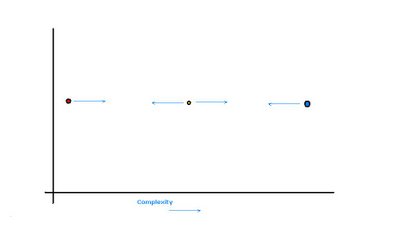
The second common misconception about evolution is that it has a tendency to generate greater complexity. Originally, right after the initial origin of life on Earth, evolution did produce greater complexity, but only because there was no way to become any more simple than the first organisms already were. There is a “left wall” of complexity in the living world, i.e. there is a minimum complexity that is necessary for something to be deemed alive.

Thus, initially, the only direction evolution could take was away from the left wall (red dot), i.e., becoming more complex. But once reasonably complex organisms evolved, they were not snuggled against the left wall any more (yellow dot). Adaptation to current local conditions can equally promote simplification as it does complexification of the organism in question. In other words, as populations evolve, the members of the populations are equally likely to become simpler as they are to become more complex.

Actually, as we know from the world of man-made machines, there is such a thing as being too complex (blue dot). Over-complicated machines break down much more easily and are more difficult to maintain and repair. Likewise, organisms of great complexity are often not as fit as their simpler relatives – their genomes are so large that the error rate is greater and cell division is more difficult. Cells can “go wild” and turn into cancer. Also, with so many interacting parts, it is more difficult for complicated organisms to evolve new adaptations as the development of the whole complex system has to change and adapt to such changes.

Thus, simplification is as often seen in evolution as is acquisition of greater complexity. Just think of parasites – they are all simplified versions of their free-living relatives – no need for eyes, other sensory organs or means of locomotion if one spends one’s life attached to the lining of the host’s intestine, sucking in nutrients and growing billions of eggs.

Measuring Diversity – Taxonomy and Systematics

People have always tried to classify living beings around them, by grouping them according to some man-made criteria, usually by the way they look, where they live, and how useful they may be to us. Only for the past 150 years we have understood that all organisms on our planet are genealogically related to each other, so we started classifying them according to the degree of relatedness – drawing family trees of Life.

Initially, classification was done according to anatomy and embryology of organisms. Such methods brought about the division of Life on Earth into six great Kingdoms: Bacteria, Archaea, Protista, Plants, Fungi and Animals. The first two are Prokaryotes (cell has no nucleus), the latter four are Eukaryotes (cells have a nucleus).

The Kingdoms were, like Russian dolls, further subdivided into nested hierarchies: each Kingdom was composed of a number of Phyla (Phylum = type). Each Phylum consists of Classes, those are made of Orders that are further subdivided into Families. Each family consists of Genera and each Genus is composed of the most closely related Species.

The proper name of each living organism on Earth is its binomial Latin name – capitalized name of the Genus and lower-case name of the species, both italicized, e.g., Homo sapiens, Canis familiaris, Equus caballus, Bos taurus (human, dog, horse and cow, respectively).

Lately, modern molecular genetic techniques have been applied to testing relationships between species, resulting in many changes in classification at lower levels of systematics (e.g,. species, genus, family, etc).

The knowledge gained from this approach also resulted in some big changes in the way we classify living organisms. Instead of six Kingdoms, we now divide life on Earth into three Domains: Bacteria, Archaea and Eukarya.

We are now aware that endosymbiosis (intercellular parasites, originally small bacterial cells entering and living inside larger bacterial cells) gave rise to organelles, like mitochondria and chloroplasts. We are now aware how much lateral (or horizontal) transfer of genetic material is going on between species, i.e., the branching tree of life has many traversing connections between branches as well.

Cladistics is a relatively new method of classifying organisms, using multiple (often many) different genetic, morphological and other traits and building “trees” by calculating (using computer software) the probabilities of each two of the species being related to each other. Thus, “most likely” trees are plotted as cladograms which can further be tested and refined.

Previously in this series:

BIO101 – Biology and the Scientific Method
BIO101 – Cell Structure
BIO101 – Protein Synthesis: Transcription and Translation
BIO101: Cell-Cell Interactions
BIO101 – From One Cell To Two: Cell Division and DNA Replication
BIO101 – From Two Cells To Many: Cell Differentiation and Embryonic Development
BIO101 – From Genes To Traits: How Genotype Affects Phenotype
BIO101 – From Genes To Species: A Primer on Evolution
BIO101 – What Creatures Do: Animal Behavior
BIO101 – Organisms In Time and Space: Ecology

ScienceOnline2011 – interview with Richard Grant

Continuing with the tradition from last three years, I will occasionally post interviews with some of the participants of the ScienceOnline2011 conference that was held in the Research Triangle Park, NC back in January 2011. See all the interviews in this series here.

Today my guest is Richard P. Grant (blog, Twitter).

Welcome to A Blog Around The Clock. Would you, please, tell my readers a little bit more about yourself? Where are you coming from (both geographically and philosophically)? What is your (scientific) background? Tell us a little more about your career trajectory so far: interesting projects past and present?

Richard, on the right. Photo credit: Joe Dunckley

I’m a gypsy, both geographically and scientifically. My father was in the RAF (NCO), and so I’ve always moved around a bit. A lot, really. I read Biochemistry at Oxford and stayed for a DPhil, then a postdoc—both in cell/molecular biology/protein chemistry, looking at the machinery whereby cells stick down to a surface.

After that I had a brief spell in a small company you’ll never have heard of in Cambridge, making DNA extraction technologies. I was good at it, and everything I touched turned to gold—well, it would have if we’d have had a sales team that could actually sell anything. I left under a bit of a cloud, quite disillusioned, but having landed a postdoc at the MRC-LMB (the Nobel Factory) with Murray Stewart.

My plan there was to learn X-ray crystallography, something that had fascinated me since my doctorate. Because the protein I was working on refused to crystallize however, I ended up doing a brute force NMR attack with the incomparable David Neuhaus. Thence I was able to figure out how to get the thing to crystallize, and got a beautiful 1 Å crystal structure of my protein—part of the mRNA nuclear export pathway—combined with its ligand (a fragment of the nuclear pore). In my six years working for Murray, in addition to the nuclear export stuff I also did some work on cell motility, using nematode worm sperm as a model. These little guys crawl rather than swim, and the amazing thing is they have no actin. That was a great deal of fun, leading to me going round saying “I yearn to learn how the worm sperm turns.” You have to get your laughs where you can in this business.

Then I had three years in Sydney, being the only cell biologist in a huge team of NMR types. That was fun in a number of ways, and was where I started writing a ‘proper’ blog. I’d kept a self-propelled online web-log and written various things for other labrats before that, most of which is unpublishable, but this was the first time I’d done it using authoring software and whatnot.

When that grant money wasn’t renewed, I decided that it was time to make a clean break (I never wanted to be a PI…) and left the lab, came back to the UK and took a job with Faculty of 1000. Where I did everything from running a website rebuilding project to writing for The Scientist magazine. Now I’m on the move again, having this week accepted an offer to be a Senior Writer at a medical education & publishing agency in London.

What is taking up the most of your time and passion these days? What are your goals?

My creativity has taken a bit of a beating recently, but I’m now coming out of what has been quite a dark patch for me. I’m trying to write again—I have two novels on the go, one lab lit, based on my experiences in Cambridge; the other fantasy—and a few short stories that need looking at. I haven’t written any poetry recently but it’s something I want to revisit.

I help Jenny (Rohn) very closely with Science is Vital, the grassroots campaign group set up to protect science funding in the UK. That trundles along for a few months and then we have a massive effort—recently on science careers for example—when we don’t get any sleep.

And of course, I run Occams Typewriter. I set it up a year ago when I finally got fed up with Nature Network, and the amazing thing is it’s pretty self-propelled these days. It’s a fantastic group of people writing there, and I’m very pleased with how things have turned out.

How does (if it does) blogging figure in your work? How about social networks, e.g., Twitter, FriendFeed, Facebook and others? How do you intergrate all of your online activity into a coherent whole? Do you find all this online activity to be a net positive (or even a necessity) in what you do?

Hah. Well, while at F1000 I’ve been running the blog as well as doing all the other social media engagement. It’s been quite difficult keeping my own ‘brand’ separate from that, and to be honest, I’ll be quite glad to go back to just being me next month!

When and how did you first discover science blogs? What are some of your favourites? Have you discovered any cool science blogs by the participants at the Conference? What was the best aspect of ScienceOnline2011 for you? Any suggestions for next year?

Science blogs as a separate entity first came real to me after I started blogging in Sydney. The thing is, the University asked its staff to keep blogs, and they had loads of humanities types doing it, but I was one of maybe two other scientists who showed an interest—and the only blog that anyone read. It was really successful, and I even made it into the national press. Then Nature Network came along, and I got into OpenLab (the only blogger to get the word ‘fuck’ into the anthology that year. I checked), and I realized there were loads of other people doing the same sort of thing.

The best thing about SO2011 was meeting all these people I only knew from their electrons. Some of them turned out to be really nice people—and to be frank that was quite a surprise! Amazing how online personas differ from real life. People are nearly always better in real life, in my experience. My life was enriched.

Thank you! I hope you can make it to ScienceOnline2012 in January.

#scio11 – Open Notebook Science: Pushing Data from Bench to Web Service

Open Notebook Science: Pushing Data from Bench to Web Service from NASW on Vimeo.

This is a recording of a session from ScienceOnline2011, the fifth annual conference on Science and the Web. Join us for the sixth – bigger and better edition – next January at ScienceOnline2012.

#scio11 – Experiments with the Imagination

Experiments with the Imagination from NASW on Vimeo.

This is a recording of a session from ScienceOnline2011, the fifth annual conference on Science and the Web. Join us for the sixth – bigger and better edition – next January at ScienceOnline2012.

Cicadas, or how I Am Such A Scientist, or a demonstration of good editing

Originally published on May 16th, 2011 at my old blog.

Charles Q. Choi runs a bi-weekly series on the Guest Blog over at Scientific American – Too Hard for Science? In these posts, he asks scientists about experiments that cannot be or should not be done, for a variety of reasons, though it would be fun and informative it such experiments could get done.

For one of his posts, he interviewed me. What I came up with, inspired by the emergence of periodic cicadas in my neighborhood, was a traditional circadian experiment applied to a much longer cycle of 13 or 17 years.

Fortunately for me, Charles is a good editor. He took my long rant and turned it into a really nice blog post. Read his elegant version here – Too Hard for Science? Bora Zivkovic–Centuries to Solve the Secrets of Cicadas.

Now compare that to the original text I sent him, posted right here:

The scientist: Bora Zivkovic, Blog Editor at Scientific American and a chronobiologist.

The idea: Everything in living organisms cycles. Some processes repeat in miliseconds, others in seconds, minutes or hours, yet others in days, months or years. Biological cycles that are most studied and best understood by science are those that repeat approximately once a day – circadian rhythms.

One of the reasons why daily rhythms are best understood is that pioneers of the field came up with a metaphor of the ‘biological clock‘ which, in turn, prompted them to adapt oscillator theory (the stuff you learned in school about the pendulum) from physics to biology.

And while the clock metaphor sometimes breaks down, it has been a surprisingly useful and powerful idea in this line of research. Circadian researchers came up with all sorts of experimental protocols to study how daily rhythms get entrained (synchronized) to the environmental cycles (usually light-dark cycles of day and night), and how organisms use their internal clocks to measure other relevant environmental parameters, especially the changes in daylength (photoperiod) – information they use to precisely measure the time of year and thus migrate, molt or mate during an appropriate season.

These kinds of experiments – for example building Phase-Response Curves to a variety of environmental cues, or a variety of tests for photoperiodism (night-break protocol, skeleton photoperiods, resonance cycles, T-cycles, Nanda-Hamner protocol etc.) – take a long time to perform.

Each data point requires several weeks: measuring period and phase of the oscillation before and after the pulse (or a series of pulses) of an environmental cue in order to see how application of that cue at a particular phase of the cycle affects the biological rhythm (or the outcome of measuring daylength, e.g., reproductive response). It requires many data points, gathered from many individual organisms.

And all along the organisms need to be kept in constant conditions: not even the slightest fluctuations in light (usually constant darkness), temperature, air pressure, etc. are allowed.

It is not surprising that these kinds of experiments, though sometimes applied to shorter cycles (e.g., miliseconds-long brain cycles), are rarely applied to biological rhythms that are longer than a day, e.g., rhythms that evolved as adaptations to tidal, lunar and annual environmental cycles. It would take longer to do than a usual, five-year period of a grant, and some experiments may last an entire researcher’s career. Which is one of the reasons we know so little about these biological rhythms.

~~~~~~

Living out in the country, in the South, just outside Chapel Hill, NC, every day I open the door I hear the deafening and ominous-sounding noise (often described as “horror movie soundtrack) coming from the woods surrounding the neighborhood. The cicadas have emerged! The 13-year periodic cicadas, that is. Brood XIX.

I was not paying attention ahead of time, so I did not know they were slated to appear this year in my neck of the woods. One morning last week, I saw a cicada on the back porch and noticed red eyes! A rule of thumb that is easy to remember: green eyes = annual cicadas, red eyes = periodic cicadas. I got excited! I was waiting for this all my life!

Fortunately, once they emerge, cicadas are out for a few weeks, so my busy travel schedule did not prevent me from going to find them (just follow the sound) to take a few pictures and short videos.

There are three species of periodic cicadas that emerge every 17 years – Magicicada septendecim, Magicicada cassini and Magicicada septendecula. Each of these species has a ‘sister species’ that emerges every 13 years: M.tredecim, M. tredecassini and M.tredecula. A newer species split produced another 13-year species: Magicicada neotredecim. The species differ in morphology and color, while the 13 and 17-year pairs of sister species are essentially indistinguishable from each other. M.tredecim and M.neotredecim, since they appear at the same time and place, differ in the pitch of their songs: M.neotredecim sings a higher tone.

So, how do they count to 13 or 17?

While under ground, they undergo metamorphosis four times and thus go through five larval instars. The 13 and 17-year cicadas only differ in the duration of the fifth instar. They emerge simultaneously, live as adults for a few weeks, climb up the trees, sing, mate, lay eggs and die.

When the eggs hatch, the newly emerged larvae fall from the trees to the ground, dig themselves deeper down, latch onto the tree roots to feed on the sap, and wait another 13 or 17 years to emerge again.

There are a number of hypotheses (and speculations) why periodic cicadas emerge every 13 or 17 years, including some that home in on the fact that these two numbers are prime numbers (pdf).

Perhaps that is a way to fool predators which cannot evolve the same periodicity (but predators are there anyway, and will gladly gorge on these defenseless insects when they appear, whenever that is, even though it may not be so good for them). Perhaps this is a speciation mechanism, lowering the risk of hybridization between recently split sister species?

Or perhaps that is all just crude adaptationist thinking and the strangeness of the prime-number cycles is in the eye of the beholder – the humans! After all, if an insect shows up every year, it is not very exciting. Numerous species of annual cicadas do that every year and it seems to be a perfectly adaptive strategy for them. But if an insect, especially one that is so large, noisy and numerous, shows up very rarely, this is an event that will get your attention.

Perhaps our fascination with them is due to their geographic distribution. Annual cicadas may also have very long developmental times, but all of their broods are in one place, thus the insects show up every year. In periodic cicadas, different broods appear in different parts of the country, which makes their appearance rare and unusual in each geographic spot.

In any case, I am more interested in the precision of their timing than in potential adaptive explanations for it. How do they get to be so exact? Is this just a by-product of their developmental biology? Is 13 or 17 years just a simple addition of the duration of five larval stages?

Or should we consider this cycle to be an output of a “clock” (or “calendar”) of sorts? Or perhaps a result of interactions between two or more biological timepieces, similarly to photoperiodism? In which case, we should use the experimental protocols from circadian research and apply them to cicada cycles.

Finally, it is possible that a ling developmental cycle is driven by one timing mechanism, but the synchronization of emergence in the last year is driven by another, perhaps some kind of clock that may be sensitive to sound made by other insects of the same species as they start digging their way up to the surface.
The problem: In order to apply the standard experiments (like construction of a Phase-Response Curve, or T-cycles), we need to bring the cicadas into the lab. And that is really difficult to do. Husbandry has been a big problem for research on these insect, which is why almost all of it was done out in the field.

When kept in the lab, the only way to feed them is to provide them with the trees so they can drink the sap from the roots. This makes it impossible to keep them in constant conditions – trees require light and will have their own rhythms that the cicadas can potentially pick up, as timing cues, from the sap. So, the first thing we need to do is figure out a way to feed them artificially, without reliance on living trees for food.

Also, we do not know which environmental cues are relevant. Is it light cycle? Photoperiod? Or something cycling in the tree-sap? Or temperature cycles? What are the roles of developmental hormones like Juvenile Hormone or Ecdysone? We would have to test all of them simultaneously, hoping that at least one of them turns out to be the correct one.

Second, more obvious problem, is time. These experiments would last hundreds of years, perhaps thousands! Some experiments rely on outcomes of previous experiments for the proper design. Who would do them? What funding agency would finance them? Why would anyone start such experiments while knowing full well that the results would not be known within one’s lifetime? Isn’t this too tantalizing for a scientist’s curiosity?

The solution? One obvious solution is to figure out ways to get to the same answers in shorter time-frames. Perhaps by sequencing the genome and figuring out what each gene does (perhaps by looking at equivalents in other species, like fruitflies, or inserting them into Drosophila and observing their effects), hoping to find out the way timing is regulated. This will probably not answer all our questions, but may be good enough.

Another way is to set aside space and funding for such experiments and place them into an unusual administrative framework – a longitudinal study guided by an organization, not a single researcher getting a grant to do this in his or her lab. This way the work will probably get done, and the papers will get published somewhere around 2835 A.D.

~~~~

See? How long and complex my text is? Now go back to the post by Charles to see again how nicely he edited the story.

#scio11 – How is the Web changing the way we identify scientific impact?

How is the Web changing the way we identify scientific impact? from NASW on Vimeo.

This is a recording of a session from ScienceOnline2011, the fifth annual conference on Science and the Web. Join us for the sixth – bigger and better edition – next January at ScienceOnline2012.

Is education what journalists do?

Originally published on May 24th, 2011 at my old blog.

We had a great discussion this afternoon on Twitter, about the way journalists strenuously deny they have an educational role, while everyone else sees them as essential pieces of the educational ecosystem: sources of information and explanation missing from schools, or for information that is too new for older people to have seen in school when they were young. Also as sources of judgement in disputes over facts.

While journalists strongly deny their educational role, as part of their false objectivity and ‘savvy’, everyone else perceives them as educators – people who should know and then tell, what is true and what is false, who is lying and who is not. People rely, as they cannot be in school all their lives, on the media for continuing education, especially on topics that are new. And people are then disappointed when, as usually happens, journalists fail in that role by indulging in false balance, He-Said-She-Said reporting, passionately avoiding to assign the truth-value to any statement, or self-indulgent enjoyment of their own “skill with words” in place of explaining the facts.

Fortunately for you all, you do not have to wade through all the tweets to see the entire discussion, as Adrian Ebsary has collected it all using Storify – read the whole thing (keep clicking “Load more” on the bottom of the page until you get to the end):

[View the story “Defining the Journalist’s Role: What’s the difference (if any) between a journalist and an educator? ” on Storify]

As you can see, while there is some snark and oversimplification here and there due to short format, the discussion was pretty interesting and constructive. This is also a demonstration that useful discussions can be had on Twitter.

Whenever someone says “you cannot say anything in 140 characters” I respond with “who ever said that you only have 140 characters?”. To their quizzical look, I add “You are not limited to one tweet per lifetime – if you need 14,000 characters, you can write 100 tweets”. But, by writing 100 tweets, and making sure that each tweet – not just the collection of 100 – makes sense, has punch to it, and is hard to misunderstand or misquote out of context, one has to write and edit each tweet with great care. Twitter does not allow for sloppy writing!

Picking a theme for a few hours or days, and tweeting a whole lot about it during that period, is usually called ‘mindcasting‘. But it is even better when a bunch of other people join in and mindcast together – everyone learns something from the experience.

Now read the Storify and, if you have time and energy, respond with an essay on your own blog, as a continuation of the mindcasting process.

And the first responses are in::

Whose Job is Public Science Education?

Are Journalists Educators? Does It Even Matter?

#Scio11 – Making the History of Science [Video]

Making the History of Science from NASW on Vimeo.

Diversity of insect circadian clocks – the story of the Monarch butterfly

As the Monarch butterflies are passing through New York right now, I thought this would be a good time to republish my old January 2006 post about this butterfly (see also 2008 version):

There are pros and cons to the prevalent use of just a dozen or so species as standard laboratory models. On one hand, when a large chunk of the scientific community focuses its energies on a single animal, techniques get standardized, suppliers produce affordable equipment and reagents, experiments are more likely to get replicated by other labs, it is much easier to get funding, and the result is speedy increase in knowledge.

On the other hand, there are drawbacks. One is the narrow focus which can breed arrogance. The worst offenders are people who work with rats. They rarely put the word “rat” in the title of the paper, and often it is not even found in the abstract, introduction and discussion of the paper. One has to dig through the materials and methods to find out, although if you know about this little secret, the very fact that the species is not noted in the title is a dead giveaway that it is a paper about rats. Some of the papers dealing with humans also make the same mistake of not pointing out the species in the title.

One of the most important animal laboratory models for the study of genetics and molecular biology is the wine-fly Drosophila melanogaster. For a century now, almost all advances in knowledge in these areas came from fly research first, then this knowledge got applied to other species, e.g., mice and humans.

Last month (December 2005), a paper came out that highlights both the pros and the cons of the “model” approach. On one hand, all the techniques used in the work were developed by fruitfly researchers and are now standard methods, easily replicable between labs.

On the other hand, it shows how important it is to sometimes move away from the models and take a reality check: is the mechanism described in the model animal generalizable to other animals or is it idiosyncratic to the model. The papers dealing with models, including wine-flies (and of course rats!), often make the implicit claim for generalizibility (helps funding!) without data to support this claim.

The model of the molecular mechanism of the circadian clock has been initially developed in Drosophila melanogaster and massive research is still going on in this animal. It is regarded as a reference model in a way – models developed later in mice, bread-mold, Arabidopsis plant, Synechococcus bacterium, etc, are always compared to the fruitfly model to look for similarities and differences. In a sense, it is the ‘deafult’ model in chronobiology.

This paper took a look at a non-model animal and found out that the fruitfly mechanism does not appear to be even typical of other insects. Steven Reppert and colleages at the University of Massachusets Medical School are studying circadian system in Monarch butterflies (mainly in order to better understand migratory orientation).

In this paper they discover that the Monarch, unlike the fruitfly, has two copies of a clock gene called Cryptochrome (cry). One copy (cry1) is very similar to that of Drosophila. The other copy (cry2), however, is much more similar to the mouse version of the gene.

In the brain pacemakers of fruitflies, cry is not the core component of the clock but is a blue-light photoreceptor. In the peripheral tissues, the same gene may be a component of the clock (it represses expression of some other clock genes).

In mammals, cry is not directly photosensitive, but is a core clock gene and a strong repressor of expression of other clock genes.

In Monarchs, as they show in this paper, cry1 is responsive to light, just like the cry of fruitflies. The cry2, though, does not respond to light, but represses expression of other genes, just like the mouse cry.

The best thing about this paper, though, is that the authors then went on and looked into genebanks of several other insect species and, lo and behold, discovered cry2 in a few more insects, including moths, honeybees, mosquitoes and flour beetles. Actually, the honeybees and flour beetles appear to have ONLY the mammalian-like version of the gene.

They also plotted the phylogeny of the cry gene, showing the genealogical relationship between the fruitfly-like and mouse-like versions of cry, both versions presumably resulting from a gene duplication some time in the past (the apparent precursor, bacterial photolyase, appears as only one copy in E.coli and its function is in DNA repair).

The PERIOD protein does not enter the nucleus in the Chinese silkmoth and the Monarch butterfly. Thus, at least in these two insects, the molecular mechanism of the circadian clock must be different from that of the fruitfly. Presence of the mammalian-like version of the cry gene, a potent gene repressor, suggests that it may be fulfilling the function of Per in these species. Thus, there appears to be more than one way to run a clock in an insect and the fruitfly mechanism is not as ‘standard’ at previously thought.

And working with Monarch butterflies must be great fun!

Reference:

Haisun Zhu,1 Quan Yuan,1 Oren Froy, Amy Casselman, and Steven M. Reppert, 2005, The two CRYs of the butterfly.Current Biology, Vol 15, R953-R954, 6 December 2005.


#NYCSciTweetup

Next #NYCSciTweetup will be on Thursday, October 27 at 6:30pm – 11:30pm, most likely at Peculier Pub on Bleeker Street, Manhattan.

Help us get a rough head-count by indicating on the Facebook event page if you think you can make it this time.

What is #NYCSciTweetup? See here for details.

BIO101 – Organisms In Time and Space: Ecology

This post was originally written in 2006 and re-posted a few times, including in 2010.

As you may know, I have been teaching BIO101 (and also the BIO102 Lab) to non-traditional students in an adult education program for about twelve years now. Every now and then I muse about it publicly on the blog (see this, this, this, this, this, this and this for a few short posts about various aspects of it – from the use of videos, to the use of a classroom blog, to the importance of Open Access so students can read primary literature). The quality of students in this program has steadily risen over the years, but I am still highly constrained with time: I have eight 4-hour meetings with the students over eight weeks. In this period I have to teach them all of biology they need for their non-science majors, plus leave enough time for each student to give a presentation (on the science of their favourite plant and animal) and for two exams. Thus I have to strip the lectures to the bare bones, and hope that those bare bones are what non-science majors really need to know: concepts rather than factoids, relationship with the rest of their lives rather than relationship with the other sciences. Thus I follow my lectures with videos and classroom discussions, and their homework consists of finding cool biology videos or articles and posting the links on the classroom blog for all to see. A couple of times I used malaria as a thread that connected all the topics – from cell biology to ecology to physiology to evolution. I think that worked well but it is hard to do. They also write a final paper on some aspect of physiology.

Another new development is that the administration has realized that most of the faculty have been with the school for many years. We are experienced, and apparently we know what we are doing. Thus they recently gave us much more freedom to design our own syllabus instead of following a pre-defined one, as long as the ultimate goals of the class remain the same. I am not exactly sure when am I teaching the BIO101 lectures again (late Fall, Spring?) but I want to start rethinking my class early. I am also worried that, since I am not actively doing research in the lab and thus not following the literature as closely, that some of the things I teach are now out-dated. Not that anyone can possibly keep up with all the advances in all the areas of Biology which is so huge, but at least big updates that affect teaching of introductory courses are stuff I need to know.

I need to catch up and upgrade my lecture notes. And what better way than crowdsource! So, over the new few weeks, I will re-post my old lecture notes (note that they are just intros – discussions and videos etc. follow them in the classroom) and will ask you to fact-check me. If I got something wrong or something is out of date, let me know (but don’t push just your own preferred hypothesis if a question is not yet settled – give me the entire controversy explanation instead). If something is glaringly missing, let me know. If something can be said in a nicer language – edit my sentences. If you are aware of cool images, articles, blog-posts, videos, podcasts, visualizations, animations, games, etc. that can be used to explain these basic concepts, let me know. And at the end, once we do this with all the lectures, let’s discuss the overall syllabus – is there a better way to organize all this material for such a fast-paced class.

Ecology


Ecology is the study of relationships of organisms with one another and their environment. Organisms are organized in populations, communities, ecosystems, biomes and the biosphere.

A population of organisms is a sum of all individuals of a single species living in one area at one time.

Individuals in a population can occupy space in three basic patterns: clumped spacing, random spacing and uniform spacing.

Metapopulations are collections of populations of the same species spread over a greater geographic area. There is some migration (ths gene-flow) between populations. Larger populations are sources and smaller populations are sinks of individuals within a metapopulation.

Population size is determined by four general factors: natality, mortality, immigration and emigration.

Natality depends on a number of factors: the proportion of the population that are at a reproductive age (as opposed to pre-reproductive and post-reproductive), proportion of the reproductively mature individuals that get to reproduce, sex-ratio of the reproductives, the mating system, the fertility of individuals (sometimes affected by parasites), the fecundity (number of offspring per female), the maturation rate (the amount of time needed for an individual to attaint sexual maturity), and longevity (amount of time an individual can live after reproducing).

Mortality is affected by bad weather, predation, parasitism and infectious diseases. It depends on the mortality of pre-reproductive stages (from eggs and embryos, through larva and juveniles), mortality of reproductive stages, and mortality of post-reproductive stages (often from disease or aging).

A population can, theoretically, grow exponentially indefinitely. However, in the real world, the growth is limited by the amount of space, food (energy) and predators. Thus, the population size often plateaus at an optimal number – the carrying capacity of that population.

Some organisms produce a large number of progeny, most of which do not make it to maturity. This is r-strategy. The population size of such species often fluctuates in boom-and-bust patterns.

Other organisms produce a small number of progeny and make a heavy investment into parenting and protecting each offspring, This is K-strategy. The population size of such species grows more slowly and tends to stabilize around the carrying capacity.

All populations show small year-to-year fluctuations of population sizes around the optimum number. Some species, however, exhibit regular oscillations in population sizes. Such oscillations often involve populations of two different species, usually a predator and its prey, the most famous example being that of the snowshoe hare and the lynx.

Correct prediction of future changes in a population size is essential for the assessment of the populations viability and for its protection.

A biological community is a collection of all individuals of all species in a particular area. Those species interact with each other in various ways, and have evolved adaptations to life in each others’ presence.

Niche is a term that describes a life-role, or job-description, or one species’ position in the community. An example may be a large herbivore, a nocturnal burrowing seed-eater, a seasonal fruit-eater, etc.

Within one community only one species can occupy any particular niche. If two species share some of their niche, they are in competition with each other. If two species occupy an identical niche, they cannot coexist – one of the species will be forced to move out or go extinct.

If two species compete for the same resource (food, territory, etc.), one will utilize the resource better than the other. Competitive exclusion is a process in which one species drives another species out of the community.

Complete exclusion is not inevitable. The competition between two species can be reduced by natural selection, i.e., one of the species will be forced to assume a slightly different niche. For instant, two species can geographically partition the territory, e.g., one living at higher altitude than the other on the same mountain-side. Two species can also temporally partition the niches, for instance one remaining active at night and the other becoming active during the day.

Predation is one of the most important interaction between species in a community. Predation often causes evolutionary arms-races between predators and prey. For instance, by killing the slowest zebras, lions select for greater speed in zebras. Greater speed in zebras selects for greater speed in lions.

The most interesting examples of evolutionary arms-races between pairs of enemies are those in which the prey is dangerous to the predator, often by being toxic or venomous. For example, garter snakes and tiger salamanders on the West coast are involved in one such arms-race. Prey – the salamander – secrete tetrodotoxin from its skin. This toxin paralyzes the snake. Locally, some snakes have evolved an ability to tolerate the toxin, but the side-effect of such evolution is that these snakes are slow and sluggish – themselves more vulnerable to predation by birds.

Ground squirrels (prey) in the Western deserts have evolved immunity to rattlesnake venom, so the rattlesnakes (predators) are becoming more venomous. Similarly, and in the same area, desert mice have evolved immunity to the toxin of their prey – the scorpions, resulting in increasing toxicity of the scorpion venom in that region (but not in areas where these two species do not overlap). A Death’s-head sphynx moth steals honey from beehives and has evolved partial immunity to honey-bee venom.

Many plants have evolved thorns or toxic chemicals to ward off their enemies – the herbivores. Monarch butterflies are capable of feeding on milkweed despite this plant’s toxic content. Moreover, the Monarchs store the noxious chemical they extracted from milkweed and that chemical makes the butterflies distasteful to their own predators.

The shape and color of the prey often evolves to protect from predation. Warning coloration, usually in very bright colors, informs the predators that the prey is dangerous. Aposomatic coloration is one commonly found kind of warning coloration – the black and yellow stripes on the bodies of many bees and wasps are almost a universal code for dangerous venomous stings.

Cryptic coloration, or camouflage, on the other hand, allows an animal to blend in with its surroundings. Many insect look like twigs, leaves or flowers, effectively hiding them from the eyes of predators. Some animals have evolved behavioral color-change, e.g., chameleons, some species of cuttlefish and the flounder.

Batesian mimicry is a phenomenon in which non-toxic species evolve to resemble a toxic species. Thus, some butterflies look very similar to Monarch butterflies and some defenseless flies and ants have aposomatic coloration.

Mullerian mimicry is a phenomenon in which two or more dangerous species evolve to look alike. This is “safety in numbers” strategy as a predator who tastes and spits out one of them, will learn to avoid all of them in the future.

Co-evolution does not occur only between enemies. It can also occur between species that positively affect each other. The best example is co-evolution of flowers and insect pollinators.

Symbiosis is a relationship between organisms that are not direct enemies (e.g,. predator and prey) to each other. Commensalism, mutualism and parasitism are forms of symbiosis.

In commensalism, one partner benefits, while the other one is not affected at all. For instance, birds building nests in a tree do not in any way affect the fitness of the tree.

Mutualism benefits both partners. The best known examples are lichens, mycorrhizae, and legumes. Birds that clean the skin or teeth of crocodiles, hippos or rhinos are protected by their hosts.

Parasitism is detrimental to one of the partners. Parasites that are too dangerous, i.e., those that kill their host, are not successful since they also die without leaving offspring. Thus, parasites evolve to be minimally harmful to their hosts. The same logic goes for infectious agents – the disease should help propagate the microorganism (e.g, by causing sneezing, diarrhea, etc.) without killing the host.

The organisms that make up ecosystems change over time as the physical and biological structure of the ecosystem changes. Right now, one of the effects of global warming is that some species migrate and others do not. Thus, old ecosystems break down and new ones are formed. The ecosystems are in a process of remodeling. During that process, many species are expected to go extinct.

When an ecosystem is disturbed to some extent, but not completely eradicated, the remodeling process that follows is called primary succession.

When an ecosystem is completely wiped out (e.g,. a volcanic eruption on an island), secondary succession occurs, with a predictable order in which species can recolonize the space. One species prepares the ground (quite literally) for the next one. The process may start with bacteria, lichens and molds, continuing with mosses, fungi, ferns and some insects, etc, finally ending with trees, birds and large mammals. The final structure of the ecosystem is quite stable over time – this is a mature ecosystem.

Previously in this series:

BIO101 – Biology and the Scientific Method
BIO101 – Cell Structure
BIO101 – Protein Synthesis: Transcription and Translation
BIO101: Cell-Cell Interactions
BIO101 – From One Cell To Two: Cell Division and DNA Replication
BIO101 – From Two Cells To Many: Cell Differentiation and Embryonic Development
BIO101 – From Genes To Traits: How Genotype Affects Phenotype
BIO101 – From Genes To Species: A Primer on Evolution
BIO101 – What Creatures Do: Animal Behavior

What does it mean that a nation is ‘Unscientific’?

I first wrote and published this blog post on December 22, 2009. I thought I’d re-publish it here, on the new blog, in light of the recent discussion on the network about scientists communicating to the public (see Social Media for Scientists Part 1: It’s Our Job, Social Media for Scientists Part 2: You Do Have Time., Science communication? I wish it were that easy…, On Naïveté Among Scientists Who Wish to Communicate and Social Media for Scientists Part 2.5: Breaking Stereotypes). It’s long, so take your time, perhaps print it out or save on Instapaper if you have difficulty reading it all on screen.

If a publisher offered me a contract to write a book under a title that would be something like “Unscientific America”, how would I go about it?

I would definitely be SUCH a scientist! But, being such a scientist does not mean indulging in Sesquipedalian Obscurantism.

Being such a scientist means being dilligent, thorough and systematic in one’s reasearch. And then being excited about presenting the findings, while being honest about the degree of confidence one can have in each piece of information.

I was not offered a book contract, and I do not have the resources and nine or twelve months to write such a book. But in the next couple of hours days I will write a blog post (this one, I am just starting) thinking through the methodology I would use for such a project, musing about difficulties, jotting down notes and – this being a blog – asking readers for links to information that can either reinforce or challenge my hypotheses. So please follow me under the fold…..

Reasons and Goals and Target Audience

Why write such a book? What is the reason a publisher would want to invest in it? What’s the point?

I assume that the motivation comes from seeing a distressing world in which Global Warming Denialists, anti-vaccination mobs, Creationists, Animal Rights activists, opponents of genetically-modified food, and other anti-science forces are having far too much effect – most definitely a negative, potentially disastrous effect – on local, national and international policies. The book should be an exploration for the causes of such a situation and then should derive the possible remedies from the identified causes.

The authors of Unscientific America, Am I Making Myself Clear? and Don’t Be Such a Scientist are pretty explicit about the target audience for their books being scientists.

This implies (and the content of all three books supports this implication) that reaching the goal is in the hands of scientists ONLY (and implicitly out of jurisdiction of anyone else). But this implication should not be a starting point of the book. It is one of the several possible alternative hypotheses that the books should be testing, and the results of the investigation may or may not lead to accepting this result. Work needs to be done first.

Thus I would do the research first and only in the end, once I come to some conclusions, would I decide who is the most appropriate target audience, i.e., which groups of people have potentially the greatest power to effect change in a positive direction. Then I’d write a book specifically for them.

Definitions of Terms

For a longer piece of writing, like a book, it is essential to precisely define the key terms in the beginning and then to stick to those definitions throughout. Doing this prevents one from falling into a trap of shifting one’s working definitions from chapter to chapter because it’s easier (e.g., there is more information out there to discuss).

The key term for this project is the word “unscientific” (and its opposite “scientific”). How would I define it in the light of the Reasons And Goals I outlined above?

There are several candidate definitions that people explicitly or implicitly use in books, papers or blog posts on the topic. Let’s take a look.

1) An unscientific nation is one in which most citizens do not do well on tests of scientific facts.
2) An unscientific nation is one in which most citizens do not understand the Scientific Method and the way scientists really work.
3) An unscientific nation is one in which most citizens do not have trust in scientists, physicians and scientific institutions.

All three of these definitions are important and potentially useful for different projects. But are they useful for this particular project?

I’d say No. Why? Because the Reasons And Goals of the project are to figure out why some nations do not base policy on science. These three definitions focus on, I think, the wrong population: all citizens. And thus they are likely to come up with wrong solutions (better science education, better science popularization/communication, etc.). But it is not all citizens who enact policies. It is their governments who do so. So, for the purposes of my project, I would use a definition somewhat like this:

4) An unscientific nation is one in which the government is not Reality Based.

While it is unfortunate that countries are decision-makers on global policies, that is the reality right now and we need to work within a reality framework. There are also many other science-related policies that are not necessarily global but affect the lives, health and productivity of the citizens of an individual country, so the nation (aka it’s government) is, for now, the appropriate place to focus on.

And the project should also study the way the definitions 1 through 3 relate to Definition 4. And thus explore how other sub-populations outside the government (including, among others, working scientists), can influence the governmental policies.

Once decided on the working definition, I’d write it on a Post-It note and stick it on my monitor, always being reminded of it, not allowing myself to switch to any seductive alternatives.

Methodology

Governments are groups of people. Writing laws and enacting policies (and all the politicking and decision-making and horse-trading that goes into it) are behaviors of people. Thus I would study the behavior of governments using the demonstrably best framework for the study of any behavior – Niko Tinbergen’s Four Questions (PDF).

To refresh your memory, Tinbergen’s four questions are:

1) Mechanism:
– defining the behavior
– describing the behavior
– describing the underlying mechanisms of behavior at all levels of organization from molecules to neurons to organ systems to organisms to populations.

2) Ontogeny
– development of the behavior
– timing (during one’s lifetime or daily/seasonal) of behavior
– is the behavior instinctive or due to learning

3) History
– how and from what precursors did the behavior evolve
– was the behavior directly selected for or a by-product of selection for something else or a more-or-less random effect of genetic drift
– what kinds of environments have, in the past, resulted in the appearance of the behavior

4) Function
– is the behavior adaptive, maladaptive or neutral
– are there situations in which an adaptive behavior becomes maladaptive

Behavior of policy-making governments is a little bit different from the behavior of seagulls and sicklebacks, so I would have to rephrase some of these ideas somewhat, while keeping true to the spirit of the Four Questions.

The first two (mechanism and ontogeny) are also known as Proximate Causes, asking the How questions. The latter two (History and Function) are known as Ultimate Causes, asking the Why questions. Those who have studied the history of Behavioral Biology know that research projects based on Tinbergen’s framework are necessarily Integrative (asking the question from many angles at many levels of organization) and Comparative (asking the question from many related species).

Making an exciting finding in Drosophila melanogaster is not an answer to a basic biological question – it is a hypothesis that can only be tested by doing the same research in a bunch of other species. This can tell us if the finding is generalizable (thus fundamental) or is it just a quirk of Drosophila melanogaster.

Likewise, study of only one nation, e.g., United States, is not sufficient. Only a comparison with other nations can tell us if the analysis of the American situation is insightful for studying the question of “national unscientificness” or if it is just a unique quirk of this country alone.

Mechanism

Let’s start with the definition again: “An unscientific nation is one in which the government is not Reality Based.”

What does that mean? How does such a government operate?

An unscientific government is one that does not tackle the world as it is, but through wishful thinking and ideology. It is impervious to logic, uninterested in data and does not keep empirical knowledge in any regard. It prefers decisions made “from the gut” to those made by studying the world with one’s brain and devising realistic policies meant to fix real problems. It is essentially posturing (to voters, for example, as needed for re-election, or to political opponents, or to leaders of other countries) coupled with treating one’s own emotional problems (often related to power and a hierarchical view of the world). It usually but not always operates independently of any outside influences (voters, academics, media, etc.) because it can.

The flip side is a Scientific government. It is not necessarily scientistic or technocratic, just Reality Based. It attempts to figure out as best it can how the world really works, what is the real source of the problem, and what policy is most likely to fix the problem. Often this process entails getting information from experts on the way the world really works, which are often scientists. They will get the most reliable information, build the most realistic models, and figure out actions that are most likely to result in the solution to the problem. Such a government would not always follow exactly what scientists suggest – they are elected to their best in governing a country, so they will have to take into account other considerations, e.g., political consideration (can we sell this to voters), economic consideration (can we afford to do this) and foreign policy consideration (will we make some countries enemies if we do this). Thus art of the compromise comes in, but it is based on reality – it is not an ideological compromise.

And such a government does not just consult science, but acts like a scientist in a sense. A new law or regulation is not writ in stone, but is regarded as an experiment. Once enacted, the new policy is continuously monitored and measured for effectiveness and if necessary modified, replaced or removed.

Ontogeny

Let’s start with the definition again: “An unscientific nation is one in which the government is not Reality Based.”

How does a country get a government like this? How does a country get any kind of government? It can happen slowly (election, of succession of royalty), or abruptly (a coup or revolution or outside invasion).

Or, to be more precise, how does a country get its policies made?

What is really essential to bear in mind is the level of independence of the government – how much are they forced to listen to the voice of the people. An Emperor or King or Generalissimus does not need to listen to the people. He can make any laws or policies he wants. Some such dictators make it very clear that the punishment for even the mildest dissent will be painful (see Ceausescu for a historical example). Others are much better at using the power of the state, including the schools and the media, to get the population to love them and thus willingly support everything they do (see Tito for a historical example).

On the other extreme of the spectrum are countries in which elections are frequent and the voters have the power to remove one from the government pretty swiftly – the countries with perpetual ‘campaign mode’ in politics.

And there is an entire continuum in-between.

So we have two main players here: the government and the population it governs.

We have four possible combinations of ‘scientificness’ of the two players: scientific government + unscientific voters, scientific government + scientific voters, unscientific government + unscientific voters and unscientific government + scientific voters. In which ‘scientificness’ is used in the sense of “Reality-Based” for the government and in the sense of Definition 3 (trust in scientists and scientific institutions) for the voters.

And then we have the long spectrum of the influence of the population on the government ranging from zero to all.

If both the government and the voters are scientific, it does not matter how much the government has to listen to the voters – it will do the right thing.

If both the government and the voters are unscientific, it also does not matter how much the government has to listen to the voters – it will do the wrong thing anyway.

But if the government is scientific and voters are not, then it takes an independent, courageouos or strong government to do the right thing despite the will of the people.

And if the government is unscientific but voters are scientific, it takes a tentative, voter-dependent government in perpetual ‘campaign mode’ to be persuaded to do the right thing despite their own instincts and beliefs.

OK, this is a simple, two-element model. It is a scaffolding on which to build more complex yet more realistic models. Of course there are other players involved, those who can push either the government or the people in the direction of greater or lesser ‘scientificness’:

Industry – often new scientific data suggest that the industry needs to change the way it does its business, e.g., to reduce negative environmental impact, or to reduce negative health effects on their employees or customers. In a country in which the economic and financial systems are set up in a way that rewards only short-term profits (or worse, rely on bad proxy numbers like the value of stocks in the stock market which is, remember, the market of second-hand stocks traded by others, not by companies themselves), then the industry will have to resist Reality-Based solutions and will try to affect the governmental policies in that direction.

They can do that via lobbyists in some countries, or more directly (during a golf game with their buddies in the government) in other places. Or they can try indirectly – trying to persuade the people (if the people are deemed influential in that country) directly or via influence on the media (during a golf-game with the star TV pundit, or by building a PR machine – read that link!!!).

In other countries, though, the particular industry may be government-run, or may be persuadable by people or the media to quickly adopt science-based solutions without risking much in the market-place. It all depends on the way the economy is set up.

National Academy of Sciences and other scientific institutions (or even individual scientists) will have a much greater voice in the the policy-making process in some countries than in others. Where not having direct influence on the government, they may try to work indirectly, persuading the people via media or other venues.

Media is another important player here. It has the power to influence the voters, and also has the power to influence the industry leaders and the governments. How? The government thinks that the media presents the view of the people. The people think that the media presents the view of the government. The latter are, in many countries (most notably in the USA) correct. The media writes what it thinks the government thinks. And government reads the media to find out what the people think yet only finds the reflection of itself and is satisfied to find the will of the people so wonderfully aligned with their own. Add some PR machinery or direct money from the industry to the leaders of the media, and their interests miraculously become the “voice of the people” that the government will be happy to go along with. This is a short and condensed version of an important argument, to which I will return a little later (if you have the patience to read this post to the very end).

Religious organizations are a very powerful lobby in some countries, often, but not always, on the anti-science side of things.

So, it is a model with a number of players and in each country the power-dynamics between them are different: who can persuade whom, the final executor of the resulting decision of all these players being the national government which then, in cases like Climate Change or global pandemics, has to enter a higher-level field, negotiating with other governments which all have different kinds and intensities of fire aimed at their toes at home.

To summarize: the development and enactment (“ontogeny”) of policy decisions depends on relative power of various players, the key player being the government. The ‘relative power’, or ‘independence’ means ability to influence or overpower other players while at the same time being immune to the influence by the other players.

History

Let’s start with the definition again: “An unscientific nation is one in which the government is not Reality Based.”

So, if the ontogeny of each policy decision is dependent on the relative power and relative ‘scientificness’ of all the involved players, how does such a system, with those particular power-relations evolve, i.e., come to be over time? What kinds of events, or actions (by whom?), produce change in the system?

Who gets to be in the government? Who gets to be an industry leader? Who gets to be a talking head on TV? What are their backgrounds? Ideologies? Do they get better science education than the rest of the population or is the educational system equal for everyone?

Education – not just science education, but more importantly education that fosters critical thinking and openness to new ideas, is an important factor in developing ‘scientificness’ (in the sense of being Reality Based) in different segments of the society. Is there such an educational system in a particular nation? For all or just for the the chosen few (rich and powerful)?

Education is important, but not a be-all and end-all of it. After all, people have received PhDs in geology or evolutionary biology and still remained Creationists.

Ideological and religious background can trump all education, through mental filters of various kinds.

Does knowing scientific facts make one more likely to be Reality Based? Perhaps a little, but is it enough to spread through the population and lead to a strong pro-science voice?

Does understanding the Scientific Method make one Reality Based? Perhaps a little, but is it enough to spread through the population and lead to a strong pro-science voice?

Can the school have any effect on the level of trust one has in scientists and scientific institutions? Probably very little….

How much critical-thinking and scientific education of the population actually translates into reality-based policies enacted by their government is something that needs to be studied. I expect that this will differ between countries and will, in the end, not make much of a difference.

After all, tests of scientific trivia across many countries do not show great differences between countries (the results are pretty bad everywhere), yet the scientificness of their governments’ policies vary hugely.

Keep reading, I’ll explain why I think that a little later….

It is in the answering the History question (of the Tinbergen’s four questions) that the Comparative Method really comes to the fore. By studying a behavior across many species one can figure out if the behavior, wherever it occurs, is the result of evolutionary history going back deep in time, tracing back to some ancient ancestor of all the studied species. That behavior is than retained in all extanct species because it either remains adaptive or because, even though not very useful any more, it is not maladaptive enough to be selected against. And if it does disappear from some lineages, we can ask what environmental forces led to their disapperance (selection against it or random event). On the other hand, we can figure out if the behavior emerges independently, over and over again, in every species that finds itself in a particular environment – that tells us something not just about history but also about Function of that behavior.

So, focusing here only on the ‘scientificness’ of the United States is blind. One has to analyze a number of other countries, their current policies, their histories and how they got to where they are now. This is a big project, but I am sure that researchers in other nations have done studies of their own homelands and published their findings.

It’s just that we here in the US tend not to pay attention to those.

I do not assert that I have any expertise on the matter, but I can provide anecdotally a view from one other country as an illustration, and perhaps as a motivation to others to conduct relevant studies in various countries and then do head-to-head comparisons.

I grew up in Yugoslavia. It is several countries now, but culturally they are all similar so for the sake of this argument, I can pretty much use Yugoslavia and Serbia interchangeably in this example.

It was a country where garbage was on the streets. Black smoke was proudly emanating from the factory smoke-stacks. The patriarchal machismo saw Nature as something to be exploited and conquered.

I went to Serbia a few months ago. Belgrade is spotlessly clean and beautiful. What happened in the elapsed time?

First, there was a switch from socialism (though a strange, market-based socialism) to capitalism. Brand-new, still unregulated capitalism to which people are not used to (and don’t yet know how to play the game, or feel that it is not even ethical to try playing that game) breeds insecurity, which inflames nationalism and empowers religion.

Second, there was a decade of wars, and sanctions, and anti-government demonstrations not noticed by the West, and being a pariah, and being presented as criminals in the international press, and being a bargaining tool between the superpowers. And then getting bombed at the end of it all. And then the internal political fights and sending Milosevic to The Hague. With all that pounding over so many years, all the machismo is gone.

Look at these two guys:

They live in Eastern Serbia. The first thing they asked me when I got off the bus in their town (Milosevic’s hometown) was “are you one of those communists?”. I had to think fast: what communists – 19th century Marxists, Tito-era communists, Milosevic-style communists, current powerless/marginalized Communist party? Then I smiled – I realized they used the word “communist” as a synonym for “government”. I could say I was not and be true to it. They are anti-government royalists! They support the church not because they are very religious, but because it is the only institution that really cares about national pride of Serbs. They want a King not because they love the guy so much but because they cannot stomach the insecurity that comes with frequent changes in the government that naturally flow from having regular democratic elections. They crave stability (who could blame them after the crazy 1990s!), hopefully headed by an iron-fisted ruler who will sit in his palace, looking beautiful in his kingly dress, for decades without change.

If they lived in the USA they would be extreme Right, perhaps teabaggers. And totally anti-science on every issue from Climate Change to Creationism. A perfect example, seen in every country in the world, of the tension between city and country (that leads to so many wars!).

Yet, they are actually scientists. Furthermore, they are die-hard environmentalists. They do research on how to recycle some nasty industrial byproducts. And they made it their lives’ main goal to teach kids to think like environmentalists, with several projects involving local schools. For them, being an environmentalist and making and keeping Serbia clean and not contributing to global warming is a matter of national pride.

I am still kicking myself in the butt for forgetting my camera one day in Belgrade when I encountered a garbage can that had an inscription, in black marker (obviously written by a neighbor) appealing to national pride. It said something along the lines of “If you are a true Serb, you will not put recyclables in this trash can – the recycling container is in the back yard”.

Edit, October 6th, 2011: Bothered by this omission, when I visited Belgrade again two years later, and almost two years since I wrote this post, I made a point of going again to that part of town, walking up that street, finding that house, entering the hallway and taking the pictures – it says “Brothers Serbs!!!, do not throw trash bags and bottles into this can”:

Somebody, at some point over the past decade, had a great idea to harness national pride in the pursuit of environmental goals, devised a PR campaign towards that goal – and succeeded. I will have to figure out how that exactly happened. If I figure it out, I promise to blog about it.

Nikola Tesla being a Serb is a matter of national pride. The results of scientific research from nuclear physics to maize genetics are a matter of national pride. Petnica is a matter of national pride (which explained why the defunding of it was vigorously and successfully fought by the people). Being an intellectual, a prolific reader, and someone who can discuss Selfish Gene at the bar are matters of national pride. Serbs are supposed to be smart and educated. None of that anti-intellectualism stuff – we are Europeans with a long intellectual and scientific tradition.

Does it mean people are actually well educated in science? I am not sure what is the state of science education right now, but when I was in school there was TONS of science in the classroom – but taught as factoids. By the time I graduated high school I had behind me eight years of physics, eight years of chemistry, eight years of biology (also a year each of ecology, microbiology, molecular biology, botany and zoology due to my occupational tracking), eight years of geography (including basics of cosmology, geology, meteorology and oceanography), and twelve years of math. But we barely had any labs. And we never really tackled Scientific Method much. And we did not have it presented in any kind of historical or philosophical context. We did learn detailed biographies of Darwin and Tesla and Pupin and Milankovich and Pancich, but in a hero-mode of history. So, yes, we learned a lot of facts, and we learned to admire a few scientific geniuses (especially if they were from our homeland), but we did not really learn any critical thinking skills from it.

Thus, Serbs can talk at length about science, yet not always be critical about it. They fall oh-so-easily for scientific-sounding gibberish, from astrology to medical quackery, despite having a huge repository of science-trivia knowledge typical of Eastern European educational systems. They reject Creationism because Darwin is a hero and believing in evolution is a mark of an educated European (likewise for Climate Change – it is what educated people are supposed to understand and support, not fight against like the Troglodytes do), but they are not really able (like citizens of any country, really) to be fully skeptical of pseudoscientific ideas that sound scientific on the surface.

There are currently strong voices against getting vaccinated for swine flu. But the reasons are different than in the USA. The typical Jenny McCarthy autism-vaccine quasi-connection is not strong there. They reject the vaccine because it comes from the West. And West is always suspect. What is the Western interest in selling us the vaccines? Are they trying to poison us? Is it warfare? The scars are too fresh.

But then Dr.Kon comes on TV and tells them to get vaccinated and why they should do so. And they believe him (well, he is on TV all the time!). He is a premier authority on epidemiology there. And scientists there have authority. And they are trusted. Thus when the government wants to enact policies that are Reality Based and require the people to change their habits (as in many environmental issues), the government invites academics to speak and uses those academics as authorities they rely on for enacting such policies.

Last time I was there, I watched a long (2 hours long) show on TV that everyone was glued to. About swine flu and vaccines. Who was in the studio? Dr.Kon. And a few other physicians. And a bunch of medical students. The only person in the studio who was obviously uneducated and dumb was the moderator from the TV station (I later heard, from one of the participants, that she was even drinking during the breaks). No politicians. No representatives of politically-motivated nay-saying groups. Facts only wanted, thus experts only. And it was still a contentious and occasionally downright aggressive debate – experts debating fine points of timing of vaccines, how many, which kind of vaccine, who should get it first, etc.

And that kind of show is not unique there. Scientists, physicians, academics are often in the media, revered and trusted as relevant sources of expertise on the information how the world really works and what are the most likely actions that can potentially solve a problem. There have always been science and nature shows on TV and nobody ever thought that watering down the language was needed – the audience understood, or understood enough. And was fascinated. And believed it all. And loved it. And kept the love and reverence for science for the rest of their lives.

In a nation in which it is perfectly normal that the local drunk sitting at the bar is reading Feynman while drowning sorrow in slivovitz, where bookstores are full of books about science and nature (and philosophy! – it’s big there), where the media is full of science and reveres scientists (while the anti-science cranks are mostly ignored, never invited, or laughed at), where the government takes the academics’ word as law – is it surprising that people trust scientists and encourage the government to enact science-based solutions to problems even if they don’t truly understand them?

Both this year and last year when I visited Belgrade I gave multiple radio interviews (a few of those were hour-long) and a brief TV interview (where I met ubiqutous Dr.Kon who was also on the same show right after me). Thus I had a chance to chat with a lot of media people there and discuss the state of the media and journalism in today’s world.

Of course, as people everywhere are wont to do, they complained about the state of Serbian media. Did they forget the state it was in during Milosevic era? I tried to tell them how for me, looking from the outside, it looked perfectly good. I watched the TV there and noticed that TV anchors called a spade a spade and were very well informed about the issues they were talking about.

For example, back in 2008 there were many TV debates ahead of the elections. The anchor would not ask “Can you explain your economic plan?” in an open-ended manner, let the candidate trot our talking points and then, like Wolf Blitzer, say Let’s leave it there. They would say something like this “When one runs the math on your economic proposal, one finds out that it would lead to X number of jobs lost, X billion in lost revenue, X billion in budget deficit, and X percent of inflation. How can you propose such a destructive plan?”. When the candidate tries to weasel out, the anchor turnes to the opposing candidate and says “What do you think?” and gives him 30 minutes to actually DO the math on air, totally destroying the bad proposal, leaving the opponent to fume and the audience to laugh. Then she turns to that other candidate and does the same grill on him. One with a more reasonable plan that survives the math and on-air dissection wins. And probably wins the election. How it should be done. And – even when it comes to economics – Reality rules the day. Facts. Numbers. Logic.

So I would tell my media friends about it and say that is so much better than the US media. To which they laughed – “What US media? US does not have media!”. And then they would explain to me how in the US there may be something that superficially looks like media because it uses the same technological channels – the technology of TV, radio and newspapers. But that what goes through those channels has no resemblance to journalism. It is a combination of entertainment (bread and circuses for the masses) and propaganda for whichever President’s strings are currently being pulled by the military-industrial complex.

Ouch!

I guess looking from the outside, one is able to see more clearly….

From their point of view, US foreign policy is what matters. From that point of view there is not much difference between Republicans and Democrats – they are both involved in the American imperialist project (oops, “American interests abroad”). Remember that Bush Sr. screwed up the region at the time when it could still be saved, and that then Clintonistas came in, ignorant of the local history, geography and politics and did every single thing wrong there, prolonging the war by years resulting in many more dead, wounded and displaced, and ending up bombing Belgrade, while at the same time frustrating the opposition that was trying to get rid of Milosevic and could have done so years earlier if the Democratic U.S. president did not keep interfering. So, differences in domestic policy do not really matter for foreign observers. I guess Serbs were still hopeful, until this week, that at least Obama would be more reliable on Global Warming. Eh. But from their point of view, and rightly so, there is no real media in the US, at least not media that is visible by many Americans and potentially visible to foreigners if one searches really hard.

To summarize, Serbia has a population that possesses a lot of knowledge of science trivia, an honest interest in science, has no idea how science works, has no skeptical skills, yet reveres science and trusts scientists. It is a matter of national pride. And is not aligned with any particular ideology or political party. And it is something that is mirrored by and perpetuated, however imperfectly, by schools, media and government. Thus, despite the population being either scientific or unscientific, depending on which definition one uses (yes on being scientific if using definition #1, no if #2, yes if #3), the country as an entity that really matters here (definition #4) is a Reality-Based one and can easily be so as it is in sync with the voters and the media on this account. And can be so no matter which party is in power there. Most of the parties there (at least serious ones that have a chance of getting elected to govern) are Reality Based enough at least to know they cannot ignore science and reality with impunity.

I am sure my American readers have already done the comparative study in their minds while reading the case of Serbia above. And probably readers from other countries as well. Put your thoughts in the comments, please, so we can all learn more.

Function

Let’s start with the definition again: “An unscientific nation is one in which the government is not Reality Based.”

First question here is: is having a Reality Based government adaptive for the country? Does it do better than if it was not Reality Based?

Ahm. Look at the USA. Reagan years (trickle-down economics), plus Bush Sr. years (voodoo economics), plus Clintonite conservative triangulation followed by devastatingly dangerous Contract On America, and the final nail in the coffin in 2000-2008 with recklessly ideological bullying by the Bush Republicans. It is a testament to natural wealth and the robustness of the US economy that the country still exists and that we are not all literally starving in the streets. Any other country would not be able to survive 30 years of Fairy-Tales-based policy-making and would have been annihilated from within. Yet even America is hurting. Badly. Ask the Afghans and Iraqis.

Ask the tens of millions of poor, unemployed/underemployed and uninsured Americans. Look at the economic numbers. See the environmental devastation we produced.

Policy based on ideology and wishful thinking and “from the gut” is disastrous.

But, just because having a Reality Based government is adaptive does not mean it is a “natural state of things”, thus….

The second question: is the Reality-Based or Unscientific the default state for a nation?

That’s a question that can be thought of in terms of entropy (which of the two extreme states is lower energy, thus easy to attain, while the opposite state requires input of energy) or in terms of an adaptive landscape (which of the two extreme states is on the adaptive peak that requires climbing onto, and which one is in the valley).

In other words, is it natural for a country to be Unscientific and work needs to be done to make it Scientific? Or is it a natural state for a country to be Scientific and work needs to be done to make it Unscientific? This absolutely requires comparative study and a historical study.

If ancient state was Unscientific because there was no science and thus all the nations were originally Unscientific, did some nations become Scientific easily (it’s all downhill so just let it slide) or did it always require a lot of effort? What explains why some nations are still Unscientific, including the USA?

I do not have the answer to that question – it would be a part of the project of book-writing to study the issue and try to come up with an answer. But it is a neccessary question for this project. No prescription can be made without getting an answer to it first.

So, let’s for the sake of the argument assume that the “natural”, low-energy state is somewhere in-between the extreme states. As science progresses and governments want to generally do the best they can for their people, they more and more consult the “experts on reality” i.e., scientists and come up with more and more reality-based solutions.

There will be forces that try to speed up the process. And there will be forces that try to slow down the process. The rate of change will be a resulting vector or the sum of those forces. In each country those forces will have different indentities, strengths and directions, so the rate of movement and the trajectory of movement will be different.

What are some of the likely forces and their relative effectiveness? What factors will influence their effectiveness?

I already talked about Industry above so there’s not much new to say here. If, due to the economic and financial system, they have to pay attention primarily to short-term profits, they will be a force that slows down the process and will use direct line to politicians, or lobbyists, or PR machinery, or will try to
influence the media, whatever it takes to have their way.

Education is an important factor here. How much science is taught? How is it taught? Is the curriculum updated frequently to keep up with the advances of science? Does it teach trivia/facts, or scientific method, or critical thinking, or reverence for hero-scientists? Or does it consist of memorizing some ancient religious book? Who determines the curriculum – a national organization of educational experts, or a locally elected school board composed of who knows who?

While education in itself is no panacea, the populace that is well educated in science will be more receptive to scientific ideas in the media, will not need watering down of language when the science is presented in the media and, indirectly, may be more likely to support governmental initiatives that are demonstrably based on the best current scientific understanding of the world.

Organized Anti-Science Movements are usually allies of, or funded by, political or religious organizations. Thus, they should be treated as such, on a case-by-case basis.

The pseudoscience associated with the political Left is usually fragmented – each with its own organization – and has no influence on the Democratic Party in the USA or on much of public discourse. Chopra-style purveyors of NewAge spiritual woo don’t have any common interests with Animal Rights activists. On the other hand, anti-science movements of the Right are all parts of the same movement, coordinated with each other, and heavily funded by the same conservative network of rich organizations.

Creationists ARE Global Warming Denialists ARE opponents of stem cell research ARE Republican activists and elected officials. Their goal is not just blocking one particular area of science, but a much broader cultural rewinding of the clock. They are the key elements of the Republican party (what is left of it today), not just having an outside influence on it.

Religion tends to be, in most places, a force trying to slow down the progress. But we have to think about this smartly. It is not religion per se, it is religion used as a scaffolding for ideology, an excuse for ideology, and a symbol for rallying the ideological brethren.

Ideology is quite dependent on geography. Liberal ideology tends to thrive in big cities, where diversity of people and their beliefs breeds tolerance, where higher education is abundantly available, and where traveling is something that is done on a regular basis – seeing the world is a great liberalizer. On the other hand, small rural communities tend to be conservative because they are racially, culturally, ideologically and religiously homogeneous. The group cohesion is necessary for daily survival.

Outsiders are potentially disruptive and viewed with suspicion. They are The Other. To be scorned.

So, the more people move from country to city (as industrial revolution engendered) more they become liberalized and more they are likely to embrace reality. Those who stay in the country are more likely to stick to tradition (organized by the local religious institution) and resist disruptive change. If the rural folks perceive a science-based change in policy to be disruptive of their tradition, they will resist it (or, like my Serbian friends above, will embrace it for their own reasons, e.g., national pride).

So the city/country ratio of the country is an important determinant of the potential for a change towards scientificness of the government. Also, the relative voice that city and country have will be a factor. In countries, like USA, in which rural states and counties have disproportionately large representation in Congress, their negative influence on the movement towards Reality Based governance will be greater. In other countries, the intelligentsia that lives in the capital drives the policy and the rural areas are ignored.

Another problem with hiding an ideological resistance to change behind the skirt of religion is that in many places religion is a taboo topic for conversation, including in the media. Thus religion cannot be analyzed, questioned and criticized in public without a huge backlash. Any talk of it makes even some of the liberal seculars nervous who then try to advise the critics to abide by the tradition of silence and keep it quiet – a strategy that historically never worked and only emboldens the regressives to try harder to take control of the government and turn the country into a theocracy. Sunshine is the best disinfectant and cockroaches scurry off when you shine a light on them. Likewise, a silence about religion, and undue “respect” for religion just gives the cowards boldness to try harder to proselytize. Remember they are essentially cowards – afraid of everything new and unfamiliar. Cowards understand the language of force. They can recognize who has the balls and will run away if threatened (oh, sure, they will be yelling loudly while running away, but that can be ignored).

Even the most dry and technical analysis of religion tends to receive a very aggressive counter-response. Is it due to calculated resistance to criticisms that are seen as challenges to tradition, or an incredibly thin skin of the religious, or such a tight identification of the believers with their belief that they are incapable of seeing critiques of ideas as anything but personal attacks – I don’t know.

But as a strong factor slowing down progress towards a Scientific Nation, religion has to be openly analyzed and criticized. The topic must be made palatable to the media.

And even those liberal atheists who are uneasy, due to cozy yet traditional upbringing, with discussions of religion will have to get used to the fact that regressive, conservative religion has to be challenged in public. The faked “hurt feelings” of the religious should not be a consideration here – they need to hear the criticism (many will be responsive – they just never thought about it before, took it for granted because of the silence) and grow up to withstand it, or cower in the corner if they don’t like it, or break the shackles themselves. The super-religious will not be moved one way or another. Liberal believers have to be challenged: whose side they are on – reality or their regressive religious brethren? But fence-sitters are more likely (though they will take time, nothing instantly) to move away from religion if exposed to criticisms, despite the initial recoiling and distaste, than become more religious just because “those atheists are so uncivil”. It is ugly, and slow, but the net result is positive.

The Overton Window (illustrated) is an important concept to think about when discussing the struggle against conservatism dressed up as religion. And it is important to understand how it fits within the project of communicating science (important link) to the public. It is also related to the way we can work on changing what is acceptable to say in the media.

The struggle against religious digging-in-the-heels is a two-tiered project that requires two sets of people using two different strategies. One group uses gentle hand-holding tactics to help individuals cross over. The other group moves the Overton Window of what is acceptable to say by being very public and even harsh in their criticisms. The two groups cannot work without each other. The first group cannot start moving people over if there is no acceptable discussion of religion in the public and the media.

The latter cannot be successful if there are no troups in the trenches to hold the hands of individuals and bring them into the public square they prepared. And even the shouting matches between the two groups – the former trying to silence the latter – are actually good: the noise is also part of the moving of the Overton Window and making criticism of religion acceptable topic in the mainstream society.

In any country in which religion is a powerful force slowing down (or even reversing) the movement towards a Reality Based government, one has to have a counter-force: either a a well-organized or a loose secular/atheist coalition that has the courage to speak up and make possible the environment in which discussion of religion is deemed normal and respectable. I understand not everyone has the guts for this (how many death threats has PZ Myers received in his life?), but those who do should be applauded, not silenced. They are making a real and positive difference.

Scientists tend to be a force that helps usher a government toward becoming more Reality Based. The average density of scientific researchers per million of population is around 1000 (Source PDF). The highest is in Japan (a little over 5000 per million) and USA (a little below 5000 per million). That is a very small number. Consider also that only a very small proportion of researchers are in academia. In all countries most of the researchers are employed by the government, the military or the industry.

Only a sliver works in universities or in basic-science Centers or Institutes (where the currency are publications, not patents). And many have leaked out of the tenure-track rat-race and work as teachers, journalists, writers, press information officers, journal editors, museum curators, etc.

Thus the voice of the scientists themselves will always be small, even if all scientists get up in arms and organize and get really loud in demanding something. Some scientists are interested in doing their work and have no interest in any kind of activism or popularization or education. Others are interested in making sure funding keeps flowing. Others are interested in making sure that the published research findings are freely available to all. Only a small number of scientists are primarily interested in seeing research findings applied to policy, be it public health, or local environmental problems, or global problems like Climate Change.

So, scientists will always be viewed by the government as an interest group, a small and feeble one at that. Which is why the ScienceDebate2008 action was safely ignored, though it did have some small effects around the edges, probably not sufficient to affect election, though. And the group can certainly keep working on having the voice of scientists, unified, heard in the halls of power.

While scientists can be leaders, they cannot accomplish anything in politics on their own. They have to recruit millions of non-scientists to their cause if they are to be effective. To do so, they have to be trusted. In order to get trust, they have to defeat the forces that paint them in negative light – otherwise, the general population is quite inclined to view scientists with reverence for their intellect. The industry lobbyists and PR agencies have brought in (in the USA) the negative stereotypes of scientists as pointy-headed intellectuals whose only interest is personal wealth and destruction of free market. That’s BS and you know where that came from (tobacco lobby until defeated, then later the same PR henchmen now working for the oil/coal lobby), and you know it is not the case in most other countries. Re-read Chris Mooney’s Republican War On Science for a detailed history and analysis of the sources of anti-intellectualism and anti-science sentiment in America.

In a country with a decent general education, which includes some decent science education, there is no need to water down science for the audience. Serbs have no problem with scientific terminology on TV or in books. Those scientists who are not good at communicating tend to retreat into their labs and not attempt to communicate. Which is just fine. But many, perhaps most scientists are excellent communicators – they speak with passion and clarity and need no special ‘communications’ classes to get any more effective than they already are.

I organize ScienceOnline conferences every year. Scientists, either currently active in research or not any more, keep contacting me directly (or I hear about them from others who suggest I take a look at their work), asking to do a demo of their popularization activities. You have no idea how many scientists tweet and blog and make podcasts and produce videos, and do museum demonstrations, and do Science Cafes, and run local radio shows, and give public lectures, etc, etc. Thousands! And most of the stuff they produce is excellent! There are tons of scientists who are very active in popularization of science and are very good at it. And very effective for their audiences. We don’t need more of them. We don’t need them to learn how to become better communicators. What we need is to push their existing work onto unsuspecting audience that does not already flock to them. The “push” strategy in place of the “pull” strategy. Talking to the people who don’t even know they would be excited by a scientific topic, not just to those who actively search for them.

Saying that it is up to scientists to turn their government into a Reality Based one, that it is scientists who are inactive at communication who are responsible for the government being Unscientific, suggesting that all can change if only more scientists learned how to communicate better and then do it, in short the theses of Unscientific America, Am I Making Myself Clear? and Don’t Be Such a Scientist, are misguided at best. The scientists are doing their best already, a fantastic job actually, but their efforts are just a subset of a subset of a subset of a sliver of a side-show of a tangent of the solution to the problem. They are the only ones really on board in the USA right now and giving their maximum. How do we get others on board, too?

The very few scientists who are charged with actually lobbying the government in some way should get special training in how to do it. This has nothing to do with ‘science communication’ or learning how to become more exciting speakers. The chapter in Unscientific America about talking to politicians is the best chapter in the book. It explains what mistakes untrained scientists make when trying to persuade a politician. A very useful lesson. But it has nothing to do with having more scientists become better communicators. It’s a specialized task that requires specialized training for a very small number of specially chosen scientists. Perhaps the organization that got built around ScienceDebate can set up a training camp for those rare scientists who will be talking to politicians, whoever they are and whenever that happens. That can ve very useful.

Entertainment Industry is a special case. Back in Yugoslavia I had the pleasure of working with several film crews, some local, some international, as they paid to use our horses as props (or sometimes us as riders of those horses in action scenes). I have never met, in my life before or after, such an unbelievable collection of arrogant, ignorant Narcissists as the film crews, especially the directors (or other people supposed to be creative – folks in charge of technical or managerial aspects, e.g., the sound or lighting techs or the cameramen and even most actors tended to be quite normal). I was flabbergasted at the mere existence of such completely self-loving idiots, whose self-importance and over-inflated egos were based on nothing but hot air and some New-Age woo. But they certainly held themselves in high regard. They knew everything about everything and were never wrong about anything and got all pouty if contradicted (especially with facts). It was a nightmare working with such blowhards.

I was lucky never to work on a film in the USA, but from what I can see and read (and the results they put on screen), it does not seem like Hollywood is any better, perhaps worse. Sure, there are a few humble and educated exceptions, here as well as there, but they are rare – and they are too far up in the hierarchy for me, a mere mortal, to ever meet them and thus evaluate them in person. Don’t believe me? Just read this, this, this, this, this and this for the latest illustration of how they think and operate (lots of informative stuff in the comments as well). Gah! They don’t even know how idiotic they are.

Yet, the entertainment industry has a large effect on the perception of science and scientists by the public. And while they have their own mores and traditions that drive most of what they do, they are also a reflection of what the general society thinks. It is a two-way street, which gives one hope that even they can be reformed, with a lot of effort and time.

Remember that many scripts are proposed. Only a few are actually turned into movies. The decision as to what will get filmed rests on the movie moguls – heads of big studios. The smaller fish watch what the big fish do and try to emulate it next year. Thus our targets need to be the Big Producers and Big Directors, people who actually have influence on the movie industry as a whole.

How do we change the culture of Hollywood? There are many scientists who drop out of science careers. Some may be interested in a career in the movie industry.

Infiltrate!

The thing is, don’t be such a Randy Olson. When you go to Hollywood, don’t leave all your critical faculties behind. Do not accept the Hollywood voodoo. They have no idea, no matter how loudly they yell, about what they are doing. Really. They have no idea what really makes a good movie. Multi-million dollar projects were flops.

Tiny-budget independent movies became big hits. They are all winging it. There is no real system to their madness. Don’t believe it when they tell you otherwise.

The idea is not to infiltrate them in order to become yet another hyper Hollywood idiot. The idea is to remain who you are, unimpressed by the glitz, and change their culture from within. Use your science – do research on what works on audiences. Demonstrate how much more exciting is a story that stays true to reality than the one that just stays with old worn-out movie-making tropes. Challenge the old wrong ideas they have about “what works”.

And above else, keep your cool. The Hollywood crowd loves Randy Olson because he is such a stereotypical scientist. Unfortunately, he is uncomfortable in that role and eager to try to blend in with them and be deemed “cool” (which is the currency of Hollywood) instead of capitalizing on what he is – the brainiac at the table, the one they should all look up to for realistic, grounded advice. He is playing right into their stereotypes instead of busting them.

Now, I have never met Randy [edit: I have, briefly, since this post was first published], but he admits he is stiff and that he had to work hard on becoming a good communicator (and then through the camera lens, not talking). But he is an exception to the rule. I dare you to put me on stage or in front of a microphone – we’ll all have a lot of fun. I also don’t know why are Randy’s experiences with other scientists so bad.

Yes, I have seen some dreary science talks, but they were a minority. Most talks were fun, engaging, humorous, crystal-clear on the substance and joy to listen to. Perhaps my experience is unusual? Perhaps chronobiologists are somehow better speakers than other scientists (no, there are a couple of famously bad ones there)? Perhaps NCSU is a place where the art of giving oral presentation is much more strongly fostered than elsewhere (after all, an NCSU professor wrote the best book on the subject)?

Perhaps I saw all the best speakers in departmental seminars (and I saw 3-4 per week in 3-4 departments over ten years – that’s a lot of talks, but I guess I am one of those few irresistibly curious scientists) because we have a special culture of it? Or because I was on the departmental seminar committee for two years and myself picked the best? I doubt it. I think Randy just had bad luck. Or selective memory. Most scientific talks, no matter if the audience is the inner-most circle of the discipline or lay audience at a museum, are a blast.

So, scientists can be and usually are interesting and animated. What leads to the horrendous movies in the end is that it does not really matter what scientists say. Matt Weddell was quote-mined. It happens to everyone (not just scientists) when interviewed for a movie. The entertainment guy comes to you with a pre-set story, uninterested at all in changing it, and is fishing for quotes that are usable. If you say that something he wants to show is not true, he will edit the “not” out of your sentence and have you say it’s true. Too arrogant to even know they are being dishonest. This is the world they operate in. Better become media-savvy or refuse interviews. Being media-savvy, not falling into traps that the entertainments sets, is a completely different skill from ‘becoming a better communicator’. Scientists in general can talk great, but some how-to-deal-with-inherently-dishonest-media training is in order if one is to be interviewed for a documentary.

We as scientists will never be able to get millions of people to refuse to go see a movie just because we say it’s misrepresenting science. But we can start affecting the big studio moguls by working for them, or, like Jennifer and others are doing, giving them structured, correct and respectful advice. It will be a long uphill slog. But it can be done as a part of changing the broader culture. With little help from us, movie world will gladly follow the changes in the broader society if that means ticket sales.

But in the end, the entertainment industry is not a major source of pro- or anti-intellectual sentiment, or of scientific information. When you watch a movie you know it’s fantasy. Do you know how much people learn from a science documentary? Almost zero. You all remember Ida (Darwinius massilae), don’t you? When the paper came out I bought a shirt with a picture of Ida. I wore it around a lot. Many people I met in the street knew what it was….a fossil. At best a primate fossil. Seen “on TV the other night”. When asked to say more – nobody could. Nobody uttered the phrases “human ancestor” or “missing link” let alone any Latin. All they knew there was this fossil discovered and that it was beautiful and cool. Actually – a win for the science. They found something scientific to be cool. They were never going to or meant to learn any more than that. The documentary did its job: showed that science is cool. No more, and one should not expect any more. And if it was not “pushed” on the general audience everywhere (instead of just the History Channel which is “pull” method), nobody would have ever heard of it. From our perspective, it was a media circus (perhaps because we are not used to it). From the perspective of general audience, it was a small blip on the radar, but something that showed that science is cool.

So, I think that the entertainment industry tends to reflect the society. In the big scheme of things, they tend to be followers, not leaders. I’d rather focus energies on changing the society (and let the movies follow) than try the difficult struggle to change the movie industry first. It’s more cost-effective that way.

Corporate Media also differs from country to country.

In some places, the press is officially or unofficially owned, run and controled by the government. The ‘Government Knows Best’ press. It serves as a progaganda organ for the government, telling citizens (and other countries, which is usually more important) what the government thinks and does. That way people know what NOT to say in public if they want to avoid imprisonment. In this kind of country, the government is independent (belligerently so) and does whatever it wants. It can choose to be Reality Based or not while being completely impervious to criticism and uninterested in popular opinion. And people are unlikely to rise just because their opinions are ignored – they need to really hurt in order to revolt. And this may take decades of suffering.

On the other extreme are countries in which the independent press acts as an unofficial political opposition. It is the ‘Government is Always Wrong’ press. It does not represent the thinking of the government, but also does not represent the views of the broader population either, rather it represents a particular political view of the group (perhaps a political party) that de facto runs the press. This is a rare situation and does not last long – either the government goes down, or the press gets shut down and replaced by something more to the liking of the government. This is a theoretical case – anyone know of a real-world example of this?

In between the two extremes, there are media with various degrees of independence and various degrees of influence.

My constant criticisms of the press are really focused on the US situation only. This is because the US press is in a league of its own. It is not government-owned but acts as one and, more insidiously, pretends to be independent and “watchdog” while not being so. Worse, many people buy into that lie. How does that work?

The local and metro journalists take their cues from the D.C. press, the so-called Village. They trust the Villagers because they are “at the source”. Villagers rub shoulders with the politicians every day, get ‘insider’ information (often planted to them on purpose, but they are too giddy to notice) and act very wise in the matters of politics. This is what Jay Rosen calls the Church of the Savvy. They are buddies with the Democrats and the Republicans, consider both to be their friends and hear from both what their stands are on various topics. Thus they decide that whatever these guys say is within the realm of realistic. Everything else is not.

Even if they venture outside of the capital, when they hear people saying things that are not in their realm of possible, they dismiss it as ‘naive’ or ‘extreme’.

They are the keepers of the Overton Window, working hard on preventing anyone from moving it in any direction. They are comfortable in the status quo and hate change so they work hard on preventing change from happening. That way they keep all their politician friends.

They do not see themselves as judges of the veracity of claims – they make reality. They are just scribes – they transcribe what someone from the Left says, then what someone from the Right says, then stake their reasonable and realistic position smack in the middle (do they use the ruler and compass to determine exactly where the mid-point is?). Everyone outside of that middle is an extremist. And every idea outside that narrow domain is unworthy of mention. Like single-payer healthcare system – not savvy, not realistic (or so they determined in advance, thus not worth a mention, which then makes it unrealistic). Or WMDs being a lie.

Sorry, but the mid-point between a truth and a lie is still a lie.

Sometimes they encounter difficulties when trying their best to do the HeSaidSheSaid journalism. One side is so obviously right and the other so obviously wrong. What to do, what to do? Invent a new side, of course! Here is a great recent example: the GW denialists salivating over hacked e-mails were so obviously wrong (and morons) and the other side, the scientists and the Reality-Based community are so obviously right, the journos could not have any of that – that would be equal to conceding defeat. So they dug out from under some rock a completely irrelevant party – the Greens and environmentalists. Yeah, cool, those wackos can be portrayed as equally nutty as the GW denialists, thus the journos remain firmly in the middle, grinning smugly about their own wisdom. Oh, and the “middle-ground” they thusly discovered? It is suspiciously palatable to the anti-scientific forces of the oil/coal industry and their Republican marionettes. The savvy middle, yeah right.

Then the next morning, Washington politicians wake up and open their Washington Post, New York Times and Wall Street Journal to see what is the pulse of the nation.

They see that only the stances they are happy with are reported as being the discourse of the people. They go happily with their day. No challenge permitted.

In short, the US press acts as a barrier between the people and their government. They report to the people what the politicians deem reasonable (which would never change if left entirely to them – have you seen the average age of the US Senators?) and they report the same stuff to the politicians as the view of the people. No free exchange of ideas and opinions can pass through that barrier – the Villagers are keeping those gates closed and they decide what is and what is not “realistic”. When change happens, it is always because information bypasses the press. And then they are distressed and surprised. It’s hard work adapting to a new landscape, learning all over again who now supports what and reporting thusly.

Another reason they do this is because they are themselves not Reality Based. Unlike that Serbian anchor I mentioned above, they are incapable of doing the math and analysing a policy proposal themselves. All they are capable of doing is transcribing what various political spokes-persons say with no ability to estimate (let alone actually know) who is based in reality and who is just bullshitting them. Such ignorance is the source of their post-modernism – it’s all opinion to them, because they have no idea how to determine and assign a Truth value to any statement. “We report you decide” also means “we are too ignorant to decide for ourselves”. It also means “Truth is what we say it is, reality be damned”.

By actively preventing any change from occurring, and by staking their position as “realistic” although it is a mid-point between reality and batshit insane (thus keeping the batshit-insane ideas legitimized), the Villagers (and their followers in the provinces) keep the country from moving in the direction from Unscientific to Scientific. Always halfway to Reality-Based, never really getting there. The press is working mightily to make sure that never happens.

Prescription

Let’s start with the definition again: “An unscientific nation is one in which the government is not Reality Based.”

Focus back on the Government. It appears that, due to the Media, the US government is geometrically precisely mid-way between Reality-Based and Anti-Reality Based points. That is a pretty abysmal place to be, when you think about it. Far too far away from Reality-Based.

There are strong anti-Reality forces in the country: the Industry (because the economic system rewards only short-terms thinking), the Educational system (being determined on the local level), Electoral system (disproportionately rewarding the rural areas), Religion (unchallenged in its privileged position of being unquestioned), Entertainment Industry (which is just dumb), Republican Party (what is left of it now that the teabaggers aka birthers aka Palin-drones aka 26%-ers have purged it from the last human with a brain, but still not laughed out of court by the press), and the Media (which actively legitimizes insane views and prevents change).

The pro-Reality forces are much smaller, much less organized, much less funded, and all outside of the power establishment: scientists, good science teachers, good science writers/journalists, and vocal atheists. So how can such a small bunch break the gates and effect change? By recruiting more people and then making the government know what the will of the people really is. This means bypassing the media and, in the process, opposing all the other powerful players. It’s a dangerous game!

So how does one build a coalition, oppose the negative forces, bypass the media and talk directly to the government? In other words, how does one make it obvious to the government that their only option is to become Reality Based if they wish to get re-elected and remain in power?

First, one should identify the forces that are either purposefully trying to slow down or reverse the movement towards a Reality Based nation, or inadvertently helping such forces. Then do all of these:

1) Organized Action – build coalitions and actively oppose the anti-science activity, policy proposals, anti-science political candidates, etc.
2) Stick and Carrot – praise the people/organizations when they do something right, and slam them when they do something wrong. Make sure they hear it in both cases.
3) Punishment – organize boycotts of products, for example
4) Infiltration – reform the organization from within, making it more pro-Reality
5) Bypassing – build parallel organizations that do the job better, then put efforts into marginalizing the older, traditional organizations you are replacing

By using all of these approaches simultaneously, one can potentially win. How does one do all of that? It’s all about communication.

New Media

The ultimate target of communication is the government. One can get to it directly or indirectly.

You can go to WhiteHouse.gov or USA.gov or contact your representatives. Many are now on Facebook and Twitter – follow them and reply. Some employee there is probably tasked with reporting to the boss what the people are saying. Or go to OSTP blog – they are listening. Or to ExpertLabs (Anil Dash will be at ScienceOnline2010, specifically to get your feedback as to how to build and run that site to make it useful for the administration to get input from the experts).

Or you can go indirectly. Remember that the politicians, geriatric patients for the most part, get their ‘pulse of the nation’ by reading traditional media. If the message of

Reality is not fairly represented in the media, see the above five tactics. Praise the journos who do it right (directly or in various online venues). Slam the journos who do it wrong (they’ll burn, they’ll squeal, but most will learn their lesson). Infiltrate – become a journalist and do a better job. Bypass – build new online communications and media powerhouses. Those tactics are not mutually exclusive, they are complementary.

Sure, the governments (as well as other anti-Reality forces) are also aware of the new media channels and will try to use them for their own purposes. But there’s more of us. And we last longer – we don’t get elected for a few years, we breed. In the end, we’ll win.

Bad Guys TM also can use the Web for organizing, sure. But who has the advantage? The side that has a numerical advantage online. Remember that 26% of Americans are fundamentally anti-science. That means that 74% are reality-based, or at least amenable to intelligent persuasion. That is already a numerical advantage. Also remember that most of the anti-science forces are in the hinterland, where there is much less likelihood one can get online access (no cable, wifi or internet cafes out in the country), or have a computer or iPhone, or be mentally eager to start using such tools – a much more traditional society. That is also an advantage (for now, that will get erased pretty fast).

Getting a link from a Creationist site brings a few hits, an almost undiscoverably small number. Getting a link, even if just in a comment thread, from Pharyngula or Panda’s Thumb or RichardDawkins.net sends a humongous avalanche of traffic. While the Creationists may be having their own echo-chambers, our echo-chamber is much bigger, by being realistic it is much more likely to grow (and not be limited to the 26%) through new recruits, and will thus be potentially much louder and much effective in the long run.

How did those online communities (to take atheists as an example here) get to be so big? Before the Web, most atheists in the States thought they were alone, or in a tiny minority. Usenet newsgroups, forums, blogs, social networks revealed they count in millions – many, often pseudonymously at first, revealed online what they never told anyone before. This recognition engendered boldness. More people came out of the closet and told census workers and pollsters they are atheists. More became open about it in RL. Suddenly atheism is the fastest-growing religious self-identification in the country.

When media started discussing atheism as an emerging phenomenon by having two religious leaders discussing it in the studio (CNN), they got slammed so hard, they had to do another show and invite an actual atheist to it. The proliferation of books and blogs by vocal atheists made the topic acceptable in the public sphere. Media was forced to change to reflect this. Overton Window has moved. While Bush Sr. could say with impunity that atheists are not real Americans, his son, who is himself much more of a fundamentalist Christian, could not say that (or was prevented by advisors to say that). Vocal atheists, who found each other and organized online, engendered a large cultural shift.

The same can be done with a shift towards becoming a more Reality Based nation. It was especially disappointing to see that authors of the three books about science communication I linked to above, although three of them are bloggers, do not understand the power of the Web. You don’t need to have diligently read blogs, articles and books by Clay Shirky, danah boyd, Kevin Kelly, Jeff Jarvis, Eszter Hargittai, Dan Gilmor, Dave Winer, Theresa Nielsen Hayden, Jay Rosen and Scott Rosenberg to grok it.

Being a blogger for a few years and witnessing (and even participating in) numerous instances of the online community getting organized and effecting change (resignation or firing of officials, media mea culpas, passage or defeat of legislation, GOTW efforts, electoral results, etc.) should be sufficient.

When people formerly known as audience have communicaton tools at their disposal, they can communicate with each other (thus discover each other, agree on the goals, and organize action) and to those in power. When those in power become more afraid of us than of the CEOs or TV pundits, they’ll do their job for which we hired them.

Are we there yet? No, but we are getting there fast. In 2004, the existing handful of bloggers could not affect the results of the Presidential election. Already in 2006, they affected some mid-term elections. In 2008, online organizing was one important element of the Obama strategy to win. Locally, it can be even stronger. If you are running for office here in Chapel Hill, you better show up at Orange Politics. If you don’t (or worse, show up and be belligerent), your candidacy (and probably all future candidacies) is doomed.

Don’t judge a new communications ecosystem by its first unsteady steps. It will get there…. And sooner the worst of the traditional media goes under, sooner we can build a more modern media system in which it is much more likely that the participation of many people will ensure that the best expertise gets transmitted the broadest (techies are frantically working on better filtering tools, combining algorithms with human-curated recommendation systems) and that the best available information, as well as the will of the people, gets to its intended target, which is the government.

So, grooming a few more scientists to become a little better at talking about their research is a drop in the bucket of the solution. They are already excellent communicators and doing their maximum. It is a smart use of the new communication tools to find and organize non-scientists interested in a Reality Based government that will do the trick. Smart use of the new communication tools is necessary because the traditional communication tools – the media – keep the people away as passive observers. It is merely a method for people already in power – politicians, D.C. pundits, lobbyists, industry leaders, religious leaders, etc. – to send signals to each other.

Which is why the media in the USA is as it is – designed to exclude the people.

It will be a hard, uphill battle against very rich and powerful interests, but it can be done – there’s more of us, and we now have a way to communicate with each other and to those in power. Let’s use that new ability to make a Reality Based government here. And in other countries citizens will do the same as well.

BIO101 – What Creatures Do: Animal Behavior

This post was originally written in 2006 and re-posted a few times, including in 2010.

As you may know, I have been teaching BIO101 (and also the BIO102 Lab) to non-traditional students in an adult education program for about twelve years now. Every now and then I muse about it publicly on the blog (see this, this, this, this, this, this and this for a few short posts about various aspects of it – from the use of videos, to the use of a classroom blog, to the importance of Open Access so students can read primary literature). The quality of students in this program has steadily risen over the years, but I am still highly constrained with time: I have eight 4-hour meetings with the students over eight weeks. In this period I have to teach them all of biology they need for their non-science majors, plus leave enough time for each student to give a presentation (on the science of their favourite plant and animal) and for two exams. Thus I have to strip the lectures to the bare bones, and hope that those bare bones are what non-science majors really need to know: concepts rather than factoids, relationship with the rest of their lives rather than relationship with the other sciences. Thus I follow my lectures with videos and classroom discussions, and their homework consists of finding cool biology videos or articles and posting the links on the classroom blog for all to see. A couple of times I used malaria as a thread that connected all the topics – from cell biology to ecology to physiology to evolution. I think that worked well but it is hard to do. They also write a final paper on some aspect of physiology.

Another new development is that the administration has realized that most of the faculty have been with the school for many years. We are experienced, and apparently we know what we are doing. Thus they recently gave us much more freedom to design our own syllabus instead of following a pre-defined one, as long as the ultimate goals of the class remain the same. I am not exactly sure when am I teaching the BIO101 lectures again (late Fall, Spring?) but I want to start rethinking my class early. I am also worried that, since I am not actively doing research in the lab and thus not following the literature as closely, that some of the things I teach are now out-dated. Not that anyone can possibly keep up with all the advances in all the areas of Biology which is so huge, but at least big updates that affect teaching of introductory courses are stuff I need to know.

I need to catch up and upgrade my lecture notes. And what better way than crowdsource! So, over the new few weeks, I will re-post my old lecture notes (note that they are just intros – discussions and videos etc. follow them in the classroom) and will ask you to fact-check me. If I got something wrong or something is out of date, let me know (but don’t push just your own preferred hypothesis if a question is not yet settled – give me the entire controversy explanation instead). If something is glaringly missing, let me know. If something can be said in a nicer language – edit my sentences. If you are aware of cool images, articles, blog-posts, videos, podcasts, visualizations, animations, games, etc. that can be used to explain these basic concepts, let me know. And at the end, once we do this with all the lectures, let’s discuss the overall syllabus – is there a better way to organize all this material for such a fast-paced class.

————————————–

Today, we discuss animal behavior. Note that I tend to do a lot of drawing on the whiteboard in this lecture, which is not seen in these notes. I also show a lot of short YouTube videos that show examples of strange animal behaviors.

————————————–

Imagine that you are a zebra, grazing in the savanna. Suddenly, you smell a lion. A moment later, you hear a lion approaching and, out of the corner of your eye, you see the lion running towards you.

What happens next? You start running away, of course. How does that happen? Your brain received information from your sensory organs, processed that information and made a decision to pursue a particular action. That decision is relayed to the muscles that do the actual running.
In short, that is behavior and it can be schematically depicted like this:

Environment———> Sensor ———-> Integrator———> Effector

Here, the change in the environment (appearance of a lion) is perceived by the sensors (eyes, nose, ears), processed by the integrator (the brain) and results in the activity of the effectors (muscles).

But, it is usually not that simple. The flow chart, as depicted, may be accurate when describing behavior of a bacterium, a protist, a fungus or a plant. A molecule in the cell membrane of a bacterium may sense nutrients, toxins or light. This information is processed by the cell as a whole, and as a result, the cilia or flagella move the bacterium in an appropriate direction.

Specialized cells in the shoot-tips or root-tips may detect up and down, or the position of the Sun, and guide growth in an appropriate direction (shoots up, roots down). Sunflowers and some other plants track the position of the Sun throughout the day. Many plants open and close their flowers or leaves at particular times of day. Some flowers, e.g, Venus flytrap and some orchids, can move even faster in order to capture insects.

Pilobolus, a fungus (seen as fine white fuzz on manure), shoots its spores towards the Sun at a particular angle at a particular time of day. Those are all simple behaviors involving a single sensor, a single integrator and a single effector in a simple unidirectional flow of information.

Once we get to animals with central nervous systems, things get a little bit more complicated. There are often multiple sensors. In the zebra example, the changes in environment are detected by three separate sensors: for vision, audition and olfaction. Effectors are many muscles, working in a highly coordinated manner.

Sensors located in the muscles feed the information about their activity back to the integrator. Integrator feeds back to the sensors as well – raising the sensitivity of the sensory organs, including vision, hearing, smell and the tactile sense (touch), while reducing the sensitivity of other sensors, e.g., for pain. The subjective perception of the rate of passage of time slows down, allowing for more fine-grained sensation and faster decision-making by the integrator.

Furthermore, the integrator will stimulate secretion of the hormones which, in turn, may increase the ability of effectors (muscles) to do their work. Integrator will also raise the activity of other organ systems that are important in allowing muscles to perform at their maximal level, e.g., circulatory and respiratory systems that bring oxygen and energy to the muscles.

At the same time, the brain temporarily shuts down the activity of organ systems not necessary for short-term survival, but which may take the valuable energy away from the muscles. Thus, the digestive, immune, excretory and reproductive systems are inhibited.

As the zebra runs away, the act of running results in subsequent changes in the environment, which are again detected by the sensors. The integrator makes decisions to suddenly swerve if the lion gets closer, or to buck and kick if the lion gets very close, or to stop and find the safest route back to the herd if the lion has abandoned the chase.

All the changes described in the zebra example above are elements of the stress response, which is an excellent example of a complex behavior. There are multiple sensors, multiple effectors, various modifications of the body’s physiology, and several kinds of information feedbacks involved. Behavioral biology studies all aspects of it.
In addition, it is not just the activity itself, but also the propensity for such activity that is studied by behavioral biology. Probability of a behavior happening depends on the motivation, or the state of the effector. The state can be modified by hormones, hunger, tiredness, libido, general energy levels, etc. The effector (e.g, the brain) also possesses timing mechanism (clocks and calendars) which make some behaviors much more likely during the day or during the night, some more likely during spring or summer, others more likely during fall or winter.

What Is Behavior?

It is difficult to define behavior without resorting to just listing examples of various kinds of behaviors, but let’s try to define it anyway: Behavior is a change in body’s position, shape or color, or a change in potential for such change, in response to changes in the external or internal environment. Behavior is endogenously generated (i.e., if I move your arm – that is not your behavior, it’s mine), purposive (meant to achieve a goal), and is an evolved adaptation that contributes to survival or reproduction, thus increases one’s fitness (which is obvious in the case of the fleeing zebra).

How to study behavior?

The most informative and profitable way to study behavior is an integrative approach. This means that the behavior under study is approached at all levels of organization (from molecules to ecosystems) and from four different angles. The first angle is Mechanism, which denotes study of the physiology underlying behavior. Most of the analysis of the zebra’s behavior described above focused on this aspect – the physiology of the sensory, neural, muscular and other systems and the way they work together to produce the behavior.

The second one is Ontogeny, the study of embryonic and post-embryonic development of the behavior – how does an individual acquire the behavior, how much is the behavior inherited vs. learned, at what time in one’s life cycle can the behavior be learned or expressed, at what times of day or year are the behaviors most likely to be expressed, etc.

These first two angles – mechanism and ontogeny – are sometimes called Proximate Causes of behavior and are designed to ask and answer the “How” questions of behavior (how does it work, how does it develop). The next two are called Ultimate Causes of behavior and are designed to ask and answer the “Why” questions (why behave in such way).

History is the third approach. It studies the evolutionary history of a behavioral trait, usually by employing the comparative method, i.e., comparison of a number of related species, trying to discover if the behavior is common in all of them, in which case it is present due to the deep phylogenetic history, or of it most reliably varies with the type of environment the species lives in, suggesting that the behavior is a recent adaptation for a particular way of life.

Finally, the fourth approach is Function. It tests the hypothesis that the behavior in question increases the animal’s fitness, aids in survival and/or reproduction, and has evolved for that function – is it an adaptation.

Recently a fifth question has been added to this list. Animal cognition asks “Can animals think?” Here, careful use of some unusual (and quite controversial) methods, including anecdotes, introspection and anthropomorphism, aids in the development of testable hypotheses about the inner worlds of animals.

No other area of biology is as integrative as behavioral biology. It is possible for a biochemist to ignore ecology or for an ecologist to ignore biochemistry (though at the risk of performing irrelevant research), but a behavioral biologist cannot ignore any aspect of the biology of the species under study. This makes the study of behavior the glue that holds all of biology together. This makes behavioral biology difficult to do, as one needs to have strong background in many areas of biology, technical expertise in a broad range of laboratory and field techniques, and lots of time to follow up on the literature in a number of related fields.

Only a few – the best – behavioral biologists are capable of exploring every aspect of a behavior at all levels. Mostly, the problem is divided among a number of laboratories around the world, each researcher using a slightly different approach and different techniques. The laboratories then communicate with each other via formal channels – the publications in scientific journals – and via informal channels – conferences and personal communication (and more recently, on the Web). Thus, a big picture is slowly being built out of its smaller parts, each piece of research being informed by all other pieces of research.

Types of behaviors

Foraging behavior involves finding, catching, handling and ingesting food. It includes the formation and use of feeding territories, learning the hunting techniques, the physiology of hunger, as well as behavioral strategies for avoiding becoming prey.

Animal movement includes, most prominently, long-distance migration including the neural mechanisms of spatial orientation and navigation.

Communication is the ability of animals to communicate information to each other (within and between species) via several sensory channels (or modalities). Those modalities include vision (including infrared, ultraviolet and polarized light, as well as thermoreception), sound (including ultrasound, infrasound and substrate vibrations), chemical signals (smells, pheromones, taste), touch and electrical signals (as in electrical fish).

Reproductive behaviors encompass a broad range of behaviors. Mate-finding, male-male competition, mate-choice and courtship are behaviors involved in securing a mate. Mating behavior ensures fertilization. Nesting and parenting behaviors are meant to ensure the survival of the offspring.

Reproductive behaviors are important elements of evolutionary change. Many phenotypic traits are a result not of natural selection, but of sexual selection, where a trait is selected not by the physical environment but by potential mates. Traits favored by the individuals of the opposite sex tend to be more likely to be passed on to the next generation in that population. This leads to the evolution of exaggerated traits (e.g., the peacock’s tail) and to differences between sexes (e.g., in many bird species the male is brightly colored while the female looks drab).

Mate choice can, potentially, be involved in sympatric speciation, if different individuals in the population favor different traits in their mates, so the gene flow between the two groups gets progressively smaller with each generation. This kind of mating is called assortative mating (as opposed to random mating, where each individual is equally likely to mate with each individual of the opposite sex).

The most common types of mating systems are monogamy, polygyny, and polyandry. A good example of polygyny is the elephant seal in which only one male (after defeating all the other males in one-on-one fights) mates with all the females in his territory.

Polyandry is found only a little less often – one female mates with multiple males over the course of a breeding season, resulting in her offspring being of mixed paternity (i.e., different eggs were fertilized by different males). This has been studied mostly in frogs.

Monogamy is the rarest form of mating strategy in the animal kingdom. A distinction is made between social monogamy and sexual monogamy. Many animals that form breeding pairs, including most species of birds, are engaged in social monogamy – the male and the female build the nest together, mate and raise the chicks together. However, DNA fingerprinting has shown that a small proportion of the eggs is invariably fertilized by a different male – a fleshy neighbor who may not be a good “husband” and “father”, but whose size, bright colors or powerful song indicate other genetic qualities. Thus, some of the progeny of the same female will be fleshy sons, some will be “good husband” sons and some will be daughters – the female is hedging her bets about the production of grandoffspring.

Humans are not officially classified as monogamous animals – though human polygamy (both polygyny and polyandry) tends to be in the form of serial monogamy, i.e., sticking monogamously with one partner for a particular length of time, then changing the partner. Social norms have strongly opposed, but did not eradicate human non-monogamy. Increased life-span, invention of reliable contraception, and economic independence of women are making it more and more difficult to suppress the non-monogamous tendencies in humans, as seen from statistics for divorce (around 50%), re-marrying, and cheating (around 60% of both men and women) that have held quite steady over the past 50 years or so.

Social behaviors involve relationships between individuals of the same species. Some animals tend to live alone, each individual defending a territory, and a male and a female meeting only briefly during the mating season. Other animals tend to live in smaller or larger groups. Some animals change their social structure seasonally – for instance, European quail live in coveys (10-12 birds) during the winter), in huge flocks during spring and fall migrations, and in breeding pairs during summer.

Within groups, there is often a hierarchy of individuals – the so-called “pecking order”. The social hirearchy is established through aggression, often in form of ritualized displays. In many species, the ritualized aggressive behaviors are so-called “fixed-action patterns“, i.e., a strongly heritable order of particular movements. Mating behaviors are also often fixed-action patterns.

In some species, the mating fixed-action patterns are also used for aggressive encounters. In some cases, when a male mounts another male utilizing a typical mating pattern, this is actually a display of social dominance. However, in other species, a male mounting a male is actually homosexual behavior, evolved not to determine social hierarchy, but quite the opposite, to increase social coherence within the group (“making friends”). In pygmy chimps (bonobos), everyone in a troop mates with everyone else in the troop, regardless of gender. This makes the troop socially cohesive (which helps in group’s defense if attacked by another troop, predators or other enemies).

Previously in this series:

Biology and the Scientific Method
BIO101 – Cell Structure
BIO101 – Protein Synthesis: Transcription and Translation
BIO101: Cell-Cell Interactions
BIO101 – From One Cell To Two: Cell Division and DNA Replication
BIO101 – From Two Cells To Many: Cell Differentiation and Embryonic Development
BIO101 – From Genes To Traits: How Genotype Affects Phenotype
BIO101 – From Genes To Species: A Primer on Evolution

Best of September at A Blog Around The Clock

I posted 10 times in September. That is, on A Blog Around The Clock only (not counting the posts on The Network Central, The SA Incubator, Video of the Week, Image of the Week, or editing Guest Blog and Expeditions).

A new ScienceOnline interview:

ScienceOnline2011 – interview with Michael Barton

An announcement:

Update: NYC and The Story Collider and #NYCSciTweetUp

Several re-posts from the old archives:

Seasonal Affective Disorder – The Basics
The Mighty Ant-Lion
#Arseniclife link collection
BIO101 – From One Cell To Two: Cell Division and DNA Replication
BIO101 – From Two Cells To Many: Cell Differentiation and Embryonic Development
BIO101 – From Genes To Traits: How Genotype Affects Phenotype
BIO101 – From Genes To Species: A Primer on Evolution

Previously in the “Best of…” series:

2011

August
July
June
May
April
March
February
January

2010

December
November
October
September
August
July
June
May
April
March
February
January

2009

December
November
October
September
August
July
June
May
April
March
February
January

#Arseniclife link collection

Native arsenic, by Aram Dulyan at Wikimedia Commons.

Over the past year or so I have been diligently collecting all the links related to the (in)famous #arseniclife affair at my old blog. Links are, especially later in the process, more or less in the chronological order. I guess it will be easier for me to update, and easier for people to find it, if I re-post it here:

Mono Lake bacteria build their DNA using arsenic (and no, this isn’t about aliens) and Science gets it (mostly) wrong again: My take on the NASA astrobiology paper and Lots of Ink for a few extremophiles: We’ve been invaded by aliens, Monolakians, from the Duncecap Galaxy and When life gives you arsenic, make arsenate-backboned DNA, non-alien Halomonadaceae!

Preliminary Thoughts on the “Arsenic-Based Life” Paper and Ordinary evidence would do

The Real Scoop on Aliens Oops Arsenic in Old Lakes and Bacteria Use Arsenic As Basic Building Block In A Pinch and Poison Nil: Mono Lake Bacterium Exhibits Exotic Arsenic-Driven Biological Activity and Arsenic and Odd Lace and It’s not an arsenic-based life form.

Arsenic and Old Lakes: NASA Finds Life NOT As We Know It and Arsenic-Eating Bacteria Expands Definition of Life and It Came From Mono Lake and Complete heresy: life based on arsenic instead of phosphorus and Bacteria eat arsenic – and survive!

Arsenic-associated bacteria (NASA’s claims) and Arsenic-permissive bacteria – implications for arsenical cancer chemotherapy and Are there viruses of arsenic-utilizing bacteria? and The ‘Give Me a Job’ Microbe

Of Arsenic and Aliens and NASA’s real news: bacterium on Earth that lives off arsenic! and Close Encounters of the Media Kind and A Life Less Ordinary and Life With Arsenic: Who’d Have Thought? and Medicine! Poison! Arsenic! Life itself!

Why “alien” life, aka arsenic-loving bacteria, embargo fiasco was deja vu for Sun Spaceman Paul Sutherland and Did you know you could have bet on the NASA arsenic-based bacteria find? and On science blogs this week: Alien abductions and Nasa dismisses criticism of ‘arsenic bacteria’ research

Arsenic-Eating Bacteria May Not Redefine Life, But Could They Be Useful in Oil Spill Cleanup? and A new life form? Not so fast and Arsenic and Old Lace and Arsenic-Based Life

The Wrong Stuff: NASA Dismisses Arsenic Critique Because Critical Priest Not Standing on Altar and NASA: science shouldn’t be debated in media and blogs?! and Not getting it and “This Paper Should Not Have Been Published”: Scientists see fatal flaws in the NASA study of arsenic-based life.

Unquestioning dogma: the gatekeepers of science and Death for “Arsenic-Based Life”? and My summary of NASA’s arsenic-thriving bacteria story and Arsenic and Bacteria: “nothing in that paper is going into my biochemistry textbook” and Why was #PLoS ONE blamed for the media hype about the Darwinius and Red Sea papers, but when it comes to the latest overblown #Science paper, it is #NASA that’s blamed for the hype? (same applies to Venter’s synthetic life: Venter gets the blame not Science) and Heavy Metal

And the skeptics keep chiming in…George Cody on arsenic life and NASA discovers life on Earth and Extraordinary claims attract extraordinary blogging and The Value of Blogs and Ordinary evidence would do

[guest post: Alex Bradley, PhD] Arsenate-based DNA: a big idea with big holes and On how science happens – Case Study: NASA, Arsenic, and Controversy and Is That Arsenic-Loving Bug — Formerly an Alien — a Dog?

Hat die NASA Aliens gefunden? (natürlich nicht) and Die Arsen-Bakterien: Doch ein lohnendes Forschungsobjekt? and Science Is Sexy: Why Do NASA’s New Arsenic Bacteria Matter? and NASA’s arsenic microbe science slammed and Inside scoop from the NASA man who was way ahead of the rest of NASA on those Mono microbes with arsenic in their genes.

NASA’s new life form: Underwhelming? and Did NASA really find new life? and NASA’s Arsenic-Eating “Alien” Bacteria Is More Like Science-Fiction and Was NASA’s big announcement a big mistake? and NASA’s Arsenic-Loving Bacteria Don’t Love Arsenic After All, Critics Say.

An arsenic bacteria postmortem: NASA responds, tries to pit blogs vs. “credible media organizations” and The Right Place for Scientific Debate?: Scientists snub media as controversy over arsenic-eating microbes rolls on and Hey, NASA: this is what peer review actually looks like.

The dubious arsenic bacterium and Life on Arsenic? and NASA arsenic story – let’s lay off the personal attacks on all sides and Scientific dissention: shouldn’t we all be nice? and Arsenic about face and My Letter to Science and DNA, Phosphorus, and Arsenic and NASA can’t have it both ways.

Wolfe-Simon et al Comment: 08 December 2010 and Scientists: NASA’s claim of microbe that can live on arsenic is ‘flawed’ and Did NASA follow its own code of conduct in announcing the arsenic bacteria study? (Hint: No) and Post-publication peer review in public: poison or progress?

Of arsenic and aliens: What the critics said and Falsehoods associated with the arsenic-thriving bacteria story: What it is and what it isn’t and Critics raise doubts on NASA’s arsenic bacteria and Three Tales of Arsenic Tolerant Bacteria

Robert Sheldon, ID proponent, defending the arsenic bacteria paper? Oh dear God. and Arsenic Bacteria Breed Backlash and Don’t Like Arsenic Bacteria? Put Your Experiment Where Your Mouth Is! and GFAJ-1: Get Fighting And Jousting! and Albert Eschenmoser and I Had Arsenic for Lunch

Arsenic bacteria – a post-mortem, a review, and some navel-gazing and Of Arsenic, Slime Molds, and Life on Other Worlds and On science blogs this week: Arsenic bugging and Science Weekly: The arsenic bacterium that could help find life in outer space

Aliens, arsenic and alternative peer-review: Has science publishing become too conservative? and Arsenic up for Review and Arsenate redux and No-one cuts deeper than a Science Blogger. and Your daily dose of arsenic: On the Madeleine Brand Show on KPCC

The Agency That Cried “Awesome!” and Arsenic and Primordial Ooze: A History Lesson and Poisoned Debate Encircles a Microbe Study’s Result and How to harness distributed discussion of research papers and Molecular evolution of an arsenate detoxification pathway by DNA shuffling

If a Microbe Can Do It…: Finding Happiness Even Amid Toxicity (this one is total crap, but what do you expect from HuffPo)

Science Weekly: The great arsenic bacteria backlash and Good Science or good publicity? and Arsenic And Peer Review and Communication – it’s not just for cells and MEDIA ADVISORY: M10-167 and Ambitions of an Early Career Scientist? and Scientific knowledge – getting closer to the right answer

Where can we find arsenic in a DNA structure? and Not Exactly Rocket Science etc -The Great Monolakian Arsenic Issue and its quick rise to fame and flame and The Arsenic Chronicles and In Search of Life: SETI has come a long way over the years, but is the search really important? and Just to be clear: Ed Yong does read the primary literature

Calling Dr. Kane and A new kind of life? and Response required and More on Arsenic Bugs – Nature responds to the blogosphere

The arsenic post I never wrote and What Alien Bacteria Can Teach Us About Health PR and Response to Questions Concerning the Science Article, A Bacterium That Can Grow by Using Arsenic Instead of Phosphorous (PDF) and Real science – warts and all

Arsenic bacteria study authors respond to critics and Using the ‘arsenic bacteria’ story as a teaching moment for undergraduates

A Funny Arsenic Smell Upstream — What questions is it fair to ask about squishy science? and Comments on Dr. Wolfe-Simon’s Response and Yet another reason why the Wolfe-Simon conclusion is so improbable and Arsenic and Old Wounds

Scientists and the News Media: Arsenic-Based Life Forms a Case Study? and Arsenic Bacteria 4: The Quest for Peace and Confused about Arsenic

Exclusive Interview: Discoverer of Arsenic Bacteria, in the Eye of the Storm and #ArsenicLife #Fail: A teachable moment and Response to the critics.

Phosphorus beats arsenic…by a factor of seventeen powers of ten and An arsenic-laced bad-news letter: Who is the audience for online post-publication peer review?

Added four months later:
Arsenic life, four months later: pay no attention to the internet and Arsenic life, four months (and a bit) later: Reviewers with shovels and Comment posted on Rosen paper and Response from Drs. McDermott and Rosen about their arsenic paper and Arsenic Author Dumps Peer Review, Takes Case to TED and Felisa Wolfe-Simon (of arsenic infamy) is no more convincing in person than in print

And another couple of months later:

Science Publishes “Arsenic is Life” Critiques. Game On., Arsenic, RNA, and the unpleasant aftertaste of hype, The Discovery of Arsenic-Based Twitter, “The Center of Gravity Has Shifted.” Carl Zimmer on the Arsenic Paper, Critics weigh in on arsenic life.

Arseniclife: The formal critiques and the authors’ responses, Wolfe-Simon et al.’s responses to my comments, How to test the arsenic-DNA claims, How might a bacterium evolve to use arsenic in place of phosphorus?.

Arsenic-based bacteria: Fact or fiction?, Critics take aim at NASA ‘arsenic life’ study, Debate over arsenic-based life enters a new chapter, Science Publishes Multiple Critiques of Arsenic Bacterium Paper

#arseniclife, peer review, and the scientific process, High Impact Science in a Hyperactive Media Environment, Arsenic life – more criticism, formally published, Post publication peer review – a new way of doing science?.

Were my original #arseniclife criticisms overly personal?, Examples of good astrobiology please, Further panning of the arsenic life claims, Minding the As and P: Can Arsenic Substitute for Phosphorus or Not?.

What the Coburn report has in common with arsenic life, Finding the truth is a waste of time, scientists say, Does Arsenic Really Exist in the DNA from GFAJ-1?, The Arsenic Paper is out, along with eight critiques.

Return of the Arsenic Bacterium, Felisa Wolfe-Simon Does NOT Get It, Arsenic-based life debate continues, Follow arsenic life science “live”.

From the shadows to the spotlight to the dustbin – the rise and fall of GFAJ-1, Arsenic bacteria have changed science…science education that is.

Just in case I do decide to test the #arseniclife …, Working safely with arsenic (what I’d need to know), Guest post about #arseniclife, Starting to work with GFAJ-1!, They’re here!, Counting the GFAJ-1 cells, Vitamins are for wusses (#arseniclife), Why would GFAJ-1 grow much better on agar than in liquid?, Maybe it’s the water? Or the tubes?

It’s not the water, nor the tubes, nor the parafilm…, No excuses… , More detailed plans, GFAJ-1 (no real progress to report), Life and death of GFAJ-1…. and many more posts detailing the process of replicating the research.

Scientist in a Strange Land and Arsenic is Life and the View From Nowhere and #ArsenicLife Goes Longform, And History Gets Squished and Tom Clynes on arsenic life.

Arsenic, quasicrystals and the myth of the science martyr

Seasonal Affective Disorder – The Basics

First published on February 05, 2006.

So, why do I say that it is not surprising the exposure to bright light alleviates both seasonal depression and other kinds of depression, and that different mechanisms may be involved?

In mammals, apart from visual photoreception (that is, image formation), there is also non-visual photoreception. The receptors of the former are the rods and cones that you all learned about in middle school. The receptors for the latter are a couple of thousand Retinal Ganglion Cells (RGCs) located in the retina in each eye. Each of these cells expresses a photopigment melanopsin (the cryptochrome challenger apparently lost the contest about a year ago after several years of frantic research by proponents of both hypotheses).

The axons – nerve processes – from these cells go to and make connections in three parts of the brain. One is the brain center that controls pupillary reflex – when the light is bright the pupils constrict, while in the dark the pupils dilate.

The second is the brain center involved in the control of mood. There is still a lot to work out about this center, but that is probably the place where exposure to light helps alleviate regular, i.e., non-seasonal depression.

The third place where these RGCs project is the suprachiasmatic nucleus (SCN) – the main circadian pacemaker in the mammalian circadian system. The first light of dawn perceived by the eyes tells the SCN that it is day. Likewise, at dusk, the gradual decrease in light intensity perceived by these RGCs signals to the SCN that night is about to start.

Much of the work on seasonal depression (SAD) suggests that it appears in response to the changes in daylength – the photoperiod. While other aspects of the weather, e.g., brightness, temperature, etc., may modulate the response, the basic mechanism appears to be the same way other mammals time their seasonal activities, including breeding, migration, molting and hibernation. Recent studies indicate that other mammals also suffer from winter depresssion, which is triggered by long night and short days (that last link is to a really cool study – perhaps I should write a separate post just on that!).

What is important to keep in mind is that total amount of received light, its intensity and quality, do not matter in photoperiodic response in mammals. What matter is the duration of the night AS PERCEIVED BY THE SCN. One can fool the SCN by, for instance mimicking a long summer day with skeleton photoperiods (a light pulse in the morning and a pulse in the afternoon) – the clock perceives only two pulses of light (a total of a couple of hours of illumination), yet interprets is as a long day.

The output of the SCN, among else, is a projection to the superior cervical ganglia (SCG) in the upper neck region, which are part of the sympathetic (autonomic or vegetative) nervous system. The SCGs, in turn, project their axons onto the pineal gland where release of nor-epinephrine controls the synthesis and secretion of the pineal hormone melatonin. So, whenever the SCN ‘thinks’ it is night, the pineal secretes melatonin into the bloodstream.

During the day, the SCN inhibits the secretion of melatonin. The duration of melatonin secretion is the signal for the duration of the night. This signal is then read and interpreted by other parts of the brain that trigger changes in development, morphology, physiology, reproduction and behavior in a seasonally appropriate manner. So, it is the duration of exposure to melatonin, not any direct hormonal activity of melatonin, that is the key to seasonal phenomena.

Here is a schematic of the melatonin profile in the blood of normal people in summer and winter:

Such profiles are very important for fitness (survival and reproduction) in hamsters, sheep, deer and most other mammals. Humans are not so strikingly seasonal – we breed throughout the year – but our distant ancestors certainly were. Some traces of the seasonality of our ancestors can be seen. For instance we crave different foods in different seasons, put on or lose weight seasonally, etc. The best evidence for the human seasonality is the existence of Seasonal Affective Disorder – SAD. Just like other mammals, we get slow, grouchy, and in severe cases, clinically depressed during the winter (yes, I know, there are some rare people who are opposite – depressed in summer, but they are seasonal, too, and their SAD is also due to photoperiodic time measurement).

How does exposure to bright light alleviate SAD? Most humans have an inherent freerunning period (tau) of their circadian clock somewhat longer than 24 hours – around 25, actually. Thus, the two figures I drew above are idealized – very few people have profiles exactly like that. We tend to wake up some hours after dawn. We sleep indoors in relatively dark rooms, perhaps under covers, with our eyes closed. The RGCs do not perceive the first light of dawn at the time of dawn but some time afterwards. Thus, the SCN entrains to the environmental light-dark cycle with a slight delay. Most humans are mild “owls” in this respect. And even when we get up, we expose ourselves only to the relatively weak artificial light, or the dim light of a dark and dreary winter morning.

In the evening, most people do not go to bed at dusk, but switch on the lights (curse you, Edison!) and go to bed much later – often around midnight. We phase-delay our clocks with our daily behaviors. Yet, the artificial light is not sufficiently intense to shut down the secretion of melatonin. What you get is something like this – an artificially lengthened night and even longer duration of the melatonin signal than what the actual duration of night warrants:

By exposure to very bright light (a ‘light-box’ that you can buy online) in the morning, we phase-advance our clocks every morning, just enough to place ourselves into a more normal phase. High intensity is needed as the speed and size of phase resetting is dependent on light intensity. This way, we reduce the perceived duration of the night to what it really is (instead of the artificially lengthened night), thus alleviating some of the mood-related effects of short photoperiods.

“Larks” are people whose clocks run with a period at or shorter than 24 hours and who are, thus, somewhat phase-advanced in relation to the environmental light-dark cycles. The strategy for “larks” is to expose the RGCs to bright light in the evening, thus phase-delaying the clock and, again, reducing the perceived duration of night to the actual duration of night, hopefully eliminating mood-altering effects of long winter nights:


Melatonin supplements are often used in treatment of clock-related disorders. Melatonin has been suggested to treat jet-lag, effects of night-work and shift-work (“shift-lag”) and various clock-related insomnias. But beware – melatonin is also a signal of season.

I have not seen a study of this, but here is something that, in theory, can happen. If you are an extreme night owl, i.e., phase-delayed and try to reset your clock by taking melatonin earlier in the evening than your normal (i.e., very late) bed-time, what is going to happen?


Even if you do this in the middle of summer, the melatonin supplement will prolong the nightly melatonin signal (exogenous melatonin in early night + endogenous melatonin during late night). Your brain will interpret this as an abrupt onset of very long winter nights. If you are susceptible to winter depression (and if I remember some studies correctly, owls are more susceptible to SAD than larks), you will artificially trigger SAD in the middle of the summer. So, beware!

Now, you may understand why are people who live in very high latitudes chronically depressed. After all, they are exposed to a continuous night that lasts for several months! One wonders if the reindeer are depressed, too.

What I outlined here is just the very basic mechanism of SAD – the textbook version. There are, as one should expect, many more details, complications and strange data out there. Those are, frankly, outside my domain of expertise. I am a bird kind of guy, after all. So, if you want more details, or medical advice, you will be better off to ask somebody who does research on (and clinical work with) human subjects, or at least on mammals.

Update: NYC and The Story Collider and #NYCSciTweetUp

I’ll be in New York City most of the next week, going to the office to do some work and attend meetings, going to NYU to participate in some classes in j-school (now that I am Visiting Faculty there) and to tell a story…in public! This is much different from giving a lecture or being on a panel. This takes some preparation and is really nerve-wrecking!

Next week’s The Story Collider (see: What is: The Story Collider) will have an interesting topic: “The Science of Writing”. The storytellers will be Carl Zimmer, Anna North, Amanda Marcotte, Mark Katz, Tricia Rose Burt and myself.

Check out the Facebook event page and buy tickets to attend if you will be in New York City on Tuesday night.

The event is organized so it happens at the same place and the same time as the #NYCSciTweetUp so people can come to both, or either one of them, and have fun.

If you want to be in the loop and know when each #NYCSciTweetUp happens, “Like” the Facebook page. For this week’s event, to help us estimate the size of the crowd, check “Attending” at the Facebook event page. And once there, do not be shy – approach me and say Hello.

BIO101 – From Genes To Species: A Primer on Evolution

This post was originally written in 2006 and re-posted a few times, including in 2010.

As you may know, I have been teaching BIO101 (and also the BIO102 Lab) to non-traditional students in an adult education program for about twelve years now. Every now and then I muse about it publicly on the blog (see this, this, this, this, this, this and this for a few short posts about various aspects of it – from the use of videos, to the use of a classroom blog, to the importance of Open Access so students can read primary literature). The quality of students in this program has steadily risen over the years, but I am still highly constrained with time: I have eight 4-hour meetings with the students over eight weeks. In this period I have to teach them all of biology they need for their non-science majors, plus leave enough time for each student to give a presentation (on the science of their favourite plant and animal) and for two exams. Thus I have to strip the lectures to the bare bones, and hope that those bare bones are what non-science majors really need to know: concepts rather than factoids, relationship with the rest of their lives rather than relationship with the other sciences. Thus I follow my lectures with videos and classroom discussions, and their homework consists of finding cool biology videos or articles and posting the links on the classroom blog for all to see. A couple of times I used malaria as a thread that connected all the topics – from cell biology to ecology to physiology to evolution. I think that worked well but it is hard to do. They also write a final paper on some aspect of physiology.

Another new development is that the administration has realized that most of the faculty have been with the school for many years. We are experienced, and apparently we know what we are doing. Thus they recently gave us much more freedom to design our own syllabus instead of following a pre-defined one, as long as the ultimate goals of the class remain the same. I am not exactly sure when am I teaching the BIO101 lectures again (late Fall, Spring?) but I want to start rethinking my class early. I am also worried that, since I am not actively doing research in the lab and thus not following the literature as closely, that some of the things I teach are now out-dated. Not that anyone can possibly keep up with all the advances in all the areas of Biology which is so huge, but at least big updates that affect teaching of introductory courses are stuff I need to know.

I need to catch up and upgrade my lecture notes. And what better way than crowdsource! So, over the new few weeks, I will re-post my old lecture notes (note that they are just intros – discussions and videos etc. follow them in the classroom) and will ask you to fact-check me. If I got something wrong or something is out of date, let me know (but don’t push just your own preferred hypothesis if a question is not yet settled – give me the entire controversy explanation instead). If something is glaringly missing, let me know. If something can be said in a nicer language – edit my sentences. If you are aware of cool images, articles, blog-posts, videos, podcasts, visualizations, animations, games, etc. that can be used to explain these basic concepts, let me know. And at the end, once we do this with all the lectures, let’s discuss the overall syllabus – is there a better way to organize all this material for such a fast-paced class.

Today, we introduce the concept of evolution, mainly via natural selection (sexual selection will come later in the course, and neutral selection etc. are too much for this level). Note that I tend to do a lot of drawing on the whiteboard in this lecture, which is not seen in these notes.

———————————————————-

Evolution

Imagine a small meadow. And imagine in that meadow ten insects. Also imagine that the ten insects are quite large and that the meadow has only so much flowers, food and space to sustain these ten individuals and not any more. Also imagine that the genomes of those ten insects are identical, except for one individual: that one has a mutation in one gene (due to an error in DNA replication, or due to crossing-over during meiosis, or due to chemicals in the environment, or due to getting hit by rays coming from outside Earth, etc). That mutation, during development, led to the induction of the production of more mitochondria in each muscle cell.

Normally, that mutation is not obvious – the insect flutters from flower to flower just like anyone else. However, if the situation arises, the mutant individual is just a tiny little bit faster because the additional mitochondria in muscles allow it to switch from aerobic to anaerobic sources of energy later than in other individuals. Thus, the “normal” individuals can fly one yard in one second, while the mutant can fly one yard plus one inch in one second.

Now imagine that, over some time period, a bird comes by the meadow four times. Each time, the bird chases the insects and catches the one that is the closest to her. Which individual is, statistically speaking, least likely to get caught and eaten? The mutant, as the little extra speed may give it just enough edge in comparison to other individuals. This comparative “extra edge” is called increased fitness.

After four insects have been eaten, six remain – three males and three females. They pair up, mate, lay eggs and die. Each pair lays, let’s say eight eggs, which all hatch, proceed normally through the larval development and become adults. This makes a total of 24 insects in a meadow that can support only ten individuals. At the same time, the bird has laid eggs, the eggs hatched and the hatchlings sometimes come to the meadow to hunt.

Let’s look at the genetics of this population for a moment. Two pairs of “normal” insects produced a total of 16 offspring, all of them “normal”. The offspring of one “normal” and one “mutant” each got one of the chromosomes from the mother, the other one from the father. All of them will have the mutation on one, and not on the other chromosome. Let’s say that having a mutation on only one chromosome adds a half-inch to the yard-per-second flaying speed. The full mutant is homozygous for this mutation. The half mutant is heterozygous for this mutation. The heterozygous individuals are still relatively more fit than the “normals”. As the hatchling birds hunt down the insects and cut down the population to ten individuals, the half-mutants are more likely to be present in the remaining population than the non-mutants.

Let’s call the “normal” variant of the gene A and the “mutant” variant of the same gene a. A and a are alleles of the same gene.

In the next generation, some normals will breed with normals, producing normal offspring. Some half-mutants will mate with normals and produce a mix of normals and half-mutants. Some half-mutants will mate with some half-mutants and the resulting eight offspring will consist of 2 normals (AA), two mutants (aa), and four semi-mutants (Aa).

As the a allele confers relative fitness to its carriers, this allele will spread through the population over several generations and either completely eliminate allele A, or attain some stable balanced ratio in the population.

When one compares the genetic composition of this population over generations, one notices that it changes over time, from preponderance of A in the first generation, through a series of intermediate stages, to the preponderance of a in the last generation.

The change of genetic composition of a population over multiple generations is called evolution.

That sentence is the most commonly used definition of evolution. The process that favored one allele over the other, resulting in evolution of flight speed in these insects, is called natural selection. The environment – the carrying capacity of the meadow plus the bird predators – was the selecting agent. The process that turns a genetic change (mutation) into a trait that can affect fitness of the whole organism is development. Thus, one can also define evolution as “change of development by ecology”.

For evolution to proceed, the trait must vary in a population, one of the variants has to confer greater fitness than the other variants, there has to be a limit on the fecundity (how many offspring can survive in each generation) leading to differential rate of reproduction, and the trait has to be heritable, i.e., the offspring have to be more like parents in respect to that trait than like other individuals in the population. The inheritance is usually, though not always, conferred by the genome (the DNA sequence).

The example we used is quite unrealistic. Populations are much more likely to number in thousands or millions than just ten individuals. Thus, instead of a few generations, it may take thousands or millions of generations for a new allele to sweep through the population. In annually breeding organisms, this means thousands to millions of years. In slow-breeding animals, like elephants, it will take even longer. In fast reproducers, like bacteria, this may only take several months or years, as in evolution of antibiotic resistance in bacteria or evolution of pesticide resistance in agricultural pests.

Another way that the example was unrealistic was the assumption that all the individuals were genetically identical to each other except for that one mutation in that one gene. In reality, there will be variation (two or more alleles) in every gene, and new mutations show up all the time. Some mutations decrease fitness, some are neutral and some increase fitness. Some alleles affect fitness depending on which other alleles of other genes are present in the same individuals, or depending on the environment it finds itself in at a particular time, as in the ‘norm of reaction’ phenomenon (see previous lecture). Due to this, some combinations of alleles may tend to move from one generation to the next together.

Finally, in many organisms, genes can be transmitted horizontally – not from parent to offspring but directly from one individual to another. This most often happens in bacteria, where individual bacteria may exchange bits and pieces of their DNA. Likewise, viruses are carriers of DNA sequences from one organism to another as well. Some of the sequences in our genome are of bacterial origin, transmitted some time in the past by viruses, and now fully integrated into our genome and even assuming an indispensable function. For instance, HERV genes are originally viral genes that are now parts of our genome and are necessary for the development of the placenta.

Thus, in the real world, the situation is more complicated than in our example. Still, the proportions of various alleles of many genes are constantly changing in populations over generations – evolution occurs all the time.

Let’s now assume that our insects live in a much larger area and that there are millions of them. The frequencies of various alleles fluctuate all the time, and there is quite a lot of genetic variation contained in the population. Natural selection may work on preserving the average phenotype as its fitness is high and outliers at each end have lower fitness. This is called stabilizing selection.

As the climate slowly changes, or other aspects of the environment change, the relative frequencies of alleles of various genes will track those changes. New conditions may, for instance select for larger body size. The largest individuals tend to leave most offspring, while the smallest individuals, on average, put the least of their genes into the next generation. The selection for large body size is an example of directed selection.

In some cases, selection may favor the extremes, but not the middle. Fast fliers may be selected for because they can escape the birds. The slowest fliers may be selected because they mostly walk or crawl and are thus not easily spotted by birds. They are also fit, but via a different strategy. The medium-speed fliers are selected against. This is an example of disruptive selection, forming two different morphs of the same species.

If those two morphs tend to, on average, be more likely to find each other and mate with each other within a morph than between two morphs, this may lead to splitting the species into two species – this is called sympatric speciation. As the gene flow between the two groups declines, more and more mutations/alleles will be found only in one morph and not the other. Those genes will also be under the influence of selection, and the selecting environment is different between crawlers and fliers. Soon enough, the individuals belonging to the two groups will not even recognize each other as belonging to the same species. Even if they recognize each other, they may not like each other (“mate-choice”) enough to mate. Even if they mate, their eggs may not be fertile. Even if their eggs are fertile, the resulting offspring may not be fertile (hybrids, like mules for instance). If, for whatever reason, two related populations do not, will not or cannot interbreed, they have became separate species – speciation occurred.

Imagine now that a small cohort of about ten individuals got blown away by wind from the mainland to a nearby island. The mainland population is huge. The island population is tiny. The ability of any mutation or any allele to spread fast through the population is much greater in a small group. The selective pressures are also different.

It may be better for the island insects to be small and for the mainland insects to be large, perhaps due to the types of flowers or kinds of predators that are present. The mainland insects may be selected for high flying speed because of bird predation. The island insects may not have any bird predators, but, those individuals who are the best fliers are most likely to be swept off the island by wind and drown in the ocean, never placing their genes into the next generation. Thus, they are selected not to fly, even to lose their wings.

If, after a number of generations, those two populations again get into contact – e.g., a land bridge gradually arises, or another cohort of mainland insects floats on a log onto the island, the two populations will not recognize each other as the same species (or not like each other enough to mate, or not having fertile eggs or offspring). Thus, they have also become reproductively isolated, thus, by definition, they have become two separate species. Speciation occurred. This type of speciation, where a geographic barrier separates two parts of a population preventing gene flow between them is called allopatric speciation, and is much better documented and much less controversial than sympatric speciation.

Billions of such speciation events, meaning branching of species into two or more species, resulted in the evolution of all species of organisms on Earth from a single common ancestor (a very primitive bacterium) over a period of more than 3.5 billion years.

Watch animation:

Evolution

Further readings:

Understanding Evolution
What is Evolution?
Introduction to Evolutionary Biology
Evolution FAQs
Index to Creationist Claims
Talk Design Articles
Talk Reason
Transitions

Previously in this series:

Biology and the Scientific Method
BIO101 – Cell Structure
BIO101 – Protein Synthesis: Transcription and Translation
BIO101: Cell-Cell Interactions
BIO101 – From One Cell To Two: Cell Division and DNA Replication
BIO101 – From Two Cells To Many: Cell Differentiation and Embryonic Development
BIO101 – From Genes To Traits: How Genotype Affects Phenotype

The Mighty Ant-Lion

First written on March 04, 2005 for Science And Politics, then reposted on February 27, 2006 on Circadiana, and re-posted a few more times as I moved my blog around (the latest in 2009) a post about a childrens’ book and what I learned about it since.

When I was a kid I absolutely loved a book called “Il Ciondolino” by Ricardo Vamba – a book in two slim volumes for kids (how times change – try to publish a 200+ page book of dense text for children today!). I later found out that it was translated into English under the title The Prince And His Ants in 1910 (Luigi BERTELLI (M: 1858 or 1860 – 1920) (&ps: VAMBA) The Prince And His Ants [It-?]. Holt.(tr S F WOODRUFF) [1910] * Il Giornalino Di Gran Burrasca [It-?] (tr ?) [?] ) and was even The Nation’s Book of the Week on June 2nd 1910.

[“Vamba” is the pseudonym of Italian fantasist Luigi Bertelli. The Prince and His Ants (1910) tells the tale of a boy who becomes an ant, and a girl who becomes a butterfly. The English translation by one Miss Woodruff was edited by Vernon Kellogg, an insect authority at Stanford University. Ninety interior illustrations are scientifically accurate.]

This book is hard to find – don’t even bother with Amazon – but my brother was persistent and after several weeks of patient searching he got a copy from Alibris and sent it to me. It is a story of a boy who wakes up one morning transformed into an ant. The book describes his travels and adventures in the world of the small. Of course, he meets a bunch of really cool creatures, like various wasps, and bees, and moths, and honey-ants, etc. But the one I remember the most was the ant-lion.

Photo by Jonathan Numer at Wikimedia Commons.

The antlion is actually quite pretty, yet short-lived, as an adult. But it is the larva that is really cool:

It digs a pit in the sand and hides underneath the sand right under the bottom of the pit. When an ant or some other insect comes by, it falls into the pit and has trouble climbing out of its steep walls again. The ant-lion lunges out of the sand (like a scene from “Tremors”) and eats the poor bug:


Now the really cool part: the volume of the pit is bigger when the antlion is hungrier (or so they say at this marvelous website that I highly recommend you browse around). But, hungry or not, the ant-lion digs a bigger pit when the moon is full. Nobody has any idea why that would be so. Here is a photograph (from the site I linked in the previous sentence) of a colony of ant-lions, each with its own little pit:


But here is the coolest part of all. If you take ant-lions out of the field and put them in little sandboxes in the laboratory and isolate them from any cues about the outside world they will still dig bigger pits roughly every four weeks – they have an internal lunar rhythm:


They have, somewhere in their brains, a lunar clock that tells them to dig larger pits whenever the moon is full even if they canot see the moon itself (e.g., on a dark cloudy night). If and when somebody figures out how this little brain works, I’ll be sure to tell you, but you may have to wait years for it – I don’t think anybody is even thinking about studying it right now.

References:

G.J. Youthed, V.C. Moran, The lunar-day activity rhythm of myrmeleontid larvae, Journal of Insect Physiology,Volume 15, Issue 7, July 1969, Pages 1259-1271

Inon Scharf, Aziz Subach, Ofer Ovadia, Foraging behaviour and habitat selection in pit-building antlion larvae in constant light or dark conditions, Animal Behaviour, Volume 76, Issue 6, December 2008, Pages 2049-2057 (PDF)


BIO101 – From Genes To Traits: How Genotype Affects Phenotype

This post was originally written in 2006 and re-posted a few times, including in 2010. Please help me locate the sources of the images – I assume they are from the text book I used at the time, but am not completely sure.

As you may know, I have been teaching BIO101 (and also the BIO102 Lab) to non-traditional students in an adult education program for about twelve years now. Every now and then I muse about it publicly on the blog (see this, this, this, this, this, this and this for a few short posts about various aspects of it – from the use of videos, to the use of a classroom blog, to the importance of Open Access so students can read primary literature). The quality of students in this program has steadily risen over the years, but I am still highly constrained with time: I have eight 4-hour meetings with the students over eight weeks. In this period I have to teach them all of biology they need for their non-science majors, plus leave enough time for each student to give a presentation (on the science of their favourite plant and animal) and for two exams. Thus I have to strip the lectures to the bare bones, and hope that those bare bones are what non-science majors really need to know: concepts rather than factoids, relationship with the rest of their lives rather than relationship with the other sciences. Thus I follow my lectures with videos and classroom discussions, and their homework consists of finding cool biology videos or articles and posting the links on the classroom blog for all to see. A couple of times I used malaria as a thread that connected all the topics – from cell biology to ecology to physiology to evolution. I think that worked well but it is hard to do. They also write a final paper on some aspect of physiology.

Another new development is that the administration has realized that most of the faculty have been with the school for many years. We are experienced, and apparently we know what we are doing. Thus they recently gave us much more freedom to design our own syllabus instead of following a pre-defined one, as long as the ultimate goals of the class remain the same. I am not exactly sure when am I teaching the BIO101 lectures again (late Fall, Spring?) but I want to start rethinking my class early. I am also worried that, since I am not actively doing research in the lab and thus not following the literature as closely, that some of the things I teach are now out-dated. Not that anyone can possibly keep up with all the advances in all the areas of Biology which is so huge, but at least big updates that affect teaching of introductory courses are stuff I need to know.

I need to catch up and upgrade my lecture notes. And what better way than crowdsource! So, over the new few weeks, I will re-post my old lecture notes (note that they are just intros – discussions and videos etc. follow them in the classroom) and will ask you to fact-check me. If I got something wrong or something is out of date, let me know (but don’t push just your own preferred hypothesis if a question is not yet settled – give me the entire controversy explanation instead). If something is glaringly missing, let me know. If something can be said in a nicer language – edit my sentences. If you are aware of cool images, articles, blog-posts, videos, podcasts, visualizations, animations, games, etc. that can be used to explain these basic concepts, let me know. And at the end, once we do this with all the lectures, let’s discuss the overall syllabus – is there a better way to organize all this material for such a fast-paced class.

Today, I tackle the important but difficult task of explaining why “gene for” idea is wrong and how to think in a more sophisticated manner about the way genes affect phenotype.

———————————————–

How Genotype Affects Phenotype

One often hears news reports about discoveries of a “gene for X”, e.g., gene for alcoholism, gene for homosexuality, gene for breast cancer, etc. This is an incorrect way of thinking about genes, as it implies a one-to-one mapping between genes and traits.

This misunderstanding stems from historical precedents. The very first genes were discovered decades ago with quite primitive technology. Thus, the only genes that could be discovered were those with large, dramatic effects on the traits. For instance, a small mutation (change in the sequence of nucleotides) in the gene that codes for RNA that codes for one of the four elements of the hemoglobin protein results in sickle-cell anemia. The red blood cells are, as a result, misshapen and the ability of red blood cells to carry sufficient oxygen to the cells is diminished.

Due to such dramatic effects of small mutations, it was believed at the time that each gene codes for a particular trait. Today, it is possible to measure minuscule effects of multiple genes and it is well understood that the “one gene/one trait” paradigm is largely incorrect. Most traits are affected by many genes, and most genes are involved in the development of multiple traits.

A genome is all the genetic information of an individual. Each cell in the body contains the complete genome. Genomes (i.e., DNA sequences) differ slightly between individuals of the same species, and a little bit more between genomes of closely related species, yet even more between distantly related species.

Exact DNA sequence of an individual is its genotype. The collection of all observable and measurable traits of that individual is phenotype.

If every position and every function of every cell in our bodies was genetically determined, we would need trillions of genes to specify all that information. Yet, we have only about 26,000 genes. All of our genes are very similar to the equivalent genes of chimpanzees, yet we are obviously very different in anatomy, physiology and behavior from chimpanzees. Furthermore, we share many of the same genes with fish, insects and even plants, yet the differences in phenotypes are enormous.

Thus, it follows logically that the metaphor of the genome as a blueprint for building a body is wrong. It is not which genes you have, but how those genes interact with each other during development that makes you different from another individual of the same species, or from a salmon or a cabbage.

But, how do genes interact with each other? Genes code for proteins. Some proteins interact with other proteins. Some proteins regulate the transcription or replication of DNA. Other proteins are enzymes that modify other chemicals. Yet other proteins are structural, i.e., become parts of membranes and other structures.

A slight difference in the DNA sequence will have an effect on the sequence of RNA and the sequence of the resulting protein, affecting the primary, secondary and tertiary structure of that protein. The changes in 3D shape of the protein will affect its efficiency in performing its function.

For instance, if two proteins interact with each other, and in order to do so need to bind each other, and they bind because their shapes fit into each other like lock and key, then change of shape of one protein is going to alter the efficiency of binding of the two. Changes in shapes of both proteins can either slow down or speed up the reaction. Change of rate of that one reaction in the cell will have effects on some other reaction in the cell, including the way the cell reacts to the signals from the outside.

Thus genes, proteins, other chemicals inside the cell, inter-cellular interactions and the external environment ALL affect the trait. Most importantly, as the traits are built during development, it is the interactions between all these players at all levels of organizations during development that determine the final phenotype of the organism.

The importance of the environment can be seen from the phenomenon of the norm of reaction. The same genotype, when raised in different environments results in different phenotypes. Furthermore, different genotypes respond to the same environmental changes differently from each other. One genotype may produce a taller plant at higher elevation while a slightly different genotype may respond quite the opposite: producing a shorter plant at higher elevations.


So, if genes do not code for traits, and the genome is not a blueprint, what is the best way to think about the genome and the genotype/phenotype mapping? I have given you handouts (see below) with four different alternative metaphors, at least one of which, I hope, will feel clear and memorable to each student. I will now give you a fifth such metaphor, one of my own:

Imagine that a cell is an airplane factory. It buys raw materials and sells finished airplanes. How does it do so? The proteins are the factory workers. Some of them import the materials, others are involved in the sale of airplanes. Some guard the factory from thieves, while others cook and serve food in the factory cafeteria.

But the most important proteins of this cell are those that assemble the parts of airplanes. When they need a part, e.g., a propeller, they go to the storeroom (nucleus) and check the Catalogue Of Parts (the DNA), and press the button to place an order for a particular part. Other proteins (storeroom managers) go inside and find the correct part and send it to the assembly floor (endoplasmic reticulum).

But, protein workers are themselves robots assembled out of parts right there in the same factory, and the instructions for their assembly are also in the Catalogue of Parts (DNA) in the nucleus.

Further reading:

How do you wear your genes? (PDF) by Richard Dawkins.
An analogy for the genome by Richard Harter.
It’s not just the genes, it’s the links between them by Paul Myers
PZ Myers’ Own Original, Cosmic, and Eccentric Analogy for How the Genome Works -OR- High Geekology by Paul Myers
It’s more than genes, it’s networks and systems by Paul Myers.

Previously in this series:

Biology and the Scientific Method
BIO101 – Cell Structure
BIO101 – Protein Synthesis: Transcription and Translation
BIO101: Cell-Cell Interactions
BIO101 – From One Cell To Two: Cell Division and DNA Replication
BIO101 – From Two Cells To Many: Cell Differentiation and Embryonic Development

ScienceOnline2011 – interview with Michael Barton

Continuing with the tradition from last three years, I will occasionally post interviews with some of the participants of the ScienceOnline2011 conference that was held in the Research Triangle Park, NC back in January 2011. See all the interviews in this series here.

Today I talk to Michael D. Barton of The Dispersal of Darwin blog.

Welcome to A Blog Around The Clock. Would you, please, tell my readers a little bit more about yourself? Where are you coming from (both geographically and philosophically)? What is your (scientific) background?

I am originally from southern California – a variety of cities. I found myself slowly moving farther south, and was taking biology courses at a school in San Diego when I realized that I would soon end up in Mexico. So I moved nearer another border: Montana. An interest in dinosaurs brought me to Montana State University in Bozeman, which had (at the time at least) the only undergraduate degree in dinosaur paleontology, and has the world-famous Museum of the Rockies and big time paleontologist Jack Horner.

I imagined turning my growing fascination with terrible lizards – which began in 1993 as a sophomore in high school with some rather small Spielberg film – into a career path. Was California the place for that? Of course not, so Montana it was, and it was a big deal: not only moving away from home, but from the Sunshine state to what was to me Siberia. I thought I would take classes in the geology department and work on digs in the summer, excavating fossils and possibly working at the Museum of the Rockies. Before I started classes, however, I learned of another discipline and switched my major.

Tell us a little more about your career trajectory so far: interesting projects past and present?

Before I even started taking courses in the geology department, I met a history professor who told me about something called “history of science.” He said I seemed to be more interested in the people and places behind science and everything that goes along with – science as a human endeavor – rather than doing science itself. He pointed me to some online resources about the history of science, and I quickly switched to the history department. I was thus thrown into learning about the history of science.

While an undergraduate in 2007, I started my blog The Dispersal of Darwin when I began searching for information on Darwin online. There were plenty of evolution blogs, but nothing specifically from a history of science perspective. So, along with writing class papers about Darwin or other topics in history of science, I explored blogging, and explored utilizing the internet for paper research. The most important paper I wrote as an undergraduate was about Darwin’s experiments with seeds in saltwater, and concerned “where” he conducted them. My first conference experiences were with this paper, one in North Carolina (where I first met another science blogger) and the other in Cambridge, England (where I met Darwin bloggers Richard Carter and Karen James). Interestingly, another one of the conference attendees in Cambridge recognized me through having read my blog. I got interested in not just my own history of science blogging, but that of others, and presented on blogging at a meeting of the History of Science Society.

When the opportunity came to be able to attend my first Science Online conference, I helped organize a session about the history of science (video). My research as a graduate student, also at Montana State, went along with my participation in a project to transcribe the correspondence of the nineteenth-century physicist and science popularizer, John Tyndall. I wrote my masters paper about how Tyndall indirectly supported Darwin during an American lecture tour in 1872-3 (I blog periodically about Tyndall here, and, although I am not with the project officially anymore, I continue to tweet for it). If you’re interested in history of science blogging, which has exploded in the last year, check out my list of history of science blogs and Twitter accounts (and of course you should know about The Giant’s Shoulders). And I have a forthcoming review of history of science blogs in the British journal Endeavour.

What is taking up the most of your time and passion these days? What are your goals?

To be honest, most of my time these days are taken up by fatherhood and working a part-time restaurant job. I moved to Portland, OR in May 2010 after completing my masters in history at Montana State. I am seeking interest-related work (museums, history, science education, environmental education, etc.), and I sustain my interests by continuing to blog and tweet. In the last few years I have become increasingly interested in the creationist tactic of quote-mining (my part at the Science Online session, a short article in Reports of the National Center for Science Education about John Tyndall being quote-mined in the nineteenth century, a presentation for a humanist group in Portland, and I recently recorded a bit for the podcast Skeptically Speaking, whose host Desiree Schell saw my presentation at Science Online and recruited me as a guest).

As for goals, I would like to get a job of course. But what I would really like to do is be in a position to do some deeper research on Darwin, but I am not sure what topic. I really should work on my masters paper and try to get it published, but I might wait until after I can present it at a Tyndall conference at Montana State in the fall of 2012. Another topic which I have entertained in my head is a project to look in detail at how Darwin’s own children were crucial to his work. That, of course, would require some archive trips to England, which I am not able to do at the present. So, things are open for me right now. I am not sure where I’ll end up career wise. Presently, I’m focusing on remaining engaged online and exploring nature with my son, which I blog about at Exploring Portland’s Natural Areas.

What aspect of science communication and/or particular use of the Web in science interests you the most?

I like how science communication online is immediate. In the particular case of how I view the utility of history of science online, and that of many other history of science bloggers, too, being online allows for the communication of correction. Much of history of science can be rather outdated, simplified (especially in popular writing rather than academic), or downright false (either unintentionally, like the innocent perpetuation of myths of how things happened in science, or intentionally, like how anti-evolutionists distort the historical record concerning Darwin). Online engagement allows for historians of science and their students to respond to these sorts of things quickly, and in an arena where more interested people are likely to see it than in an academic journal.

How does (if it does) blogging figure in your work? How about social networks, e.g., Twitter, FriendFeed, Facebook and others? How do you integrate all of your online activity into a coherent whole? Do you find all this online activity to be a net positive (or even a necessity) in what you do?

While my various history research projects could have been done without blogging, immersing myself into the online history of science community has surely been a net positive to me as a young historian. Some of my conference presentations have been directly related to blogging, as well as some publications. I’ll continue with my interest in Darwin and creationist quote-mining, and perhaps that will yield a longer article, surely thanks to online activities. And Twitter (@darwinsbulldog) and Facebook serve as, to relate back to my blog, “dispersing” mechanisms for posts and resources I find valuable.

When and how did you first discover science blogs? What are some of your favourites? Have you discovered any cool science blogs by the participants at the Conference?

I first discovered science blogs in early 2007, when searching online for information about Darwin and evolution for history papers. Some longtime favorites are Laelaps, The Red Notebook, Thoughts in a Haystack, and the then usual variety coming out of ScienceBlogs. Unsurprisingly, I enjoy the long list of history of science blogs I mentioned earlier. Some of the bloggers I started following just before or following the conference include David Dobbs, Hannah Waters, Alice Bell, David Orr, Jeremy Yoder, Danielle Lee, Kate Clancy, Brian Malow, and Emily Willingham.

What was the best aspect of ScienceOnline2011 for you? Any suggestions for next year?

There was a moment while at Science Online that was simply the best, and reinforced for me that spending time with my Darwin blog is worthwhile. I was approached by someone in the hotel and asked, “You’re Michael Barton, right? Darwinsbulldog?” Yes, I replied. She introduced herself as Stacy Baker, and I immediately said, “Miss Baker. Oh, you blog along with your high school biology students.” She told me how she uses my blog in her classes. While I may think of myself as a history of science blogger, I find that much of the traffic that comes to my blog is from educators, not other historians of science. That, I believe, is a great thing. Overall, being my first Science Online conference, it was meeting fellow science communicators that I enjoyed the most. And the lemurs.

Is there anything that happened at this Conference – a session, something someone said or did or wrote – that will change the way you think about science communication, or something that you will take with you to your job, or to your science reading and writing?

Some sessions I particularly found useful were “Keepers of the Bullshit Factor” (about telling people when they’re wrong, publicly), and Technology and the Wilderness (I enjoy exploring in nature with my son, and yet I don’t yet own a smartphone and am missing out on some neat tools to assist in that exploring). Presentations in my own session, however, were enlightening. When writing about science, it is all too easy to think of past science in terms of what we know in the present. Holly Tucker (Scientia CuriosaWonders and Marvels@history_geek) and Randi Hutter Epstein (website@rhutterepstein) both discussed, essentially, the idea of presentism in history of medicine as it related to each of their books, Blood Work: A Tale of Medicine and Murder in the Scientific Revolution (which all attendees received in their swagbag!) and Get Me Out: A History of Childbirth from the Garden of Eden to the Sperm Bank, respectively. As was tweeted by several folks during the session, taking from things Holly Tucker and Eric Johnson said, we should look at history of science “on its own terms.” Judging a scientific idea from the eighteenth century based on what is known today is poor scholarship. One should judge it by what was known at that time. Away with Whiggish interpretations of science!

Thank you so much! I hope to see you again in January.

BIO101 – From Two Cells To Many: Cell Differentiation and Embryonic Development

This post was originally written in 2006 and re-posted a few times, including in 2010. Please help me locate the sources of the images – I assume they are from the text book I used at the time, but am not completely sure.

As you may know, I have been teaching BIO101 (and also the BIO102 Lab) to non-traditional students in an adult education program for about twelve years now. Every now and then I muse about it publicly on the blog (see this, this, this, this, this, this and this for a few short posts about various aspects of it – from the use of videos, to the use of a classroom blog, to the importance of Open Access so students can read primary literature). The quality of students in this program has steadily risen over the years, but I am still highly constrained with time: I have eight 4-hour meetings with the students over eight weeks. In this period I have to teach them all of biology they need for their non-science majors, plus leave enough time for each student to give a presentation (on the science of their favourite plant and animal) and for two exams. Thus I have to strip the lectures to the bare bones, and hope that those bare bones are what non-science majors really need to know: concepts rather than factoids, relationship with the rest of their lives rather than relationship with the other sciences. Thus I follow my lectures with videos and classroom discussions, and their homework consists of finding cool biology videos or articles and posting the links on the classroom blog for all to see. A couple of times I used malaria as a thread that connected all the topics – from cell biology to ecology to physiology to evolution. I think that worked well but it is hard to do. They also write a final paper on some aspect of physiology.

Another new development is that the administration has realized that most of the faculty have been with the school for many years. We are experienced, and apparently we know what we are doing. Thus they recently gave us much more freedom to design our own syllabus instead of following a pre-defined one, as long as the ultimate goals of the class remain the same. I am not exactly sure when am I teaching the BIO101 lectures again (late Fall, Spring?) but I want to start rethinking my class early. I am also worried that, since I am not actively doing research in the lab and thus not following the literature as closely, that some of the things I teach are now out-dated. Not that anyone can possibly keep up with all the advances in all the areas of Biology which is so huge, but at least big updates that affect teaching of introductory courses are stuff I need to know.

I need to catch up and upgrade my lecture notes. And what better way than crowdsource! So, over the new few weeks, I will re-post my old lecture notes (note that they are just intros – discussions and videos etc. follow them in the classroom) and will ask you to fact-check me. If I got something wrong or something is out of date, let me know (but don’t push just your own preferred hypothesis if a question is not yet settled – give me the entire controversy explanation instead). If something is glaringly missing, let me know. If something can be said in a nicer language – edit my sentences. If you are aware of cool images, articles, blog-posts, videos, podcasts, visualizations, animations, games, etc. that can be used to explain these basic concepts, let me know. And at the end, once we do this with all the lectures, let’s discuss the overall syllabus – is there a better way to organize all this material for such a fast-paced class.


————————————————————————–
Cell Differentiation and Embryonic Development
BIO101 – Bora Zivkovic – Lecture 2 – Part 2
There are about 210 types of human cells, e.g., nerve cells, muscle cells, skin cells, blood cells, etc. Wikipedia has a nice comprehensive listing of all the types of human cells.

What makes one cell type different from the other cell types? After all, each cell in the body has exactly the same genome (the entire DNA sequence). How do different cells grow to look so different and to perform such different functions? And how do they get to be that way, out of homogenous (single cell type) early embryonic cells that are produced by cell division of the zygote (the fertilized egg)?

The difference between cell types is in the pattern of gene expression, i.e., which genes are turned on and which genes are turned off. Genes that code for enzymes involved in detoxification are transcribed in lver cells, but there is not need for them to be expressed in muscle cells or neurons. Genes that code for proteins that are involved in muscle contraction need not be transcribed in white blood cells. The patterns of gene expression are specific to cell types and are directly responsible for the differences between morphologies and functions of different cells.

How do different cell types decide which genes to turn on or off? This is the result of processes occurring during embryonic development.

The zygote (fertilized egg) appears to be a sphere. It may look homogenous, i.e., with no up and down, left or right. However, this is not so. The point of entry of the sperm cell into the egg may provide polarity for the cell in some organisms. In others, mother may deposit mRNAs or proteins in one particular part of the egg cell. In yet others, the immediate environment of the egg (e.g., the uterine lining, or the surface of the soil) may define polarity of the cell.

When the zygote divides, first into 2, then 4, 8, 16 and more cells, some of those daughter cells are on one pole (e.g., containing maternal chemicals) and the others on the other pole (e.g., not containing maternal chemicals). Presence of chemicals (or other influences) starts altering the decisions as to which genes will be turned on or off.

As some of the genes in some of the cells turn on, they may code for proteins that slowly diffuse through the developing early embryo. Low, medium and high concentrations of those chemicals are found in diferent areas of the embryo depending on the distance from the cell that produces that chemical.

Other cells respond to the concentration of that chemical by turning particular genes on or off (in a manner similar to the effects of steroid hormones acting via nuclear receptors, described last week). Thus the position (location) of a cell in the early embryo largely determines what cell type it will become in the end of the process of the embryonic development.

The process of altering the pattern of gene expression and thus becoming a cell of a particular type is called cell differentiation.

The zygote is a totipotent cell – its daughter cells can become any cell type. As the development proceeds, some of the cells become pluripotent – they can become many, but not all cell types. Later on, the specificity narrows down further and a particular stem cell can turn into only a very limited number of cell types, e.g., a few types of blood cells, but not bone or brain cells or anything else. That is why embryonic stem cell research is much more promising than the adult stem cell research.

The mechanism by which diffusible chemicals synthesized by one embryonic cell induces differentiation of other cells in the embryo is called induction. Turning genes on and off allows the cells to produce proteins that are neccessary for the changes in the way those cells look and function. For instance, development of the retina induces the development of the lens and cornea of the eye. The substance secreted by the developing retina can only diffuse a short distance and affect the neighboring cells, which become other parts of the eye.

During embryonic development, some cells migrate. For instance, cells of the neural crest migrate throughout the embryo and, depending on their new “neighborhood” differentiate into pigment cells, cells of the adrenal medula, etc.

Finally, many aspects of the embryo are shaped by programmed cell death – apoptosis. For instance, early on in development our hands look like paddles or flippers. But, the cells of our fingers induce the cell death of the cells between the fingers. Similarly, we initially develop more brain cells than we need. Those brain cells that establish connections with other nerve cells, muscles, or glands, survive. Other brain cells die.

Sometimes just parts of cells die off. For instance, many more synapses are formed than needed between neurons and other neurons, muscles and glands. Those synapses that are used remain and get stronger, the other synapses detach, and the axons shrivel and die. Which brain cells and which of their synapses survive depends on their activity. Those that are involved in correct processing of sensory information or in coordinated motor activity are retained. Thus, both sensory and motor aspects of the nervous system need to be practiced and tested early on. That is why embryos move, for instance – testing their motor coordination. That is why sensory deprivation in the early childhood is detrimental to the proper development of the child.

The details of embryonic development and mechanisms of cell differentiation differ between plants, fungi, protists, and various invertebrate and vertebrate animals. We will look at some examples of those, as well as some important developmental genes (e.g., homeotic genes) in future handouts/discussions, and will revisit the human development later in the course.

Previously in this series:

Biology and the Scientific Method
BIO101 – Cell Structure
BIO101 – Protein Synthesis: Transcription and Translation
BIO101: Cell-Cell Interactions
BIO101 – From One Cell To Two: Cell Division and DNA Replication


BIO101 – From One Cell To Two: Cell Division and DNA Replication

This post was originally written in 2006 and re-posted a few times, including in 2010.

As you may know, I have been teaching BIO101 (and also the BIO102 Lab) to non-traditional students in an adult education program for about twelve years now. Every now and then I muse about it publicly on the blog (see this, this, this, this, this, this and this for a few short posts about various aspects of it – from the use of videos, to the use of a classroom blog, to the importance of Open Access so students can read primary literature). The quality of students in this program has steadily risen over the years, but I am still highly constrained with time: I have eight 4-hour meetings with the students over eight weeks. In this period I have to teach them all of biology they need for their non-science majors, plus leave enough time for each student to give a presentation (on the science of their favourite plant and animal) and for two exams. Thus I have to strip the lectures to the bare bones, and hope that those bare bones are what non-science majors really need to know: concepts rather than factoids, relationship with the rest of their lives rather than relationship with the other sciences. Thus I follow my lectures with videos and classroom discussions, and their homework consists of finding cool biology videos or articles and posting the links on the classroom blog for all to see. A couple of times I used malaria as a thread that connected all the topics – from cell biology to ecology to physiology to evolution. I think that worked well but it is hard to do. They also write a final paper on some aspect of physiology.

Another new development is that the administration has realized that most of the faculty have been with the school for many years. We are experienced, and apparently we know what we are doing. Thus they recently gave us much more freedom to design our own syllabus instead of following a pre-defined one, as long as the ultimate goals of the class remain the same. I am not exactly sure when am I teaching the BIO101 lectures again (late Fall, Spring?) but I want to start rethinking my class early. I am also worried that, since I am not actively doing research in the lab and thus not following the literature as closely, that some of the things I teach are now out-dated. Not that anyone can possibly keep up with all the advances in all the areas of Biology which is so huge, but at least big updates that affect teaching of introductory courses are stuff I need to know.

I need to catch up and upgrade my lecture notes. And what better way than crowdsource! So, over the new few weeks, I will re-post my old lecture notes (note that they are just intros – discussions and videos etc. follow them in the classroom) and will ask you to fact-check me. If I got something wrong or something is out of date, let me know (but don’t push just your own preferred hypothesis if a question is not yet settled – give me the entire controversy explanation instead). If something is glaringly missing, let me know. If something can be said in a nicer language – edit my sentences. If you are aware of cool images, articles, blog-posts, videos, podcasts, visualizations, animations, games, etc. that can be used to explain these basic concepts, let me know. And at the end, once we do this with all the lectures, let’s discuss the overall syllabus – is there a better way to organize all this material for such a fast-paced class.

Today, we continue with the cell biology portion of the course – covering the way cells communicate with each other, something that will come up over and over again for the rest of the course. See the previous lectures:
Biology and the Scientific Method
BIO101 – Cell Structure
BIO101 – Protein Synthesis: Transcription and Translation
BIO101: Cell-Cell Interactions

Continuing with the Thursday BIO101 lecture notes, here is the fifth part. As always, I ask you to correct my errors and make suggestions to make the lecture better. Keep in mind that this is a VERY basic speed-course and that each of the lecture-notes covers roughly 45 minutes (often having 3-4 of these within the same day). This part was first posted on May 14, 2006.

——————————————-
Cell Division and DNA Replication

In the first lecture, we covered the way science works and especially how the scientific method applies to biology. Then, we looked at the structure of the cell, building a map of the cell – knowing what processes happen where in the cell, e.g., the production of energy-rich ATP molecules in the mitochondria.

In the third part of the lecture, we took a closer look at the way DNA code gets transcribed into RNA in the nucleus, and the RNA code translated into protein structure in the rough endoplasmatic reticulum. Finally, we looked at several different ways that cells communicate with each other and with the environment, thus modifying cell function.

All of that information will be important in this lecture, as we cover the ways cells divide, how cell-division, starting with a fertilized cell, builds an embryo, how genetic code (genotype) influences the observable and measurable traits (phenotype) and, finally, how do these processes affect the genetic composition of the populations of organisms of the same species – the process of evolution.

Mitosis

The only way to build a cell is by dividing an existing cell into two. As the genome (the complete sequence of the DNA) is an essential part of a cell, it is necessary for the DNA to be duplicated prior to cell division.

In Eukaryotic cells, chromosomes are structures composed mostly of DNA and protein. DNA is a long double-stranded chain-like molecule. Some portions of the DNA are permanently coiled and covered with protective proteins to prevent DNA expression (transcription). Other parts can be unraveled so transcription can occur.
The number of chromosomes is different in different species. Human cells possess 23 pairs of chromosomes. Prior to cell division each chromosome replicates producing two identical sister chromosomes – each eventually landing in one of the daughter cells.

The process of DNA replication – the way all of the DNA code of the mother cell duplicates and one copy goes into each daughter cell – is the most important aspect of cell division. It is wonderfully described in your handout and depicted in the animation. Other cell organelles also divide and split into two daughter cells. Once the process of DNA replication is over, the new portion of the cell membrane gets built transecting the cell and dividing all the genetic material into two cellular compartments, leading the cell to split into two cells.

Meiosis

Meiosis is a special case of cell division. While mitosis results in division of all types of cells in the body, meiosis results in the formation of sex cells – the gametes: eggs and sperm. Mitosis is a one-step process: one cell divides into two. Meiosis is a two-step process: one cell divides into two, then each daughter immediately divides again into two, resulting in four grand-daughter cells.

Each cell in the body has two copies of the entire DNA – one copy received from the mother, the other from the father. Fertilization (fusion of an egg and a sperm) would double the chromosome number in each generation if the egg and sperm cells had the duplicate copy. Meiosis ensures that gametes have only one copy of the genome – a mix of maternal and paternal sequences. Such a cell is called a haploid cell.

Once the egg and a sperm fuse, the resulting zygote (fertilized egg) again contains double dose of the DNA and is called a diploid cell. Thus the resultant zygote inherits genetic material from both its father and its mother. All the cells in the body except for the gametes are diploid. Sexual reproduction produces offspring that are genetically different from either parent.

DNA Replication

DNA replication is a complex process of duplication of the DNA involving many enzymes. It is the first and the most important process in cell division. Please read the handout (BREAKFAST OF CHAMPIONS DOES REPLICATION by David Ng) to appreciate the complexity of the process, but you do not need to memorize any of the enzymes for the exams. Also, it will help your understanding of the process if you watch this animation.

Further reading:
THE CELL CYCLE: A UNIVERSAL CELLULAR DIVISION PROGRAM By David Secko

Previously in this series:

Biology and the Scientific Method
BIO101 – Cell Structure
BIO101 – Protein Synthesis: Transcription and Translation
BIO101: Cell-Cell Interactions

Best of August at A Blog Around The Clock

I posted 17 times in August. That is, on A Blog Around The Clock only (not counting the posts on The Network Central, The SA Incubator, updates of the Video of the Week and Image of the Week, or editing Guest Blog and Expeditions).

A couple of new posts:

City Of Light: Insomniac Urban Animals

Identity – what is it really?

A couple of announcements:

Seven years – not bad, not bad…

The Story Collider about The Science of Writing, and #NYCSciTweetup, rolled into one.

Several re-posts from the old archives:

How to Fix an Authentic Serbian* Sarma (Stuffed Cabbage)

Do you love or hate Cilantro?

Offal is Good

Books: Michael Pollan – The Omnivore’s Dilemma

Books: ‘On The Grid’ by Scott Huler

The Science Of Driving And Traffic – the importance of breaking the rules

Everything You Always Wanted To Know About Sleep (But Were Too Afraid To Ask)

Defining the Journalism vs. Blogging Debate, with a Science Reporting angle

How To Become A Biologist

BIO101 – Biology and the Scientific Method

BIO101 – Cell Structure

BIO101 – Protein Synthesis: Transcription and Translation

BIO101: Cell-Cell Interactions

Previously in the “Best of…” series:

2011

July
June
May
April
March
February
January

2010

December
November
October
September
August
July
June
May
April
March
February
January

2009

December
November
October
September
August
July
June
May
April
March
February
January

How To Become A Biologist

This post is kinda personal. I wrote it first on July 27, 2005 on Science And Politics. Later, it was professionally edited and published on LabLit.com on March 3, 2006. It is very out-dated, but an interesting glimpse into history (including my own personal history). So much has changed since then – Yugoslavia (now seven countries), the States, my career… Here is the unedited version:

I was just thinking today what a long and winding route I took in becoming a biologist. So, why not write a blog post about it?

As long as I can remember I loved animals. I have no idea where that came from. My family mostly had to do with theater, art, language and literature. I think they thought I was going to become an actor. My grandfather was a famous architect and I certainly have talent – I can draw a floor-plan of an apartment or a building from memory. If I ever get filthy rich I will probably try to play a big role in the design of my house. My great-uncle is a chemical engineer. But none of them were particularly in love with nature or animals. None of them felt really comfortable out in the wild. There was nobody in the family who could take me out camping in the woods and show me where to look for cool critters, to teach me the ways of nature and to nurture my “naturalistic intelligence” which is still woefully inadequate no matter how hard I try. I am still a city-slicker.

I grew up in Belgrade, a grey city with three native species: pigeons, rats and cockroaches. Nothing there for me to observe. We lived in a small apartment on 7th floor so pets were out of the question no matter how hard I tried…. I did have a little turtle for a few months, though. His name was Aeschylus. I loved other people’s pets and they mostly loved me back. I also enjoyed summers in the country. The local boys taught me some cool stuff about animals and I spent a lot of time in neighbors’ barns observing the behaviors of farm animals (I got really good at imitating animal voices – I can fool a goat with my call). And of course, I started riding horses when I was about five, so there was one species I could hang around with for extended periods of time on a regular basis.

So, from very early on I knew that my career was going to have something to do with animals. But what can an animal-lover in Yugoslavia do for a living? Here are some ideas that I toyed with at one time or another.

Join the circus.

There are lots of circuses in Europe and one or another would pitch its tent in Belgrade several times a year. I always went. I had to go. I begged my parents to take me when I was little and I went with friends once I got old enough. I loved the circus. I read books about circus life. Recently my mother sent me some artwork that I made as a kid and it struck me that ALL depicted scenes from a circus.

When I was about 18 I seriously considered joining a circus. Serious. Dead serious. Don’t tell my mom. OK, you can tell my mom – obviously I did not join the circus then and it is too late now. As crazy as I am now, I am not THAT crazy to join a circus now. But then, I was thinking I could get a start with liberty horses, then move on to elephants. Strange species also crossed my mind. I have seen zebras, giraffes and rhinos perform every now and then. They did not do great tricks but, being able to get one of those to enter the ring, take a couple of laps around the ring and leave without going berserk and killing a bunch of people is quite an accomplishment. Perhaps, I thought, if I was lucky, I could get to do the Great Cats one day!

I usually went to the circus with friends from the stables – all horse nuts. During the break we would sneak back to the barn and the menagerie and chat with stable boys or whoever was there. Still, I never gathered enough courage to actually inquire about apprenticeships. I was too young to leave my family, school, friends and horses behind. Whew! Now I’m glad I did not do it….

Work at the Zoo.

Some of my friends worked at the Belgrade Zoo for a couple of years. I went there to help them out occasionally (and they showed me how to get in for free). As a little kid I loved the zoo, but as I grew older, and especially once I got to go behind the scenes, I did not like it very much any more.
Belgrade Zoo is very old. It has too many animals and too little space. Poor animals are stuck in tiny cages and display all sorts of neurotic behaviors. Once the wars started it got saddled with even more animals as small local zoos had to evacuate. Those were mostly wolves, foxes, bears and boars – all unknown to each other, thus necessary to keep in separate enclosures. What a mess.

The Director of the Zoo realized that the Zoo had to move to a bigger piece of land. He tried to get the powers-that-be in Belgrade to relocate the zoo, to no avail. So, he decided to start on a campaign to get the people en masse to the zoo, to start liking it again, to start fighting for it. He did all sorts of publicity stunts. He spent what money he had on visitors’ comforts, e.g., restaurants, everything painted pretty, pony rides for kids, etc. in order to draw in the crowds. He was successful, but this approach did nothing to make life for animals any better. Frankly, there was not much he could do about it with the limited space he had and he could not get rid of half the animals to make more room for everybody. Then, the war started and zoo became a very low priority item on Belgrade’s list. It probably still is.

Although I could have easily got a job there, I had too much of a bad taste in my mouth. I was not going to be happy there. Helplessness to do something for the animals would be just too frustrating. Now, if Belgrade Zoo was half as good as Asheboro Zoo which was designed from the beginning to provide as naturalistic habitats as possible, I might have ended up working there.

Join the pet industry.

There is no pet industry in Yugoslavia. People there are much more pragmatic about animals – they either do something useful or they are meat. Very few people had pets (compared to the US or UK), especially small fancy stuff like parrots or hamsters.

Dog owners were a special type. They were either veterinarians or good friends of veterinarians. They mostly had expensive pure-breds, they took them to dog shows, prepared their own dog food and generally took pet ownership far too seriously. I think there were pet shops there, but I am not really sure. It certainly was not a profitable thing to do.

Dog breeding, on the other hand, could be profitable. A good friend of mine made his fortune as a dog breeder. Once he got rich, he sold all his dogs, built factories to make money and started building his dream – an amusement center of sorts, with a little zoo, a stable full of fine Arabian horses, sports fields for soccer, basketball, volleyball and tennis and a restaurant on the lake. Since his land did not have a lake he dug one up and built a restaurant on it. I worked for him – taking care of the health and training of his horses – for about a year, just before I left for the USA.

I never thought I could go anywhere with dog breeding. First, competition is tough. One needed quite a lot of starting capital to buy bitches with spectacular pedigrees, to pay for mating with Champions, to pay for all the veterinarian care and supplies, and, importantly, to build a beautiful kennel and keep it immaculately clean. I did not think I could even start, even less make it.

Become a biologist.

Nope, not in Yugoslavia. As an animal lover I have read every book about animals I could get my hands on, which, as I grew older, included more and more science. Thus, while I have read the complete Dr.Dolittle series (the old racist version) as a little kid, I later moved to people like Brehm and Lorenz. When I was about 13 I tried to read, in my still beginner’s English, Darwin’s Origin of Species. It was too difficult for me at that time and I never managed to finish it, but I was impressed with what I could understand. And I read everything about science and nature in newspapers and magazines.

In school, I think Darwin was mentioned in fourth grade for the first time, then again almost every year. By the time I finished high school I had behind me eight years of biology, a year of bio lab, a year each of botany, zoology, microbiology, biochemistry, molecular biology and ecology. Good old times of science education dominance by Eastern Europe, now diluted by westernization, provided me with a good background. I could have gone on to study biology at the University, but why? What could a biologist do there? Nobody there was doing cool experiments like Darwin and Lorenz did. They pretty much spent their time drinking coffee, smoking and gossiping with colleagues in state-owned institutes that could not afford to buy test-tubes. There was no future there.

Work at the Racecourse.

Well, I spent most of my days there anyway, so I tried and actually worked there for a couple of years. I could have become Racing Secretary and Handicapper if I wanted to. But I was sick of politicking, money-grabbing, and the lowlife humanoid creatures inhabiting the place. My showjumping friends were intelligent, educated and civilized people. Doctors and engineers and commercial pilots etc. The people involved with trotters were mostly farmers. They were actually quite nice people and I was really good at suppressing my disdain for their conservatism and sexism and getting them to like me and accept me. I could have been fine working with them. But the people involved in racing (gallop) were a mafia. Every jockey had a file in the local police station and knew how the jail looks from inside. I did not want to get knifed in a dark alley just because I made somebody’s horse carry an extra kilogram of weight.

Not-so-obvious careers.

Why have nobody told me then about some other alternatives?! How about nature photography? Or a career in science journalism, or becoming a science policy adviser to the President? Writing, editing and/or illustrating science textbooks? Writing popular science books? Those all look interesting to me today, but those never occurred to me when I was younger. Today, I make a point of mentioning all of these choices whenever I talk about careers with students. And who knows, I may end up actually doing one of those things if I don’t manage to get a decent job in the academia.

So, what did I do?

Well, I read James Herriot and decided to become a veterinarian. Not a country vet like James – I knew that was a thing of the past – but an equine vet. There were very few good equine vets in the country at the time and I could make it a good career.

So I went to vet school at the Belgrade University. My knowledge of evolution proved really important during the entrance exams – almost half of the question during the oral portion had something to do with evolution! I took my time with classes but that was not unusual at the time – the average graduation time was 10 years (for a five-year school). It was tough. How tough it was? In its 100-year history, there was only one student who finished vet school with grade point average of 10 (equivalent of straight As). He taught the pathology lab, became a good friend of mine and found my second horse for me.

The school accepted about 300 new students every year, but allowed only 52 into the final fifth year. Why? Because the bus had 52 seats so that is how many students they could take around to farms, slaughterhouses etc. for practical exercises (I heard later that they sold a centrifuge and used the money to buy a second bus).

In order to cut down the number of students from 300 to 52, they instituted one or two extremely difficult exams every year knowing that multiple failure to pass those exams will force many people to quit. In the first year the killer was biochemistry (though biology, chemistry and physics were not easy either), second was histology (with anatomy as a backup), third was pharmacology (with pathology as a backup)…. It usually took people two years to finish each year of school. But those who survived were good – really good.

A few years into vet school I already had my “region” – a couple of towns and surrounding villages north of Belgrade where I took care of everybody’s horses, made sure that all vaccinations and de-worming were done on time, did one spectacular treatment of a rare type of pneumonia that the local vet (not a horse expert) treated ineffectively for months, and started building trust with the locals. I also designed a fitness training program for an Arabian stallion who went on to win a big international show (and consequently brought his owner heaps of money in breeding fees).

I was already eying a great (and cheap) piece of land there. It was cheap because it was “tainted” as in “the guy bought it and built a house on it in order to have a get-away place with his concubine”. I didn’t care about the taint, but I loved the price. And I loved the way all the neighboring land was owned by some very old people whose progeny did not care about the land at all, so I could have expanded in the future by buying the surrounding parcels cheaply as they came on market.

I was planning to build a vet clinic on that piece of land, plus a barn for my own horses, a few brood mares, perhaps some ponies for a riding school. I was even considering saving one of the local girls from patriarchy by asking her father for her hand, then introducing her to the beauties of gender equality. It could have been a good life.

So, what happened?

But then it became obvious that war was about to start. I sold my horse and saddle and bought a plane ticket to the USA with that money. I left Belgrade one week before the war broke out. I found a job in a local horse barn and remained there for about two years until I got all the papers straightened out (i.e., green card).

Then, I had to start thinking – what next? I inquired at the vet school here if they would let me just finish the last year here. Nope. I would have to start from scratch. Oh horror – anatomy and histology all over again!? I did not like that idea. I also did not like what I heard from the veterinarians who came to the barn – it appears that the veterinary business in the US is a different animal altogether. A glut of vets makes for harsh competition. It is difficult and expensive to get started, and even more expensive to pay insurance in this litigation-happy society.

But, then I remembered where I was – in America. The best place in the world to do basic science. By far the best. We may complain about the cuts in funding for federal granting agencies, or difficulty in working on sensitive stuff like stem-cell research, or attempts by political hacks to shut down particular types of research (mostly in sexuality) or to discredit particular scientists whose findings the current administration and their corporate cronies do not like. We may bemoan Right-wing assault on science, resurgence of ID Creationism, horrendous state of science education prior to college. But still, compared to anywhere else in the world the US system is ideal. Not just the most money available for grants, but also relative ease of getting a job in the academia, relative ease in advancement and gaining tenure, top-notch laboratories and equipment, fantastic people to start collaborations with, often within one’s own department. Not to mention that it is easier to publish in a respectable journal if you are from the USA than if you are working in a developing country.

So, I remembered my old love of basic biology and evolution. I found it easy here to find books on the topic and swallowed them by the bushel. I applied to Biology/Zoology departments in the area (we were not able to move anywhere at the time) and got into NC State. My vet-school background made it easy for me to get a teaching assistantship for various anatomy/histology/embryology and physiology classes.

But there was another reason why I wanted to do some physiology first. I was distressed by some evolutionary theorizing that sounded good on paper but completely ignored the way organisms actually work! I wanted to do better than that. I did my Masters in pure circadian physiology, then broadened my PhD research to encompass molecular, cellular, developmental, behavioral, ecological and evolutionary elements. Early on in that endeavor I realized that my data coudl make sense only within a multi-level selection context, so I read everything on the subject (pro and con) and spent some time talking with people who gave the most thought to the question (Bob Brandon, David Sloan Wilson).

So, though I agree with Razib that experts in one field are not automatically experts in another, he picked on the wrong guy this time. Fellow bloggers may trust me not because of my liberal pedigree but because multi-level selection is my domain of expertise. And I have realized that opposition to multi-level selection is now reduced to a few die-hards who have either invested too much of their careers opposing it to be able to now back down, or people like Razib who oppose it for ideological reasons.

Past year and half, election and all, derailed my dissertation writing. I felt that defending the country and the world from the scourge of the anti-rational forces of the Right was more important than a year of my own personal career. If Kerry had won on November 2nd, I probably would have continued with my dissertation-writing on November 3rd. But since he lost, I needed a few months of reading, thinking and blogging to try to understand how so many apparently normal, nice, smart people are capable of voting for Voldemort. I needed to figure out how people get recruited to the Dark Side, how is it possible for so many Americans to become Dubya’s Willing Executioners.

But now, kids need to eat, wife needs to continue to love me, so I better get on with the business of writing. My department just moved to a brand new beautiful building. I am going there tomorrow to install computers in my new office. I hope that will be a nice motivation to get this thing done. And what next? I don’t know. Let me defend the dissertation first, I’ll think about the next step afterwards. Postdoc somewhere? Probably. I have a lot of ideas what experiments I want to do next. Marrying my interests in science and politics in some kind of journalistic or advisory role? Perhaps farther into the future I might just do something like that. Just wait and see.

Defining the Journalism vs. Blogging Debate, with a Science Reporting angle

I wrote and posted this originally on March 30th, 2009. It is intentionally strong and provocative. If you want to use me as a straw man (“techno-utopian”, “Web-optimist” – as if those are bad words) to destroy, go ahead, read this, skip the details and nuance, pick up your own take-home message, and go for it 😉

You know I have been following the “death of newspapers” debate, as well as “bloggers vs. journalists” debate, and “do we need science reporters” debate for a long time now. What I have found – and it is frustrating to watch – is that different people use different definitions for the same set of words and phrases. “News”, “reporting”, “media”, “press”, “journalism”, “Web”, “Internet”, “blog”, “citizen journalist”, “newspapers”, “communication”, etc. are defined differently by different people. Usually they do not explicitly define the terms, but it is possible to grasp their definition from context. Sometimes, people use one definition in their initial article, but once the debate heats up, they switch the definitions. Some define terms too broadly, others too narrowly, depending on their own background, biases or agendas. Some make the error of using several of those terms interchangeably, where a clear distinction exists. Thus, in many of the debates, it is a conversation of the deaf – the opponents do not understand that they actually agree (or allies don’t see that they actually disagree) because they do not use the terms the same way.

This post is my attempt to clear up a lot of that mess, at least for myself, by coming up with my own definitions: the way I think of these terms. Please use the comments thread to point out where I am wrong, or offer better definitions.

This post is also a response to a whole slew of online discussions in the wake of this Clay Shirky post – Newspapers and Thinking the Unthinkable, including some responses by Dave Winer.

And finally, this post is also a response to the big discussion we recently had in the aftermath of the Nature article about science journalism and science blogging.
What I will try to do is define some terms and try to find (and link to if possible – though checking through the links on this post, as well checking what I “Like” on FriendFeed, following Jay Rosen on Twitter, or digging through my Media category) examples of people using the term in the same way as well as in alternative ways. I will also try to explain my thinking; provide a historical context (and again, correct me when I am wrong as I am not a media historian); explain what is happening today and what a possible future may be (feel free to disagree); and finally see how science reporting is similar or different from the rest of reporting. Let’s start….

Breaking News

Something (Event A) happens at Time X. Nobody could have expected or predicted that A would happen at all, or at least that it would happen at the particular time X. It is a new data point. Not ‘information’ yet, just data. It may be interesting or important enough to notify the world that A happened.

The key to breaking news is speed. It needs to be relayed as close to Real Time as possible.

“A plane just landed on Hudson”
“A plane landed on Hudson, took pic with cellphone, see it here:”
“A plane landed on Hudson, on ferry going to save people”
“A plane landed on Hudson, I am on it, everyone alive”
“I am a pilot. I just landed a plane on Hudson. Bird strike – both engines”

What do the above statements do? They answer just one of the canonical journalistic questions: What? Inevitably, such breaking news reports will contain answers to some other questions, e.g., Where? (Hudson), When? (look at time-stamps of the reports), perhaps Who? (pilot and passengers). It is too early to add answers to the questions

How and Why. The premium is on speed, accuracy and fact-checking will have to come later.

Notice something? Each of the statements above is shorter than 140 characters. Perfectly possible to post on Twitter (or a twitter-like platform). From a mobile device. By eye-witnesses, not professional journalists (Note: some of them are paraphrases of actual twitter messages, others are hypotheticals I invented).

About 12 minutes later, the online media sources (AP, Reuters, CNN, etc.) will break the news as well. What info are they going with? What they read on Twitter, or perhaps they got some phone calls. It will take them some time to dispatch professional reporters to the scene.

Once the crews are on the scene, they will have text, audio and video done pretty quickly, so the breaking news can show up on radio and TV. Newspapers? You will read those stale news the next morning. Probably incomplete because it will miss all the new incoming information that happens between the dispatch is filed in the evening and the time you get to read your paper with your morning coffee.

How about accuracy? As the premium is on speed, accuracy check has to come later. How many times have you noticed breaking news on CNN saying there are 6 dead, then 30 minutes later changing that to 9 dead, then another hour later changing that to 15 dead, etc. The mainstream media also have to make corrections if their initial reports were inaccurate. There is nothing new about that.

Is there a potential for abuse, e.g., hoaxes? Yes. The mainstream media has been taken in by hoaxes before, and will be again, and the subsequent accuracy check reveals this and the media retracts and apologizes. Nothing new there, either.

What about the questions of How and Why? That comes later and is not a part of “Breaking News”, it is a part of “News Analysis”. Who will provide those answers? Professional journalists will interview the officials (e.g., from the airline), read the official reports, interview participants (e.g., the pilot, passengers), and the eye-witnesses and will try to put together a more-or-less complete story about the Event A. Some will do this better than others. Some events are easier to report on than others due to, for instance, political sensitivity.

Can Citizen Journalists do the same? Yes and No. The professional reporters will be able to enter a press briefing and interview the officials. This is more difficult for bloggers to do, but that is changing fast – bloggers are getting press passes more and more these days. On the other hand, an eye-witness will be more relaxed and open to a neighbor with a cell phone than with a reporter shoving his/her microphone in your face and shouting questions. When approached by the press, most people recoil, get all their red flags up, get very cautious what they are saying, and generally do not blurt out everything they really know or think. It is much harder for pros to get the information out of regular citizens, even if it is, for now, easier for them to get information out of officials.

Remember when the bridge fell down in Minnesota about a year ago? Who did the best reporting? The guy who lives in the first house next to the bridge. He was there at the moment of the event. He ran down and took pictures. He talked to the passers-by and neighbors. Many knew him and trusted him. He got involved in the rescue and interviewed the people he rescued. And he posted all of that on his blog in as close to Real Time as was humanely possible.

How did the local media do in comparison? Quite poorly. It took them time to get there, it took them time to gather the facts, they could not get honest, personal accounts from eye-witnesses and victims who viewed them with suspicion. It took them even more time to find more information and put together their stories. And then they abandoned the story, while the rescue was still going on.

So, is that blogger a journalist? Yes and No. He was, for a time, an Accidental Journalist. He just happened to be there at the right time and right place and he did his civic duty to find information and report it. He never asked for money for doing it (although, if I remember correctly, readers asked him to put up a PayPal button so they could financially reward him for his service) – he felt it was his obligation as he could do a more thorough job than the pros at this particular story. Did it make him want to become a journalist? I don’t know, but I guess not [oops – I guess he does!]. I think he went back afterwards to his own life, blogging whatever he wanted to blog about, probably satisfied that he did his citizen’s job well and was widely recognized for doing so.

The same goes for many other news events. For instance, a guy tweeted from the Boulder airplane accident (12 minutes before any other news source had anything out) a couple of months ago.

How about news in other countries? How about, for instance, the Mumbai terrorist attack? Lots of eye-witnesses posted on Twitter frantically for a couple of weeks. They were all Accidental Journalists. Do you “trust” each and every individual and each and every tweet? No, but when you look at the entire collection, yes, a pattern emerges, and you can trust them as a group, quite obviously. So, why many journos and readers did not trust them? And waited patiently for US/UK media to send their pros to the scene?

It is a mix of ethnocentrism, racism and anti-democratic sentiments that many still, unfortunately, harbor. There is no reason to trust NYT and WaPo reporters better than the Indian twitterers. But, hey, they are not trained in the NYT newsroom, and they are Indian – ergo, not to be trusted. Excuse: they are biased.

Bias? What bias – all they did was input the data: what, where, when. They did not write 1000-word essays, just information. Also, unlike the Western journalists that later arrived on the scene, the locals were much more familiar with the context: the map of the city, the history, the players, the politics of it all, which made them much more efficient news gatherers as they knew where to go, who to talk to, what to ask and what to do. They were far better informed than the foreign reporters, and thus I trusted them much more than the foreign reporters. In subsequent News Analysis, both the locals and foreign experts could write longer pieces and that is where, perhaps, bias of both sources could show up. But not at the Breaking News stage yet.

So, my definition of Breaking News:

Informing the world about novel, unpredicted data about the world in as close to Real Time as possible.

Professional journalists are almost never going to personally witness the events as they happen (they can’t be everywhere at all times – not enough of them for this to be so). Eye-witnesses are those who will break the news (and pros can work with those data later, for more in-depth coverage). Are we there yet? No, but getting close.

Imagine the Hudson airplane event again, but let’s say it happens five or ten years from now in the future. Let’s say there are 100 people on board. All 100, in that future, will have cell-phones with online access and will be familiar, comfortable and fluent in the use of microblogging services, just like most people today are fluent with using a phone. The plane crashes. 10 are too hurt to do anything. 20 are too scared to think straight. 55 pull out their cellphones and tweet “holy cow – I was just in a plane accident”. Not too informative, but the sheer numbers help spread the news virally faster. The remaining 15 have enough presence of mind and enough understanding of what they are supposed to do, they will tweet much more information. “Crashed on Hudson, nobody dead, 10 hurt”, “Heard explosion, both engines on fire before the crash”, “Saw flock of ducks around the wings just before the accident”, etc. When you take the total output of all of them – that is Breaking News. Sufficient information to put pieces together in real time. Accidental Journalists, who will afterwards go back to their normal lives. Unpaid.

How about science? What would be the equivalent for science journalism?

A famous scientist dies (that is kind-a meta-science, not science itself). An ‘Eureka’ moment from someone’s lab or from the field. Creationists just introduced another stealth legislation to wedge religion into science classes. The last individual of a species dies in a zoo. An observatory detects an asteroid hurling towards Earth. Mars Rover detects water. A revolutionary discovery announced at a hastily-arranged press conference. That’s about it. Again, it is just a data-point, in Real Time, something that every citizen involved or eye-witnessing can competently report: What, Where, When.

Reporting News

What is the difference between Breaking News and Reporting News? I think an important difference is in predictability. If we know that something newsworthy will happen at a particular time and place, we can have whatever infrastructure and equipment is needed in place to capture and broadcast that information in real time. We can send camera crews and reporters to a football game or horse races, or to a meeting of the City Council, or to Congress when it is in session, or to New Orleans as Katrina is approaching, or to an event which started as ‘breaking news’ but is now ‘ongoing news’ (think of the Tsunami in Indonesia a couple of years ago). We can even automate some of that stuff, e.g,. weather, stock market ticker-tape, Racing Form, just off the top of my head. Do we need the Turing test? Who cares, as long as the data are made readily available.

What we’ll get from there is a video or audio of the event. And a quick summary report. Traditional media of all kinds: newspapers, radio, TV have an advantage here, at this point in history, over any kind of non-traditional journalists due to infrastructure – they have the equipment, they have the channels, they have enormous audiences.
Where Internet kills the traditional media is in the lack of limits. Radio or TV will have a 2-minute summary, a newspaper will have a predetermined amount of space for it.

This will tell you briefly What, Who, Where, When, How and perhaps even a little bit of Why, but cannot, by definition tell the whole story. If you are not interested, this is enough for you. If you are interested, or if you are suspicious of the source, you are left hanging and unsatisfied. But online, that short summary will provide a link to something that no other medium can afford to have: the entire transcript of the session, the entire video of the whole football game, full uncut interviews instead of brief quotes, further links to additional relevant information.

While traditional media are good and fast at quickly relaying the summaries of the news, the Web can provide a full record of the event far beyond the summary and keep it there, as a record, forever, when all the tapes and paper are already rotten and gone. Smart traditional media are already starting to do exactly that – the radio or TV program or the newspaper are just the vehicles that deliver the audience to the website where the full information can be found.

A good example of this is the Election here in the USA. On November 4th, you can watch the pundits blabber on CNN, but what CNN provided that was really useful was their website where every result of every race in every state, county and precinct was reported as soon as the data became available. There were several such websites on that day, and they were much more useful than any broadcast. Newspapers? Well, a lot of people bought the papers next morning because they wanted to have a cover with a big Obama picture on it as a souvenir. Nobody actually learned the result from the papers.

Again, as bloggers (those who are interested and ambitious about it) are more and more treated as journalists, given press passes and given journalistic privileges, some of them will be able to report news just as well as the traditional media, and since they do not have the space and time limits of radio, TV and papers, they can make both their summaries and their complete reports as short or as long as they want, with as much supporting documentation as they can find, and the audience will pick and choose what to read according to their own levels of interest.

Finally, as many newspapers go belly up, there will be a vaccuum on local reporting. How will that vaccuum get filled, who will report from the City Council meetings? Well, every community will solve that problem differently: some will find a way to pay a blogger or two to do it. Others will require all sessions to be taped and full videos, full transcripts and full texts of documents be placed online immediately after the session is over.

So, my definition of Reporting News:

Informing the world about novel, yet predictable data about the world in as close to Real Time as possible, using either personal or automated reporting systems.

How about science?

These days a predictable event is a publication of a paper. It may come with a press release. It can be covered as news. Science reporters know exactly which journal publishes on which day of the week, subscribe to e-mail announcements, get PDFs in advance, and write short reports that are released at the time embargo is lifted. Fine. Very traditional. It is similar with conferences, where talks can be reported on. Announcing the Nobel Prize winners is another example.

But the new trends in science, as well as new online technologies, allow for something different: data become available for broadcast as soon as they are produced. Folks in the Open Notebook Science movement are posting all of their data online as soon as the data are generated. The information is not just What, but also How (materials and methods), the time-stamps tells us When, the owner of the site is the Who, and the lab where the data originated is the Where. No need to do any Why yet (apart from the initial motivation to do the experiment to begin with – the stated hypothesis).

Moreover, those same folks are now working on ways to automate the process. Instead of typing the new data into the wiki in the evening, they are coaxing their laboratory equipment to automatically post the data on the Web. Likewise, the Mars Rover was tweeting from Mars. That is scientists broadcasting data to the world.

But “citizen scientists” do the same. Christmas bird watch? Species location and identification? Plant phenology data? The Galaxy Zoo project? Live-blogging data from the field research? All the data go online in real time. The NC fishermen will tweet their catch in real time. Just ‘data’. Not ‘information’ yet. Certainly not analysis yet. That’s News Reporting. Straight from the horse’s mouth.

News Analysis

Now we are getting to a place where being in the right place at the right time is not enough. Knowledge, expertise, and ability to find and parse through sources, becomes important. News are data. News analysis is information – ‘data made meaningful’. Breaking News and Reporting News just provide the raw data – News Analysis connects the dots, places the new data-set into the context of other related data-sets, and provides historical, philosophical, theoretical, methodological, economic, political, sociological, etc, contexts. It also tries to answer the hardest of the canonical questions of journalism: Why?

This is also a place where access to additional sources of information is important. The sources of information are: a) documents, and b) people.

Documents, which formerly had to be dug up in libraries or various repositories, necessitating travel (which costs) or permission (which journalists could get using their employers’ brand names), are now for the most part freely available online. Full transcripts of interviews, full videos of events, full texts of pieces of legislation – all of this is now easily found on the Web and will be even more so in the near future. Thus, anyone who has the time and passion and expertise to dig out all the information and put it all together, can do so. Who do you trust on economics more: an economist or a journalist? Who has the proper training, knowledge, experience and expertise and is less likely to fall for the sweet-talking, nonsense-speaking PR shills for the special interests?

People are tougher. Pro journalists nurture special relationships with the people in power. They have access to them that you and I don’t (yet). Thus, people in power are more likely to give interviews to pros than to amateurs. There are pros and cons to this, of course. The intimate relationship biases the reporter – just look at The Village in D.C., totally corrupted by the PR that politicos push on them at all those cocktail parties, and thus oblivious to any other views, including the views of most regular people.

And as the transparency is the new motto in D.C. and more and more people in power are themselves present online, it is gradually becoming easier for all of us to gain access even to the most reclusive and the most powerful people. Just give it a few more years – the non-responsive will not get re-elected so easily any more (it’s already happening at the local level – if you want to get elected here in Orange County, you better show up at Orange Politics blog, answer questions, and moreover answer the question in a satisfactory way).

On the other hand, as I noted above, an amateur journalist will get a much more honest response from a regular person who is suspicious of the corporate media.

But the greatest advantage of the Web, no matter if the article is written by a professional journalist or an amateur with expertise in the topic as opposed as in journalism, is space. Radio will give you at most an hour for such a big story, if you are very lucky to be picked by editors to say it. Television is even more competitive and hour-long stories are very rare. If you look at New York Times (or any other big daily paper), such an in-depth story of the requiered length happens mainly once a week in the Sunday Magazine – rarely outside of it.

So, the News Analysis stories get cut in length and parade as news reporting. Instead of complete interviews, you get brief quotes. Now, think about it for a minute. You talk to a reporter for an hour. It is because what you have to say requires an hour to explain. You see yourself quoted the next day in the newspapers. Even if the quote is verbatim, it is nonetheless a misquote, or a ‘quote out of context’ because it lacks all of the other stuff you said before and after that sentence – all the context and background and caveats and examples are gone. Even if your quote is verbatim, it may lead the reader to assume that you meant opposite of what you really meant. Or at least, something tangential and certainly not the main point you really wanted to hammer home (for instance, even if those quotes are verbatim and I really said that, this was not what my Main Take Home Message for this article was, not even close).

Online, there are no limits to length. Your story will be as short or as long as it needs to be. When you quote someone, you, right there and then, link to the complete transcript of the interview so the people can go and find the context for themselves and check if you quoted them correctly. You link to all the relevant documents so people can check if you cited them correctly. The ethic of the hyperlink that you use in your online article will always trump the articles by the best and most ethical professional journalists just because of space limitations – their analysis has to be incomplete and they cannot know what pieces of information can be omitted.

Doing News Analysis takes time and effort. Not everyone has the time required and not everyone has the motivation to do this. But if you look around the blogosphere, it becomes obvious that many people find time and have the motivation to do this on a regular basis. If paid, even more of them would do it even more regularly (I know I would). Plus, unlike the journalists, they have the required expertise in the topic, which makes them more reliable and trustworthy than the journalists (or at least most journalists – some got good by covering the topic for decades, an unusual and unofficial way to get an informal ‘social equivalent’ of a PhD on the topic).

As traditional media goes bankrupt and journalists are laid off, some will start doing this online as freelancers. Some bloggers will continue doing this. The line between journalism and blogging will become even more fuzzy. And some traditional media will figure out how to do journalism online and allow their paid journalists to adopt the online form and use the unlimited space, time and hyperlinking that makes online journalism better than the one done on paper.

So, my definition of News Analysis:

Turning a data-set into Information by connecting it to other related data-sets and providing meaningful context and explanation.

How about science?

The ur-example of this is the scientific paper itself: Who, Where and When (authors, affiliations, publication date), Why (Introduction), How (Materials and Methods), What (title, abstract, Results, statistics, graphs, complete data-sets and supplementary data), Context and Analysis (Discussion) and relationship to related data-sets (List of References).

Of course, the data and the context and the analysis are presented by the authors of the data-set themselves, which raises concerns about objectivity. Which is why we insist on having the manuscript pass peer-review and editorial decision to publish in a reputable scientific journal. But as more people move to real-time Open Notebook Science, as talks and posters presented at (formerly assumed to be closed to a small circle) conferences become liveblogged, and as the process of publication become both more dynamic and more collaborative, the peer-review itself will have to become more dynamic and collaborative. Instead of 2-3 people doing it at one point before the publication, now many people will keep doing it throughout the process of publication and afterwards, leaving their commentary/review attached to the paper itself forever. Additional review will happen outside of the paper itself, in an outer circle of the ecosystem: in the media, almost all of it in the online media, aka blogs, and trackbacked to the paper itself for easy discovery.

At this level of communication, speaking good English is nice, but real expertise in that area of science is far more important. Thus, very rarely will this kind of analysis be done by people who are primarily journalists (unless they, over the decades of reporting on that one area of science, have become as expert as working scientists are on that topic – a very rare occasion). This will be done almost entirely by scientists (in the broader sense of the term – not just currently active researchers, but all who are trained in science irrespective of their current job description).

Science bloggers may not cover every new paper, or even every new hot paper, and may not care about timeliness of writing in time for the embargo-lift (I know how hard it is to get them to do it immediately!), but when they write about a study, they will write kick-ass stuff that almost all journalists can only dream of doing. And more importantly, they will rarely focus only on that one paper – they are much more likely to provide a deeper context for it as they already know the relevant literature: they don’t need to dig for it for the first time today. And if they get a fact wrong, the commenters, themselves mainly scientists, will be quick to point that out in the comments.

So, today we have a situation in which authors write papers which get published months or years after the data have been gathered. Their institutions write press releases. Science reporters, those who still have jobs in this economy, are so pressed for time covering so many stories simultaneously, they just regurgitate the press releases.

Then bloggers jump on them for sensationalism and for the lack of accuracy, and for missing out the context.

Tomorrow, with jobs in science being so scarce, many people with science degrees, including many with PhDs will want to change their career paths. Instead of doing research, or teaching high-school, they may want to do science journalism. But there are no jobs in traditional media for this – science journalists are getting fired left and right! Well, they can get hired by universities and write press releases, which will thus become better than what we are used to seeing now. Or they can freelance. Or start science blogs.

It’s a new world – it used to be you apply to jobs and once you are hired you start to work. Today, you start working for free and hope that it is good. You accumulate a portfolio that you can show when you apply for jobs. You develop a good reputation that brings you job offers out of the blue. It is nerve-wrecking, but if you are good, something good will happen to you as people will not allow good stuff to remain unrewarded for too long.

With Open Access (and importantly, Historical Open Access), with Open Notebook Science, with scientists writing press releases, with scientists writing blogs, and with all those getting connected by hyperlinks, the audience will get everything: science reporting from authors directly, both in formal (journal papers) and informal (blogs) settings AND via intermediaries who are also trained in science. That kind of information combo can be trusted. A quick hyping report in a newspaper, radio or TV cannot.

Investigative Reporting

This is what the curmudgeons like to say – bloggers can’t do investigative reporting. Really? But what is it? Going to a press conference and asking Obama a gotcha question is not reporting – it is manufacturing news. You are not trying to find out what Obama is planning or doing or saying, but what he says in response to your question. That’s news? No, without your question, he would not have said anything – you made the news by asking, and reporting his answer is not reporting the news, and certainly not investigative reporting. You inserted yourself into the world and caused news (“what he said”) to happen.

Investigative reporting is uncovering data and information that does not want to be uncovered. Hmm, sounds like a definition, so here it is italicized:

Investigative reporting is uncovering data and information that does not want to be uncovered.

It is hidden, often because someone is purposefully hiding it, i.e., suppresing it and does not want the world to know. That’s tough to do. Go out and ask someone where one can buy a physical newspaper in your town. Then go and buy one. Look at every page. How many pieces of investigative reporting did you find – information that someone tried to suppress but the brave reporter uncovered? If you find one on any given day, your local newspaper is really, really good!

Yes, it happens. Pulitzers are given for a reason to worthy investigative reporters.

But how about blogs? Firedoglake crew did the investigative reporting on the entire Valerie Plame outing and Skooter Libby trial. They dug up documents. They interviewed people. They sat in court every second of the proceedings. They posted bried summaries for people who had just a passing, superficial interest in the story. They posted detailed analyses. They posted lengthy interviews. They posted entire documents. They posted legal analysis (as some of them are lawyers). The entire traditional media on the planet, when put together, did not cover the case as much and as well as that one little blog. And they would have covered even less if they were not pushed and shamed by Firedoglake to do so.

Do I need to remind you of Talking Points Memo? Mudflats digging up the backstory on Sarah Palin? The Durham bloggers and the Lacrosse case? And many, many more.

Police beat is tough to do for non-professionals, yet bloggers have been known to uncover and bring to life issues like corruption in their police departments, or cases of anwarranted use of force and abuse by officers.

How about science?

Whose investigative reporting led to resignation of Deutch, the Bush’s NASA censor? Nick Anthis, a (then) small blogger (who also later reported on the Animal Rights demonstrations and counter-demonstrations in Oxford in great detail as well).

Who blew up the case of plagiarism in dinosaur palaenthology, the so-calles Aetogate? A bunch of bloggers.

Who blew up, skewered and castrated the PRISM, the astroturf organization designed to lobby the Senate against the NIH Open Access bill? A bunch of bloggers. The bill passed.

Remember the Tripoli 6?

Who pounced on George Will and WaPo when he trotted out the long-debunked lie about global warming? And forced them to squirm, and respond, and publish two counter-editorials? A bunch of bloggers.

Who dug up all the information, including the most incriminating key evidence against Creationists that was used at the Dover trial? A bunch of bloggers.

And so on, and so on, this was just scratching the surface with the most famous stories.

When a person is slighted, or detects some unfairness of foul play, that person is highly motivated to dig deeper and uncover the truth. In earlier times, this required finding and persuading a reporter to do it for you. Today, you can do it yourself and, by recruiting hundreds of other bloggers to your cause, raise enough of a stink that the corporate media cannot ignore the story any more and is forced to report it. Even if that means they have to report on something outside of their ‘sphere‘ of “what is considered normal”, and thus helping, against their best instincts, to move the Overton Window in the direction of reality.

Opinion, Entertainment, Storytelling, etc.

The four aspects of journalism above – Breaking News, Reporting News, News Analysis and Investigative Reporting – are often considered to be ‘journalism proper’. As we saw above, the Web is the best medium for all four due to speed, hyperlinks and limitless space. All four can be and have been done by non-professionals. For some, such non-professionals are already demonstrating they are better. For others, the traditional media still has the upper hand to some extent, though this is changing.

Nobody says that everybody can do it or wants to do it or will do it, but it shows that professional journalistic training is not a necessary pre-requisite for doing it right. It only says something about the medium, not the people or training. Amateurs, by and large, do not have access to the newspapers, radio and television. But both professionals and amateurs have access to the Web, and both can potentially do all four types of journalism online and do it correctly. Amateurs and professionals are on equal footing here and their work and work alone will determine who will gather a following by building trust with the audience, and who will have to find a different day job.

But the above four are not the only parts of journalism, if one thinks of it a little broader. In many minds, journalism is “everything that shows up in newspapers, on the radio, on TV, and online”. Not just news. Also ads, obituaries, sports, nice pictures, drawings and cartoons and comic strips, stories, poems, opinion-pieces, crossword puzzles, quiz shows, commercials, travelogues, diaries, funny videos and so on, and so on….

With paper, radio and TV, editors decide what goes in. With the Internet, everything gets published and the audience fliters the content, buries the bad and promotes the good, so, at least in theory, the best stuff, after a while, rises to the top and becomes very, very “famous”. The technology-based and people-based filters that do this are still imperfect but are in the process of constant tweaking and improvement. Google search is the best known of the technological filters. There are others. For people-based filters, check out Blog Carnivals. For science, there are Google Scholar, CiteULike and Mendeley. We are all Editor now.

And, as Digby and Glenn Greenwald and Amanda Marcotte and Melissa and Hilzoy write better op-eds – in every sense of the term: better use of English, better thinking, more accurate facts – than David Brooks or Maureen Dowd or George Will, soon there will be no reason to pay Brooks or Dowd or Will to produce stuff that most people don’t read and others read for laughs. It is a big cost for the NYT, with nothing to show for it but embarrassment.

The same goes for other stuff: stories, comic strips, art….

It already killed the music industry, it is now killing the newspaper as well.

Journalism is EVERYTHING that appears in the media.

And in this sense, we are all journalists. Even if we never break news or do investigative reporting, if we write poetry on our blogs, we are journalists. And the world is our editor.

How about science?

Thus, in this sense, science bloggers are all science journalists as well. We disseminate cool educational videos, announcements of interesting lectures and meetings, we write opinion pieces, we write educational pieces (e.g., the Basics), we dispel the myths of anti-social dorky stereotypes of scientists by writing personal stories, we connect science to art, literature, politics and culture, and we do something uniquely useful by discussing the trials and tribulations of career paths in science. And we are fun. So people keep coming back for more. Thank you 😉

Newspapers

Newspaper is a bunch of loose pieces of paper with stuff printed on them. It is one of many ways to deliver various kinds of content, including news. It is not the one and only, or even the best ‘defender of Democracy.

Newspapers does not equal news.

Breaking news, reporting news, news analysis, investigative reporting, opinion, storytelling, entertainment, art, sports results, scientific data, advertising – none of that inherently HAS to be printed on paper. All of that can be done and is done daily on the radio, on TV and online.

Paper, ink, printing presses, trucks….all of that is extremely expensive. And that technology is far too slow for the 21st century. And the limited real-estate on the paper forces a system in which content to be printed has to be chosen in advance – by editors – and chopped down to size – by editors – before it sees the light of day, several hours after it ceased to be news.

The newspaper has a very limited scope to deliver content in comparison to technologies that arrived later. Radio and TV are likewise constrained by time. Internet has no space or time constraints, thus there is no need for any editors to make choices as to what goes and what doesn’t, and there is no need for longer pieces to get cut shorter by editors either (heck, I’d love to have an editor to fix my typos, bad grammar, wrong punctuation, and suggest improvements in style, as long as my content remains unbutchered and I have a final say what goes online in the end).

In traditional media, all the filtering is done by editors before the transmission. In online media, all the filtering is done by a collective editorial choice of the readership, after the transmission. In online media, there are no length limits, thus a journalist is at freedom to include all the relevant information. Additional information is linked to.

Feedback is instant, in the comments. The best pieces rise to the top, eventually.

Before I go on, I need to be fair. Just like there are many different kinds of blogs, so there are many different kinds of newpapers. If you are in Manhattan right now, go outside and look at the newspaper stand down the street. What do you see? Just New York Times? No, there will be that other rightwingnutospheric rag, the New York Post, there as well. There will be also many other newspapers, with narrower niches, covering art, or underground music scene, or Real Estate listings. And then there are magazines – weekly or monthly or quarterly.

Remember that NYTimes also once published their first ever copy, at the time when nobody suspected they would become the “newspaper of record”. Many New York City newspapers have come and gone over the decades, and who could have guessed that out of all of them it would be the New York Times to survive this long?! And it’s not even that good!

If you are not in Manhattan, go out and buy USA Today and your local metro. Take a good look at both. Which one do you like better? Which one of the two do you think will survive? Which one of the two you wish will survive? I bet that, almost everywhere in the USA you may be (and I guess there are equivalent examples in other countries), the answer to all those questions is: USA Today. Why?

USA Today will have LOTS of news – something for everyone every day. It has excellent reporters and journalists and op-ed writers. There is, in each day’s issue, quality content that you cannot find anywhere else. And furthermore, if the brevity of an article frustrates you, the paper tells you to go to their website. There, you will not just find the copy+paste of the printed article. You will also find more information, and often links to additional information. They are not perfect, but they are slowly getting there.

In contrast, your local metro will consist mostly of advertising, AP stories, syndicated columnists and comic strips, horoscope, a local mouthbreathing op-ed writer spouting rushlimbaughisms and, if you are lucky, a reprint of a two-days-old Krugman editorial. How many locally produced news? Very little. Reports from the meetings of the City Council or School Board? Nope. Investigative reporting? Zero. I hope you have a birdcage that needs lining or own a fish store that needs cheap wrapping paper.

But what if you live in a place like Carrboro, NC? You will go out and pick, of course, Carrboro Citizen. Two years old. Free to pick up anywhere. Increasing their print volume every week. Their problem? So many people outside Carrboro – in Chapel Hill, greater Orange County and northern Chatham County want not just to read it but also for the Citizen to cover their areas. Why are they so successful?

First: it is web-to-print. Pieces written by locals, or by UNC students, are posted online, get comments, and then are edited for printing.

Second: it is hyperlocal, containing advertising for local businesses and covering stories of local interest, including those pesky City Council and School Board meetings – stuff that cannot be found anywhere else in print or on the Web.

Third: it does not pretend to be “objective” or “fair and balanced” – it cares about truth and reality, not the he-said-she-said Broderian journalism. They write it as they see it, and they see it as they uncover the facts. So, if reality has a liberal bias, so be it. After all, Carrboro was one of the few places in which Kucinich won the primaries in 2004, so nobody here complains about liberal bias. A similar paper in a conservative town would probably have a conservative bias, and that is fine (let them live in delusions, I guess). You can disagree, but you cannot complain about dishonesty, or bias or hidden agendas, because nothing is hidden. And that is so refreshing after years of rage-inspiring so-called journalism of the other local papers, e.g., Raleigh News & Observer.

Such newspapers – hyperlocal, community (or even family, club, team, organization) newspapers – will survive. The big, international, good papers like USA Today will survive by becoming “table of contents” for what they offer on their websites. The chain-owned metros will die. And good riddance because they have quit doing quality journalism a long time ago. Not because the reporters were bad, or even because their editors were biased, but because the owners made every wrong move in the book business-wise: cutting away what was unique and locally relevant, while keeping copy+paste syndicated stuff that everyone can find online in a thousand copies. Why would anyone ever pay for that?

How about science?

Both the scientific journals and the popular science magazines are facing a business crisis. The scientific journals are saving themselves by going fully online (and will probably, more and more, completely abandon the print editions) and by going Open Access (as libraries cannot afford their subscription rates any more). Those who are digging in their heels will go extinct. Just like the most heard-headed newspapers.

Popular science magazines are in a different kind of trouble. More and more, people can go directly to the primary sources for information as they become freely available online. More and more, their audience gets captured by science blogs which are both more fun and elicit greater respect, as they are written by scientists.

Those who turn to sensationalism, like The New Scientist, will lose their last customers quickly and will go under. Those that are trying to improve the quality of their magazine, like the American Scientist, hiring the PhDs in science who want to switch to journalism, producing fascinating, scientifically accurate stories that require much more time and effort than your average science blogger is willing to put into a post, getting top class artists to illustrate their stories, providing uniquely good book reviews or news that cannot be found elsewhere, and release all of their articles online soon after the print edition goes out, will persist for a while longer. Those who do science with a twist, like Seed Magazine connects science to culture, art and politics, will also persist.

Science reporting in newspapers? Dead. Because the newspapers are dead. The few mega-big papers that survive
will have good science coverage by a stable of excellent freelance journalists, each covering a different area of science and bringing in decades of expertise on the topic. The hyperlocals, if they have a scientific community locally (as the Triangle does), will have good locally-relevant science coverage. Otherwise, they will have none. Most science beat reporters will, like their colleagues covering other beats, have to find new jobs. It hurts, but it is a fact of life. There is no going back now.

Blogs, bloggers and blogging

As I have said many times before:

Blog is software.

Bloggers are people who use blogging software. Blogging is using the blogging software. Period.

Bloggers are not alien invaders from outer space. Bloggers are humans, citizens, silent majority that never had a voice until now. Bloggers are former and usually current consumers of the media. And re-producers of the media (yup, those guys that drive the traffic to your sites). And commenters on the media (guys who keep you honest and make you better if you are open-minded enough to listen). As well as producers of the media.

When journalistic curmudgeons want to denigrate bloggers, they point to the blogs containing LOLcats and teenage angst. They conveniently forget Talking Point Memo, Huffington Post, Firedoglake, Scienceblogs.com, or for that matter Slate, Salon and Atlantic 😉

It is not what you use, but how you use it. 90% of everything on blogs is crap. 90% of everything in newspapers is also crap. So goes for the radio and TV. If you complain that we should not point out the worst of the newspapers and focus on the best instead, then please reciprocate: point to the best of blogs, not the worst. Then perhaps we can have a discussion.

Same goes for microblogging services like Twitter and FriendFeed, or social networking sites like Facebook. If all you see is boring stuff, you are following the wrong people. If you do not like Livecasting (“what I had for breakfast”) which is actually an important aspect of human communication, then start following people who do Mindcasting instead and you will get more than you bargained for in terms of intellectual nourishment and uncomfortable thought-provocation.

And how do you find quality blogs? Well, how did you find quality newspapers? Someone told you, perhaps your parents when you were a child (or you just saw which newspaper came to your home every morning). Then you checked it out. Then you read it for a while and made up your own mind. You can do the same with blogs. Why do you need instant gratification – do your work and you will find excellent blogs that trounce traditional media in every way. Don’t just sit around and complain how many blogs there are and how all of them must be bad, but you will not waste your time finding out if you are correct about it or not. That’s lazy and dishonest.

Some of the best blogs out there are now becoming true New Media establishments, paying their bloggers to do “real journalism”, including investigative reporting, getting their bloggers press badges for important events (e.g., party conventions in election years). TPM is hiring. Huffington Post just got a nice sum of money to do exactly that – I hope they will ditch their Chopras and Kennedys and other nutcases and do the same for the quality of their science/health reporting which is atrocious.

As newspapers are dying, they leave a vacuum. Most places either have an existing blog, or immediately start a new one, to replace the vanished newspaper. The medium is different, more conducive to quality journalism than any of the previous communication channels, but also requires much fewer people to get the job done. It will be different than the newspaper it replaces. It will try to fulfill the needs of the community that the newspaper did, but also fulfill the needs of the community that the newspaper never could do.

We’ll all be watching those valiant new efforts. Something will come out of them. A single business model? No, of course not – as many business models as there are communities. Some will work better than others, and some will work better in some places than in other places. No need to have an expectation that a single business model will win and be adopted by all. After all, the newspapers never had a single universal business model themselves, so why expect anything else from the New Media?

When a newspaper folds, many people lose their jobs. And it hurts. And in this economy, it is hard for them to find other jobs. Typesetters, printers, packers, truck drivers will have to find new lines of work. Editors, technical editors, copy editors, accountants, lawyers, artists, and yes, reporters, will have to find new jobs. What took thousands of people to produce – a newspaper – now takes a dozen people, and they can do the job better.

There is a lot of pain going around. But it is not the fault of bloggers, or of Blogspot, WordPress and MoveableType. It is these that will do the journalism in the future, and some of the former newspaper journalists will find jobs in the online media if they are open minded and willing to learn how to adopt to the new medium. Quality journalism will survive, in this medium or another, but will require fewer paid professionals to do so. A core professional stuff, plus crowdsourcing, will produce news and entertainment and everything in-between.

But the old journos will suffer in the meantime. And I feel for them. Most of them are good people, and good at what they do. They get flack from readers when some editor slaps a silly headline on top of their work, or when some editor cuts the key paragraph out of the article, or some editor rewrites the article beyond recognition. Many have learned to suffer in silence about such indignities in order to save their jobs. They have learned to play the game. Many of them will feel relieved – oh such a sense of freedom, finally! – when they move online and adapt to its practices. And they will produce great journalism, many of them for the first time in their lives. It is unfortunate that so few of them can get paid to do it. Just an economic reality.

So, the whole “bloggers will replace journalists” trope is silly and wrong. No, journalists will replace journalists. It’s just that there will be fewer of them paid, and more of us unpaid. Some will be ex-newspapermen, others ex-bloggers, but both will be journalists. Instead of on paper, journalism will happen online. Instead of massaging your article to fit into two inches of the paper column, you will make your article’s focus be on information, accuracy and truth. Instead of cringing at the readers’ comments, you will learn how to moderate them and appreciate them and learn from them.

Many sources will speak directly to the audience, instead of via middle-men. From Obama to scientists. But some sources will not speak unless forced to by a journalist. And some sources are not humans, but animals, or machines, or natural phenomena, or old documents, and cannot talk to the audience without a middle-man.

Many of us will be both consumers and producers of media in our spare time. We may become journalists if news fall into our laps – we become Accidental Journalists for a day or a week, and provide information that others cannot but we, due to circumstances, can. That will not eliminate a journalist’s job, but provide a journalist with a source and a story.

Many of us will occasionally commit acts of journalism, or provide information needed for a story, or provide opinion needed for an op-ed, but very few of us will care to do that for a living, every day. We don’t want to take the journalists’ jobs away, we want them to thrive, but it is a reality that there are too many of them, and that many of the aspects of their job descriptions are now better done by machines, or by crowds of people, than by individuals. Let the best of them remain journalists, adapted to the new, better ways of doing things. Let’s hope the others find decent jobs elsewhere so they can feed their families.

A 100 years ago, many horse trainers, saddle-makers and blacksmiths became car repairmen. A much better career decision than just sitting there and complaining how cars will never replace the horses. My father owned a printing press, and worked in the printing business his entire life. I went with him there several times as a kid. I loved the typesetting machines, and the printing presses, and the smells and sounds. I loved printing stuff at home with my letter stamps. I love the feel and smell of a fresh print.

Both my brother and I were in some way involved with school newspapers and such when we were young. But that era is now gone.

I also spent most of my life working with horses. I love the feeling of riding a horse, the smell of fresh hay, the sounds of horses munching their oats. But I do not saddle up my horse to go to the grocery store. I don’t even own a horse any more. It is just not a viable method of transportation any more.

But that does not mean that horses are extinct. There are thousands being bred every year for sport and show and leisure. They are pampered and loved much better than when they were just means of transport, when both people who loved them and who hated them had to use them. Horses (or mules or oxen or llamas or camels) are also still a key method of transportation in those places in the world where there is no infrastructure for the cars: roads, gas stations, garages.

Likewise, newspapers will become extinct as a major means of news-delivery. But they will persist in the hands of hobbyists and local communities who love them. And they will persist in places in the world where there is no infrastructure for the Internet: electricity, computers, wifi. Perhaps those who so strongly agitate for saving the newspapers should go there – their services will be useful in such places for a while longer. There, they can be analog bloggers.

Let us get on with the business of building a new journalism, fit for the new century and Millennium. The rest is nostalgia. Counterproductive.

How about science?

Oh, we had many, many discussions about science blogging, and why do we blog, and how we find time to blog, and why scientists and academics should blog, there have been articles and editorials published on this topic and even peer-reviewed articles, not to mention various conferences.

Then, an article came out in Nature a couple of weeks ago after which we all piled up. Read the article itself, the adjoining editorial and the responses by:
Jessica Palmer, Michael Tobis, PZ Myers and commenters, Larry Moran, Janet Raloff, LouScientist , John Timmer, Anthony, Francis Sedgemore, Curtis Brainard, John Wilkins, Derek Lowe, Ed Silverman, WFSJ, Sean Carroll, Kristi Vogel, Philip Davis, David Crotty, Eric Berger, John Hawks, Jennifer Gardy, Bee, Text Technologies, Chris Mooney, Carl Zimmer, Henry Gee, Mr. Gunn, Mark Liberman, Ben Goldacre, Chris Patiland Vivian Siegel, Chris Mooney again, Joseph Romm, Bex Walton, Abel Pharmboy, Mike the Mad Biologist, Phil Plait, Simon Baron-Cohen, Larry Moran again and again and Jessica Palmer again.

One of the major questions that crops up repeatedly in these discussions is the matter of reach. Science blogs, similarly to popular science magazines, are in the “pull” more – attracting readers who are a priori interested in science. But how do we do “push”, i.e., throw science at unsuspected citizens, in hope they will find it interesting or useful?

Sure, having science taught well in schools is the best ‘push’ strategy because it is mandated by the state. When I graduated from high school I had 8 years of physics, 8 years of chemistry and 8 years of biology behind me, instead of one of each as US students get.

But besides that, ‘push’ is very difficult. Back when there were only a couple of TV channels, if there is an hour-long science documentary, everyone watched it because that was on the program. And people liked it. But today, there is none on major TV channels and one has to seek science, nature or medicine on specialized channels. Likewise for radio – there is Ira Flatow every Friday on NPR and that is about it – easy to flip the station or put in a CD instead.

If at any time in the past, newspapers had a lot of (and good) science coverage, that would have been somewhat of a ‘push’ strategy. At that time, people were not inundated with information and were more likely to read the paper cover-to-cover. They could still skip the science section, but on some days a headline might have piqued their curiosity and made them read. Today, newspapers have little to no science, and there is less and less paper anyway.

But, as soon as the newspaper dies in any given market, the people are forced to go online for information. If the local newspaper is replaced by a news website or blog, this is where people will go (and sooner the papers die, sooner their monopoly on information will go away, so online upstarts can move into the void).

Once people are online, they will be there in as great numbers as newspapers ever had. Now, if that local news-site does not hide its science section a click or two away (“pull”), but showcases the science headlines right there on the front page, this will be better push than newspapers could ever do. No need to turn the leaf, or click – the headlines are staring at you.

If a site like Huffington Post, which just got funds to pay reporters, publicly eliminates their pseudoscience, HIV denialist, New Age woo-mongers and hires some real science/nature/medicine reporters instead, it is in a position to do the ‘push strategy’ on science. I bet some of the science bloggers would like to get that gig. And then link to us who are doing the ‘pull’ strategy here on Scienceblogs.com (or Nature Network or Discover).

Update: I have collected the responses to this post here and written, so far, two follow-up posts: New Journalistic Workflow and ‘Journalists vs. Blogs’ is bad framing

Everything You Always Wanted To Know About Sleep (But Were Too Afraid To Ask)

This post is by far, my most popular ever. Sick and tired of politics after the 2004 election I decided to start a science-only blog – Circadiana. After a couple of days of fiddling with the template, I posted the very first post, this one, on January 8th, 2005 at 2:53 AM and went to bed. When I woke up I was astonished as the Sitemeter was going wild (getting a couple of thousand hits was a big deal back then, but within a few days, this post got to about 60,000 visits)! This post was linked by BoingBoing and later that day, by Andrew Sullivan. It has been linked by people ever since, rediscovered over and over again, although the post is six and a half years old.
I decided to move the post from the old archives here without any editing. I hope my writing has improved since then. And beware that it is more than six years out of date. It is here, really, to show my first real scienceblogging post, the one that convinced me, due to positive response, to switch from political to science blogging. A piece of personal history, if you wish.

What are you doing up so late, staring at the computer screen reading this? For that matter, what am I doing up late writing this at 11pm? Are we all nuts?

Until not long ago, just about until electricity became ubiquitous, humans used to have a sleep pattern quite different from what we consider “normal” today. At dusk you go to sleep, at some point in the middle of the night you wake up for an hour or two, then fall asleep again until dawn. Thus there are two events of falling asleep and two events of waking up every night (plus, perhaps, a short nap in the afternoon). As indigenous people today, as well as people in non-electrified rural areas of the world, still follow this pattern, it is likely that our ancestors did, too.The bimodal sleep pattern was first seen in laboratory animals (various birds, lizards and mammals) in the 1950s, 60s and 70s, i.e, before everyone moved their research to mice and rats who have erratic (un-consolidated) sleep patterns. The research on humans kept in constant conditions, as well as field work in primitive communities (including non-electrified rural places in what is otherwise considered the First World) confirmed the bimodality of sleep in humans, particularly in winter.

Larks and Owls
There is a continuum of individual sleep patterns ranging from extreme “larks” who fall asleep at the first inkling of dusk but wake up before dawn, all the way to the extreme “owls” who stay up quite late and wake up once the day is in full swing, and of course everything in between. No matter where you are on this continuum, you tend to sleep more during the winter long nights than during the short summer nights.

The genetic basis of extreme “larkiness” has been elucidated. It is a mutation in a phosphorilation site on the protein product of the core-clock gene period (per). A phosphorilation site on a protein is a place where another protein may add a phosphate group. Phosphate groups are ubiquitous sources of energy in biology (remember ATP from high-school biology? That’s it!). Thus, an addition of the phophate may make it easier for the protein to react with another molecule. That other molecule may give it stability, or destroy it, or allow it to move to another part of the cell. In the case of period, it appears that lack of the phosphate group allows the protein to move into the nucleus sooner than normal where it blocks transcription of its own gene.

Of course, we are talking statistics here: hundreds or thousands of period proteins per cell, several thousand pacemaker clock-cells in the suprachiasmatic nuclei, plus trillions of peripheral clock-cells all over the body: each of these molecules has a statistical chance of moving back into the nucleus sooner than in a person without a mutation. Moving sooner into the nucleus means that the inherent (“freerunning”) period of the clock is shorter. In most people it is about 24-25 hours long (when measured in completely constant environmental conditions, i.e., no light-dark, temperature, sound, or social cycles). The “owls” have longer periods and “larks” have shorter periods. Period determines phase relationship between the internal clock and the environmental synchronizing cue (e.g., the light-dark cycle), thus longer the period of the clock, later the clock will trigger waking up in the morning or feeling sleepy in the evening, and vice versa. People like me go to bed at 4am and wake up at noon. People with the extreme lark mutation wake up at about 4am, but are real party poopers, snoozing at 7pm or so. The whole continuum is believed to be determined by similar small mutations in which just a single DNA base-pair is replaced in one of the clock genes (12 such clock-genes are known so far to operate in mammals).

During a normal night’s sleep, REM occurs every 90 minutes or so. As the night progresses, the REM episodes get longer and the non-Rem periods in-between become shorter (thus still adding up to 90 minutes) as well as shallower. Thus, the really deep sleep (e.g, Stage 3) occurs only during first 1-2 cycles early in the night. Lack of Deep Sleep results in tiredness. Usually adults wake up from REM (children do not), unless waking is forced (e.g., alarm clock). Research on relative roles of REM and NREM in consolidation of memory is very controversial (look for Jerome Siegel on Google Scholar). Growth Hormone surges during episodes of Deep Sleep, and falls during REM, and is almost undetectable during wakefulness.

In the morning, our body prepares us for waking by increasing blood levels of ACTH and cortisol (leading to preponderance of heart attacks at waking time). Our body temperature is the lowest just an hour or two before waking and highest an hour or two before falling asleep. If you feel a chill sometimes when you are up at strange times, it is because your clock is at a pre-waking (late-night) phase.

Melatonin is secreted only at night (circadian clock time) and is not dependent on sleep. However, bright light tends to reduce melatonin levels. In summer, nights are short, thus the duration of the melatonin “signal” is short. In winter, nights are long, thus the duration of the melatonin “signal” is long. The duration of the melatonin signal is the cue that the circadian clock (this is in mammals only) uses to detect season, i.e., the changes in photoperiod (daylength) – information important for timing of seasonal events, e.g., molting, migration, hibernation, reproduction. Humans are only mildly seasonal – our ancestors about 70 million years ago were living in little holes in the ground, were tiny, were nocturnal, were seasonal breeders, and were hibernators. Some traces of our ability to measure photoperiod are retained in “winter blues”, or Seasonal Affective Disorder (SAD). It is almost a form of hibernation.

Phase-disorders of the circadian clock (i.e., extreme larks or owls) can have a similar effect by tricking the melatonin signal (or the reading of the signal by the clock) into believing it is always winter, thus time to be depressed. Lithium treats depression by affecting the period (thus indirectly phase) of the circadian clock (both in vivo and in vitro). In bipolar disorder, manic episodes are characterized by phase-delays and depressive episodes by phase-advances of the diurnal sleep-wake and activity patterns. In a way, phase-delayed people are constantly in the depressive phase of the bipolar disorder.

Treating Extreme Larks and Owls

Trying to regulate sleep-time with melatonin supplements can be tricky. If you are phase-delayed, thus producing melatonin in summer from 2am until 10am, if you take a melatonin pill at 10pm in order to go to sleep earlier, your clock will see a winter-like melatonin signal of 12 hours duration (10pm-10am) and will make you depressed within a couple of days.

The best way to shift a clock is by using bright light. Instead of buying a $500 light-box, you can, for much less money, build your own for a fraction of that money. You need a piece of board, 3-4 strong neon lightbulbs, balasts, a switch, a plug, and some wires. An hour of fun, and you have an apparatus that is just as good and effective as the hifallutin corporate gizmo. Use the light box at appropriate times (dawn for owls, dusk for larks). If you are an extreme owl, when you first get up in the morning, immediately go out in the sunlight (that is thousands of lux of light energy, compared to hundreds from a lightbox) for a jog with your dog. If you do not have a dog, buy one – that will force you to go for a walk early in the morning. Well-scheduled meals also help.

Do not take anti-depressants. They tend to not work for circadian-based depression and may just mask the symptoms (i.e., you “feel” good while your body is falling apart). Do not use melatonin supplements. Do not use alcohol – it may make you fall asleep fast, but the sleep will be shallow and erratic and you will wake up feeling lousy instead of rested. Caffeinated drinks are fine, except during the last 2-3 hours before your intended bedtime, at which time a warm glass of milk may be better.

Make a routine in the evening. The last 2-3 hours before bedtime stay out of the bedroom (bedroom is only for sleep and sex), and switch off all the screens: no TV, no computer, no gameboy. Reading a book while sitting in an armchair in the living room is fine. Just sitting on the porch and thinking will help you wind down. As the evening progresses gradually turn down the lights. Once the bedtime arrives, go to the bedroom, go to bed, switch off the light (pitch darkness) and go to sleep if you can. If you cannot, get up for a few minutes, but keep your lights dim, still no screens, no caffein, no food.

Of course, all of the above are the strategies to shift your clock to a “socially accepted” phase. But you are not crazy or sick. It is the societal pressure to get up at a certain time that is making you sick. Try to get a job that fits your natural schedule. Work at night, sleep during the day (in a pitch-dark, light-tight, sound-proof room) and enjoy life in all its quirkiness.

If you need to go to the bathroom in the evening or during the night, do not turn on the light. Can’t you find your vital organs in the dark? If neccessary, a very dim nightlight (or indirect light from the hall) is OK. If you wake up in the middle of the night, do not get up or switch on the light. Have sex instead. Hopefully your partner will enjoy being woken up by your kinky activities. You will both crash into pleasant deep sleep afterwards. If you do not have a partner, just do it yourself without switching on the lights (as I said, you can find your vital organs in the dark). Jocelyn Elders was onto something….

Why We Sleep Like This?
A classical sociobiological just-so story posits that this kind of individual variation on the lark/owl continuum had an adaptive function, namely to ensure that at every time of night at least one member of the tribe was awake. Thus some stood guard early in the night, others late in the night, listening to the sounds of the jungle (or savannah, or whatever) while the midnight break is thought to have been used for copulating with whomever also happens to be awake at the time – this was before the social invention of sexual monogamy.

Why did cave-men live in caves? Caves are rare and expensive pieces of real estate. If you find one, it is likely to be already inhabited, thus you need to kick out the old tenants (bears?) in order to move in. Then you have to defend it from others who also want this nice piece of property. And it is difficult to defend a cave – it has one entrance – the rest is a trap. If the intruder is really dangerous you have two options: to go out and be killed outside, or remain inside and get killed in the cave. What is so important about the cave that warrants such a risk? Is it that a possible attack can come only from one side, thus requiring only one guard at a time? Is it that newly naked human animals needed shelter from bad weather that they did not need while they were still furry? Is it to protect the newly acquired fire from being extinguished by rain? Does it make easier the task of keeping the herd of not-yet-that-well domesticated animals all together and preventing it from running away? Possibly all of it – we’ll never know – it’s a “just-so” story. But do not forget one very important property of the cave: it is dark inside. It is easy to sleep in the dark. Most animals find shelter or burrow when they want to sleep – this is not just to hide from the enemies and weather, but also to hide from the sunlight.

Sleep is one of the strongest human needs. If you have read the last part of my four-part series featured on the previous Tangled Bank, you have read my ideas why we still don’t know what sleep is for (though see the current state of knowledge in, e.g., this paper: Origin and evolution of sleep: roles of vision and endothermy (pdf)). While I am not advocating ditching modernity, cutting off electricity and going back to the old sleep pattern, we still do not know enough about sleep in order to make the 24-hour society work for us without too much in the way of health consequences.

Hey, teacher, leave us kids alone (to sleep late)

It has been known for a while that adolescents are quite extreme “owls” no matter what their chronotype may be earlier and later in life (and fortunately, school districts are starting to recognize this). This has been attributed to the surge of sex hormones in early adolescence. Responsiveness of the circadian clock to sex hormones has not been studied much (virtually not at all, though I should be able to publish my data within a year or so, sorry for not being able to divulge more detailed information yet), yet most people in the field believe this to be the case, even if no details are available yet.

Now a new paper suggests that the end of adolescence should be defined as a time when the circadian clock goes back to its “normal” state. But, wait a minute, the hormones do not disappear at that time. Thus, if the clock is responding to the hormones at the onset of the adolescence, does this mean that the end of adolescence should be defined as the time when the clock becomes UNRESPONSIVE to the hormones? How does that happen and how is that triggered?

Anyway, I still have to look at the study itself (this is just a press release). I want to see if females both become “owls” AND quit being “owls” earlier than males [OK, I took a peek at the paper and yes, they do]. Also, in women, hormones (mostly estrogen and progesterone) surge in monthly cycles that end abruptly at menopause, while in men testosterone (mainly) is pretty high (with a small circadian variation) continuously and only gradually declines in old age. The lifelong sex difference they found in the study is quite interesting in this light.

Also, I like the way they tried to tease away social influences from pure biology, though they are correct to warn they do not know in which direction causation flows: do the teenagers sleep late because they party, or do they party because they are wide awake…..and now a closet sociobiologist is waking up somewhere in my head trying to explain why would it be adaptive for teens to stay up late and play, including perhaps experimentation with sex while elders are asleep (squash, bad sociobiologist…go back to sleep…there, good boy)….

Wake Me When It’s Over

“Societies define adulthood in different ways, from entering puberty to entering the workforce. But circadian clock researchers now suggest that adolescence ends when we stop sleeping in.Teenagers are more likely to have trouble getting out of bed in the morning than are young children or adults–a finding many studies attribute to a chronic lack of sleep. But researchers at the University of Munich wondered if a more fundamental biological factor played a role.Using a brief questionnaire distributed in clinics, universities and online, Till Roenneberg and colleagues collected data on sleeping patterns from more than 25,000 people in Germany and Switzerland. As part of their analysis, the researchers determined each person’s “chronotype” by calculating the mid-point of their sleep–halfway between going to bed and waking up–on days when the subjects slept as late as they wanted.A surprising pattern emerged. Average chronotypes drift later and laterduring the teen years, but then begin to move steadily earlier after the age of 20, the researchers report in the 28 December issue of Current Biology. It still isn’t clear why, says Roenneberg.

Teenagers may sleep late because they’ve been out partying or they may go out because they’re wide awake at 11 pm. However, he says, the team also saw a similar pattern in teenagers in rural valleys in South Tyrol–where nightclubs are relatively scarce. There, the average chronotype wasabout an hour earlier, but the overall age pattern was the same. The researchers also saw differences between the sexes, with females having an earlier average chronotype than males until around age 50–consistent with menopause–when the correlation between age and chronotype seems to break down. This suggests, Roenneberg says, that biological factors such as hormones have an important influence on the tendency to sleep late.Sleep researcher Mary Carskadon of Brown University in Providence, Rhode Island, says that both social and biological factors are likely involved. Finding the biological trigger–if any–could lead to a better understanding of what drives circadian rhythms, she says.”

Of course, the study was done on Germans. Even in disco-less South Tyrol there is electricity and modernity. It would be cool to see a similar study performed in a culture where sleep is divided in two parts (late-night sleep and afternoon Siesta), like in Mediterranean and Latin American countries, as well as in a real primitive society in which sleep is divided into two parts (early-night sleep and late-night sleep with a break for sex around midnight).

Societal Constraints

One thing we know is that darkness is an important aspect of the environment conducive to sleep. Silence is another. And we do not need science to tell us this – it’s been known forever. I remember, as a kid, learning the “sleep manners”, along with learning how to say “please” and “thank you”, how not to interrupt adults when they were on the phone, and other early lessons of life. By “sleep manners” I mean behavior when there is someone asleep in the house: one is not to enter the room with the sleeping person, not to switch on the lights, not to switch on the noisy appliances (TV, vacuum cleaner, hair dryer or wash machine), not to talk at all if possible, or reduce it to the briefest quietest whisper if absolutely neccessary. One is to walk around on tiptoes, although the best idea is just to leave the house for a while. There was also a ban on telephone use between 10pm and 8am and again between 2pm and 5pm (so-called “house order”). Sleep was treated as something sacred. Be it at night, or the afternoon siesta, only a life-or-death emergency situation warranted waking someone up.

As Robert Anston Heinlein said:

Waking a person unnecessarily should not be considered a capital crime. For a first offense, that is.

One thing I noticed upon arriving to the States is that nobody here seems to have any notion of “sleep manners”. I have seen (and experienced) many times people barging into the room containing a sleeping person, switching on the lights and TV, talking, even talking to the sleeping person, all the while not being even aware that this is a Big No-No, very inconsiderate, and extremely rude. When confronted, the response is usually very defensive, stressing the person’s individual right to do whatever he/she wants and not bother about being considerate about some lazy bum who is sleeping at an inappropriate time. Whoa! Stop right there!

First, individual rights are assumed to mean that you can do whatever you want as long as that does not hurt another person in some way. Waking someone up is harassment – of course it hurts someone. Second, there is no such thing as inappropriate time. If you can, you sleep whenever you can. There is no appropriate or inappropriate time. What do you do if someone is working the night-shift (like my wife often does, and I sometimes do, too)? That person will sleep during the day, so you better shut up. Third, what is this about sleeping being a sign of laziness. The “owls” are constantly being treated as lazy, though they are more likely to be sleep-deprived (cannot fall asleep until the wee hours, then being rudely awoken by the alarm clock after just a couple of hours) and spend more hours awake (and presumably productive) than “larks” do. If you are asleep, this means you need it. If you are rested enough you cannot physically remain asleep or go back to sleep again. You are wide awake. Thus, when you see someone asleep, it is because that person needs sleep right there and then. Sleep is not laziness. Laziness is “lots of front-porch picking”.

Pretending that sleep-need does not exist is also institutionalized. I am not talking just about night-shifts and rotating shifts (those will kill you), night flights, being available for communication 24/7, stores open 24/7, etc – those are part of a modern society, will not go away, and we just need to learn how to adjust. I am talking about the building standards. With a huge proportion of the population working at night, why do windows have no blinds? Some old manors do, but new buildings do not. Never. Some have fake blinds, just for show, screwed into the outside walls on the sides of windows, yet cannot be closed. There are no built-in black curtains, or roll-down wooden blinds. It is difficult to find such curtains in stores if one wants to install one. What is going on? I have never seen, heard, read about, or experienced another country in the world in which sleep is not sacred, and blinds are not an essential part of a house.

I see some striking parallels between the way this society treats sleep and the way it treats sex. Both are sinful activities, associated with one of the Seven Deadly Sins (Sloth and Lust). Both are associated with the most powerful biological needs. Both are supposed to be a taboo topic. Both are supposed to be done in private, at night, with a pretense that it is never actually happening. Education in sleep hygiene and sex hygiene are both slighted, one way or another (the former passively, the latter actively opposed). Both are thought to interfere with one’s productivity – ah, the good old Protestant work ethic! Why are Avarice and Greed not treated the same way? Raking in money by selling mega-burgers is just fine, and a decent topic of conversation, even a point of pride. Why are we still allowing Puritan Calvinist way of thinking, coupled with capitalist creed, to still guide the way we live our lives, or even think about life. Sleeping, whether with someone or alone, is a basic human need, thus a basic human right. Neither really detracts from the workplace productivity – au contraire: well rested and well satisfied people are happy, energetic, enthusiastic and productive. It is sleep repressed people, along with the dour sex repressed people, who are the problem, making everyone nervous. How much longer are we going to hide under the covers?

Perhaps not that long. It appears that we are slowly waking up to sleep problems (pun intended). More and more companies are allowing naps, and even providing nap-rooms. More and more school districts are moving high-school morning schedules later, as during teenage years, under effects of sex hormones, the circadian clocks are all temporarily “owlish”. Adolescents are not crazy and lazy – they physically cannot fall asleep at a normal bed time, and physically cannot awake and feel rested early in the morning (elementary and middle school kids can, as their hormones have not surged yet).

It seems political advisors have caught on, too. During the presidential debates I blogged about the likely tacks used by the handlers to get their candidates to be at their peak performance levels in early evening – something apparently more difficult for Bush than Kerry ( see this and this). Battle for More Free Time, including its subset: the Battle for Sleep, is re-entering the political domain again. Check the links to the websites commenting on this newly-brewing movement. And of course, the art of matchmaking is starting to include the lark/owl questionnaire, assuming that people of the same chronotype are a perfect match (I saw this in a magazine in a waiting room, but if anyone knows if online dating services are doing this, please let me know).

Popping melatonin pills is one of the latest crazes. Melatonin failed as a sleeping pill and its uses as a scavenger of free radicals are dubious at best. It can shift one’s clock, though. However, it cannot help against jet-lag or effects of shift-work (shift-lag) as melatonin is likely to shift only the main brain pacemaker in the suprachiasmatic nuclei. The problem with jet-lag and shift-lag is dissociation of rhythms between cells in different tissues, i.e., your brain clock may resynchornize to the new time-zone/schedule in a couple of days, the clocks in your heart and lungs in a week, and in your stomach and liver in a month. In the meantime, everything in your body is desynchronized and you feel really bad. If you keep changing your work shift over and over again, you never get to achieve complete synchronization, leading to long-term effects on health, including significant rise in heart attacks, stomach ulcers, and breast cancer.

Well, intercontinental flight is here to stay, and some shift-work is neccessary for the modern society to survive. It is now understood that some people (chronotypes) adjust to night-shifts and even properly executed (non-rapid, phase-delaying) rotating shifts, better than others. People have always tried to self-select for various schedules, yet it has recently started to enter the corporate consciousness that forcing employees into unwanted shifts has negative effects on productivity and safety, thus bottom line. See Chernobyl, Bhopal, Exxon Valdese and Three Mile Island accidents – all caused by sober but sleepy people at about 3am, just like thousands of traffic accidents every year.

So how does the future look like? As usual, don’t ask scientists, especially members of the Academy. If you want answers to scientific questions about the future, you have to read science-fiction – this is a sacred duty of all scientists. Cory Doctorow who blogs on the group blog Boing Boing, has written a novel “Eastern Standard Tribe” (you can buy it, or download for free here) that answers just such questions. In the future not so far, people form communities not according to geography, or hobbies, or ideology, but their time zone. Everyone, no matter where on the planet, awake and at the computer at the same time, belongs to a particular Time Zone Tribe. Thus an owl from one country, an average from another and a lark from another will all be typing and reading at the same time, thus will meet in cyberspace and forge alliances against other time-zone communities. Inter-time-zone wars ensue, intrigue and treason happen, boy meets girl…the story is wonderful and will make you think about sleep, and about circadian rhythms, about Internet, and about being human, all in ways you never thought before. Enjoy.

BIO101: Cell-Cell Interactions

This post was originally written in 2006 and re-posted a few times, including in 2010.

As you may know, I have been teaching BIO101 (and also the BIO102 Lab) to non-traditional students in an adult education program for about twelve years now. Every now and then I muse about it publicly on the blog (see this, this, this, this, this, this and this for a few short posts about various aspects of it – from the use of videos, to the use of a classroom blog, to the importance of Open Access so students can read primary literature). The quality of students in this program has steadily risen over the years, but I am still highly constrained with time: I have eight 4-hour meetings with the students over eight weeks. In this period I have to teach them all of biology they need for their non-science majors, plus leave enough time for each student to give a presentation (on the science of their favourite plant and animal) and for two exams. Thus I have to strip the lectures to the bare bones, and hope that those bare bones are what non-science majors really need to know: concepts rather than factoids, relationship with the rest of their lives rather than relationship with the other sciences. Thus I follow my lectures with videos and classroom discussions, and their homework consists of finding cool biology videos or articles and posting the links on the classroom blog for all to see. A couple of times I used malaria as a thread that connected all the topics – from cell biology to ecology to physiology to evolution. I think that worked well but it is hard to do. They also write a final paper on some aspect of physiology.

Another new development is that the administration has realized that most of the faculty have been with the school for many years. We are experienced, and apparently we know what we are doing. Thus they recently gave us much more freedom to design our own syllabus instead of following a pre-defined one, as long as the ultimate goals of the class remain the same. I am not exactly sure when am I teaching the BIO101 lectures again (late Fall, Spring?) but I want to start rethinking my class early. I am also worried that, since I am not actively doing research in the lab and thus not following the literature as closely, that some of the things I teach are now out-dated. Not that anyone can possibly keep up with all the advances in all the areas of Biology which is so huge, but at least big updates that affect teaching of introductory courses are stuff I need to know.

I need to catch up and upgrade my lecture notes. And what better way than crowdsource! So, over the new few weeks, I will re-post my old lecture notes (note that they are just intros – discussions and videos etc. follow them in the classroom) and will ask you to fact-check me. If I got something wrong or something is out of date, let me know (but don’t push just your own preferred hypothesis if a question is not yet settled – give me the entire controversy explanation instead). If something is glaringly missing, let me know. If something can be said in a nicer language – edit my sentences. If you are aware of cool images, articles, blog-posts, videos, podcasts, visualizations, animations, games, etc. that can be used to explain these basic concepts, let me know. And at the end, once we do this with all the lectures, let’s discuss the overall syllabus – is there a better way to organize all this material for such a fast-paced class.

Today, we continue with the cell biology portion of the course – covering the way cells communicate with each other, something that will come up over and over again for the rest of the course. See the previous lectures:

Biology and the Scientific Method
BIO101 – Cell Structure
BIO101 – Protein Synthesis: Transcription and Translation

————————————————-
BIO101 – Bora Zivkovic – Lecture 1 – Part 4


Cell-cell interactions


Cells do not exist in complete isolation. For a coordinated function of cells in a tissue, tissues in an organ, organs in a system and systems in the body, cells need to be able to communicate with each other. Each cell should be capable of sending chemical signals to other cells and of receiving chemical signals from oter cells, as well as signals (chemical or other) from its immediate environment.


Cell membrane is a double layer of molecules of fat. Some small chemical messengers are capable of passing through the membrane. Most ions and most molecules cannot pass through the membrane, thus the information between the inside and the outside of the cell is mediated by proteins embedded in the membrane.


Membrane proteins serve various functions. For instance, such proteins form tight junctions that serve to glue neighboring cells together and prevent passage of substances between the two cells. Other surface proteins are involved in cell-cell recognition, which is important for the immune response. Other membrane proteins serve functions in communication between the inside of the cell and the cell’s immediate environment.


How does a cell send a signal?


A cell can communicate signals to other cells in various ways. Autocrine signaling is a way for a cell to alter its own extracellular environment, which in turn affects the way the cell functions. The cell secretes chemicals outside of its membrane and the presence of those chemicals on the outside modifies the behavior of that same cell. This process is important for growth.


Paracrine signaling is a way for a cell to affect the behavior of neighboring cells by secreting chemicals into the common intercellular space. This is an important process during embryonic development.


Endocrine signaling utilizes hormones. A cell secretes chemicals into the bloodstream. Those chemicals affect the behavior of distant target cells. We will go into more details of autocrine, paracrine and endocrine signaling later on, when we tackle the human endocrine system.


Direct signaling is a transfer of ions or small molecules from one cell to its neighbor through pores in the membrane. Those pores are built out of membrane proteins and are called gap junctions. This is the fastest mode of cell-cell communication and is found in places where extremely fast and well-coordinated activity of cells in needed. An example of this process can be found in the heart. The muscle cells in the heart communicate with each other via gap junctions which allows all heart cells to contract almost simultaneously.

Finally, synaptic signaling is found in the nervous system. It is a highly specific and localized type of paracrine signalling between two nerve cells or between a nerve cell and a muscle cell. We will go into details of synaptic signaling when we cover the human nervous system.


How does a cell receive a signal?


Some small molecules are capable of entering the cell through the plasma membrane. Nitrous oxide is one example. Upon entering the cell, it activates an enzyme.


Some small hormones also enter the cell directly, by passing through the membrane. Examples are steroid hormones, thyroid hormones and melatonin. Once inside the cell, they bind cytoplasmic or nuclear receptors. The hormone-receptors complex enters the nucleus and binds to a particular sequence on the DNA. Binding dislodges a protein that inhibits the expression of the gene at that segment, so the gene begins to be transcribed and translated. Thus, a new protein appears in the cell and assumes its normal function within it (or gets secreted). The action of nuclear receptors is slow, as it takes some hours for the whole process to occur. The effect is long-lasting (or even permanent) and changes the properties of the cell. This type of process is important in development, differentiation and maturation of cells, e.g., gametes (eggs and sperm cells).

There are three types of cell surface receptors: membrane enzymes, ion channels, and transmembrane receptors.

When a signaling chemical binds to the membrane enzyme protein on the outside of the cell, this triggers a change in the 3D conformation of that protein, which, in turn, triggers a chemical reaction on the inside of the cell.


When a signaling molecule binds to an ion channel on the outside of the cell, this triggers the change of the 3D conformation of the protein and the channel opens, allowing the ions to move in or out of the cell following their electrical gradients and thus altering the polarization of the cell membrane. Some ion channels respond to non-chemical stimuli in the same way, including changes in electrical charge or mechanical disturbance of the membrane.

G protein-linked receptors are seven-pass transmembrane proteins. This means that the polypeptide chain traverses the membrane seven times. When a chemical – a hormone or a pharmaceutical agent – binds to the receptor on the outside of the cell, this triggers a series of chemical reactions, including the movement and binding of the G-protein, transformation of GTP into GDP and activation of second messengers. Second messengers (e.g., cyclic AMP) start a cascade of enzymatic reactions leading to the cellular response. This signaling method is quite fast and, more importantly, it amplifies the signal. Binding of a single hormone molecule quickly results in thousands of molecules of second messengers acting on even more molecules of enzymes and so on. Thus, the response to a small stimulus can be very large. We will go into details of G-protein-mediated signaling when we tackle the endocrine and the sensory systems.

Previously in this series:

Biology and the Scientific Method
BIO101 – Cell Structure
BIO101 – Protein Synthesis: Transcription and Translation

The Story Collider about The Science of Writing, and #NYCSciTweetup, rolled into one.

Next month, The Story Collider will be really exciting, as we teamed up and put this event together with the #NYCSciTweetUp.

The event will be held on September 27th in Union Hall in Brooklyn. The meetup will be 6:30pm – 10:00pm (or longer – until they kick us out of the establishment), and the Story Collider program will start at 8pm. The place is big, so you can keep moving between the storytelling room and the bar as you please.

The September theme for the storytelling event is The Science of Writing. The people you’ll see on the stage telling their stories will be science writer/blogger Carl Zimmer, political writer/blogger Amanda Marcotte, novelist/blogger Anna North, Clinton speechwriter Mark Katz, one more storyteller yet to be announced, and myself.

The Story Collider website will have more information about the event soon, but if you are interested in showing up for the tweetup, please let us know (so we can estimate numbers) at our Facebook event page (and if you do not want to miss future tweetups, “Like” the official #NYCSciTweetUp Facebook page – if you are not on Facebook, just show up, it’s OK).

Seven years – not bad, not bad…

I almost forgot – luckily I got interviewed on the phone today about all sorts of things, including about the ways I got into blogging, which reminded me to check the date when I started my own blog and realized it was on this day seven years ago (Ugh!). That is about half a century in dog blog years, I guess. Lots has changed since then – my blogging topics and style, the blogosphere as a whole, the World… Anyway, nice to remember Important Anniversaries.. 😉

BIO101 – Protein Synthesis: Transcription and Translation

As you may know, I have been teaching BIO101 (and also the BIO102 Lab) to non-traditional students in an adult education program for about twelve years now. Every now and then I muse about it publicly on the blog (see this, this, this, this, this, this and this for a few short posts about various aspects of it – from the use of videos, to the use of a classroom blog, to the importance of Open Access so students can read primary literature). The quality of students in this program has steadily risen over the years, but I am still highly constrained with time: I have eight 4-hour meetings with the students over eight weeks. In this period I have to teach them all of biology they need for their non-science majors, plus leave enough time for each student to give a presentation (on the science of their favorite plant and animal) and for two exams. Thus I have to strip the lectures to the bare bones, and hope that those bare bones are what non-science majors really need to know: concepts rather than factoids, relationship with the rest of their lives rather than relationship with the other sciences. Thus I follow my lectures with videos and classroom discussions, and their homework consists of finding cool biology videos or articles and posting the links on the classroom blog for all to see. A couple of times I used malaria as a thread that connected all the topics – from cell biology to ecology to physiology to evolution. I think that worked well but it is hard to do. They also write a final paper on some aspect of physiology.

Another new development is that the administration has realized that most of the faculty have been with the school for many years. We are experienced, and apparently we know what we are doing. Thus they recently gave us much more freedom to design our own syllabus instead of following a pre-defined one, as long as the ultimate goals of the class remain the same. I am not exactly sure when am I teaching the BIO101 lectures again (late Fall, Spring?) but I want to start rethinking my class early. I am also worried that, since I am not actively doing research in the lab and thus not following the literature as closely, that some of the things I teach are now out-dated. Not that anyone can possibly keep up with all the advances in all the areas of Biology which is so huge, but at least big updates that affect teaching of introductory courses are stuff I need to know.

I need to catch up and upgrade my lecture notes. And what better way than crowdsource! So, over the new few weeks, I will re-post my old lecture notes (note that they are just intros – discussions and videos etc. follow them in the classroom) and will ask you to fact-check me. If I got something wrong or something is out of date, let me know (but don’t push just your own preferred hypothesis if a question is not yet settled – give me the entire controversy explanation instead). If something is glaringly missing, let me know. If something can be said in a nicer language – edit my sentences. If you are aware of cool images, articles, blog-posts, videos, podcasts, visualizations, animations, games, etc. that can be used to explain these basic concepts, let me know. And at the end, once we do this with all the lectures, let’s discuss the overall syllabus – is there a better way to organize all this material for such a fast-paced class.

Today, we continue with the cell – the basic processes of DNA transcription, RNA translation, and protein synthesis. See the previous lectures:

Biology and the Scientific Method
BIO101 – Cell Structure

Here is the third BIO101 lecture (from May 08, 2006). Again, I’d appreciate comments on the correctness as well as suggestions for improvement.

————————————————–

BIO101 – Bora Zivkovic – Lecture 1 – Part 3

The DNA code

DNA is a long double-stranded molecule residing inside the nucleus of every cell. It is usually tightly coiled forming chromosomes in which it is protected by proteins.

Each of the two strands of the DNA molecule is a chain of smaller molecules. Each link in the chain is composed of one sugar molecule, one phosphate molecule and one nucleotide molecule. There are four types of nucleotides (or ‘bases’) in the DNA: adenine (A), thymine (T), guanine (G) and cytosine (C). The two strands of DNA are structured in such a way that an adenine on one strand is always attached to a thymine on the other strand, and the guanine of one strand is always bound to cytosine on the other strand. Thus, the two strands of the DNA molecule are mirror-images of each other.

The exact sequence of nucleotides of all of the DNA on all the chromosomes is the genome. Each cell in the body has exactly the same chromosomes and exactly the same genome (with some exceptions we will cover later).

A gene is a small portion of the genome – a sequence of nucleotides that is expressed together and codes for a single protein (polypeptide) molecule.

Cell uses the genes to synthesize proteins. This is a two-step process. The first step is transcription in which the sequence of one gene is replicated in an RNA molecule. The second step is translation in which the RNA molecule serves as a code for the formation of an amino-acid chain (a polypeptide).

Transcription

For a gene to be expressed, i.e., translated into RNA, that portion of the DNA has to be uncoiled and freed of the protective proteins. An enzyme, called DNA polymerase, “reads” the DNA (the sequence of bases on one of the two strands of the DNA molecule) and builds a single-stranded chain of the RNA molecule as a complementary, mirror-image sequence. Again, where there is a G in DNA, there will be C in the RNA and vice versa. Instead of thymine, RNA has uracil (U). Wherever in the DNA strand there is an A, there will be a U in the RNA, and wherever there is a T on the DNA molecule, there will be an A in the RNA.

Once the whole gene (100s to 10,000s of bases in a row) is transcribed, the RNA molecule detaches. The RNA (called messenger RNA or mRNA) may be further modified by addition of more A bases at its tail, by addition of other small molecules to some of the nucleotides and by excision of some portions (introns) out of the chain. The removal of introns (the non-coding regions) and putting together the remaining segments – exons – into a single chain again, is called RNA splicing. RNA splicing allows for one gene to code for multiple related kinds of proteins, as alternative patterns of splicing may be controlled by various factors in the cell.

Unlike DNA, the mRNA molecule is capable of exiting the nucleus through the pores in the nuclear membrane. It enters the endoplasmatic reticulum and attaches itself to one of the membranes in the rough ER.

Translation

Three types of RNA are involved in the translation process: mRNA which carries the genetic code, rRNA which aids in the formation of the ribosome, and tRNA which brings individual amino-acids to the ribosome. Translation is controlled by various enzymes that recognize specific nucleotide sequences.

The genetic sequence (nucleotide sequence of a gene) translates into a polypeptide (amino-acid sequence of a protein) in a 3-to-1 fashion. Three nuclotides in a row code for one amino-acid. There are a total of 20 amino-acids used to build all proteins in our bodies. Some amino-acids are coded by a single triplet code, or codon. Other amino-acids may be coded by several different RNA sequences. There is also a START sequence (coding for fMet) and a STOP sequence that does not code for any amino-acid. The genetic code is (almost) universal. Except for a few microorganisms, all of life uses the same genetic code – the same triplets of nucleotides code for the same amino-acids.

When the ribosome is assembled around a molecule of mRNA, the translation begins with the reading of the first triplet. Small tRNA molecules bring in the individual amino-acids and attach them to the mRNA, as well as to each other, forming a chain of amino-acids. When a stop signal is reached, the entire complex disassociates. The ribosome, the mRNA, the tRNAs and the enzymes are then either degraded or re-used for another translational event.

Protein synthesis – post-translational modifications

Translation of the DNA/RNA code into a sequence of amino-acids is just the beginning of the process of protein synthesis.

The exact sequence of amino-acids in a polypeptide chain is the primary structure of the protein.

As different amino-acids are molecules of somewhat different shapes, sizes and electrical polarities, they react with each other. The attractive and repulsive forces between amino-acids cause the chain to fold in various ways. The three-dimensional shape of the polypeptide chain due to the chemical properties of its component amino-acids is called the secondary structure of the protein.

Enzymes called chaperonins further modify the three-dimensional structure of the protein by folding it in particular ways. The 3D structure of a protein is its most important property as the functionality of a protein depends on its shape – it can react with other molecules only if the two molecules fit into each other like a key and a lock. The 3D structure of the fully folded protein is its tertiary structure.

Prions, the causes of such diseases as Mad Cow Disease, Scrapie and Kreutzfeld-Jacob disease, are proteins. The primary and secondary structure of the prion is almost identical to the normally expressed proteins in our brain cells, but the tertiary structure is different – they are folded into different shapes. When a prion enters a healthy brain cell, it is capable of denaturing (unwinding) the native protein and then reshaping it in the same shape as the prion. Thus one prion molecule makes two – those two go on and make four, those four make eight, and so on, until the whole brain is just one liquifiied spongy mass.

Another aspect of the tertiary structure of the protein is addition of small molecules to the chain. For instance, phosphate groups may be attached to the protein (giving it additional energy). Also, short chains of sugars are usually bound to the tail-end of the protein. These sugar chains serve as “ZIP-code tags” for the protein, informing carrier molecules exactly where in the cell this protein needs to be carried to (usually within vesicles that bud off the Rough Enodplasmic Reticulum or the Golgi apparatus). The elements of the cytoskeleton are used as conduits (“elevators and escalators”) to shuttle proteins to where in the cell they are needed.

Many proteins are composed of more than one polypeptide chain. For instance, hemoglobin is formed by binding together four subunits. Each subunit also has a heme molecule attached to it, and an ion of iron attached to the heme (this iron is where oxygen binds to hemogolobin). This larger, more complex structure of the protein is its quaternary structure.


See animations:

Transcription
Translation

Previously in this series:

Biology and the Scientific Method
BIO101 – Cell Structure

City Of Light: Insomniac Urban Animals

The Cities are the topic of the month here at Scientific American (and at least this week on the blogs), so I should chime in on an aspect of urban ecology that I am comfortable discussing – the effects of increased light at night on animals.

Not all species of animals are negatively affected by the urban environments. Even humans are not driven to insanity by the urban jungle. Some species are really thriving – rats, mice, squirrels, bats, alligators in sewers, sparrows, pigeons, starlings, crows, house flies, mosquitoes and cockroaches come to mind. Many birds have evolved (or invented) quite nifty adaptations to urban life. Of course, animals we domesticated and keep as pets, like cats and dogs, don’t really care about the city vs. country, as long as they are with us and we take good care of them.

But there are definitely negative effects as well. After all, just counts and surveys of species make it obvious that many species are not thriving in dense urban ecosystems. Not all cities are the same either. A large, dense city is likely to be much less hospitable to many species than urban sprawl where much greenery and the original natural habitat are still preserved between the cul-de-sacs. Just watch the wilderness appearing on my back porch: skinks, tree frogs, Luna moths, white-tailed deer, rabbits, opossums, racoons, cicadas, endless species of birds…and I am in the middle of the Triangle, NC.

Large animals, in general, will not do well in cities, and not just because direct encounters with humans can often be deadly (imagine what would happen to a herd of bison if it tried to trek through streets of Manhattan?). Herbivores will be starved due to lack of plants, and carnivores will starve due to lack of herbivores. Thus many ecological factors affect the ability of species to adapt to the City – food, predators, shelter, and, importantly, noise.

But I will focus only on light today. Light pollution is often discussed in the context of impossibility to see the wonderful starry night, but effect of night light on wildlife is a problem beyond human esthetics – it has real-world consequences for the health of ecosystems. And the effect of light almost always involves, in some way, the circadian clock.

Circadian clock – a very, very quick primer

There is quite a lot of biological complexity in the circadian clock, but let’s just remember the few key, basic points.

Circadian clock is a structure (in animals it is in the brain) that governs the daily rhythms of biochemistry, physiology and behavior.

All organisms living on or near the surface of the Earth have a circadian clock. Those that now live deep down inside the soil or rocks or caves, or on the bottom of the ocean, may have secondarily lost the clock that their ancestors once had [1,2].

Having a circadian clock is an adaptation to the cycles of day and night in the environment. Where such cycles are altered, e.g., near the poles, the animals have evolved the ability to turn their daily clocks on or off as appropriate.

Circadian clock keeps ticking in constant darkness, or constant dim light. But in many species, constant intense light disrupts the rhythm.

The clock is reset (entrained, synchronized) each day by the alternation of light and darkness. Species differ as to the intensity of light needed for this resetting to take place. While physiological laboratory experiments usually test the light intensity against the background of complete darkness (in which the sensory systems can get adapted to the dark and become more sensitive to light), it is the difference in light intensity between day and night that is of ecological relevance.

Clock is not a dictator

As much as the circadian clock is “hard-wired” in the brain and determined by the clock-work of genes turning each other on and off, there is still quite a lot of plasticity of behavior – animals can act against the signals from the clock and do stuff at odd times if needed.

For example, when hungry, nocturnal animals will hunt during the day, e.g., man-eating lions hunting at dusk and early night on moon-less night, have to hunt during the day when the moon is full.

Also, these days bats in Austin, TX are flying out earlier at dusk due to prolonged dry weather conditions decimating their food.

Two species of golden spiny mice in Israel live in the same spot – one of them is more aggressive, so the other one has evolved adaptations (including even changes in the eyes) to forage during the day instead of night. Yet, when placed in isolation in the lab, both species are strictly nocturnal, active only at night, which shows that day-time foraging goes against the clock, i.e., is not the adaptation of the clock itself [3].

Finally, when population of rats in a city gets too big, some individuals are displaced. They are displaced in space – foraging on the surface instead of underground – and they are displaced in time – foraging during the day instead of during the night. If you see a rat digging through the garbage bags on the street in the middle of the day, you know that the total population of rats under ground is absolutely enormous! If you are interested in learning more about the fascinating ecology of urban rats, read the wonderful book ‘Rats‘ by Robert Sullivan.

Light at night, clocks and the outside world – behavior

One of the adaptive functions of having a clock is to synchronize one’s activities to that of other players in the ecosystem [4]. You want to go out hunting at the time when your prey is out and about and easy to catch. You want to hide (and sleep) while your predators and enemies are out on the prowl.

But what happens when the difference in the intensity of light is not very different between day and night, as in well illuminated cities? Some species will remain nicely entrained to the cycle, but others will not. Some individuals will be better entrained than others. Some will have their clocks reset over and over again and they will behave at different odd times each day, while in others all rhythms will get lost and they will be out and about all the time.

Thus, many individuals will be going about their lives at inappropriate times, perhaps when the predators are around (and predators are doing the same – one or another will be hunting at any time of day or night), or when the prey is hiding (so too much energy is wasted in looking for elusive food). As a result, many individuals will starve, or get eaten, or miss reproductive opportunities (hey, where are all the potential mates – why are they all hiding and sleeping at the time I am looking for them everywhere?).

Living in an environment in which is is hard to tell if it is day or night is similar to living without having a circadian clock at all. A couple of studies out in the field [5,6,7], with a couple of different species of rodents in which the clocks have been surgically removed from their brains, showed that such animals wonder around at unusual times and are significantly more prone to predation (this is a scientific way of saying: “they got slaughtered by wild cats within hours”).

Light at night, clock and the inside world – physiology

Another adaptive function of the clock is to synchronize events happening inside the bodies, both with each other and with the outside environment. It saves energy if two compatible functions in the body happen simultaneously, while incompatible events are happening at different times. By tuning into the outside cycles of light and dark, the body allocates different biochemical and physiological functions to different times of day, thus saving energy for the animal overall.

And energy is the key. At the time when food is around, it pays to invest energy in finding it. At times when food is hard to find, it is a good idea to use less energy, to stop, hide and sleep. The rate of energy production and use by the body – the metabolism – can be measured in warm-blooded animals (the ‘euthermic’ animals like birds and mammals) by measuring their core body temperature. Higher the metabolism, higher the temperature.

Normally, body temperature cycles throughout the day. Circadian clock drives this cycle so, for example, our bodies are coldest at dawn, and warmest in late afternoon. In birds the difference between the low and high point during the day is routinely a whole degree Celsius. And some small birds, like swifts and hummingbirds, let their temperature drop much, much more during the night (this is called “daily torpor”).

Having or not having food affects how much the body temperature will drop during the night. A hungry animal will save energy by dropping body temperature at night much more than a satiated animal [8]. Yet, temperature will rise to its normal levels the next day in order to give the animal sufficient energy (and speed of reaction) to successfully forage again.

Body temperature drops at night when there is no food, and it also drops during the day if there is no light-dark difference - Ref.8


Light affects this: if there is no difference in light intensity between day and night, e.g., in the laboratory in constant darkness, both daytime and nighttime temperatures will fall in hungry animals [8] – they would become too slow and feeble to forage effectively if out in the field. But constant light has the opposite effect – keeping the body temperature artificially high at all times, i.e., not allowing the hungry animal to save energy by dropping its body temperature. The energy balance, especially in a small animal, can quickly become negative, leading to death of starvation.

Reduced perception of day-night changes in light reduces the amount of change and slows down the change in body temperature (top - normal vision, middle - eyeless, bottom - obstructed vision) - Ref.9


Light at night, clock and reproduction

In many birds, length of day affects egg-laying in a way that helps the animal determine the total size of the clutch of eggs: how many she lays in one breeding attempt (usually one per year). Data from the laboratory (in chicken, quail and turkeys) [9,10] and from the field (bluebirds [11], also swallows and owls – unpublished data) suggests that this is a widespread mechanism in a variety of bird species.

In early spring, a bird may lay a lot of eggs in a clutch - Ref.10

In late summer, the bird may lay a smaller clutch - Ref.10

If the difference between light intensities at day and night is too small for the bird’s brain to integrate, the bird may be making too much of a breeding effort – laying too many eggs over a period of too many days, perhaps even throughout the year, thus exhausting her internal energy resources, while bringing too many hatchlings to life while unable to feed them all…a disaster all around.

Light at night, clock and calendar

There is a reason for the season. Many organisms do certain things at particular times of the year; breeding, molting, migration and more. The internal “calendar” they use to time such changes in behavior is dependent on the circadian clock which measures the gradually changing length of day throughout the year. The precision of such a measurement can be quite astonishing (see swallows of San Capistrano) [12].

So, what happens if there is not much of a difference between daytime and nighttime illumination? The clock interprets this as constant light, which is the ultimate “long day”, so the animal will constantly be in the “summer mode”, e.g.,. constantly breeding, or constantly trying to migrate or constantly molting its feathers or hair. All of this is energetically costly, and thus maladaptive, and will lead to exhaustion and eventual death of the animal (that is on top of not being in synchrony with other individuals of its species, see above).

Light at night, clock and orientation

When a moth wakes up in the evening and starts flying to find food, it orients by the Moon. It assumes a constant angle to the Moon and keeping that angle allows it to fly in a straight line. After all, the Moon is high and very far away, so flying along does not change the Moon’s relative position in the sky. This is called “transverse” or “Y-axis” orientation.

But the Moon moves across the sky during the night. If a moth is flying for a longer time, it will use its internal clock to compensate for this movement by gradually changing the angle.

What if, instead of the Moon, the moth sees another bright light, perhaps the one on your porch? It starts using it for orientation. At first, it will fly in the straight line. But as it comes closer to the light, the angle changes – the light “moves” in relation to the moth. So the moth compensates by turning in order to keep the constant angle. And then it turns again, and again, and again, spiraling in until it hits the light itself. By that time the light is so close and so bright it looks more like the Sun than the Moon. Its clock gets reset to “day”. So the nocturnal moth alights nearby and, instead of foraging for food, falls asleep. In a wrong place, where it is an easy pick for predators – bats at night, birds at dawn [13,14,15,16].

Birds also orient by celestial bodies. During the day, they orient by the Sun. Again, they use their internal clocks to compensate for the Sun’s movement across the sky. At night, they may use the Moon for orienting, but they certainly use the stars [17]. All the artificial lights become stars. Birds get disoriented, fly in all the wrong directions, and hit the windows and die.

What to do?

This post is really NOT about the solutions, but rather about the underlying science of light effects on animal behavior, physiology and health. I will leave the solutions to others who are experts on engineering or urban policy, who may use the science described above to get informed as to what kinds of solutions may work best.

From what I know, many cities are now starting to tackle the problem of light pollution. Sky lights are banned in some places or at some times of the year (e.g., times of big bird migrations). Many tall corporate buildings now instruct their tenants to turn off the lights at night. There are new designs of street lights that point down – the street below is illuminated even better, much much less light (and diffused, not pointed) goes up to the sky wasting energy and confusing the critters flying by. I am sure there are other things that people do, or things that can be done to reduce the amount of light, or at least the appearance of light sources as “points”, that can be adopted by cities worldwide.

We will never make the cities completely dark at night. And that is OK. After all, the Moon and the stars make nights quite bright out in the wilderness as well. All we need is to make sure that the difference in light intensity between day and night is sufficient for animals to entrain their clocks properly to the daily cycle of bright-light and not-as-bright-light, and they should be fine.

References:

[1] Lee, D.S. (1969). Possible circadian rhythm in the cave salamander Haideotriton wallacei. Bull.Maryland Herp.Soc. 5:85-88.

[2] Trajano, E. and Menna-Barreto, L. (2000). Locomotor activity rhythms in cave catfishes, genus Taunayia, from Eastern Brazil (Teleostei: Siluriformes: Heptapterinae). Biol.Rhythm Res. 31:469-480.

[3] Kronfeld-Schor, N., Dayan, T., Elvert, R., Haim, A., Zisapel, N. and Heldmaier, G. (2001). On the use of time axis for ecological separation: Diel rhythms as an evolutionary constraint. Amer.Nat.158:451-457.

[4] Fleury, F., Allemand, R., Vavre, F., Fouillet, P. and Bouletrau, M. (2000). Adaptive significance of a circadian clock: temporal segregation of activities reduces intrinsic competitive inferiority in Drosophila parasitoids. Proc.R.Soc.Lond.B 267:1005-1010.

[5] DeCoursey, P.J., Krulas, J.R., Mele, G. and Holley, D.C. (1997). Circadian performance of Suprachiasmatic nuclei (SCN)-lesioned antelope ground squirrels in a desert enclosure. Physiol.&Behav. 62:1099-1108.

[6] DeCoursey, P.J. and Krulas J.R. (1998). Behavior of SCN-lesioned chipmunks in natural habitat: a pilot study. J.Biol.Rhythms 13:229-244.

[7] DeCoursey, P.J., Walker, J.K. and Smith, S.A. (2000). A circadian pacemaker in free-living chipmunks: essential for survival? J.Comp.Physiol.A 186:169-180.

[8] Herbert Underwood, Christopher T. Steele and Bora Zivkovic, Effects of Fasting on the Circadian Body Temperature Rhythm of Japanese Quail, Physiology & Behavior, Vol. 66, No. 1, pp. 137-143, 1999

[9] Zivkovic BD, Underwood H, Siopes T., Circadian ovulatory rhythms in Japanese quail: role of ocular and extraocular pacemakers, J Biol Rhythms. 2000 Apr;15(2):172-83.

[10] Zivkovic, B.D., C.T.Steele, H.Underwood and T.Siopes. Critical Photoperiod and Reproduction in Female Japanese Quail: Role of Eyes and Pineal. American Zoologist 2000, 40(6):1273 (abstract).

[11] Caren B. Cooper, Margaret A. Voss, and Bora Zivkovic, Extended Laying Interval of Ultimate Eggs of the Eastern Bluebird, The Condor Nov 2009: Vol. 111, Issue 4, pg(s) 752-755 doi: 10.1525/cond.2009.090061

[12] BD Zivkovic, H Underwood, CT Steele, K Edmonds, Formal Properties of the Circadian and Photoperiodic Systems of Japanese Quail: Phase Response Curve and Effects of T-Cycles, Journal of Biological Rhythms, Vol. 14, No. 5, 378-390 (1999)

[13] Kenneth D. Frank, Impact of Outdoor Lighting on Moths: An Assessment, Journal of the Lepidopterists’ Society 42 (no. 2, 1988): 63-93.

[14] Sotthibandhu, S. & Baker, R.R. (1979). Celestial orientation by the Large Yellow Underwing Moth, Noctua pronuba L. Anim. Behav., 27, 786-800.

[15] Baker, R.R. (1979). Celestial and light trap orientation of moths. Antenna, 3, 44-45.

[16] Baker, R.R. & Sadovy, Y.J. (1978). The distance and nature of the light-trap response of moths. Nature, Lond., 276, 818-821.

[17] Sauer, E.G.F. and E.M.Sauer, 1960. Star Navigation of Nocturnal Migrating Birds. In Cold Spring Harbor Symposia on Quantitative Biology, Vol. 25. pp.463-473.

Images: U.S. light pollution map: NOAA; San Francisco at night, by Thomas Hawk on Flickr (part of the Ligh pollution Flickr collection); Moth attracted by porchlight from Wikimedia Commons. The rest of the images are drawn by me, including from my papers (the original raw files, not copied from final PDFs).

The Science Of Driving And Traffic – the importance of breaking the rules

I wrote this post back in December of 2006 (yes, I think my writing has improved since then) and not much has changed except that the roundabout on Hillsborough Street in Raleigh has been in place for a while now, I drove it several times, and it seems to be fine (though they had to add signs ahead of it to teach the drivers how to use a roundabout) and is certainly successful in eliminating congestion.

=======================

Let me state up front that this is not a topic I know anything about, but I have always had a curiosity for it, so let me just throw some thoughts out into the Internets and see if commenters or other bloggers can enlighten me or point me to the most informative sources on the topic. This is really a smorgasbord of seemingly disparate topics that I always felt had more in common with each other than just the fact that they have something or other to do with traffic. I am trying to put those things together and I hope you can help me.

1. Models of Traffic Flow

There are two kinds of people modelling traffic: traffic engineers and physicists. The former use traditional modelling techniques, while the latter indulge themselves in using more esoteric methods, e.g., cellular automata, etc. The traffic engineers, apparently, are not too fond of the models developed by physicists, and I always wondered what the reason for this was and tended to dismiss it as mere professional jealousy and turf-protection. But now I think there is a deeper reason – the two groups do their modelling with two different motivations.

The physicists are testing the math and playing with the computers. Their models are applicable not just to traffic but also to other types of flow, e.g., blood flow. Their main goal is to figure out the conditions that determine when the flow will be smooth, when there will be stop-and-go traffic, and when the whole thing will be ground to a stop.

The traffic engineers, on the other hand, have two goals: smooth traffic flow is one of them, but the other one is to ensure the maximal safety of every individual participant in traffic, something that physics models are barely starting to address. The engineers’ goals are practical – how to build roads in a way that maximizes flow AND maximizes safety. For that, their models have to incorporate not just the behavior of the entire system, but also the behaviors of each individual driver based on the real-life behavior of people operating motor vehicles (as well as cyclists and pedestrians). The physics models have only recently made some baby steps into incorporating realistic human behavior into their models. After all, humans beings behave differently in traffic than red blood cells in blood circulation.

I could not find a study that I remember from a few years back that shows that the “jerks”, those people we hate because they speed and weave in-and-out of lanes, actually contribute to smooth flow – without them, the traffic would be more likely to get congested. Although the speeders only shave off a couple of minutes of their own traveling time, their behavior prevents the blockage of traffic and thus also shortens the travelling time for everyone else.

For (I think) excellent summaries of the current state of traffic modelling I recommend these two articles: Stop-and-Go Science and The Computer Minds the Commuter. Is there anything better or more recent I should read?

2. City Traffic

Most of the traffic flow models I read about deal with the flow and congestion on highways. I could not find that much on modelling traffic of city streets. Such models must exist, though, as someone must have made some calculations when suggesting roundabouts on Hillsborough Street in Raleigh (the street that serves as a northern border of the North Carolina State University campus). For the heated debate about this, check out this excellent blog post and comments and this commentary, just to quickly get up to speed. This discussion has been going on for quite some time now, with quite strong feelings exhibited by the two sides of the issue – the pro and con groups. I have nothing empirical to base my feelings on, but I instinctively aligned myself with the pro-roundabout side. It just felt right. Am I wrong? Why or why not?

3. Car Safety

About a year ago, I have read (in ‘Discover’ magazine, I believe), several people’s essays on the “Future of the Car”. Most wrote about new gizmos and gadgets, more entertainment, and more automation. But one was thinking completely out of the box and I loved it! How to improve safety of the cars, he asked? Not by building bigger, harder and stronger cars with more and more nifty safety features – that is just a never-ending arms-race. Instead, take a lesson from the inflatable gas bags – what makes it useful is its softness, not hardness! So, the author argues, why not make the OUTSIDE of the car as soft as a marshmallow? People would still not want to bump into each other because it affects their own speed and direction, but if such a contact occurs, nobody gets hurt! Brilliant!

4. Geography of Driving Philosophy

I learned to drive back in Belgrade when I was about 18 (min. driving age there), but never bought a car so I did not drive there very much. Still, the driver ed there is a long grueling process, about 40 lessons stretching over several months. During the course, I drove on the highway and in miniscule city streets. I climbed a mountain (and drove back down again on a very narrow twisty road). I drove out in the woods outside the city in freshly fallen deep snow (and my instructor and I helped a couple of other people get their cars out of the ditches). When the city streets were covered with ice one day, my instructor made me go to the hilliest part of town and taught me how to negotiate very steep uphills and downhills on ice.

But, although the driving school was just a couple of blocks away, I had to wait until almost the end of the course until I was allowed (Allowed? Forced – I was terrified!) to try to negotiate Slavija (see picture) – a huge roundabout in the very center of Belgrade where there are absolutely no traffic signs! There are some simple basic rules of traffic applicable to the situation, but most of the rules were actually unwritten rules and all the traffic around it was based on driver-driver negotiation. The way people drive there, everywhere in the country but nowhere felt as palpably as on Slavija, is by such driver-driver negotiations: one part applied psychology, one part hand-and-eye signals.

When I arrived in the United States I had to start driving because there is no other way to get from A to B. And that is when I realized that the driving philosophy is different here – it is not based on negotiations, but rather on strict obedience to much better defined nitty-gritty rules. There are exceptions – driving in Manhattan is more Europen-style in this matter and there may be some other geographical differences within the USA. See this and this for examples.

There is something about this that makes me uneasy. I have a feeling that many people here drive on ‘automatic pilot’, lulled into complacence by a naive expectation that strict following of rules will automatically make them safe. I see it in myself. When I have a sense of flow and a full awareness of my surroundings I drive much safer but that also means that I often buck the rules. After all, the rules are just suggestions, the scaffolding on which we build our driving behavior using our knowledge and experience.

When we drive we make decisions every moment. Most of the time, the decisions we make will be within the rules and laws of traffic. But sometimes, the best decision is to not follow the rules. Safety is the primary concern. When it is satisfied, efficiency comes in as a second concern, followed by wish to minimize wear-and-tear of the car, greater comfort for the driver and passengers, and the fuel efficiency. Blind obedience to rules often does not satisfy either one of these, and when safety is challenged, bucking the rule is the best thing to do.

But, I got a couple of tickets the other year for “rolling through a stop sign” so now I obediently stop. And I discovered that this gives me a false sense of security – I do not pay as much attention to what is really happening in traffic around me. That is unsafe!

What I think is happening is that these stop signs are unnecessary – they should not be there – and when I drive well, somewhere deep inside my mind there is a decision to ignore the sign because it is an obstruction in the way of safe driving. They are inside Southern Village – a little urban village that looks like a toy-set for kids. The fact that the streets are paved at all is kinda nice, and that streets have names is probably useful for the mailman, but traffic signs are totally useless and counterproductive because everyone here drives within the “negotiation paradigm” of driving. Unfortunately, there is a police station in the Village and some cops find it easy to hide in the narrow curvy streets (especially the corner or Parkside and Meeting streets) and quickly gather a bunch of tickets from me and my neighbors without having to go too far [Note; I have moved out about a year ago]. And who is going to argue cognitive science and the physics models of traffic flow with a guy who so clearly enjoys the power of his badge and his gun (and his BLACK uniform – I thought that no police or military force in the world, after the WWII, would be so stupid to use black uniforms of the SS again – as a son of a Holocaust survivor, my first visceral reaction to a black uniform is distrust and fear, not something that makes the cop’s job easier to do)?

So, I was really happy to find that I am not the only one who thinks that most traffic signs are unnecessary or even potentially dangerous. Garry Peterson wrote a great post about this very topic, in which, among else, he quotes from this excellent Wired article:

Hans Monderman is a traffic engineer who hates traffic signs. Oh, he can put up with the well-placed speed limit placard or a dangerous curve warning on a major highway, but Monderman considers most signs to be not only annoying but downright dangerous. To him, they are an admission of failure, a sign – literally – that a road designer somewhere hasn’t done his job. “The trouble with traffic engineers is that when there’s a problem with a road, they always try to add something,” Monderman says. “To my mind, it’s much better to remove things.”

Riding in his green Saab, we glide into Drachten, a 17th-century village that has grown into a bustling town of more than 40,000. We pass by the performing arts center, and suddenly, there it is: the Intersection. It’s the confluence of two busy two-lane roads that handle 20,000 cars a day, plus thousands of bicyclists and pedestrians. Several years ago, Monderman ripped out all the traditional instruments used by traffic engineers to influence driver behavior – traffic lights, road markings, and some pedestrian crossings – and in their place created a roundabout, or traffic circle. The circle is remarkable for what it doesn’t contain: signs or signals telling drivers how fast to go, who has the right-of-way, or how to behave. There are no lane markers or curbs separating street and sidewalk, so it’s unclear exactly where the car zone ends and the pedestrian zone begins. To an approaching driver, the intersection is utterly ambiguous – and that’s the point.

Monderman and I stand in silence by the side of the road a few minutes, watching the stream of motorists, cyclists, and pedestrians make their way through the circle, a giant concrete mixing bowl of transport. Somehow it all works. The drivers slow to gauge the intentions of crossing bicyclists and walkers. Negotiations over right-of-way are made through fleeting eye contact. Remarkably, traffic moves smoothly around the circle with hardly a brake screeching, horn honking, or obscene gesture. “I love it!” Monderman says at last. “Pedestrians and cyclists used to avoid this place, but now, as you see, the cars look out for the cyclists, the cyclists look out for the pedestrians, and everyone looks out for each other. You can’t expect traffic signs and street markings to encourage that sort of behavior. You have to build it into the design of the road.”

Definitely read Distracting Miss Daisy, On “Distracting Miss Daisy” and WHERE THE SIDEWALK ENDS for more thoughts about the idea that too much regulation, and too many signs, are actually making us less safe in traffic:

Books: ‘On The Grid’ by Scott Huler

Every September, the Scientific American magazine tackles a broad topic. This year, the theme is Cities. This is only the third time the magazine has tackled this topic (it was also done once in 1920s and again in 1960s). The magazine articles will be rolled-out on the website over the next month, and our staff has prepared a number of additional Web-only features. It is not surprising that our network bloggers are going to chime in with their own blog posts about the topic (a few have already been posted this morning). I intend to write one or two myself, but to get us started, I will re-post, from the archives of my old blog, a post or two first. Let me start with my review of “On The Grid”. While the author, Scott Huler, is a good personal friend, as well as a blogger at Plugged In blog on our network, I can say that my overwhelmingly positive review is real: I really liked the book (and would have not reviewed it, for a friend or not, if I did not like it). I first published this review on July 5, 2010.

=================================

About a month ago, I told you about the book-reading event where Scott Huler (blog, Twitter, SIT interview) read from his latest book On The Grid (amazon.com). I read the book immediately after, but never wrote a review of my own. My event review already contained some of my thoughts about the topic, but I feel I need to say more, if nothing else in order to use this blog to alert more people about it and to tell everyone “Read This Book”.
infrastructure 001.JPGWhat I wrote last month,

“I think of myself as a reasonably curious and informed person, and I have visited at least a couple of infrastructure plants, but almost every anecdote and every little tidbit of information were new to me. Scott’s point – that we don’t know almost anything about infrastructure – was thus proven to me.”

infrastructure 003.JPG…was reinforced when I read the book itself: I don’t know anything about infrastructure. But after reading the book I can say I know a little bit, understand how much I don’t know, and realize how much more I’d like to know. I bet it was fun watching me as I was reading it, exclaiming on average five times per page “This is so cool”, and “Hey, this is neat” and “Wow, I had no idea!” and (rarely) “w00t! Here’s a tidbit I actually heard of before” and “Hey, I know where this is!” (as I lived in Raleigh for eleven years, I know the area well).
infrastructure 006.JPG

A few years ago, Scott was just as ignorant about infrastructure as most of us are. But then his curiosity got better of him and he started researching. He would start at his house in Raleigh and trace all the wires and cables and pipes going in and out of the house to see where they led. Sometimes there would be a crew on his street digging into the asphalt and fixing something and he would approach them and ask questions. At other times he would figure out where the headquarters are and who to ask to talk to:
infrastructure 007.JPG

“What Scott realized during the two years of research for the book is that people in charge of infrastructure know what they are doing. When something doesn’t work well, or the system is not as up-to-date as it could be, it is not due to incompetence or ignorance, but because there is a lack of two essential ingredients: money and political will. These two factors, in turn, become available to the engineers to build and upgrade the systems, only if people are persuaded to act. And people are persuaded to act in two ways: if it becomes too costly, or if it becomes too painful to continue with the old way of doing things. It is also easier to build brand new systems for new services than it is to replace old systems that work ‘well enough’ with more more modern ways of providing the same service.”

infrastructure 008.JPGIn a sense, this book is a memoir of curiosity as Scott describes his own adventures with a hard-hat, a modern Jean Valjean sloshing his way through the Raleigh sewers, test-driving the public transportation, and passing multiple security checks in order to enter the nearby nuclear plant.
infrastructure 009.JPGBut it is more than just a story of personal awe at modern engineering. Scott weaves in the explanations of the engineering and the underlying science, explains the history and the politics of the Raleigh infrastructure, the historical evolution of technologies underlying modern infrastructure, and illustrates it by comparisons to other infrastructures: how does New York City does that, how did Philadelphia did it 50 years ago, how did London 500 years ago, how about Rome 2000 years ago?

“What is really astonishing is how well the systems work, even in USA which has fallen way behind the rest of the developed world. We are taking it for granted that the systems always work, that water and electricity and phone and sewers and garbage collection and public transportation always work. We get angry on those rare occasions when a system temporarily fails. We are, for the most part, unprepared and untrained to provide some of the services ourselves in times of outages, or to continue with normal life and work when a service fails. And we are certainly not teaching our kids the necessary skills – I can chop up wood and start a wood stove, I can use an oil heater, I know how to slaughter and render a pig, how to get water out of a well, dig a ditch, and many other skills I learned as a child (and working around horses) – yet I am not teaching any of that to my own kids. They see it as irrelevant to the modern world and they have a point – chance they will ever need to employ such skills is negligible.”

infrastructure 015.JPGAnd this brings me to the point where I start musing about stuff that the book leaves out. As I was reading, I was constantly hungry for more. I wanted more comparisons with other cities and countries and how they solved particular problems. I wanted more history. I wanted more science. I wanted more about political angles. But then, when I finished, I realized that a book I was hungry for would be a 10-tome encyclopedic monograph and a complete flop. It is good that Scott has self-control and self-discipline as a writer to know exactly what to include and what to leave out. He provides an excellent Bibliography at the end for everyone who is interested in pursuing a particular interest further. His book’s homepage is a repository for some really cool links – just click on the infrastructure you are interested in (note that “Communications” is under construction, as it is in the real world – it is undergoing a revolution as we speak so it is hard to collect a list of ‘definitive’ resources – those are yet to be written):
OnTheGrid homepage.jpg
infrastructure 022.JPGWhat many readers will likely notice as they go through the book is that there is very little about the environmental impacts of various technologies used to ensure that cities function and citizens have all their needs met. And I think this was a good strategy. If Scott included this information, many readers and critics would focus entirely on the environmental bits (already available in so many other books, articles and blogs) and completely miss what the book is all about – the ingenuity needed to keep billions of people living in some kind of semblance of normal life and the interconnectedness that infrastructure imposes on the society, even on those who would want not to be interconnected:
infrastructure 027.JPG

“There are people who advocate for moving “off the grid” and living a self-sufficient existence. But, as Scott discovered, they are fooling themselves. Both the process of moving off the grid and the subsequent life off the grid are still heavily dependent on the grid, on various infrastructure systems that make such a move and such a life possible, at least in the developed world.”

infrastructure 031.JPGMy guess is, if there’s anyone out there who could possibly not like this book, it will be die-hard libertarians who fantasize about being self-sufficient in this over-populated, inter-connected world.
infrastructure 032.JPG

At several places in the book, Scott tries to define what infrastructure is. It is a network that provides a service to everyone. It has some kind of control center, a collection center or distribution center. It has a number of peripheral stations and nodes. And there are some kinds of channels that connect the central place to the outside stations and those stations to the final users – every household in town. There is also a lot of redundancy built into the system, e.g., if a water main breaks somewhere, you will still get your water but it will come to you via other pipes in surrounding streets, with zero interruption to your service.
infrastructure 025.JPG

Scott covers surveying of land, stormwater, freshwater, wastewater, roads, power, solid waste, communications (phone, broadcast media, internet) and transportation (e.g., public transportation, trains, airplanes). These are the kinds of things that are traditionally thought of as ‘infrastructure’. But aren’t there other such systems? I’d think security has the same center-spokes model of organization as well: police stations and sub-stations (distribution centers) that can send cops out wherever needed (distribution channels), with potential criminals brought to court (processing centers) and if found guilty placed in prison (collection center). Similarly with fire-departments. Ambulances are just the most peripheral tentacles of the health-care infrastructure. The local-county-state-federal political system is also a kind of infrastructure. So is the military. So is the postal system. So is the food industry and distribution.
infrastructure 018.JPG

Thinking about all of these other potential examples of infrastructure made me realize how many services that require complex infrastructure undergo cycles of centralization and decentralization. For transportation, everyone needed to have a horse. Later, it was centralized into ship, railroad, bus and airline infrastructures. But that was counteracted by the popularity of individually owned cars. And of course taxis were there all along. And as each decade and each country has its own slight moves towards or away from centralization, in the end a balance is struck in which both modes operate.
infrastructure 020.JPG

You raised your own chickens. Then you bought them from mega-farms. Now many, but not most citizens, are raising their own chickens again. It is not feasible – not enough square miles on the planet – for everyone to raise chickens any more. But having everyone fed factory chicken is not palatable to many, either. Thus, a new, uneasy balance.
infrastructure 011.JPG

Nowhere is this seen more obviously today as in Communications infrastructure. We are in the middle of a big decentralization movement, away from broadcast (radio, TV and yes, newspaper industry infrastructure with its printing presses, distribution centers and trucks) infrastructure that marked about half of 20th century, and forward into something more resembling the media ecosystem of the most of human history – everyone is both a sender and a receiver, except that instead of writing letters or assembling at a pub every evening, we can do this online. But internet is itself an infrastructure – a series of tubes network of cables and it is essential not to allow any centralized corporation to have any power over what passes through those cables and who gets to send and receive stuff this way.
infrastructure 013.JPG

Finally, as I was reading the book I was often wishing to see photographs of places or drawings of the engineering systems he describes. As good as Scott is at putting it in words, there were times when I really wanted to actually see how something looks like. And there were times when what I really wanted was something even more interactive, perhaps an online visualization of an infrastructure system that allows me to change parameters (e.g., amount of rainfall per minute) and see how that effects some output (e.g., rate of clearing water off the streets, or speed at which it is rushing through the pipes, or how it affects the water level of the receiving river). That kind of stuff would make this really come to life to me.
infrastructure 030.JPGPerhaps “On The Grid” will have an iPad edition in the future in which the text of the book is just a beginning of the journey – links to other sources (e,g., solutions around the globe, historical sources), to images, videos, interactive visualizations and, why not, real games. After all, it is right here in Raleigh that IBM is designing a game that allows one to plan and build modern infrastructure – CityOne. These two should talk to each other and make something magnificent like that.


The small images are thumbnails – click on each to see the whole picture, full-size.

BIO101 – Cell Structure

As you may know, I have been teaching BIO101 (and also the BIO102 Lab) to non-traditional students in an adult education program for about twelve years now. Every now and then I muse about it publicly on the blog (see this, this, this, this, this, this and this for a few short posts about various aspects of it – from the use of videos, to the use of a classroom blog, to the importance of Open Access so students can read primary literature). The quality of students in this program has steadily risen over the years, but I am still highly constrained with time: I have eight 4-hour meetings with the students over eight weeks. In this period I have to teach them all of biology they need for their non-science majors, plus leave enough time for each student to give a presentation (on the science of their favourite plant and animal) and for two exams. Thus I have to strip the lectures to the bare bones, and hope that those bare bones are what non-science majors really need to know: concepts rather than factoids, relationship with the rest of their lives rather than relationship with the other sciences. Thus I follow my lectures with videos and classroom discussions, and their homework consists of finding cool biology videos or articles and posting the links on the classroom blog for all to see. A couple of times I used malaria as a thread that connected all the topics – from cell biology to ecology to physiology to evolution. I think that worked well but it is hard to do. They also write a final paper on some aspect of physiology.

Another new development is that the administration has realized that most of the faculty have been with the school for many years. We are experienced, and apparently we know what we are doing. Thus they recently gave us much more freedom to design our own syllabus instead of following a pre-defined one, as long as the ultimate goals of the class remain the same. I am not exactly sure when am I teaching the BIO101 lectures again (late Fall, Spring?) but I want to start rethinking my class early. I am also worried that, since I am not actively doing research in the lab and thus not following the literature as closely, that some of the things I teach are now out-dated. Not that anyone can possibly keep up with all the advances in all the areas of Biology which is so huge, but at least big updates that affect teaching of introductory courses are stuff I need to know.

I need to catch up and upgrade my lecture notes. And what better way than crowdsource! So, over the new few weeks, I will re-post my old lecture notes (note that they are just intros – discussions and videos etc. follow them in the classroom) and will ask you to fact-check me. If I got something wrong or something is out of date, let me know (but don’t push just your own preferred hypothesis if a question is not yet settled – give me the entire controversy explanation instead). If something is glaringly missing, let me know. If something can be said in a nicer language – edit my sentences. If you are aware of cool images, articles, blog-posts, videos, podcasts, visualizations, animations, games, etc. that can be used to explain these basic concepts, let me know. And at the end, once we do this with all the lectures, let’s discuss the overall syllabus – is there a better way to organize all this material for such a fast-paced class.

Today, we continue into biology proper – the basic structure of a (mainly animal) cell. See the previous lectures:
Biology and the Scientific Method.

Follow me under the fold:
Continue reading

Books: Michael Pollan – The Omnivore’s Dilemma

I originally reviewed this book in December 2006. Shows how my thinking and writing have evolved over the years 😉

=====================

I have read the book a couple of months ago and never found time to write a review till now. I also remember that I finished the book on a Thursday afternoon – an important piece of information as it is on Thursday afternoons that there is a Farmers’ Market here in Southern Village, barely a block from me. The first thing I did when I closed the book was to walk up to the Farmers’ Market, buy some locally grown food and talk to the farmers about all the issues raised in the book and, lo and behold, they all agree with Pollan on everything I asked them about.

They were also a little taken aback that I tried to talk to them. But, I grew up in the Balkans. A big part of going to the Farmer’s Market is to chat with the farmers, banter, joke, complain about the government, haggle over prices, and make sure a kilo of cheese is reserved for you for next week – it is a very friendly and talkative affair. Great fun! Here, there is much more of a class divide. The farmers set the prices. The elegantly dressed city-slickers pick and pay. And all of that is done pretty silently, with a minimal exchange of words. No eye-contact. Nobody is haggling! At the Farmers’ Market nobody is haggling!?*@#%$^&! Travesty and Heresy!

In his book, Michael Pollan initially set out to make three – industrial, organic and personal – types of meals, but once he learned more, he realized he had to do four: industrial, industrial-organic, local-sustainable, and personal.

So, although the book officially has three parts, it really has four. Each of the four parts also reads differently and has a different style and tone:

The first part (industrial) is full of facts, stats, governmental documents, etc. – it reads like Molly Ivins’ Bushwacked or Chris Mooney’s Republican War On Science, although I heard he played loose with some stuff, i.e., cited as true some studies that are very contentious within the scientific community.

While I am a biologist, focusing on animals made me “plant blind” and I learned more about biology of corn from this book than I ever knew before.

The key event, according to Pollan, is the change, during Nixon administration, in the way farmers are paid for corn – everything else flows from that single event: the monoculture, the oil, the feedlots, the fertilizers and pesticides, environmental destruction, obesity and McDonalds.

The second part (industrial organic) is a little bit less of an onslaught of information and he gets a little looser and slower, a bit more personal. He looks at the way organic food production changed since the 1960s hippy farms to today’s giant organic producers who are, more and more, playing by the rules of Big Agra.

While the food they produce is still better than the Industrial and the practices are still more energy and environmentally friendly than Industrial, it only looks good because it is compared to the Big Industrial which is totally atrocious. This part of the book resulted in a big back-and-forth debate between Pollan and John Mackey, the CEO of Whole Foods, resulting in some changes in the way Whole Foods operates. You can find the relevant links on Pollan’s website.

The third part (local-sustainable) is totally fascinating – it is a mix of a travellogue and analysis – he keeps jumping back and forth between his dialogues with his host – Joel Salatin of the Polyface Farms – and the data. This is really the most riveting part of the book and the key element of it. This is also a part of the book that covers most new ground, not stuff found in Fast Food Nation or other well-known books. It also exposes, even better than the first part, the perniciousness of the way our agricultural system is set up, the way Big Agribusiness controls legislation and regulation, and eliminates small farmers from the competition.

Joel Salatin is a Virginia farmer who has perfected amazing agricultural practices on his farm – practically nothing has to be bought by the farm and nothing gets thrown away. Everything has its use and re-use. Everything makes sense when patiently explained to the reader. I actually bought Salatin’s book Holy Cows and Hog Heaven and read it immediately after Pollan’s.

Interestingly, although the guy is a conservative, libertarian, Christian Creationist, I agree with him on almost everything. His distrust of the Government is perhaps a little bit over the top for my taste, but his Creationism is fascinating because his whole philosophy and his whole methodology of the way he runs the farm reveals a deep understanding of evolution and ecology. His farming practice is BASED on evolutionary thinking. He is, for all practical purposes, an evolutionary biologist. Yet, he says he does not believe in evolution. How is that possible? Because he has no idea what he word “evolution” means. He probably has some “chimp is your uncle” cartoon notion of evolution, while at the same time not giving his own evolutionary ideas any name at all. Someone should tell him.

The fourth part (personal) of the Pollan’s book is in a completely different mood, very introspective, sometimes even mystical. One important thing that sets this part apart is that the type of food production described in it is the only one of the four that cannot in any way be affected by legislation, politics or activism – unless one completely bans hunting, gathering, catching, picking, stealing from neighbors, planting stuff in your garden, or collecting yeast from the air!

The best part of this portion of the book is his look at animal rights and his dialogue with Peter Singer. He, being such a typical city-slicker and “Birckenstock liberal” (Come on – slaughtering a chicken, and later a pig, made him sick? Has he never watched or participated in any kind of animal slaughter in his long life yet? Never spent some time on a farm? Dissected an animal in a biology class? What a woefully unnatural and alienated existence!), started out very sympathetic to the idea, but, over a dozen pages or so, dissects the underlying logic and discovers its fatal flows and exposes it in a brilliant paragraph – the best one in the book. You’ll find it and recognize it immediately once you read it – and you will read it because Omnivore’s Dilemma is one of the most important books written in the last few years, and should be a battle cry for many political activists and a source of ideas for many candidates for political office.

Offal is Good

Originally published on October 4, 2008, this post is about cultural norms about food, and how deeply ingrained they can become, leading to deeply visceral likes and dislikes of particular foods, regardless of nutritional value.

================

The offal refers to….

….those parts of a meat animal which are used as food but which are not skeletal muscle. The term literally means “off fall”, or the pieces which fall from a carcase when it is butchered. Originally the word applied principally to the entrails. It now covers insides including the HEART, LIVER, and LUNGS (collectively known as the pluck), all abdominal organs and extremities: TAILS, FEET, and HEAD including BRAINS and TONGUE. In the USA the expressions “organ meats” or “variety meats” are used instead.

Offal from birds is usually referred to as GIBLETS.

Another, archaic, English word for insides, especially those of deer, was “umbles”, a term which survives in the expression “to eat humble pie”, meaning to be apologetic or submissive.

Growing up in Yugoslavia, I was a very picky eater. But I absolutely loved offal. I loved liver and, although just a kid, I had developed 2-3 different recipes for preparing livers from various animals: pork, calf, veal, beef, lamb, duck, turkey and goose (I did not like chicken liver). My Mom fixes fantastic bread-battered brains which were treated as a special delicacy in our house. Yum! I loved to suck the marrow out of beef bones. I always picked hearts and gizzards from my chicken soup. When we had chicken, I would often eat necks and feet. Oxtail is fantastic. Beef tongue in tomato sauce is one of the best things to eat ever, in my mind.

Also, whenever we castrated a stallion, that was an excuse to get together for dinner – the fried horse testicles. All the best restaurants in Serbia serve ‘white kidneys’, i.e., pig testicles. I never really liked the blood sausage, but beef knees or pig tongues and ears served cold in aspic were a staple in our household.

So, when I came to the United States, I was quite surprised to see that people here generally do not eat any of that stuff. Not even liver! I was quite excited when I went to San Francisco and got to try the duck fries at Incanto.

A few months ago, when Chris put up braised Kobe-beef oxtail as a dinner special at Town Hall Grill, I had it every day that week – it was that good! – yet Chris said that it did not sell very well. And oxtail is not even offal – it is skeletal muscle, and the tenderest of all as it does not need to move a big, heavy animal around, or chew tons of bulky food – just swat an occasional fly. So, not even here in the Triangle, where there is a powerful food culture, and the locavore food scene is amazing, do people easily overcome their cultural barriers to eating meat that is not steak. And yes, this is a cultural barrier:

The type of offal used in any given culture depends on the favoured meat animal, which may in turn depend on religious dietary laws. Muslim countries use much lamb offal. The Chinese have numerous ways of dealing with organs from pigs.

Offal is a good source of protein, and some organs, notably the liver and kidneys, are very valuable nutritionally. In most parts of the world, especially the less developed countries, it is valued accordingly. In the English-speaking world, however, the pattern is different. In North America, there has been and still exists a squeamish attitude which prompted the title Unmentionable Cuisine for the book by Schwabe (1979). In Britain, where there used to be no, or anyway few, qualms about eating offal, overt consumption has declined in the last half of the 20th century, although the offal is in fact still eaten in processed foods where it is not “visible”.

Squeamish attitudes may be explained on various grounds. Heads and feet remind consumers too directly that the food is of animal origin. Ambivalence about eating certain bits of an animal”s anatomy, such as TESTICLES, is expressed through the used of euphemistic names. Some internal offal has surreal shapes and strong flavours, which are not to everyone’s taste. The meat of feet and ears is characterized by textures which are gelatinous and crunchy at the same time, a combination which is generally disliked in the western world, although appreciated in the Orient.

Another dimension in the USA is historical – for a very long time, whenever an animal at a farm was slaughtered, the owners got the steaks, and the slaves got the offal. Thus, there is a racial differentiation here as well – the whites do not have a tradition of cooking offal and tend not to have family recipes and cookbooks about it, while the blacks do have such a tradition and the recipes come down through generations, from mothers to daughters. I have noticed especially here down South, that the country-club-whites especially look down their noses with disdain at offal dishes and their almost visceral disgust with them has more than a little of a classist and racist tinge to it.

Which is unfortunate. There are many places on this planet in which there is not much money going around, and the environment is not too conducive for raising sufficient amounts of grains, fruits and vegetables to feed everyone. Thus, many (probably most) cultures in the world have to be predominantly meat-eating. And growing animals for food is also not very easy or cheap either. So, it makes sense – economic sense if nothing else – to use every last edible bit of an animal. That way, each animal provides more meals to more people than if just steaks were to be eaten. This, in turn, means that fewer animals need to be grown and slaughtered.

In such places – and I have seen that in rural Serbia myself growing up – there is an almost spiritual connection to the farm animals – the slaughter is not something done lightly. It usually involves the entire large family (and friends and neighbors), the slaughter is performed with utmost care, almost ritually. And the greatest care is made not to let any piece go to waste.

At the time when the food business is straining the economy in the USA, ruining the farmers, endangering the people eating meat, done in a way very nasty to the animals, and using far too much energy (aka Oil), a little efficiency may help, including a change in culture in ways that allow us to better utilize each individual food animal (see this, this, this, this, this, this, this, this, this, this, this and this for background and additional information about the economics and politics of food).

It is not a surprise to me that the first cookbook ever to focus on just one type of offal – the testicles – was written by a Serbian chef – The Testicles Cookbook – Cooking with Balls by Ljubomir Erovic:

The Testicles Cookbook – Cooking with Balls is a multimedia cookbook complete with how-to videos on cooking testicle dishes. Including Testicle Pizza, Testicle Goulash and White Wine Testicles, this is a short teaser taken from the full cookbook, written by Serbian testicles chef, Ljubomir Erovic. The full book is available to buy on YUDU in English and Serbian.

Guardian: Cooking with balls: the world’s first testicle cookbook

Everyone’s very excited about a new e-cookbook launched today, by online publishers YUDU. It’s been compiled by a Serbian fellow called Ljubomir Erovic who has apparently been a testicular cook for some 20 years.
“The tastiest testicles in my opinion probably come from bulls, stallions or ostriches, although other people have their own favourites,” says Mr Erovic. He also uses those from pigs and turkeys in his cooking and points out that “all testicles can be eaten – except human, of course”. Glad to hear it Ljubomir.
—————————-
While the ingredient is fairly challenging, most of the dishes in the book are less adventurous, from testicle pizza, goulash, battered testicles to barbecued testicles and giblets. To be fair though, it doesn’t hurt to keep it simple, and there are a couple of more demanding recipes in there, for instance, calf testicles in wine (white or red but not sweet) and testicles with bourguignon sauce.

Daily Mail: On the ball: Introducing the world’s first testicle cookbook :

Erovic also organises the World Testicle Cooking Championship, held annually in Serbia since 2004. It draws in chefs from Australia, Bosnia-Herzegovina, Finland, Greece, Hungary, Norway and Serbia. One metric tonne of testicles are prepared.
“When not cooking or eating testicles, or helping others to do so, (Erovic) now runs a company involved in the maintenance of medical and dental equipment,” the book says.

We need to eat and we need to systematically change the way the food industry is organized, but this also means we need to ‘try some new foods’ and be more efficient and less wasteful about it. You can start by frying a testicle or two one of these days. It’s not bad at all, I can guarantee you.

Image: From Offal GoodTM Blog.